You are most likely to lose money in the first hour of a trip, not on a dark backstreet days later. Tired eyes, a full arrivals hall, and the pressure to move fast make airport taxi scams abroad one of the easiest ways for small criminals to win.
This guide is built for that vulnerable window: landing, getting cash, reaching your hotel, and handling the first payments of the trip. If you want practical defenses against common travel scams and how to avoid them, these are the exact rules to set before wheels touch down.
Why airport arrivals create the perfect scam window
Photo by Dennis Gecaj on Unsplash
Airports smell like coffee, jet fuel, and hurry. You step from a bright gate into a crowded hall where drivers hold signs, card readers beep, and everyone seems to know where they are going except you. That is why airport taxi scams abroad work so well: the scammer is calm, and the traveler is overloaded.
Long-haul fatigue makes every decision worse. If you already know you arrive badly rested, it is worth fixing that before the trip with Prevent Jet Lag on Long Flights in 2026: A Timing Guide and Science-Backed Jet Lag Plan for Long-Haul Arrivals. Better sleep will not stop a fake taxi scam by itself, but it reduces the rushed, foggy choices that scammers count on.
Before you fly, build one arrival note with your hotel address, official taxi fare if one exists, the local emergency number, and one backup transport option. I like to store that note in TravelDeck alongside flight and hotel details so the key numbers sit in one place when the terminal gets noisy.
Make this your pre-landing setup:
- Screenshot your hotel address in the local language and in English.
- Note the official local emergency number. In much of Europe, it is 112.
- Check whether your arrival airport publishes licensed taxi rules or fixed fares.
- Decide your first payment method: card, exact cash, or prepaid transfer.
- Carry one small emergency stash, ideally the equivalent of $40 to $60 in small notes.
- Turn on your phone lock and hide banking alerts on the lock screen.
The fake taxi scam: how airport taxi scams abroad usually start
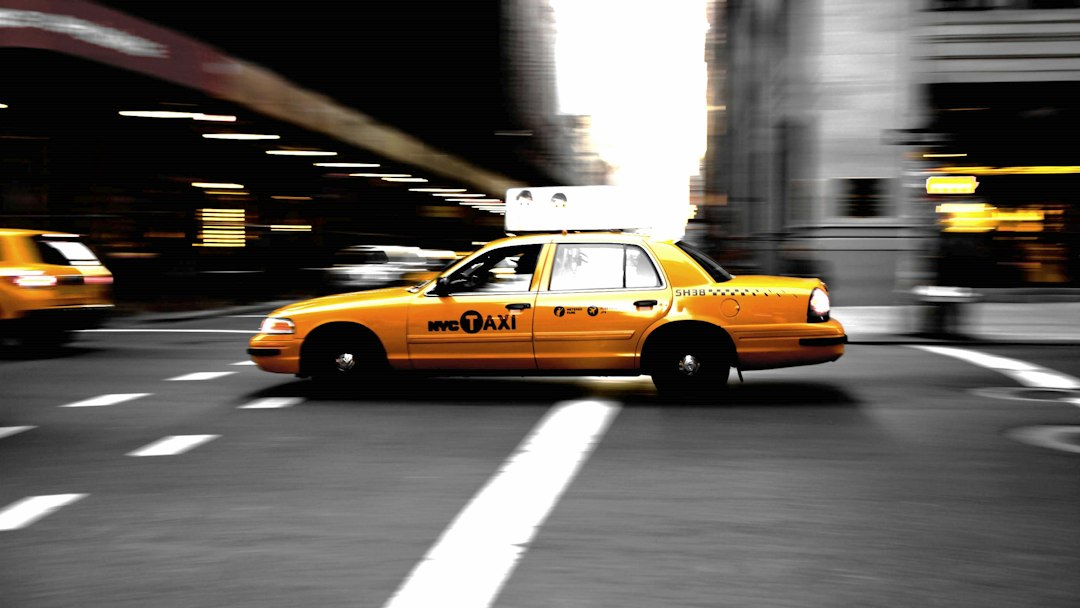
Photo by Dimon Blr on Unsplash
The classic fake taxi scam rarely looks dramatic. It usually starts with a smile in the arrivals hall: "Taxi? City center? My car is this way." You are guided past the official rank, loaded into an unmarked car, then overcharged, taken on a longer route, or told halfway through that the card machine is broken.
Sometimes the scam is subtler. The car may be a real taxi, but the meter "does not work," the quoted flat fare is invented, or the driver claims your hotel is closed and offers a "better" one. These are still airport taxi scams abroad, even when the vehicle looks legitimate from a distance.
Watch for these tourist scam warning signs before you enter any vehicle:
- The driver approaches you inside the terminal instead of waiting at the official rank.
- There is no visible license, driver ID, or taxi number.
- The fare is vague: "cheap," "special price," or "same as meter."
- The driver refuses to say whether the meter will be used.
- You are rushed away from other staff, lights, or cameras.
- The vehicle is parked outside the formal queue area.
Use this rule: no negotiation while walking. Stop, breathe, and ask three direct questions before any bag goes into a trunk.
- Is this an official licensed taxi?
- What is the fare rule: meter or fixed price?
- Can I pay by card at the end?
If the answers are slippery, leave.
In cities with official airport fares, write the number down before you land. Rome Fiumicino, for example, publishes a fixed fare of €55 to central Rome within the Aurelian Walls on its official airport pages. Knowing one number like that turns a confusing arrival into a simple yes-or-no test.
ATM distraction scams and currency exchange traps
Photo by Waldemar Brandt on Unsplash
After transport, cash is the next weak point. Bright kiosks promise "0% commission," helpful strangers offer to guide you through the machine, and a person waiting too close glances at your PIN. The ATM distraction scam is less theatrical than movies make it seem. Often it is just a friendly interruption at exactly the wrong second.
A currency exchange scam can be even quieter. You hand over €200 or $200, see crisp local notes come back, and only later realize the rate was 8% to 12% worse than the bank rate. On a two-week trip, that difference can erase one full dinner or an intercity train ticket.
Safer cash habits are boring, which is why they work:
- Use ATMs inside a bank branch, airport banking zone, or well-lit terminal wall, not a lonely street corner outside.
- Decline help from anyone you did not approach yourself.
- Cover the keypad fully, even if nobody seems close.
- If the machine offers to charge your card in your home currency, refuse it and choose local currency.
- Withdraw once in a moderate amount instead of making repeated small withdrawals in crowded places.
- Split cash between wallet, day bag, and hotel safe once you arrive.
A good arrival split for many travelers is simple:
- Main wallet: one day of spending money
- Hidden backup: the equivalent of $40 to $60
- Card 1: easy access
- Card 2: separate location, not in the same wallet
If someone starts talking to you during a withdrawal, cancel the transaction and step away. The ATM distraction scam depends on breaking your focus for two or three seconds. Do not try to be polite while handling cash.
Hotel reception scams, porter tricks, and fake SIM deals
By the time you reach your hotel, your guard often drops. That is when a hotel reception scam can land. A common version happens by phone: someone claiming to be the front desk calls your room, says there is a problem with your payment card, and asks you to read the number aloud. Another version happens in person, with someone hovering near check-in, offering to carry luggage, then pressing for cash or steering you toward a tour, exchange booth, or shop that pays them commission.
SIM cards can trigger the same fatigue pricing. At some airports, a prepaid plan sold for €30 to €35 is nearly identical to a city-center option for €10 to €15. The product may be real, but the urgency is manufactured: "last one," "tourist only," "must activate now."
Use these hotel and arrival-hall precautions:
- Never give card details over the phone to someone who called your room.
- If reception says there is a payment issue, go down to the desk yourself.
- Keep your passport in your hand or zipped bag during check-in, not on the counter edge.
- Tip only after a service is complete, and only if you chose the service.
- Compare SIM plans before landing, or buy from the official airport telecom desk if you need instant data.
- Photograph the taxi receipt, vehicle number, and any printed hotel bill on arrival day.
A hotel reception scam often succeeds because travelers want the problem to disappear quickly. Slow the moment down. Real staff do not mind verification.
Street help scams at stations, ticket machines, and cafe tables
Not every common travel scam involves a car. Major stations, ferry terminals, and cafe terraces create the same conditions as airports: noise, luggage, cash, and divided attention. You are checking platform numbers while holding coffee, or studying a ticket machine while someone explains the "easy way."
The setup changes by city, but the mechanics stay familiar. Someone "helps" with a machine and asks for payment. A spill appears on your jacket while a hand reaches for your bag. A bracelet is tied onto your wrist, then suddenly it is not a gift. A child presents a petition while another person studies your phone on the table.
Here is the fastest planning table to copy into your trip notes:
| Scam setup | What it looks like | What to do instead |
|---|---|---|
| Fake taxi scam | Driver approaches you inside arrivals | Walk only to the official rank or pre-booked pickup point |
| ATM distraction scam | Stranger offers help at cash machine | Cancel, cover keypad, move to another machine |
| Currency exchange scam | "No commission" sign, poor rate | Compare rate first or use bank ATM in local currency |
| Bracelet or gift trick | Free item placed on you or in your hand | Do not accept contact; keep walking without arguing |
| Ticket machine helper | Someone presses buttons for you | Start over alone or ask uniformed staff inside the station |
| Spill distraction | Liquid or mess appears on clothes | Secure bag first, clean up second |
| Cafe table snatch | Phone or wallet placed on table edge | Keep valuables off the table and loop a strap around your leg |
The best defense is physical, not verbal. Step back. Reclaim space around your bag. Put your phone away. Move toward staffed counters, brighter light, or families and older travelers. Distance breaks momentum faster than debate.
Your 10-minute anti-scam arrival routine
You do not need to act suspicious all day. You only need one strong arrival routine. The first 10 minutes after landing should feel almost scripted, especially if airport taxi scams abroad are on your mind.
Before you exit the terminal
Do these five things in order:
- Use the restroom and refill water if possible.
- Connect to official airport Wi-Fi only if the name matches airport signage.
- Check your hotel address and official taxi or train plan.
- Send one message to a trusted person: "Landed, leaving now, hotel ETA 45 min."
- Put away passport, cards, and phone before walking into the transport hall.
If something feels wrong
Scammers rely on embarrassment. Travelers stay quiet because they think they should have known better. Do the opposite: get visible, get still, and get specific.
If you think you are in a fake taxi scam, ask to stop at a busy, lit location such as a hotel entrance, airport police point, or staffed station. Pay only what you can document, take a photo of the plate if safe, and move away before arguing.
If your card is compromised, freeze it immediately in your banking app and record the time and place. If cash was taken, write down the amount, the exact location, and any receipt numbers while details are fresh. If your passport is missing, report it the same day.
Save these official resources before any international trip:
- UK Foreign Travel Advice
- U.S. State Department International Travel
- EU emergency help and 112 information
FAQ
What is the most common travel scam after landing?
The fake taxi scam is still one of the most common because it hits when travelers are tired, carrying bags, and unsure of local prices. The safest move is to ignore anyone recruiting rides inside the terminal and go directly to the official taxi rank or your pre-arranged pickup point.
How much cash should I carry on arrival day?
For most city trips, the equivalent of $40 to $60 in small notes is enough for a backup plan without turning your wallet into a target. Keep most of your money on cards, and split the small cash reserve away from your main wallet.
Are airport currency exchange counters always a bad idea?
Not always, but they are often expensive for large amounts. They can make sense for a small starter sum if you need transport or a snack immediately, but compare the rate first and avoid converting more than you need for the first few hours.
How do I know a taxi fare is real?
Check whether the airport or city transport authority publishes fixed fares or official meter rules before you fly. If the driver will not clearly confirm the fare rule before loading your bags, choose another car.
What should I do if I realize I was scammed abroad?
Move to a safe, staffed place first. Then freeze cards, collect photos and receipts, write down times and locations, and report the incident to local police or the nearest official help point. Speed matters more than pride.
Travel scams thrive on speed, noise, and that foggy moment when your brain has not yet caught up with your body. Slow the first hour of the trip down, and most of the clever tricks stop looking clever at all. A calm arrival is not just safer; it is the moment a journey starts to feel like yours again.