Marrakech can feel like three different trips folded into one city: a medieval maze of alleys, a polished world of design hotels and gardens, and a gateway to red-earth villages under the Atlas Mountains. That is exactly why 4 days in Marrakech works so well in 2026. You have enough time to learn the rhythm of the medina, enough room for a mountain escape, and enough evenings to enjoy the city after the day-trippers fade.
For travelers who want a trip with atmosphere and structure, this Marrakech itinerary is built around real pacing rather than a checklist. You will move from sunrise courtyards to smoky food stalls, from palace tiles to cactus gardens, and from taxi chaos to calm riad nights. I like sketching routes on TravelDeck before booking because Marrakech looks confusing on a map until you see how compact the key neighborhoods really are.
Marrakech rewards travelers who plan lightly but specifically. Pre-book the few timed attractions that matter, leave breathing room for wandering, and accept that some of your best moments will be unplanned: mint tea on a rooftop, a side lane full of brass lamps, the storks circling above El Badi, the smell of cedar and leather in the souks. If you are wondering whether Marrakech in 4 days is enough, the answer is yes, provided you do not try to see everything at once.
Day 1: First Light in the Medina
Photo by Brett Jordan on Unsplash
The best first day in Marrakech is not the busiest one. It should be about orientation: hearing the city, smelling it, and letting your eyes adjust to the density of color and movement. Begin with wide landmarks before you dive into the small lanes. The Koutoubia area gives you exactly that sense of scale. Palm trees sway, horse carriages clip past, and the minaret acts like a compass point whenever you get disoriented.
From there, slip into Jemaa el-Fna and the surrounding souks before the afternoon crowds peak. Morning is when shopkeepers sweep thresholds, spices are restacked in neat pyramids, and the medina still feels half asleep. Pause for orange juice, then continue north toward Le Jardin Secret. It is one of the smartest early stops in 4 days in Marrakech because it gives you shade, architecture, and a terrace view that helps the alley system make sense.
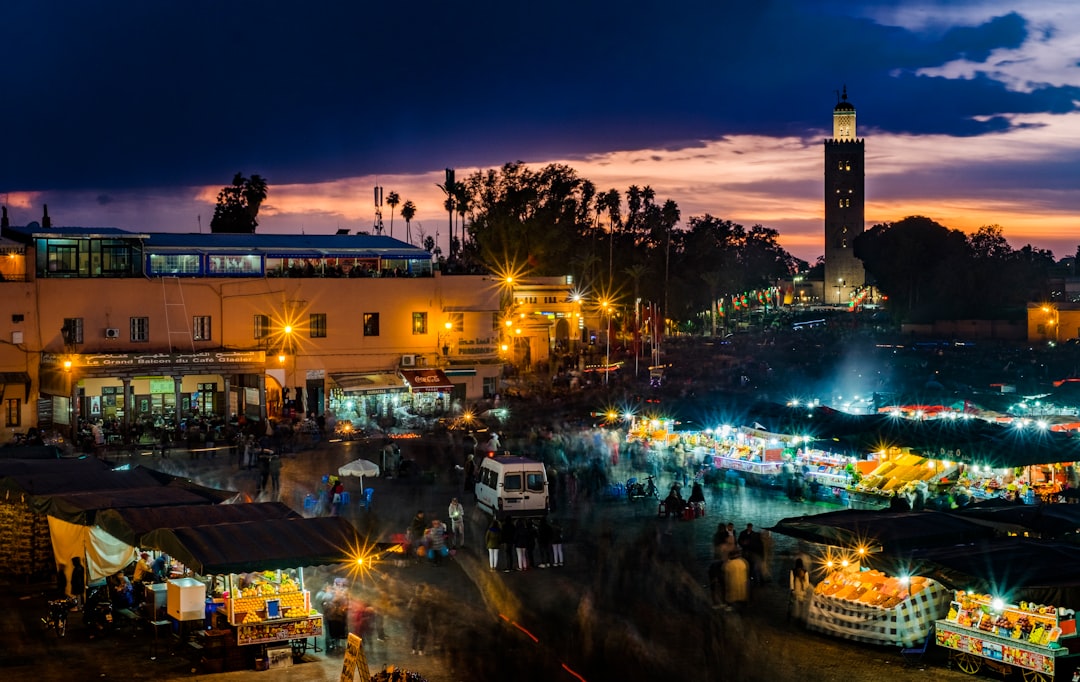
As evening falls, the city changes register. Jemaa el-Fna turns theatrical: smoke from grills, drums in the distance, sweet steam from tea, and a low electrical buzz of bargaining and conversation. Do not expect a polished plaza. Expect texture. The square is messy, loud, and unforgettable, which is exactly why your first night should end there.
- Morning, 8:30-12:30: Start at Koutoubia Mosque gardens and the avenue around it. The mosque is not open to non-Muslim visitors, but the exterior and gardens are free and worth 30 to 45 minutes. Walk into Jemaa el-Fna for a first loop, then head through the souks toward Rahba Kedima and Le Jardin Secret. Entry to Le Jardin Secret is about 100 MAD. Allow 1.5 to 2 hours with time for the tower view.
- Afternoon, 12:30-17:00: Lunch on a shaded rooftop near Mouassine or Rahba Kedima, around 80 to 150 MAD per person. After lunch, browse Souk Semmarine, Souk El Attarine, and the lanes around Mouassine Fountain. If you want one more cultural stop, visit Ben Youssef Madrasa, usually around 50 MAD and best booked with at least an hour.
- Evening, 18:00-22:00: Return to Jemaa el-Fna at dusk for the light shift, then have dinner at a rooftop restaurant nearby. Expect 120 to 250 MAD for dinner depending on the terrace. If you still have energy, walk back through the lit lanes to your riad instead of taking a taxi; the medina feels completely different after dark.
- Insider tip: On your first day, save your shopping for later. Use the first souk walk to learn prices and the layout. You will bargain better on Day 2 or Day 3 when the medina no longer feels like a maze.
Day 2: Palaces, Tombs, and a Hammam Night
Othmane Mitak
By your second day, the old city starts to open up. You notice the quiet behind heavy wooden doors, the geometry of zellige tiles, and the way entire histories are hidden inside plain walls. This is the day to focus on the southern medina and the Mellah, where Marrakech feels grander and more layered. The Bahia Palace is the obvious draw, but the joy of the route is how many textures sit close together: palace courtyards, spice shops, old synagogue lanes, and ruined walls alive with storks.
This part of town also slows you down in the right way. You spend more time looking upward at carved cedar ceilings and more time noticing how shadow works in Marrakech. Midday heat feels softer inside the palace courtyards, and even busy attractions have pockets of stillness. If you love the dense, historic energy of old urban quarters, the atmosphere here can feel as immersive as 4 Days in Istanbul in 2026: Mosques, Markets, and Ferries, just translated into red walls, courtyards, and desert light.
The perfect ending for Day 2 is a hammam. After the dust, heat, and walking, steam feels less like a spa indulgence and more like a reset button. Some travelers go traditional and local; others choose a polished riad-style hammam. Either works, but after a full heritage day, warm marble and eucalyptus steam feel like part of the itinerary rather than an extra.
- Morning, 8:30-12:30: Arrive early at Bahia Palace to avoid tour groups. Entry is usually around 100 MAD. Spend 60 to 90 minutes there, then continue into the Mellah for a slower walk past spice stores and jewelry workshops. If open during your visit, stop by the area around the Lazama Synagogue for a glimpse of the old Jewish quarter.
- Afternoon, 13:00-17:30: Have lunch near Place des Ferblantiers or the Kasbah, around 90 to 170 MAD. Then visit the Saadian Tombs, around 100 MAD, and El Badi Palace, also roughly 100 MAD. El Badi is less about ornate interiors and more about scale, ruins, and rooftop views with storks nesting on the walls.
- Evening, 18:30-22:30: Book a hammam. A simple local hammam can cost 80 to 150 MAD, while a tourist-friendly hammam with scrub and massage usually runs 300 to 800 MAD. End the night with a slow dinner of tanjia, grilled meats, or tagine in the Kasbah or Riad Zitoun area.
- Insider tip: Visit Bahia Palace right at opening if possible. The rooms are far more atmospheric before large guided groups arrive, and your photos will show the architecture instead of a wall of selfie sticks.
Day 3: Majorelle Blue, Gueliz Cafes, and Modern Marrakech
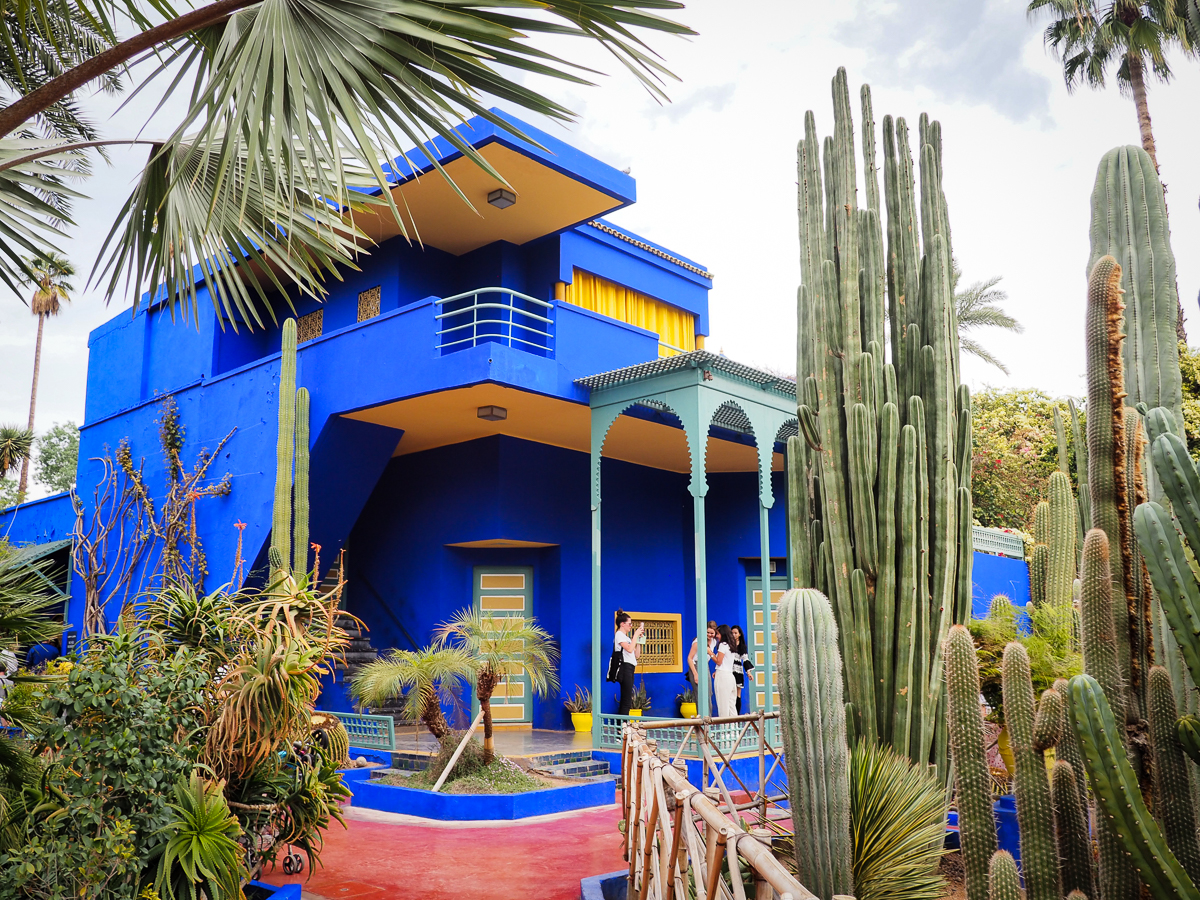
One reason 4 days in Marrakech feels complete is that the city is not only the medina. Day 3 should deliberately step outside the old walls and show you the newer face of Marrakech: boulevards, Art Deco traces, fashion-minded cafes, and gardens that feel almost cinematic in their use of color. The shift is refreshing. After two days of packed lanes and earth-toned walls, the blue of Majorelle feels almost electric.
Start early at Jardin Majorelle, because by late morning the queues can be long and the paths lose some of their hush. The garden is compact but vivid: cobalt walls, cacti, palm shade, bamboo rustling overhead, and tiny pools reflecting yellow pots and sharp leaves. Right next door, the Yves Saint Laurent Museum adds context and elegance without requiring half a day. Together, they make one of the most satisfying pairings in any Marrakech itinerary.
In the afternoon, let Gueliz reset your senses. Sidewalk cafes, modern bakeries, boutiques, and broad streets make it easier to rest between medina adventures. This is also a smart day for a cooking class in the evening, especially if you want to understand the flavors you have been eating rather than just ordering them. By Day 3, the city has moved from spectacle to familiarity, and that is when travelers usually start enjoying Marrakech in 4 days the most.
- Morning, 8:00-12:30: Pre-book Jardin Majorelle at jardinmajorelle.com. Garden-only entry is often around 170 MAD; combo tickets with the Yves Saint Laurent Museum can be around 330 MAD. Arrive for the first slot, spend about 75 minutes in the garden, then 60 to 90 minutes in the museum. If fashion is not your thing, keep the garden and skip the museum.
- Afternoon, 13:00-17:00: Lunch in Gueliz at a cafe or bistro, roughly 100 to 180 MAD. Then stroll Avenue Mohammed V and nearby side streets, duck into design shops, or visit a pastry shop for a slower break. If you want more culture, the Musée Yves Saint Laurent Marrakech official site is museeyslmarrakech.com, where hours and timed entry are updated regularly.
- Evening, 18:00-22:30: Join a Moroccan cooking class in a riad or culinary school, usually 350 to 700 MAD including dinner, or return to the medina for a final rooftop evening. If you prefer a low-key night, book dinner in a restored riad with a courtyard and live oud music.
- Insider tip: If Majorelle tickets are sold out, do not force the queue later in the day. Swap the order: do Gueliz first, then check for cancellations or book Anima Garden as an alternative on Day 4 if you are using a private driver.
Day 4: Atlas Air and One Last Evening in the Medina
A city this intense benefits from one day of distance. On Day 4, trade the medina walls for the High Atlas foothills. Even a modest day trip changes the story of 4 days in Marrakech because it reminds you what kind of landscape the city belongs to: dry riverbeds, terraced slopes, walnut trees, and villages built in the same warm tones as the earth beneath them.
The easiest classic day trip is Imlil, around 1.5 to 2 hours each way depending on traffic and stops. The route itself is part of the pleasure. Marrakech slowly thins into roadside olive groves, craft stalls, and mountain air. Once in Imlil, the light looks cleaner, the breeze feels cooler, and lunch with a view becomes the kind of memory that balances all the sensory overload of the previous days.
Return to the city before dark if you can. A last evening in the medina should feel unhurried. Buy the lamp, scarf, or spice blend you kept thinking about. Climb one final terrace. Listen to the call to prayer echo over the rooftops. After three days of context, your last night lands differently: less chaotic, more intimate, and often the moment when this Marrakech itinerary really clicks.
- Morning, 8:00-12:30: Leave Marrakech by shared excursion, grand taxi arrangement, or private driver for Imlil. Shared tours usually cost 300 to 450 MAD per person; a private car for the day is often 900 to 1,400 MAD depending on group size and inclusions. On arrival, take a short guided village walk or easy trail, about 1 to 2 hours.
- Afternoon, 12:30-17:30: Lunch on a terrace overlooking the valley, usually 100 to 180 MAD. After lunch, continue with a short scenic walk, tea stop, or viewpoint visit before driving back to Marrakech. If you want a softer version of the day, swap Imlil for Ourika Valley or Anima Garden.
- Evening, 19:00-22:30: Use your final night for relaxed shopping and a memorable dinner. Budget about 150 to 350 MAD for dinner, depending on whether you choose a simple medina restaurant or an upscale riad setting. This is also the right night to buy packaged spices, argan oil, or ceramics after you have had several days to compare quality.
- Insider tip: Do not schedule a late-night airport transfer on the same day as the Atlas trip if you can avoid it. Mountain weather, road traffic, and long lunch stops can all stretch the return. A calm final evening is one of the best parts of 4 days in Marrakech.
Best time to visit Marrakech in 2026
The best time to visit Marrakech is usually spring and autumn, when the light is flattering, daytime temperatures are pleasant, and rooftop dinners are comfortable instead of punishingly hot. March to early May is excellent for gardens and day trips, while October and November often bring the most balanced conditions for a classic 4 days in Marrakech plan.
Summer is possible, but it changes the rhythm of the city. Midday can be exhausting, especially in the medina where shade is uneven and air barely moves. Winter, by contrast, is often beautifully sunny by day and sharply cool after sunset, which many travelers underestimate. If you are planning Marrakech in 4 days, pack for temperature swings rather than one stable climate.
| Season | Typical temperature | Why go | Watch for |
|---|---|---|---|
| March to May | 17 to 30 C | Best mix of flowers, clear light, and manageable heat | Easter and spring holidays can raise hotel prices |
| June to August | 24 to 40 C | Long evenings, strong dry light, fewer cultural crowds | Very hot afternoons, especially in July |
| September to November | 18 to 32 C | Excellent rooftop weather and ideal for day trips | October weekends can book out fast |
| December to February | 7 to 22 C | Crisp days, lower prices, dramatic light | Cold riad courtyards at night, occasional rain |
For many travelers, the sweetest spot is late March, April, mid-October, or early November. That is the window when the best time to visit Marrakech lines up with comfortable walking, good mountain conditions, and evenings that still invite you to linger outside.
Estimated budget per person for 4 days in Marrakech
A realistic Marrakech budget depends less on flights and more on your hotel style. The city has a huge range, from simple riads and budget cafes to legendary palace hotels where one night costs more than an entire backpacker trip. Food and taxis remain relatively manageable, while entry tickets have risen enough that museum-heavy days now deserve their own line in your planning.
The table below assumes 4 days in Marrakech with four nights, based on two people sharing a room. Solo travelers should add roughly 20 to 40 percent, especially in the mid-range and luxury categories. Flights are not included because fares vary wildly by departure city.
| Budget tier | Stay per night | Food per day | Local transport total | Activities total | Estimated 4-day total |
|---|---|---|---|---|---|
| Budget | 300 to 550 MAD | 120 to 220 MAD | 150 to 300 MAD | 700 to 1,200 MAD | 2,200 to 3,900 MAD |
| Mid-range | 900 to 1,800 MAD | 250 to 450 MAD | 250 to 500 MAD | 1,000 to 1,600 MAD | 5,400 to 9,300 MAD |
| Luxury | 4,500 to 12,000 MAD | 500 to 1,200 MAD | 500 to 1,200 MAD | 1,500 to 3,500 MAD | 20,500 to 56,700 MAD |
A few quick planning notes for your Marrakech budget:
- A comfortable mid-range trip often lands around 6,000 to 7,500 MAD per person for four nights.
- Shared day trips help keep Marrakech in 4 days affordable without sacrificing the Atlas experience.
- Rooftop meals and hammams are where many travelers quietly overspend.
- Cash is still useful for taxis, tips, market snacks, and smaller medina purchases.
Where to stay in Marrakech
If you are debating where to stay in Marrakech, start with one question: do you want atmosphere first or convenience first? For a first visit, the medina is usually the emotional win. You step outside into lantern light, alley echoes, and courtyards scented with orange blossom. A riad also slows the city down; after the sensory noise outside, the inner calm feels extraordinary.
That said, not every traveler sleeps well in the medina. Access can involve narrow lanes, porter help with bags, and some late-night noise depending on the district. Gueliz and Hivernage feel easier, more modern, and better for travelers who want taxis to pull up directly at the hotel door. For most people doing 4 days in Marrakech, the smartest choice is a riad in the medina or Kasbah, unless mobility or work needs make the newer districts more practical.
Best areas
- Mouassine and Riad Laarous: Great for first-timers who want walkable access to Jemaa el-Fna, souks, and rooftops.
- Kasbah and southern Medina: Slightly calmer, close to Bahia Palace, Saadian Tombs, and good riads with more breathing room.
- Gueliz or Hivernage: Best for wider streets, modern hotels, easy taxis, and a break from medina intensity.
Budget stays
- Rodamon Riad Marrakech, Medina: roughly 280 to 550 MAD for dorms and simple private options.
- Riad Jennah Rouge, Medina: around 350 to 650 MAD, social and central.
- Hotel Ali, near Jemaa el-Fna: about 300 to 500 MAD, basic but very well located.
Mid-range stays
- 2Ciels Boutique Hotel, Gueliz: usually 900 to 1,400 MAD, modern rooms and a rooftop pool.
- Riad Les Yeux Bleus, Medina: around 1,200 to 1,800 MAD, elegant and peaceful.
- Riad Dar Anika, Kasbah: roughly 1,600 to 2,400 MAD, polished service and strong location.
Luxury stays
- El Fenn, Medina: about 4,500 to 8,000 MAD, style-heavy and iconic.
- La Mamounia, Hivernage: often 7,000 to 14,000 MAD, classic grand-hotel Marrakech.
- Royal Mansour Marrakech, Hivernage: usually 12,000 MAD and up, one of the city s top splurges.
If you are still unsure where to stay in Marrakech, pick a riad in the Kasbah or Mouassine area for the most balanced first trip. It gives you atmosphere without being too far from the practical anchors of your Marrakech itinerary.
How to get around Marrakech
For a city that looks confusing on paper, Marrakech is surprisingly manageable once you divide it into three modes: walking in the medina, petit taxis for longer hops, and private transport for day trips. Inside the old city, walking is usually faster than any vehicle. The challenge is not distance but orientation. Expect wrong turns, dead ends, and little discoveries, and the medina becomes far more enjoyable.
Petit taxis are useful when moving between the medina, Gueliz, and Hivernage, especially in the afternoon heat. They are inexpensive by European standards but require a little patience. Some drivers use meters, some prefer a fixed price, and after dark fares often rise. If you plan 4 days in Marrakech well, you will not need many taxi rides at all.
- On foot: Best for the medina, souks, Bahia Palace area, and evening wandering.
- Petit taxi: Typical short ride 20 to 40 MAD in the day, often 40 to 70 MAD at night or without a meter.
- Airport transfer: To the medina or Gueliz, usually 100 to 150 MAD by official taxi in the day, a bit more late at night.
- Private driver: Best for Imlil, Ourika, or garden detours, generally 900 to 1,400 MAD for a day.
- Offline maps: Essential. Download your map before arriving; medina lanes can break mobile signal and your sense of direction at the same time.
How to get there
Most travelers reach Marrakech through Marrakech Menara Airport, RAK, which sits only about 6 kilometers from the center. That closeness is one reason 4 days in Marrakech works so well for a short trip: you can often be at your riad or hotel within 20 to 30 minutes of leaving the airport. Direct flights are common from many European cities, making Marrakech one of the easiest North African city breaks to assemble.
If you are already in Morocco, the train is often the smoothest overland option. The rail connection from Casablanca is reliable and comfortable, and buses fill the gaps from cities such as Essaouira or Agadir. Travelers doing a longer Morocco circuit often combine Marrakech with the coast, the desert, or Fes, but even as a standalone destination, 4 days in Marrakech feels complete.
- By air: Direct flights often run from Paris at about 3 hours 20 minutes, London around 3 hours 40 minutes, Madrid around 2 hours, and Lisbon under 2 hours. Check airport details at ONDA.
- From the airport to the center: Official taxis to the medina or Gueliz generally cost 100 to 150 MAD in the daytime. Some riads can arrange transfers for 150 to 250 MAD, which can be worth it if your accommodation is deep in the medina.
- By train from Casablanca: From Casa Voyageurs to Marrakech, expect roughly 2 hours 40 minutes to 3 hours 15 minutes, with fares often around 150 to 230 MAD depending on class and service. Timetables are at ONCF.
- By bus: From Essaouira, expect about 3 hours and roughly 100 to 140 MAD. From Agadir, about 3 to 3.5 hours. One operator is Supratours.
- By car: Driving from Casablanca usually takes 2.5 to 3 hours, from Essaouira about 3 hours, and from Agadir around 3 to 3.5 hours depending on traffic and stops.
- Useful official planning link: Morocco tourism information is at Visit Morocco.
Things to do in Marrakech
Even with a full Marrakech itinerary, it helps to know which experiences are truly worth your time. Marrakech is full of almost-right choices: decent rooftops, decent gardens, decent museums. The city is better when you focus on the places with real atmosphere and let the weaker options fall away.
If you only have Marrakech in 4 days, prioritize a mix of sensory, historical, and local experiences. You want one grand square, one palace, one garden, one hammam, one serious food stop, and one change of scenery beyond the walls. That combination gives the city shape.
- Jemaa el-Fna at dusk, Medina: free, chaotic, essential for first-time visitors.
- Bahia Palace, southern Medina: one of the city s most beautiful interiors, around 100 MAD.
- Ben Youssef Madrasa, north Medina: intricate Islamic architecture, around 50 MAD.
- Jardin Majorelle, Ville Nouvelle edge: a compact but iconic garden, around 170 MAD, official site at jardinmajorelle.com.
- Musée Yves Saint Laurent Marrakech, next to Majorelle: strong fashion and design context, official site at museeyslmarrakech.com.
- Traditional hammam, Medina or Kasbah: from 80 MAD for simple local versions to 800 MAD for polished spa-style experiences.
- El Badi Palace rooftop walls, Kasbah area: wide views, storks, and dramatic ruins, around 100 MAD.
- Imlil or Ourika Valley day trip, Atlas foothills: from 300 MAD shared or 900 MAD and up private.
Where to eat in Marrakech
Food is one of the reasons 4 days in Marrakech feels richer than a typical city break. The city feeds you in layers: flaky msemen at breakfast, sweet mint tea at odd hours, slow-cooked tagines for lunch, and smoky meats or tanjia after sunset. Some meals will be elegant and quiet; others will happen shoulder to shoulder above the square or in a lane scented with charcoal and cumin.
Try to vary your settings as much as your dishes. Eat one breakfast in a tiny local cafe, one lunch on a rooftop, one polished dinner in a riad, and one deeply casual street-food style meal. That variety tells you more about Marrakech than chasing only the most photographed tables. It also keeps your Marrakech budget healthier.
- Café des Épices, Rahba Kedima: good for rooftop breakfasts and light lunches, around 60 to 120 MAD.
- Nomad, near Place des Épices: modern Moroccan plates and a stylish terrace, roughly 110 to 220 MAD.
- Le Trou au Mur, Medina: excellent for tanjia and classic dishes in a handsome setting, around 120 to 250 MAD.
- Amal Women s Training Center, Gueliz: thoughtful Moroccan cooking and a meaningful social project, around 120 to 180 MAD.
- Al Fassia, Gueliz: one of the city s dependable traditional dining rooms, often 200 to 350 MAD per person.
- Mechoui Alley, near Jemaa el-Fna: go for roasted lamb, soup, and bread, around 60 to 120 MAD.
- Naranj, Medina: refined Levantine-Moroccan crossover flavors, usually 150 to 300 MAD.
- Dar Yacout, Medina: a classic splurge dinner in a lavish setting, often 600 MAD and up.
What to try at least once
- Tanjia: slow-cooked Marrakech meat specialty, especially good after a long walking day.
- Mechoui: smoky roasted lamb, best in simple specialist spots.
- Pastilla: sweet-savory pie, often pigeon or chicken.
- Msemen and baghrir: breakfast pancakes and flatbreads with honey or cheese.
- Fresh orange juice: practically a Marrakech ritual, usually 5 to 15 MAD.
Practical tips for Marrakech in 2026
Marrakech is easier than many first-time visitors expect, but it rewards a little preparation. The biggest mistake is treating the city like a passive sightseeing stop. It is more interactive than that. You haggle, greet, orient, and adjust constantly. Once you accept that rhythm, 4 days in Marrakech becomes much smoother and more enjoyable.
The second big mistake is overreacting to the medina. Getting briefly lost is normal. Being approached by hustlers is normal. Having to say no thank you several times is normal. None of that means the city is unmanageable; it means you are in a place with intense street life. Read the room, move calmly, and keep your expectations grounded.
- Cash and currency: Morocco uses the dirham, MAD. Carry small notes for taxis, tips, and market snacks. Cards are accepted in many riads and modern restaurants, less reliably in small shops.
- Clothing: Marrakech is stylish but still conservative in many local settings. Lightweight trousers, midi skirts, shirts with sleeves, and a scarf are useful, especially when moving between the medina and religious areas.
- Water and heat: Drink bottled or filtered water, pace your walking, and take long lunches in shaded courtyards during hot months.
- Connectivity: Local SIM cards from Maroc Telecom, Orange, or inwi are easy to buy. Expect around 100 to 200 MAD for a generous data package.
- Bargaining: Start low but stay polite. Good-humored bargaining works better than aggressive bargaining.
- Etiquette: A simple greeting matters. If you want a broader refresher before you go, International Travel Etiquette Tips for 2026 That Matter is a useful companion read.
- Scams and fake guides: Ignore unsolicited route help unless you have clearly asked for it, confirm taxi prices before longer rides, and be cautious in your first day or two. This city is usually manageable if you recognize common setups early; Travel Scam Red Flags for Your First 24 Hours Abroad in 2026 covers the street-smart basics well.
- Prayer times and Ramadan: Daily rhythms can shift, and some restaurants or shops may operate differently during Ramadan. Check dates and be flexible.
- Riads and access: Confirm whether your riad is reachable by car or requires a porter from the nearest gate. This matters more than many travelers realize.
FAQ
Is 4 days in Marrakech enough?
Yes. 4 days in Marrakech is enough for the medina, two major heritage days, one garden-and-Gueliz day, and one Atlas Mountains excursion. It is also short enough that the intensity of the city stays exciting rather than exhausting.
Should I stay in the medina or in Gueliz?
For first-timers, the medina usually wins on atmosphere. If you are still deciding where to stay in Marrakech, choose Gueliz only if you prefer modern hotels, wider streets, easy taxi access, or you are sensitive to noise and walking over uneven lanes.
What is a realistic Marrakech budget for four days?
A sensible Marrakech budget for a mid-range trip is often 6,000 to 7,500 MAD per person for four nights, excluding flights. Budget travelers can do it for much less, especially with simple riads, casual meals, and shared day trips.
What is the best time to visit Marrakech?
The best time to visit Marrakech is typically March to May and September to November. Those months give you the best balance of warm days, cooler evenings, and comfortable walking for a classic Marrakech in 4 days itinerary.
Is Marrakech good for solo travelers?
Yes, especially if you enjoy cities with strong street life and do not mind attention in public spaces. Solo travelers usually do best with a well-located riad, calm taxi habits, and pre-booked activities for the first full day.
After 4 days in Marrakech, most travelers leave with the same feeling: they did not see everything, but they saw enough to understand the city s spell. Once you know which courtyards, rooftops, souks, and mountain views matter most to you, planning the trip becomes surprisingly easy.
---