New York is one of the few cities where a bad route can cost you three extra subway rides, 12,000 steps, and the energy you meant to save for dinner. A strong 5 days in New York plan fixes that by stacking neighborhoods logically, so you spend more time in galleries, parks, ferry terminals, and brownstone streets than underground on the wrong platform.
This day by day New York itinerary is designed for first-time visitors who want the classics without turning the trip into a frantic scavenger hunt. Every stop is specific, every transfer is realistic, and every day ends in a different mood: harbor light, museum hush, theater buzz, downtown streets, and Brooklyn skyline.
How to rebuild this Google travel itinerary
Photo by Lucia Macedo on Unsplash
The easiest way to recreate this New York itinerary 2026 is to make one map with one layer per day, then pin every stop exactly as written below. New York rewards clustering. When you keep one day in Lower Manhattan, one around Central Park, and one on the West Side, the city feels thrilling instead of tiring.
Before you leave, save your ticket pages, note your preferred lunch backup, and download offline maps for Manhattan and Brooklyn. If you are traveling with friends, sort out must-dos before anyone lands; Friends Trip Planning Checklist for 2026 That Keeps Peace is genuinely useful for that part.
- Create 5 map layers named Day 1 through Day 5.
- Add hotel pins in a separate layer so you can see airport and subway access clearly.
- Save official ticket pages for 9/11 Memorial & Museum, The Met, and Top of the Rock.
- Download offline areas in Google Maps before your flight in case your signal drops on arrival.
- Share the map with your travel partners so restaurant backups and timing changes live in one place.
Day 1: Harbor Light, History, and the Bridge
Photo by Abhishek Banik on Unsplash
Lower Manhattan is the right place to start because New York makes sense here. The harbor air is cooler, the streets still show the old colonial footprint, and the skyline rises almost absurdly fast out of the water's edge. At Battery Park, gulls wheel over commuters and ferries, and the city feels less like an abstract metropolis and more like a port that never stopped growing.
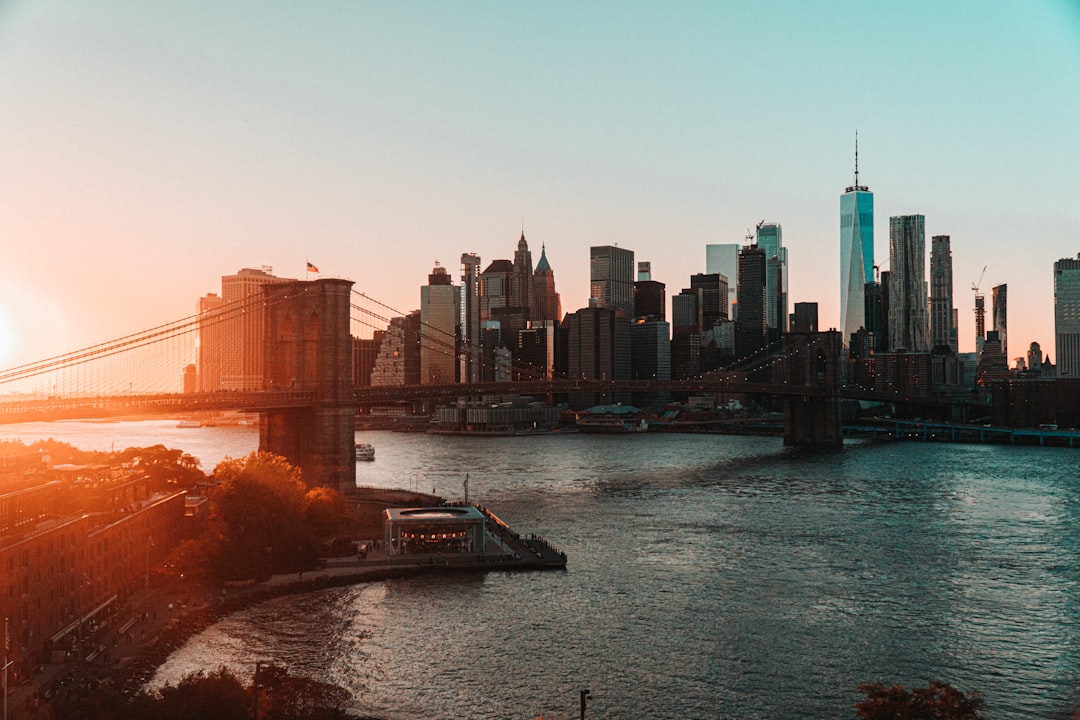
By afternoon, the emotional register changes. The Financial District gives way to the stillness of the 9/11 Memorial, then the route opens again on the Brooklyn Bridge, where the whole day widens into a skyline walk. Ending in DUMBO lets your first day finish with that cinematic New York payoff: bridge cables, river wind, and glass towers turning peach at sunset.
- Morning, 8:00-11:30: Start at Battery Park in the Financial District. Walk to Whitehall Terminal and ride the Staten Island Ferry for open-water views of the Statue of Liberty and Lower Manhattan. The ferry is free. Back in Manhattan, walk to Trinity Church at 89 Broadway and the Wall Street area, including Federal Hall and the New York Stock Exchange exterior. Budget $5-7 for coffee, otherwise this loop is free.
- Afternoon, 12:00-4:45: Lunch at Leo's Bagels, 3 Hanover Square, Financial District, about $12-18. Then walk to the 9/11 Memorial at 180 Greenwich Street, free, and if you want the full visit, enter the 9/11 Museum, from about $36. Finish with a photo stop inside Oculus at the World Trade Center, free.
- Evening, 6:00-9:30: Enter the Brooklyn Bridge from the City Hall side near Centre Street and walk to Brooklyn, about 35-45 minutes at an easy pace. In DUMBO, stop at Washington Street for the Manhattan Bridge view, then continue to Pebble Beach in Brooklyn Bridge Park. Dinner at Juliana's Pizza, 19 Old Fulton Street, runs about $25-40 per person, or graze at Time Out Market New York, 55 Water Street.
- Insider tip: On the Staten Island Ferry, sit on the right side leaving Manhattan and the left side returning for the best Statue of Liberty views without paying for a harbor cruise.
Day 2: Museum Mile and a Central Park Crossing
After the granite and steel of downtown, the Upper East Side feels measured and almost ceremonial. Museum Mile has that particular New York polish: limestone facades, doormen, yellow cabs, and a slow build toward one of the strongest museum collections anywhere. Starting at The Met also gives your second day an indoor anchor, which is useful if weather turns.
Then the city softens. In Central Park, traffic noise fades to carriage wheels, buskers, and the slap of sneakers on paths. Walking west through the park makes the geography of Manhattan feel simple: avenue, trees, terrace, lake, skyline. End with Rockefeller Center at dusk and you get the view many travelers expect from the city on day one, but at the better moment, when the lights begin to come on.
- Morning, 9:30-12:30: Visit The Metropolitan Museum of Art, 1000 Fifth Avenue, Upper East Side. Adult admission is about $30. Give yourself at least 2.5 hours for the Temple of Dendur, European paintings, and the rooftop garden if it is open.
- Afternoon, 12:45-5:00: Lunch at JG Melon, 1291 3rd Avenue, Upper East Side, about $18-25. Then enter Central Park at East 79th Street and walk west via Conservatory Water, Bethesda Terrace, Bow Bridge, The Mall, and Strawberry Fields near West 72nd Street. The park is free; allow 2.5 to 3 hours with stops.
- Evening, 6:30-9:30: Head to Top of the Rock, 30 Rockefeller Plaza, Midtown, from about $44 depending on timeslot. Afterward, walk by St. Patrick's Cathedral on Fifth Avenue and have dinner on Restaurant Row, West 46th Street, where casual pre-theater meals usually run $25-50 per person.
- Insider tip: Book Top of the Rock about 45 minutes before sunset so one ticket gives you daylight, golden hour, and the city after dark with the Empire State Building glowing in the distance.
Day 3: Midtown Icons, the High Line, and Broadway
Midtown can feel chaotic if you attack it without a route, but it is far more elegant in the morning. Bryant Park opens quietly, the library lions look almost theatrical before the crowds arrive, and Grand Central still feels like a train hall from a more glamorous century. This stretch works best when you treat it as a short, dense walk rather than a full-day neighborhood.
In the afternoon, shift west. The High Line changes the rhythm completely: freight tracks turned garden promenade, brick warehouses turned food hall, river light bouncing off new towers. By the time evening arrives, you are already positioned for Broadway, which means you can enjoy the pre-show energy without sprinting across town.
- Morning, 8:30-11:45: Start in Bryant Park, Midtown, with coffee and a quick loop. Visit the New York Public Library Stephen A. Schwarzman Building, 476 Fifth Avenue, free, then walk to Grand Central Terminal, 89 East 42nd Street, free. Detour to the Whispering Gallery near the Oyster Bar. Breakfast at Ess-a-Bagel, 831 3rd Avenue, is about $8-15.
- Afternoon, 1:00-5:00: Take the 7 train to 34 St-Hudson Yards and enter the High Line at West 30th Street. Walk south through Chelsea, free, then stop for lunch at Chelsea Market, 75 9th Avenue, where most meals run $15-30. Continue to Little Island, Pier 55 in Hudson River Park, free, though timed reservations are sometimes required on busy dates.
- Evening, 6:30-10:30: Eat near the Theater District; Los Tacos No. 1, 229 West 43rd Street, is a fast, reliable option at about $6-7 per taco. Then see a Broadway show in the Theater District. Same-day seats can start around $60, while popular shows easily reach $150-200 and beyond.
- Insider tip: If you are flexible on shows, check the TKTS booth in Times Square in late morning for discounted same-day tickets instead of paying premium evening prices online.
Day 4: Village Streets, SoHo Cast Iron, and Chinatown After Dark
Day four should feel looser. Greenwich Village and the blocks south of it are where New York stops performing monumentality and starts doing texture: stoops, corner delis, jazz history, tiny bookstores, old trees fighting for pavement space. It is a welcome contrast after Midtown's spectacle and an excellent place to leave breathing room for coffee, shopping, or an unplanned detour.
By late afternoon, the route dips into immigration history at the Lower East Side, then folds into Chinatown, where the city gets louder, brighter, and delicious again. This is one of the best nights in the itinerary for eating by instinct, because the blocks around Doyers, Pell, and Mott Streets reward wandering almost as much as planning.
- Morning, 9:00-12:00: Breakfast at Murray's Bagels, 500 6th Avenue, Greenwich Village, about $6-12. Walk through Washington Square Park, then continue along MacDougal Street, Bleecker Street, Grove Street, and Bedford Street. This whole neighborhood loop is free.
- Afternoon, 1:00-5:00: Explore SoHo around Prince Street, Greene Street, and Broadway for the cast-iron district and shops. Lunch at Prince Street Pizza, 27 Prince Street, about $6-8 a slice, or Balthazar, 80 Spring Street, about $35-60 per person. Then head to the Tenement Museum, 103 Orchard Street, Lower East Side, with tours from about $30. Finish with a snack stop at Essex Market, 88 Essex Street.
- Evening, 6:30-10:00: Build your dinner around Chinatown. Nom Wah Tea Parlor, 13 Doyers Street, is a classic for dim sum at about $20-35 per person. Xi'an Famous Foods, 45 Bayard Street, is cheaper and faster at roughly $12-16. If you want one polished cocktail, Apotheke, 9 Doyers Street, starts around $20.
- Insider tip: The Tenement Museum is one of the hardest reservations in this day by day New York itinerary, so lock in your guided tour before you book dinner nearby.
Day 5: Brooklyn Brownstones and a Skyline Finale
Your last day should not feel like leftovers. Brooklyn offers a completely different emotional finish: lower buildings, more sky, more neighborhood rhythm, and some of the best back-across-the-river views in the city. Brooklyn Heights in the morning is calm enough to hear dogs' tags clink on stoops, and the promenade gives Manhattan one last dramatic reveal without the crush of Midtown sidewalks.
Later, Williamsburg adds a younger, more creative energy. Old brick factories sit beside design hotels and waterfront lawns, and the skyline suddenly looks like something you are observing from outside the story rather than inside it. It is the right final shift for 5 days in New York because it reminds you the city is bigger than the postcard core.
- Morning, 8:30-11:30: Take the subway to Clark Street and walk Brooklyn Heights Promenade, then continue into Brooklyn Bridge Park from Pier 1 to Jane's Carousel. Breakfast at Almondine Bakery, 85 Water Street, DUMBO, is about $6-15. The walk itself is free.
- Afternoon, 12:30-5:00: Ride the NYC Ferry from DUMBO/Fulton Ferry to North Williamsburg, about $4.50. Walk Domino Park, 15 River Street, then continue along Wythe Avenue and Bedford Avenue. Lunch at Tacocina, inside Domino Park, is about $15-25, while Sunday in Brooklyn, 348 Wythe Avenue, usually lands around $25-40 per person. If you still have energy, take the L train to the Bushwick Collective murals around Troutman Street, free.
- Evening, 6:30-10:00: For a memorable final view, go to Westlight, 111 North 12th Street, Williamsburg, where drinks and small plates usually total $25-40. If you prefer a free ending, watch sunset from Marsha P. Johnson State Park and return by ferry or L train.
- Insider tip: The ferry is not the fastest way back, but on a clear evening it is one of the cheapest skyline rides in New York and a far better finale than another subway tunnel.
How to get there
For a New York 5 day itinerary, arrival logistics matter more than people expect. The cheapest airfare can become the most expensive choice if it strands you in a two-transfer airport journey with luggage during rush hour. Pick the airport that matches your hotel location first, then compare fares.
The city is also one of the easiest long-distance train arrivals in the US. If you are coming from the Northeast Corridor, rail often beats flying once you count airport transfers and security time.
| Airport or route | Best for | Typical time to Manhattan | Typical cost |
|---|---|---|---|
| JFK | Midtown East, Brooklyn, Queens connections | 45-75 min via AirTrain + LIRR or subway | about $11-20 |
| LaGuardia LGA | Upper East Side, Midtown, shorter taxi rides | 35-60 min via bus + subway | $2.90 on transit |
| Newark EWR | West Side hotels, New Jersey connections | 45-60 min via AirTrain + NJ Transit | about $16-20 |
| Philadelphia by Amtrak | Fast city-to-city option | 1 hr 20 min-1 hr 40 min | from about $19 |
| Washington DC by Amtrak | Easy alternative to flying | 2 hr 50 min-3 hr 30 min | from about $35 |
| Boston by Amtrak | Viable if booked early | 4 hr-4 hr 30 min | from about $40 |
Useful official links: Amtrak, JFK AirTrain, LaGuardia public transportation, Newark AirTrain, and the MTA.
Things to do if you want to swap a stop
Even a carefully built Google travel itinerary should leave a little flexibility. Weather, sold-out tickets, and your own energy level may change the shape of a day. These are the easiest high-value swaps if you want to customize your 5 days in New York without breaking the route.
- Statue City Cruises, Battery Park, Lower Manhattan: the paid Statue of Liberty and Ellis Island boat if the free Staten Island Ferry is not enough, from about $25.
- Museum of Modern Art, 11 West 53rd Street, Midtown: excellent rainy-day swap near Rockefeller Center, from about $30.
- Roosevelt Island Tramway, East 59th Street and 2nd Avenue: skyline ride included in a standard MTA fare.
- Village Vanguard, 178 7th Avenue South, West Village: classic late-night jazz, usually about $45-60.
- Brooklyn Museum, 200 Eastern Parkway, Prospect Heights: strong art collection with easier pacing than Manhattan's big institutions, from about $20.
- Prospect Park, Brooklyn: a spacious, local-feeling counterpoint to Central Park, free.
- Yankee Stadium, 1 East 161st Street, Bronx: seasonal add-on if a game fits your schedule, from about $25.
Best time to go for 5 days in New York
The best months for 5 days in New York are usually late April through early June and mid-September through early November. You get longer walking weather, better park time, and fewer extremes than midsummer or deep winter. Central Park is fresh in spring, while fall gives you crisp light and evenings that still work for skyline views.
December is magical but expensive, with heavier crowds around Rockefeller Center, Bryant Park, and Fifth Avenue. January and February can deliver surprisingly good hotel deals, but wind and slush make a walking-heavy New York itinerary 2026 less pleasant.
- Best overall: May, early June, late September, and October.
- Best for festive atmosphere: Early December.
- Best for hotel deals: January and February, if you can handle the cold.
- Months to think twice about: July and August, when heat, humidity, and long attraction lines can drain the fun from a packed day.
Estimated budget per person for 5 days in New York
A realistic budget depends mostly on where you sleep and how many paid attractions you stack. Food can be controlled in New York; hotel pricing usually cannot. The table below assumes 5 days and 4 nights, shared occupancy where relevant, and excludes flights.
| Budget tier | Hotel | Food | Transport + attractions | Total per person |
|---|---|---|---|---|
| Budget | $320-520 | $180-260 | $220-340 | about $720-1,120 |
| Mid-range | $700-1,100 | $280-420 | $250-420 | about $1,230-1,940 |
| Luxury | $2,200+ | $500+ | $350+ | about $3,050+ |
For most travelers, a comfortable middle-ground number for 5 days in New York is about $1,400-1,800 per person before flights if you want a well-located hotel, a couple of major tickets, and good meals without overthinking every coffee.
Where to stay
Where you stay can either tighten this rebuildable itinerary or blow it apart. For first-time visitors, the sweet spot is usually a hotel with easy subway access rather than the trendiest address. Midtown South, Lower Manhattan, and Williamsburg are the three smartest bases for this route.
Best areas
- Midtown South or Murray Hill: practical, central, and simple for airport access.
- Financial District or Lower Manhattan: quieter at night and excellent for Day 1, with easy subway lines north.
- Williamsburg: stylish, food-heavy, and great if you want a more local evening scene.
Budget
- HI New York City Hostel, Upper West Side: dorm beds from about $70-120; private rooms higher.
- Pod 39, Murray Hill: usually about $180-260.
- The Jane Hotel, West Village: usually about $170-250.
Mid-range
- Arlo Midtown, Midtown West: roughly $280-420.
- citizenM New York Bowery, Lower East Side: roughly $260-380.
- Moxy Williamsburg, Williamsburg: roughly $300-450.
Luxury
- The Beekman, Financial District: roughly $550-900.
- 1 Hotel Brooklyn Bridge, Brooklyn Bridge Park: roughly $700-1,200.
- The Whitby Hotel, Midtown: roughly $900-1,400.
Where to eat
New York does not require a fully locked restaurant schedule, but it does reward a small food plan. One bagel breakfast, one classic pizza stop, one Lower East Side or Chinatown meal, and one nicer dinner is usually the right mix for a first visit. The city is too expensive to eat randomly at every tourist corner, and too delicious to survive on convenience-store snacks.
These are dependable choices that fit naturally into the route above and keep your New York 5 day itinerary grounded in real neighborhoods rather than generic chains.
- Bagels: Leo's Bagels, Financial District, and Murray's Bagels, Greenwich Village, about $6-18.
- Classic pizza: Juliana's, DUMBO, for a sit-down pie; Prince Street Pizza, SoHo edge, for a quick slice.
- Pastrami: Katz's Delicatessen, 205 East Houston Street, Lower East Side, about $28-35 for a legendary sandwich.
- Food halls and markets: Chelsea Market in Chelsea and Essex Market on the Lower East Side, ideal for flexible lunches.
- Dim sum and Chinatown staples: Nom Wah Tea Parlor on Doyers Street and Xi'an Famous Foods on Bayard Street.
- Burger stop: JG Melon, Upper East Side, for an old-school New York lunch.
- Dessert: Junior's Cheesecake, Times Square or Downtown Brooklyn, about $9-12 per slice.
How to get around
For this 5 days in New York route, the subway does most of the heavy lifting. The city is still best experienced as a mix of trains and walking, with ferries added for scenery rather than speed. Use tap-to-pay through OMNY on the subway and local buses, and keep an eye on current fare rules on the official MTA site.
Taxis and ride-hailing are most useful for late nights, airport runs with luggage, or when weather collapses. Otherwise, they usually cost you more money and more time than the train.
- Subway and local bus: about $2.90 per ride with OMNY tap-to-pay.
- NYC Ferry: about $4.50 per ride and worth using for views on Day 5.
- Yellow cab from JFK to Manhattan: flat fare plus toll and tip, often ending around $90-100 total.
- Walking: expect 15,000-22,000 steps per day on this itinerary, so real walking shoes matter.
- Jet lag: if you are landing from Europe or Asia, Recover From Jet Lag in 2026: A Smarter First 48 Hours is worth reading before Day 1.
Practical tips
New York is not hard, but it is intense. The city moves quickly, restaurant checks arrive quickly, and weather can flip from sun to rain in one afternoon. A little preparation makes this day by day New York itinerary much smoother on the ground.
- Pack: supportive shoes, a light waterproof layer, a compact umbrella, and one extra layer for observatory decks or ferry rides.
- Tipping: plan for 18-22% in sit-down restaurants, about $1-2 per bag for hotel staff, and $1-2 per drink at bars.
- Safety: stay aware around Times Square, subway turnstiles, and bridge entrances where distraction scams are common. Travel Scam Checklist for 2026: From Booking to Taxi covers the habits that help.
- Connectivity: an eSIM or a US prepaid plan is useful for live subway changes; many stations and cafes also offer Wi-Fi.
- Tickets: book the 9/11 Museum, Top of the Rock, and Broadway in advance if your dates are fixed. The Tenement Museum also rewards early booking.
- Money: cards are accepted almost everywhere, but carrying $20-40 in small cash is still handy for tips and small food spots.
FAQ
Is 5 days enough in New York?
Yes. Five days is enough for a strong first trip if you group neighborhoods well. You will not see everything, but you can cover Lower Manhattan, Central Park, Midtown, downtown neighborhoods, and Brooklyn without feeling constantly rushed.
What is the best area to stay in for 5 days in New York?
For first-timers, Midtown South or Murray Hill is usually the easiest. If you prefer quieter nights and easy access to Day 1, stay in the Financial District. If food and nightlife matter more than total convenience, choose Williamsburg.
How much money do I need for 5 days in New York?
A sensible mid-range number is about $1,400-1,800 per person before flights for 5 days and 4 nights. Budget travelers can do less with a hostel and lighter attraction spend, while luxury travelers can pass $3,000 quickly on hotels alone.
Should I buy a New York attraction pass?
Only sometimes. If your 5 days in New York include several big-ticket sights in a tight window, a pass can save money. If you are doing a more selective trip like this one with a mix of free walks, parks, one or two museums, and one observatory, buying individual tickets is often cleaner.
Can I do this itinerary without taxis?
Absolutely. This Google travel itinerary is designed to work by subway, walking, and one scenic ferry. Taxis are optional, not necessary.
Planned this way, 5 days in New York feels less like a checklist and more like five sharply different cities stitched together by one subway map. Save the pins, leave a little room for weather and appetite, and the city will do the rest.
---