Cabin air on a long flight is often drier than many deserts, which explains why your lips crack, your eyes sting, and your patience evaporates somewhere over the ocean. If this is your first long haul flight, comfort is not luck. It is a chain of small decisions made before booking, at the airport, and in the seat itself. Get those decisions right and even economy can feel manageable; get them wrong and ten hours can feel like a punishment.
I learned this the hard way on overnight routes where the cabin smelled faintly of coffee and reheated bread, the lights kept dimming and brightening, and every stiff joint seemed louder than the engines. The good news is that a comfortable long flight is usually built from ordinary, affordable choices: smarter seat selection, better in-flight hydration, cleaner timing, and a realistic plan for sleep. This guide is for the traveler who wants less guesswork and more control.
Why your body rebels at 35,000 feet
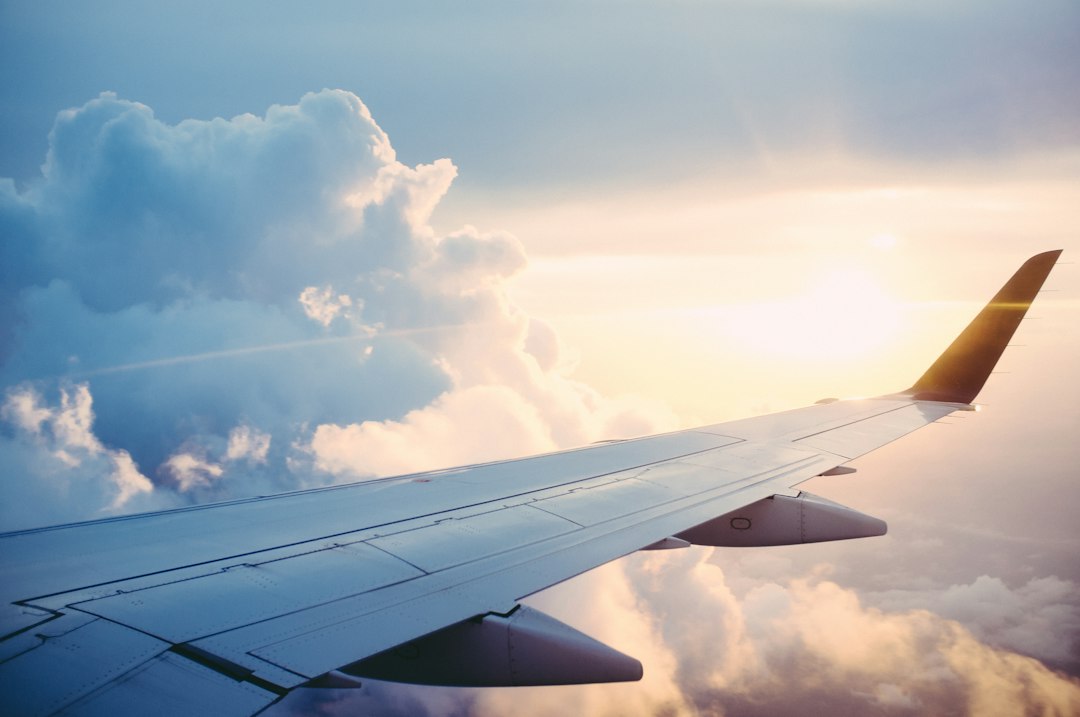
Photo by Brett Jordan on Unsplash
The hardest part of a long flight is not just sitting still. It is the strange combination of dry air, altered sleep cues, noise, bright screens, stillness, salty food, and mild cabin pressure changes that make your body feel older than it is. Even before you notice thirst, the skin around your nose and lips starts drying out. Your ankles may swell. Your eyes can feel scratchy after two movies. The seat itself is only part of the problem.
On a first long haul flight, people often assume they need expensive gadgets to survive. What they usually need instead is a more accurate picture of what feels bad in the air. The cabin is quiet in a deceptive way: a steady engine hum, rolling carts, tray tables clicking shut, and seatback screens flickering in the dark all keep your brain more alert than you think. Add cabin pressure and a cramped position, and the body reads the whole experience as low-grade stress.
That is why economy class comfort starts long before takeoff. You are managing circulation, hydration, body temperature, digestion, light exposure, and simple mental friction. Once you understand that, your first long haul flight becomes much easier to plan for.
Book the calmest trip, not just the cheapest seat
Photo by Julia Sabiniarz on Unsplash
The cheapest itinerary can be the most exhausting one. A low fare that includes a tight connection, a last-row middle seat, and a 6 a.m. departure from an airport two hours away is not a bargain if you arrive drained on day one. When booking a first long haul flight, choose the trip that reduces friction, not just the one that reduces price.
Start with route design. Nonstop is usually worth paying a little more for on flights above eight hours, especially if you get anxious, travel solo, or know you do not bounce back quickly. If a connection saves serious money, make it generous. Ninety minutes sounds fine on paper until your first leg lands late, your next gate is in another terminal, and your bottle refill and bathroom break disappear. A sensible airport layover is part of comfort, not wasted time.
Then obsess a little over seat selection. A good seat can buy you sleep, fewer interruptions, less turbulence, and easier bathroom access. A bad seat can give you cold drafts, queue noise, and a seatback that barely reclines.
| Goal | Best seat choice | Why it helps | Trade-off |
|---|---|---|---|
| Best chance of sleep | Window seat, away from galley and toilets | Wall support, fewer interruptions | Harder bathroom access |
| Easy movement | Aisle seat near the wing | Stand up without climbing over anyone | More bumps from passing carts |
| Least turbulence | Rows near or just over the wing | Smoother ride sensation | Less scenic views |
| Extra legroom | Exit row or bulkhead | More knee space | May cost more, fixed armrests possible |
| Quietest zone | Front half of economy, not by bassinets | Less engine and galley traffic | Can be pricier on some airlines |
A few booking rules make a huge difference on a first long haul flight:
- Prioritize flights on wide-body aircraft when possible. Even small differences in cabin width and lavatory spacing matter.
- Avoid the last rows of a cabin section if you are sensitive to noise, smells, or limited recline.
- If you want real economy class comfort, pay for seat selection early if the price is reasonable. It is often a better value than buying random airport food later.
- Night flights work well if you can sleep sitting up. Day flights are easier if you never sleep on planes and want to arrive upright and functional.
- Build comfort extras into your budget from the start. A seat fee, lounge shower, or airport hotel can be cheaper than losing your first travel day. If you tend to undercount those costs, Travel Budget Categories List for 2026: Stop Underpricing Trips is a useful reality check.
Build an economy class comfort kit that earns its space
A bloated carry-on makes every airport moment worse, but a smart personal item can rescue a first long haul flight. The trick is not packing more. It is packing the few things that solve the most common in-air problems: thirst, dryness, cold, boredom, awkward sleep, low battery, and grim airport lighting.
Think of your comfort kit like a backstage crew. If you do not notice it, it is working. The best items are soft, light, refillable, and immediately reachable when the cabin lights dim and the meal trays start rattling down the aisle. You do not want to stand up and dig through the overhead bin every time your lips feel like paper.
For real economy class comfort, pack your kit in a separate pouch or packing cube that slides straight into the seat pocket after takeoff. That way your essentials stay with you even if boarding was chaotic.
My personal item checklist for a first long haul flight looks like this:
- Empty water bottle to fill after security
- Electrolyte tablets or powder for better in-flight hydration
- Neck pillow that actually supports your jaw, not just your neck
- Soft eye mask with no pressure on the eyelids
- Earplugs or noise-canceling headphones
- Compression socks, ideally put on before leaving for the airport
- Lip balm, rich hand cream, and a small face moisturizer
- Saline nasal spray and lubricating eye drops for dry cabins
- Toothbrush, mini toothpaste, and deodorant wipe for the halfway reset
- A warm layer such as a zip hoodie or light merino sweater
- A second pair of socks if your feet run cold
- A charging cable plus a charged power bank
- Downloaded entertainment in at least two formats, such as one film and one podcast playlist
- Pen for forms, baggage tag fixes, and the things airports still somehow make analog
- Simple snacks: bananas, oat bars, nuts, crackers, or a sandwich that will not leak
A note on clothing: the fantasy airport outfit is rarely the right flight outfit. You want breathable fabric, no constricting waistband, and shoes that can handle swollen feet. The cabin can swing from chilly blue light to warm meal-service air in an hour, so layers matter more than thickness. That is the quiet backbone of economy class comfort.
Use the airport to get ahead of the flight
Most people treat the airport as dead time to endure. That is a mistake. The airport is where you can solve half the comfort problems of a first long haul flight before the seatbelt sign even turns off. A rushed, dehydrated, over-caffeinated boarding is a rough beginning to a ten-hour stretch in one seat.
Arrive early enough that you are not panting at the gate with your backpack half open and your nerves already fried. For most international departures, that means around three hours before departure, more if the airport is huge or you need document checks. Once you are inside, move with purpose: fill your bottle, use the bathroom, buy one or two familiar snacks, and confirm your gate before the frantic final call cycle starts.
This is also the moment to centralize your details. If your confirmations live across screenshots, emails, and memory, gather them in one place before you leave home. I usually keep boarding passes, airport hotel notes, and connection times together in TravelDeck so I am not hunting for them at the gate.
A simple pre-boarding routine for a first long haul flight:
- Refill your bottle after security and start in-flight hydration before boarding, not after the first drink service
- Eat a balanced meal 60 to 90 minutes before departure, not a giant salty feast at the gate
- Skip the third coffee; it often feels clever on the ground and miserable in the cabin
- Walk 10 to 20 minutes before boarding to wake up circulation
- Use the restroom just before lining up at the gate
- Put on compression socks before the swelling starts
- Set your watch and phone to destination time once you board
- Download or double-check offline entertainment and maps on airport Wi-Fi
Solo travelers often worry that a first long haul flight feels more intimidating without company. In practice, it often feels easier because you control the pace. If you need a little confidence boost for handling airports and transitions alone, Travel Alone With Confidence in 2026: Safer, Smarter Days is worth reading before you go.
Sleep on the plane without gambling on magic products
People love sleep hacks because they sound dramatic, but plane sleep is rarely about one miracle item. On a first long haul flight, sleep usually depends on timing, posture, and sensory control. If the cabin is bright, your chin keeps dropping, your feet are cold, and you ate too heavily, even the fanciest neck pillow will not save you.
Start with a realistic goal. On an overnight eastbound flight, any sleep helps. On a daytime flight, even a 45-minute doze can make the last third less brutal. But do not force sleep the minute you sit down if it is still daytime at your destination and you want to arrive ready for dinner. Comfort is not just about sleeping on board. It is about landing at a usable body clock.
Your sleep setup should reduce light, noise, neck strain, and decision fatigue. Once the meal service is done, turn the seat area into a tiny routine rather than waiting until you are already exhausted and irritated.
A practical sleep routine for a first long haul flight:
- Use the pillow to support the front or side of your jaw, not just the back of your neck
- Put on socks or loosen shoes before your feet swell further
- Lower screen brightness well before trying to sleep
- Use an eye mask and headphones even if you are not listening to anything
- Keep the seatbelt visible over your blanket so crew do not need to wake you during turbulence checks
- If you recline, do it gently and early, not abruptly after your neighbor has opened a laptop
- If you cannot sleep after 20 to 30 minutes, stop forcing it; switch to an audiobook or calm playlist and try again later
Food matters here. Heavy sauces, too much alcohol, and late caffeine can make your body tired but not sleepy. That floating, flushed, restless feeling is not rest. It is discomfort wearing a disguise. If you are sensitive to jet lag, align food and sleep with destination time as much as you reasonably can, without turning the whole trip into a lab experiment.
In-flight hydration, food, and cabin pressure rules
If there is one thing that improves nearly every first long haul flight, it is better in-flight hydration. Not aggressive chugging, not heroic gallon goals, just steady water intake from gate to landing. Dry air plus cabin pressure changes make dehydration feel sneaky. You may notice it first as a headache, a dry throat, puffy fingers, or sudden fatigue.
The smell of airline meals can trick you into eating whatever arrives, whenever it arrives, but comfort eating in the air often backfires. Salty food, fizzy drinks, and too much alcohol can make your stomach feel inflated and your rings feel tighter before the second movie begins. Think light, simple, and repeatable. Your body is already coping with cabin pressure and a shifted clock. It does not need a food challenge too.
For strong in-flight hydration and calmer digestion:
- Drink water regularly in small amounts instead of forgetting for four hours and then catching up
- Use electrolytes once on flights longer than eight hours, especially if you boarded already tired or dehydrated
- Limit alcohol to one drink at most if sleep and arrival energy matter to you
- Treat coffee as a timing tool, not a default beverage
- Choose lighter meals with protein, rice, oats, yogurt, fruit, broth, or eggs when available
- Avoid huge servings of beans, very greasy food, or carbonated drinks if bloating makes you miserable
- Chew gum or swallow during ascent and descent if your ears struggle with cabin pressure
- Use moisturizer, lip balm, nasal spray, and eye drops before you feel desperate
This is the section where many travelers discover that economy class comfort is often about moisture management. Glamorous? Not remotely. Effective? Completely. Hydrated skin, lubricated eyes, and a bottle within reach can make the cabin feel far less hostile.
Move often enough that your body still feels like yours
The ugliest moment on a first long haul flight often arrives when you stand up after sitting too long and your knees, lower back, and ankles all complain at once. Immobility is one of the main reasons people land feeling battered. A comfortable flight is not a motionless flight. It is a flight with small, repeated movement.
You do not need an elaborate stretching performance in the galley. You need frequency. Tiny movements done often beat one dramatic walk done nine hours in. Flex your ankles, tighten and release calf muscles, roll the shoulders, and stand up when the aisle clears. If your rowmates are asleep, do what you can in the seat and get up at the next natural break.
A circulation routine for a first long haul flight:
- Do 20 ankle circles each side every hour
- Raise heels and then toes while seated to activate calves
- Stand up at least every two to three hours on flights above eight hours
- Walk to the far restroom instead of the nearest one once or twice if the sign is off
- Stretch hip flexors and calves near the galley only if you are not blocking staff
- Wear graduated compression socks on flights over four hours, especially if you are prone to swelling
- If you have a history of clotting issues, recent surgery, pregnancy, or other medical risk factors, ask your clinician before flying long-haul
This routine supports both economy class comfort and a better arrival. The goal is not to feel athletic. The goal is to step off the plane without that heavy, swollen, slightly unreal sensation that makes immigration lines feel twice as long.
The social side of comfort: light, noise, armrests, and bathroom timing
A surprising amount of flight comfort has nothing to do with your body and everything to do with the soft diplomacy of sharing a small space. On a first long haul flight, people are often so worried about their own discomfort that they forget everyone else is improvising too. A little timing and courtesy protects your peace as much as theirs.
Cabins at night are sensory patchworks: one person is watching an action film at full brightness, another is rustling a duty-free bag, a child is half asleep, and somebody near row 42 has decided this is the perfect time to stand in the aisle and stretch dramatically. You cannot control the whole cabin, but you can reduce conflict by being the passenger who moves predictably and asks clearly.
A few rules make shared space gentler:
- If you are in the window seat, ask to get out before the meal carts lock the aisle
- If you are in the aisle, expect to stand up without making it theatrical
- Keep your screen dim at night and your headphones truly private
- Avoid strong perfume before departure; dry cabin air amplifies everything
- Recline slowly and return upright for meals without being asked
- Keep one armrest strategy in mind: window gets the wall, aisle gets aisle freedom, middle usually deserves both inner armrests
- Pack tissues and use the lavatory before the queue forms after each service round
This kind of cabin etiquette matters everywhere, and it overlaps with broader travel manners once you land. If you like arriving a little more socially fluent, International Travel Etiquette Tips for 2026 That Matter pairs well with a first long haul flight.
How to get there
A comfortable long-haul trip starts with a calm journey to the airport. Leaving home too late, paying for a frantic taxi in rush hour, or arriving hungry and stressed is the fastest way to sabotage a first long haul flight. If you are departing from a big international hub, city-center rail usually beats driving for speed and predictability.
The exact transfer matters because long-haul check-in often includes passport checks, stricter baggage deadlines, and longer queues. Give yourself enough buffer that a delayed train or traffic jam does not spill straight into boarding stress. If you have heavy luggage or an early departure, an airport hotel the night before can be worth every cent.
| Airport | Best city-center option | Time | Typical one-way cost | Official link |
|---|---|---|---|---|
| London Heathrow, LHR | Heathrow Express from Paddington | 15 min | around GBP 25 to 28 | heathrowexpress.com |
| New York JFK, JFK | LIRR plus AirTrain from Manhattan | 35 to 50 min | around USD 13.50 to 18.50 | jfkairport.com/to-from-airport/air-train |
| Tokyo Haneda, HND | Keikyu Line from Shinagawa or Monorail from Hamamatsucho | 13 to 25 min | around JPY 330 to 520 | tokyo-haneda.com/en/access |
| Singapore Changi, SIN | MRT from City Hall area | 40 to 45 min | around SGD 2 to 3 | changiairport.com |
| Doha Hamad, DOH | Doha Metro Red Line | 25 to 35 min | QAR 2 | dohahamadairport.com |
If you are driving, aim to park or drop off at least three hours before departure for international flights. If you are using public transport, add one full extra service cycle as a buffer. On a first long haul flight, that small margin feels luxurious.
Things to do
If you have time before departure or a deliberate airport layover, use it. Airports can be sterile, over-air-conditioned, and fluorescent, but a few smart actions can change how the next ten hours feel. Think of the terminal as a preparation zone, not a holding pen.
The best pre-flight activities are the ones that reduce future discomfort. You are not trying to entertain yourself endlessly. You are setting up better circulation, better digestion, cleaner sleep timing, and less sensory overload once the doors close.
Here are the most useful things to do before or during a long connection:
- Take a real walk. In Singapore, a lap through Jewel Changi gives you actual distance, greenery, and brighter natural light than most terminals. At Haneda, the shopping and open spaces around Haneda Airport Garden are far better for your legs than circling the gate.
- Shower if your layover is longer than four hours. Plaza Premium lounges in major hubs such as Singapore, London, and Hong Kong often sell shower access even if you are not flying business class. A warm rinse resets a shocking amount of fatigue.
- Eat one calm, hot meal. A bowl of noodles, congee, rice with grilled chicken, or miso soup usually sits better than fast food and fries before boarding.
- Refill your water bottle and buy one backup snack. This is the foundation of good in-flight hydration and it prevents desperate snack purchases at 2 a.m. local time.
- Change into compression socks or fresh socks. Feet swell early, and a sock swap before boarding can feel better than it sounds.
- Do a quiet body reset. Wash your face, moisturize, brush your teeth, and reapply lip balm. Long travel feels shorter when you keep restarting yourself in small ways.
- If your connection is long enough, nap properly. A transit hotel room for four to six hours beats trying to fold yourself over three airport chairs.
A smart airport layover is not glamorous, but it can save your arrival day. That is especially true on a first long haul flight, when you are still learning how your body behaves in transit.
Where to stay
Airport hotels used to sound like a sad compromise. Now they are often the sharpest comfort purchase on a long itinerary, especially before an early departure or during a long connection. The best ones turn a punishing schedule into a manageable one: shower, sleep, reset, and re-board like a functioning adult.
Prices vary wildly by airport and season, but the value is simple. If a hotel gives you six hours of sleep, a real bed, and one decent meal before a 14-hour sector, it can outperform many pricier comfort upgrades in the air.
Budget
- Ambassador Transit Hotel, Singapore Changi – Often available in blocks of around 6 hours, usually from about SGD 120 to 170. Ideal for airside rest without clearing immigration.
- YOTELAIR Paris Charles de Gaulle – Compact cabins inside Terminal 2E area, usually around EUR 110 to 160 a night. Best for solo travelers who care more about sleep than space.
- ibis budget Sydney Airport – Around AUD 140 to 190 per night. Simple, reliable, and practical for very early international departures.
Mid-range
- Hampton by Hilton London Heathrow – Usually about GBP 110 to 170 per night, with breakfast often included. A solid choice before morning departures from LHR.
- Holiday Inn Express Amsterdam Schiphol – Roughly EUR 130 to 190, usually with shuttle access. Good value if you want predictability over style.
- Crowne Plaza Changi Airport – Typically SGD 260 to 380. More polished than budget options and one of the easiest airport hotel experiences in Asia.
Luxury
- TWA Hotel, New York JFK – Usually USD 280 to 450. A rare airport hotel that feels like part design museum, part recovery room, especially good before or after transatlantic flights.
- Sofitel London Heathrow – Around GBP 180 to 280 with direct terminal access. Quiet rooms, proper bedding, and minimal transfer stress.
- Hilton Munich Airport – Usually EUR 190 to 320. A classic choice for long layovers with spa access and genuinely good sound insulation.
For a first long haul flight, booking an airport hotel is not overkill if your departure is very early, your connection is overnight, or you know sleep loss ruins your first day.
Where to eat
Food before a long flight should feel comforting but not heavy. The sweet spot is warm, familiar, moderately salty, and easy to digest. In practical terms, that means rice bowls, soup, grilled protein, oats, eggs, yogurt, toast, noodles, or a light sandwich. Giant burgers and celebratory airport beers can wait until a shorter route.
The smell of frying oil in a terminal can be persuasive when you are excited and under-rested, but your stomach will feel every impulsive decision more intensely in the air. Think about the next eight hours, not the next eight minutes.
A few dependable airport eating options for long-haul travelers:
- Leon at Heathrow – Usually around GBP 8 to 14 for porridge, grilled chicken boxes, rice pots, wraps, and salads. A safe choice if you want lighter fuel before boarding.
- Food Republic at Jewel Changi – Around SGD 8 to 15 for chicken rice, noodle soup, congee, and other easy-to-digest hawker-style meals. If you love food-focused trips, this is also a reminder that eating well on the road starts before arrival, not only after it.
- Edo-Koji and Haneda Airport Garden at Haneda – Around JPY 900 to 1,800 for soba, udon, donburi, and miso-based meals that feel gentle before a long sector.
- Jones the Grocer at Doha Hamad – About QAR 40 to 90 for eggs, soups, salads, and grain bowls. Better for comfort than grabbing sweets and chips at the gate.
- Airport lounge breakfast or soup bars – Often the best move if you already have access: simple food, fewer lines, and a quieter pace.
If you are packing snacks, favor foods that will not smell, melt, or crumble everywhere. Nuts, oat bars, crackers, hard cheese, apples, and plain sandwiches travel better than anything sticky or aggressively seasoned.
Practical tips
The most comfortable long-haul travelers are rarely the most experienced-looking ones. They are the ones who make boring, useful choices early. That matters even more on a first long haul flight, when every small irritation feels louder.
Season also changes the experience. Peak holiday windows mean fuller flights, longer security queues, and fewer chances of empty neighboring seats. If you have flexibility, shoulder-season departures are usually kinder on the nerves and sometimes cheaper too.
A practical checklist for a first long haul flight:
- Best months to travel if you can choose: February to March and October to November often mean lighter crowds than late December, Lunar New Year peaks, and midsummer school-holiday weekends.
- What to pack on your body: breathable trousers, T-shirt, warm layer, compression socks, and shoes that loosen easily.
- What to pack in your seat pouch: bottle, lip balm, eye drops, charger, headphones, tissues, snack, pen.
- Safety: keep passports, medications, and one bank card on your person, not only in the overhead bin.
- Connectivity: download boarding passes, maps, and hotel details before leaving the airport Wi-Fi. Airport signal and roaming are not always dependable after landing.
- Customs and arrival cards: carry a pen and double-check visa or entry requirements before departure, especially on routes with late-night arrivals when help desks are sparse.
- Liquids: follow the airport rules on carry-on liquids. In the US, the standard guidance remains the TSA liquids rule.
- Medication: keep essentials in original packaging when possible and carry enough for delays.
- Noise management: brown noise, soft instrumental playlists, or podcasts often work better than bright films if you want to rest.
- Mindset: do not judge the flight hour by hour. Break it into chapters: takeoff, meal, movie, sleep, walk, snack, arrival.
One last comfort rule: do not chase perfection. Your first long haul flight does not need to feel luxurious. It only needs to feel controlled.
FAQ
What is the best seat for a first long haul flight?
For most people, the best seat on a first long haul flight is a window seat near the wing and away from galleys or toilets. You get a wall to lean on, fewer interruptions, and a smoother-feeling ride. Choose an aisle instead if you know you will want to get up often for stretching or bathroom breaks.
How much water should I drink on a long flight?
There is no perfect universal number, but steady in-flight hydration works better than big bursts. Start at the gate, drink regularly through the flight, and add electrolytes once on very long sectors or if you boarded tired. If your lips are dry, your rings feel tight, and your urine is very dark, you are behind.
Are compression socks really worth it?
Yes, especially on a first long haul flight when you do not yet know how much your legs and feet will swell. Graduated knee-length socks can improve comfort and circulation on flights above four hours. Put them on before you head to the airport, not after boarding.
Should I try to sleep on an overnight flight if I never sleep well on planes?
Yes, but keep expectations low. On a first long haul flight, even broken sleep helps. Build a dark, quiet setup, recline early, and do not force it if you are wide awake; resting with eyes closed and a calm audio track still reduces the stress of the journey.
Is an airport lounge worth paying for on a long-haul trip?
Sometimes. A lounge is most worth paying for if your airport layover is long, the terminal is crowded, or you badly need a shower, quiet seat, or more reliable food before boarding. If you only have 45 minutes and a decent gate area, save the money for seat selection or an airport hotel instead.
A softer landing
A good long-haul experience is rarely about luxury and almost always about sequence. The right seat selection, better in-flight hydration, a realistic sleep plan, and a smart airport layover strategy can turn a draining trip into a manageable one. That is the real secret of economy class comfort.
So if you are facing your first long haul flight, do not think about surviving it heroically. Think about smoothing it out. Pack for dryness, move before stiffness, eat for steadiness, and give yourself time on the ground so you do not pay for chaos in the air. When you land feeling mostly like yourself, the trip begins in the right place.