10 Days in Morocco in 2026: The Ultimate Itinerary Morocco looks compact on a map, but first-timers usually discover the truth on day two: distances are bigger, roads are slower, and the country changes mood every few hours. That is exactly why 10 days in Morocco is the sweet spot. It is long enough for Marrakech, the Atlas, the Sahara, Fes, and Chefchaouen, but still short enough to fit a real holiday without turning every day into a race. This 10 days in Morocco route is built for travelers who want one trip that actually feels like Morocco: tiled courtyards and spice-heavy medinas, cedar forests and mountain passes, sunset dunes and blue-painted lanes. If you like seeing the whole route before you commit to it, sketching the stops in TravelDeck helps make the drive times and overnight rhythm instantly clearer. If you are arriving tired from a long-haul flight, read Recover From Jet Lag in 2026: A Smarter First 48 Hours before day one. And because station hustlers and taxi confusion can throw off an otherwise smooth trip, keep Travel Scam Checklist for 2026: From Booking to Taxi handy for the first 24 hours. ## Why 10 days is the right length for a Morocco itinerary If you only have 7 days, you can do Marrakech and the desert well, or the northern cities well, but not both without brutal drive days. If you have 14 days, you can slow down and add Essaouira, Tangier, or an extra desert night. For most first visits, though, 10 days in Morocco gives you the best balance between iconic sights and a pace you can still enjoy. This route starts in Marrakech and ends in Casablanca. That open-jaw plan saves you from retracing the entire country. It also keeps the hardest driving in the middle, when you are already adjusted to the rhythm of Morocco. ## How to get there For this Morocco itinerary, the cleanest flight plan is into Marrakech Menara Airport (RAK) and out of Casablanca Mohammed V Airport (CMN). Fes Saiss Airport (FEZ) also works if you want to reverse the route. Airport information is easiest to check on the official ONDA airport website. From Europe, nonstop flights into Marrakech or Casablanca are often the cheapest, usually around 80 to 250 EUR return in shoulder season if booked early. From North America, expect to connect through Casablanca or a major European hub. If you are already in southern Spain, ferries into Tangier are another option, but they make more sense for a north-first itinerary. For moving between major cities, Morocco's official rail network ONCF is reliable in the north and center. For this route, though, the southern section from Marrakech to Merzouga works best with a rental car, private driver, or organized transfer. Driving times matter more than pure distance here. ## Day 1: Marrakech Medina, courtyards and first calls to prayer Marrakech is not a city that introduces itself quietly. It hits with scooters, citrus peels, grilled meat smoke, rose-pink walls, and the sudden coolness of a riad courtyard after a hot lane. On the first day of 10 days in Morocco, resist the urge to do everything. The goal is to step into the old city slowly enough to enjoy it. Base yourself inside the Medina, ideally near Mouassine or the Kasbah, so you can walk early before the alleys get busy. Start with places that show Marrakech at its most refined rather than its most chaotic: carved cedar ceilings, zellij tilework, and gardens built for shade. - Morning, 9:00-12:30: Visit Bahia Palace, Mellah (around 100 MAD), then walk 10 minutes to the Saadian Tombs, Kasbah (around 100 MAD). Add a mint tea stop near Place des Ferblantiers.
- Afternoon, 14:00-17:30: Head to Ben Youssef Madrasa, Medina (around 50 MAD) and Le Jardin Secret, Mouassine (around 100 MAD). Wander the lanes around Rahba Kedima square for spice shops and woven baskets.
- Evening, 18:30-21:30: Watch sunset near Koutoubia Mosque from the outside, then eat at Jemaa el-Fnaa, Medina. Budget 40-80 MAD for street food or 120-200 MAD at a terrace restaurant.
- Insider tip: In Jemaa el-Fnaa, walk one full loop before choosing a stall. The first price offered is rarely the best one, and the busiest food stalls usually turn over ingredients fastest. ## Day 2: Marrakech gardens, design, and a better souk rhythm Your second day in Marrakech should feel different from the first. Leave the densest lanes for a few hours and see how the city opens up in Gueliz and the garden quarter. The contrast is part of the pleasure: from donkey carts and shadowy passages to cactus gardens, Art Deco facades, and wide boulevards. This is also the day to shop with more confidence. Once you have seen both the polished side of the city and the traditional souks, the Medina starts making sense. For solo travelers, this is often the point where Marrakech becomes exciting instead of overwhelming; Solo Travel Safety Guide 2026: Room, Route, Routine is a smart companion if you are navigating the city alone. - Morning, 8:30-11:30: Visit Jardin Majorelle, Gueliz and, if it interests you, the attached museums. Expect around 170 MAD for the main combined ticket. Official timings change seasonally on the Jardin Majorelle site.
- Afternoon, 12:30-16:30: Lunch in Gueliz, then taxi or walk back to the Medina for souk browsing around Souk Semmarine and Souk des Teinturiers. Budget 20-30 MAD for a short taxi ride and 100-400 MAD if you plan to buy small crafts.
- Evening, 17:30-21:00: Book a hammam in the Mouassine or Bab Doukkala area. A traditional scrub usually costs 150-300 MAD; more polished riad hammams run 400 MAD and up.
- Insider tip: Buy ceramics and lamps only after you have seen fixed-price boutiques in Gueliz or the Ensemble Artisanal. It gives you a realistic quality benchmark before bargaining in the souks. ## Day 3: Across the High Atlas to Ait Ben Haddou and Ouarzazate Day three is where your Morocco road trip truly begins. Leaving Marrakech, the traffic thins, the air cools, and the road climbs into the High Atlas. The pass at Tizi n'Tichka feels like a hinge in the country: red earth, sharp turns, roadside walnut sellers, then an entirely different light on the southern side of the mountains. Do not overload this day with too many stops. The point is to reach Ait Ben Haddou with enough daylight to walk the ksar, then sleep in Ouarzazate or just outside it. That keeps the next days ambitious but still rebuildable. - Morning, 8:00-12:30: Depart Marrakech Medina for Tizi n'Tichka Pass and Telouet Kasbah, Telouet village. Shared transfer seats usually cost 250-450 MAD per person; private drivers start around 900 MAD per car for the day.
- Afternoon, 13:30-17:30: Explore Ksar of Ait Ben Haddou, Ounila Valley. Entry is usually around 20-40 MAD for certain preserved sections and local guide services. The UNESCO overview is on the official Ait Ben Haddou page.
- Evening, 18:30-21:00: Continue 30 minutes to Ouarzazate and stay near Taourirt Kasbah or on the road toward the oasis. Dinner in a guesthouse is usually 120-180 MAD.
- Insider tip: Cross the dry riverbed bridge to photograph Ait Ben Haddou in late afternoon. The honey-colored walls look far flatter at midday. ## Day 4: Ouarzazate, Skoura, Todra Gorge, and the Dades Valley South of the Atlas, Morocco starts to stretch out horizontally. Palm groves appear where the land seems too dry to support them, kasbahs rise out of the dust, and villages cling to the edges of irrigated fields. This is one of the most scenic days of the trip, even though much of it happens from the road. Rather than pushing all the way to the desert, break the journey in the Dades region. That pause gives you a better Sahara entry tomorrow and lets you see the canyons at the right time, when the stone shifts from peach to rust to purple. - Morning, 8:30-11:30: Visit Kasbah Taourirt, Ouarzazate center (around 20-40 MAD) or go straight to Kasbah Amridil, Skoura Oasis (around 20-30 MAD). Coffee stops in Skoura palm grove are inexpensive, around 15-25 MAD.
- Afternoon, 13:30-17:30: Continue through Kalaat M'Gouna and Tinghir to Todra Gorge, Tinghir Province. Short local walks are free; a riverside lunch is usually 80-140 MAD.
- Evening, 18:00-21:00: Sleep in Boumalne Dades or deeper in the Dades Valley. Expect 250-500 MAD for budget guesthouses, 700-1,200 MAD for boutique stays with dinner.
- Insider tip: If you are prone to motion sickness, keep it accessible today. The switchbacks near the Dades viewpoints are spectacular and very winding. ## Day 5: Dades to Merzouga and a night in the Sahara The approach to Merzouga is one of those travel transitions you feel physically. Rock gives way to flatter plains, towns become sparser, and the palette strips down to beige, copper, and blue sky. By the time the dunes of Erg Chebbi rise behind the village, the trip has changed from city journey to desert journey. Aim to reach Merzouga by mid-afternoon. That gives you time to settle, leave your main luggage, and enter the dunes before sunset. One desert night is enough for a first-timer on 10 days in Morocco, but only if you arrive early enough to enjoy it rather than merely sleep there. - Morning, 9:00-12:30: Drive from Boumalne Dades via Tinjdad and Erfoud. Stop in Rissani for the market area if it is market day. Snack and tea budget: 30-60 MAD.
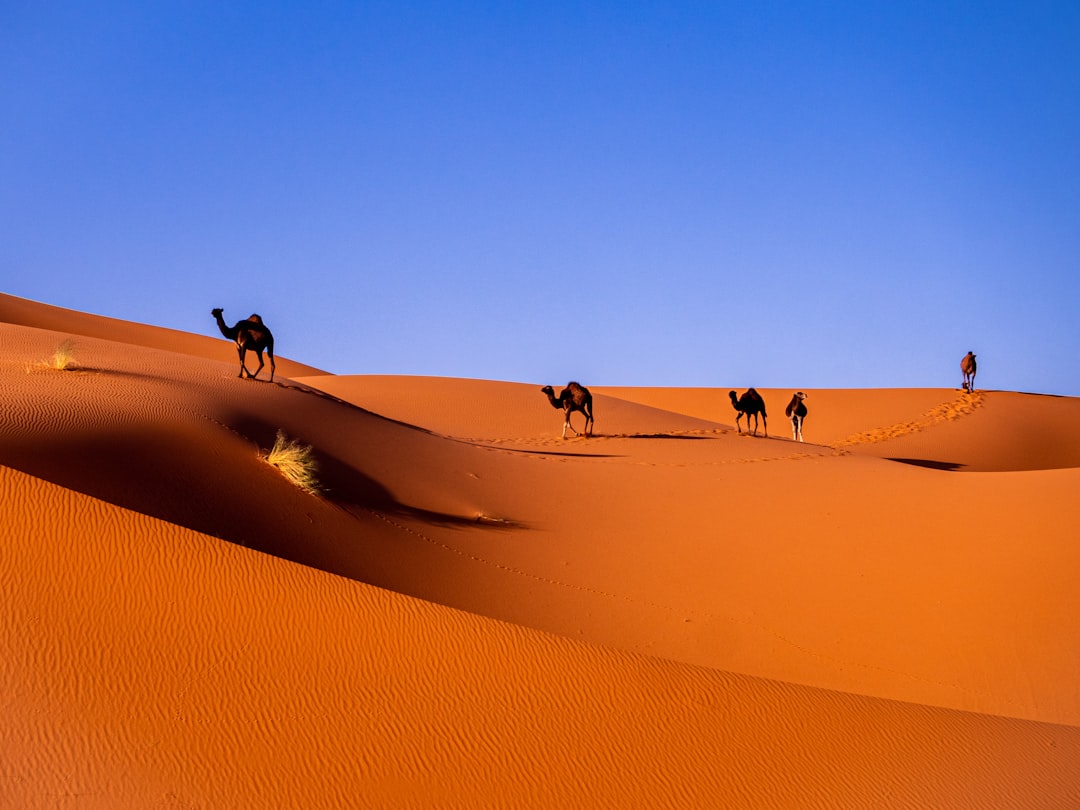
- Afternoon, 15:00-18:30: Check into a camp or auberge in Merzouga village, then transfer by camel or 4x4 into Erg Chebbi dunes. Desert camp packages with dinner and breakfast usually run 500-1,200 MAD per person depending on comfort.
- Evening, 19:00-22:00: Sunset from the dunes, dinner under canvas, and stargazing away from the camp lights. Sandboard rental is often included or costs around 50 MAD.
- Insider tip: Pack a day bag with water, a warm layer, sunglasses, sunscreen, and a power bank. Your main suitcase should stay at the Merzouga base lodge. ## Day 6: Sunrise in Merzouga, then the long road to Fes Wake early. Sahara sunrise is quiet rather than dramatic at first: pale light, cold air, footsteps muffled by sand, and then a sudden copper glow across the ridge line. It is one of the clearest arguments for putting the desert into a Morocco itinerary 10 days long. This is also the longest transfer day. Leave soon after breakfast and treat the drive as part of the experience, not dead time. The route north crosses Errachidia, the Ziz Valley, Midelt, cedar forest country near Azrou, and finally the cooler hill town of Ifrane before Fes. - Morning, 6:30-12:30: Sunrise walk in Erg Chebbi, breakfast, then departure from Merzouga. Stop at viewpoints over the Ziz Valley near Aoufous. Budget 20-40 MAD for coffee stops.
- Afternoon, 13:30-18:30: Lunch in Midelt (80-120 MAD), then continue via Azrou cedar forest and Ifrane center. Expect 7.5 to 9 hours total driving including stops.
- Evening, 19:30-21:30: Arrive in Fes el Bali or near Bab Boujloud. Keep dinner simple; after this drive, a riad meal for 120-180 MAD is ideal.
- Insider tip: Sit on the side of the vehicle with the best forward view if you get carsick. The mountain bends after Midelt are gentler than Atlas roads, but they still build up over hours. ## Day 7: Fes, the deep medieval maze Fes feels older, denser, and less performative than Marrakech. Its Medina is not built around one giant square but around a web of trades, mosques, workshops, and alleyways that seem to fold into one another. If Marrakech sparkles, Fes murmurs. This is the day to lean into history and accept that getting a little lost is part of the design. Start early and use a local guide if you dislike navigating intricate medinas. Fes rewards context: a carved doorway means more when you know it belongs to a centuries-old madrasa, and a leather tannery makes more sense when you see the streets that support it. - Morning, 9:00-12:30: Enter via Bab Boujloud, Fes el Bali and visit Bou Inania Madrasa (around 20 MAD) and Al Attarine Madrasa near Souk al Attarine (around 20 MAD).
- Afternoon, 13:30-17:30: Walk to Chouara Tanneries, Fes el Bali and continue to Place Seffarine and the University of Al Quaraouiyine exterior. Budget 20-60 MAD for small workshop tips and terrace views.
- Evening, 18:00-21:00: Sunset from Borj Nord viewpoint or the Marinid Tombs hill. Taxi from the Medina edge usually costs 20-40 MAD each way.
- Insider tip: In the tanneries, shopkeepers often hand out mint leaves to soften the smell. Take them, but do not feel obliged to buy anything afterward. ## Day 8: Chefchaouen, blue lanes and a slower pace After Fes, Chefchaouen feels almost improbably calm. The Rif mountain air is cooler, the Medina is smaller, and the city seems built for slow wandering rather than relentless discovery. That shift of tempo is why this stop works so well late in 10 days in Morocco. Travel early so you reach the blue city by lunchtime. Once there, do not overschedule it. Chefchaouen is best when you let the afternoon breathe: cats sleeping on staircases, laundry lines over alleys, and the low hum of conversation around Place Outa el Hammam. - Morning, 8:00-12:30: Bus or private transfer from Fes to Chefchaouen Medina. Bus tickets usually cost 80-120 MAD; private transfers cost more but save time.
- Afternoon, 13:30-17:30: Explore Place Outa el Hammam, the lanes off Rue Targui, and the small climb toward the Kasbah Museum (around 60 MAD if open with gardens and tower).
- Evening, 18:00-20:30: Walk to the Spanish Mosque viewpoint for sunset, around 30-40 minutes uphill from the Medina gate. Dinner around the square usually costs 80-160 MAD.
- Insider tip: Chefchaouen's blue looks best in soft light. For photos, walk the upper lanes around 8:00 or just before dusk, not in harsh midday sun. ## Day 9: Rabat, gardens, ocean air, and imperial calm Rabat rarely gets top billing in dream itineraries, which is exactly why it is such a good surprise. After the intensity of Marrakech and Fes, Morocco's capital feels ordered, coastal, and breathable. There are trams, broad avenues, clipped gardens, and an Atlantic wind that changes the whole texture of the trip. This is a good place to reset before the final departure city. The historic core is compact enough that you can see quite a lot in an afternoon without feeling rushed. - Morning, 8:00-12:30: Travel from Chefchaouen to Rabat Ville or Rabat Agdal area. Expect about 4.5 to 5.5 hours by road depending on transfers.
- Afternoon, 14:00-17:30: Visit the Kasbah of the Udayas, Rabat Medina, walk the Andalusian Gardens, then continue to Hassan Tower and the Mausoleum of Mohammed V. Most of these sites are free.
- Evening, 18:30-21:00: Dinner near Avenue Al Marsa or the medina gate. Seafood or grilled fish usually costs 120-220 MAD.
- Insider tip: Stay near Rabat Ville if you leave early tomorrow. It is more practical than sleeping deep inside the Medina for a one-night stop. ## Day 10: Casablanca, Hassan II Mosque, and departure Casablanca is not the most romantic city on this route, but it is a useful and worthwhile final note. It shows modern Morocco at scale: business districts, Atlantic boulevards, white facades, and one truly monumental landmark. If your flight is late enough, give the city half a day rather than treating it as a pure airport transfer. The essential stop is the Hassan II Mosque in the Sidi Mohammed Ben Abdallah boulevard area, perched above the Atlantic. After days of kasbahs and medinas, its size, geometry, and sea-edge setting feel almost cinematic. - Morning, 9:00-11:30: Train or drive from Rabat to Casablanca. The journey is roughly 1 to 1.5 hours. ONCF trains are frequent and usually cost around 40-80 MAD depending on class.
- Afternoon, 12:00-15:30: Join a visit to Hassan II Mosque, Casablanca. Guided entry is usually around 140 MAD. If time allows, stroll the Corniche in Ain Diab for a last ocean view.
- Evening, variable: Head to Mohammed V Airport. Allow extra time for traffic, especially on weekday afternoons.
| - Insider tip: If your flight leaves early, sleep near the Casa Voyageurs rail link or book an airport hotel. Casablanca traffic is the least charming part of this Morocco itinerary. ## Best time for a 10-day Morocco itinerary The best months for 10 days in Morocco are March to May and late September to November. You get warm city days, manageable desert temperatures, and clearer mountain roads. Summer is workable, but Marrakech and the Sahara can be punishingly hot. Winter is beautiful for cities and desert skies, yet nights in Merzouga can be near freezing. | Season | What it feels like | Best for | Watch out for | ||||
|---|---|---|---|---|---|---|---|---|
| March-May | Warm, green valleys, comfortable cities | First-time trips, desert nights, photography | Easter crowds, occasional rain in the north | |||||
| June-August | Very hot inland, cooler on the coast | If you can handle heat and start early | Marrakech and desert afternoons can be extreme | |||||
| September-November | Golden light, stable weather | Best overall balance for this route | Popular season, book early | |||||
| December-February | Crisp cities, cold desert nights, possible snow in the Atlas | Fewer crowds, dramatic light | Pack layers, allow weather flexibility | ## Estimated budget per person for 10 days in Morocco Morocco can be excellent value, but this route includes long overland sections, which raise the cost. The biggest variable is transport: trains and buses are cheap in the north, while the southern desert section becomes far easier with a driver or rental car. | Budget tier | Daily average | 10-day total | What that usually includes |
| Budget | 45-70 EUR | 450-700 EUR | Hostel or simple riad room, buses/shared transport, street food, one basic desert camp | |||||
| Mid-range | 90-150 EUR | 900-1,500 EUR | Good riads, mixed rail and private transfers, guided mosque or palace entries, comfortable desert camp | |||||
| Higher-end | 180-320 EUR | 1,800-3,200 EUR | Stylish riads, private driver, premium desert camp, upgraded dinners and top-located stays | A realistic mid-range split for 10 days in Morocco is roughly 300-450 EUR for stays, 250-450 EUR for transport, 180-300 EUR for food, and 80-150 EUR for entries and local guides. ## Where to stay on this Morocco itinerary The best stays in Morocco are rarely about international-style polish. They are about location, rooftop views, and whether the room gives you a calm place to land after noisy streets. On this route, choose riads or guesthouses close enough to walk, but not so central that every night is loud. - Marrakech: Stay in Mouassine, the Kasbah, or near Bab Doukkala. Budget 35-60 EUR, mid-range 70-140 EUR, luxury 180 EUR and up. |
- Merzouga: Stay one night in Merzouga village or directly in a camp inside Erg Chebbi. Standard camps start around 50 EUR; premium camps can exceed 150 EUR.
- Fes: Best areas are Bab Boujloud, Rcif, or a quiet lane inside Fes el Bali with porter service. Budget 30-50 EUR, mid-range 60-130 EUR, luxury 160 EUR and up.
- Chefchaouen: Choose a riad inside the Medina but close to one of the gates if you have luggage. Budget 30-50 EUR, mid-range 60-110 EUR.
- Rabat or Casablanca: Prioritize logistics. In Rabat, stay near Rabat Ville. In Casablanca, choose near Casa Voyageurs or the Corniche depending on your departure time. ## How to get around Morocco without wasting time Transport is the difference between a dream trip and a punishing one. In the north and center, trains are the easiest option. In the south, where this Morocco desert itinerary crosses mountain passes and valleys, road travel is unavoidable. - Best overall strategy: Use a car, driver, or organized transfer from Marrakech to Fes via the desert, then use trains for Rabat to Casablanca.
- Train sections: Best for Rabat-Casablanca and other major city links on the ONCF network.
- Bus sections: Good for Fes-Chefchaouen if you are keeping costs down.
- Self-drive: Best for independent travelers comfortable with long distances and mountain roads. Avoid driving after dark.
- Private driver: Often the least stressful choice for first-timers, especially for days 3 to 6.
- Petit taxis in cities: Cheap and practical for short hops; agree on the meter or fare before setting off if needed. ## What to eat along the route One of the quiet pleasures of 10 days in Morocco is how food changes from city to city. In Marrakech, you taste the theatrical side of Moroccan eating: charcoal smoke, snails, sweet mint tea, late dinners. In Fes, flavors feel deeper and more traditional. In the desert, meals are simpler but often more memorable because of the setting. - Marrakech Medina: Try tanjia, grilled brochettes, msemen, and orange juice around Jemaa el-Fnaa and Rahba Kedima.
- Ouarzazate and Dades: Order lamb or vegetable tagine, almond pastries, and roadside Berber omelets.
- Merzouga: Look for medfouna, often called Berber pizza, especially around Rissani and the desert edge.
- Fes: Try pastilla, harira, and slow-cooked lamb around Talaa Kebira and Place Seffarine.
- Chefchaouen: Goat cheese, tagines, and pastries near Place Outa el Hammam.
- Rabat and Casablanca: End with grilled fish, sardines, and seafood by the ocean. ## Practical tips for a smoother Morocco trip Morocco rewards preparation more than overplanning. A few small choices matter a lot: light layers for the desert, shoes that can handle polished riad floors and rough lanes, and enough cash for taxis, tips, and smaller cafes. - Carry cash in Moroccan dirham for markets, taxis, and smaller guesthouses.
- Dress modestly in medinas and rural areas, especially outside Marrakech.
- Pack one warm layer for Merzouga, even in spring and autumn.
- Download boarding passes and hotel contacts before long transfer days.
- Ask before photographing people, especially in markets.
- If Ramadan overlaps with your trip, expect some daytime cafes outside tourist centers to be quieter or closed. ## FAQ about 10 days in Morocco Is 10 days enough for Morocco? Yes. For a first trip, 10 days in Morocco is enough to combine Marrakech, the Atlas, the Sahara, Fes, Chefchaouen, Rabat, and Casablanca if you accept two long transfer days. Is this Morocco itinerary too rushed? It is full but realistic. The key is the open-jaw route, two nights in Marrakech, and one clear desert night rather than trying to add the coast as well. Can you do this Morocco itinerary by train only? No, not efficiently. Trains work well in the north and center, but the Atlas, Dades, and Merzouga section requires road transport. How much money do I need for 10 days in Morocco? A comfortable mid-range budget is usually 900 to 1,500 EUR per person excluding international flights, depending on room category and transport style. Is Morocco safe for first-time visitors? Generally yes, especially on a well-planned route. The main challenges are navigation, persistent touts in busy medinas, and long road days rather than serious danger. If you give Morocco ten days and respect the distances, the country stops feeling like a checklist and starts unfolding like a proper journey.
---