Hanoi is one of those capitals where one extra day changes everything. With only 24 or 48 hours, you mostly survive the traffic, humidity, and sensory overload; with 3 days in Hanoi, the city finally starts to make sense. That is why this itinerary is built around three full days on the ground, not a rushed arrival day and a half-lost departure morning.
If you are planning your route in TravelDeck, treat Hanoi as a city of clusters rather than a city of landmarks. The smartest 3 days in Hanoi keeps each day tight by neighborhood: Hoàn Kiếm and the Old Quarter first, Ba Đình and the history sites second, then West Lake and local daily life on the third. That rhythm gives you the highlights, the food, and enough breathing room to actually enjoy them.
Why 3 days is the right answer to how many days in Hanoi
Photo by Ryan Le on Unsplash
For most first-time visitors, three full days is the sweet spot. It gives you one day to absorb the Old Quarter, one day for Hanoi’s heavyweight historical sights, and one day for the calmer, more local side of the city around Tây Hồ and Trúc Bạch. Two days can work, but you will be making hard cuts. Four days only becomes more rewarding if you add a day trip such as Ninh Bình.
Hanoi also punishes over-ambitious planning. The distance between sights can look small on a map, but slow crossings, packed sidewalks, heat, and traffic eat time. A realistic Hanoi first-timer itinerary needs margins for coffee stops, weather, and the simple fact that this is a city best felt from a low plastic stool with something hot, grilled, or caffeinated in front of you.
This route works best if you:
- arrive the night before Day 1 or very early on Day 1
- stay in or near Hoàn Kiếm District
- travel with carry-on style flexibility rather than a packed, rigid schedule
- keep one attraction each afternoon as optional in case of rain or heat
Day 1: Old Quarter, Hoan Kiem Lake, and the city’s first jolt
Lan Anh Viện trưởng
Your first day should not be museum-heavy. Hanoi is loud, fragrant, beautiful, and mildly chaotic, and the best introduction is to let the center of the city wash over you before you start decoding its history. The streets around Hoàn Kiếm Lake and the Old Quarter are where Hanoi feels most immediate: scooter horns, steam rising from broth pots, silk shops with half-open shutters, women balancing fruit baskets, and tiny cafés tucked up stairwells.
This is also the most walkable day of the trip. Nearly everything is clustered inside Hoàn Kiếm District, which means you can use your energy on exploring rather than sitting in traffic. Keep your pace gentle, especially if you land in the hotter months.
Morning
Start with one of Hanoi’s iconic rituals: egg coffee. Then step straight into the spiritual and geographic center of the city around Hoàn Kiếm Lake. Morning light is softer, the sidewalks are less crowded, and the lake area feels more local before tour groups and evening crowds arrive.
- 07:30 - Egg coffee at Café Giảng, 39 Nguyễn Hữu Huân, Hoàn Kiếm. Expect 35,000 to 45,000 VND.
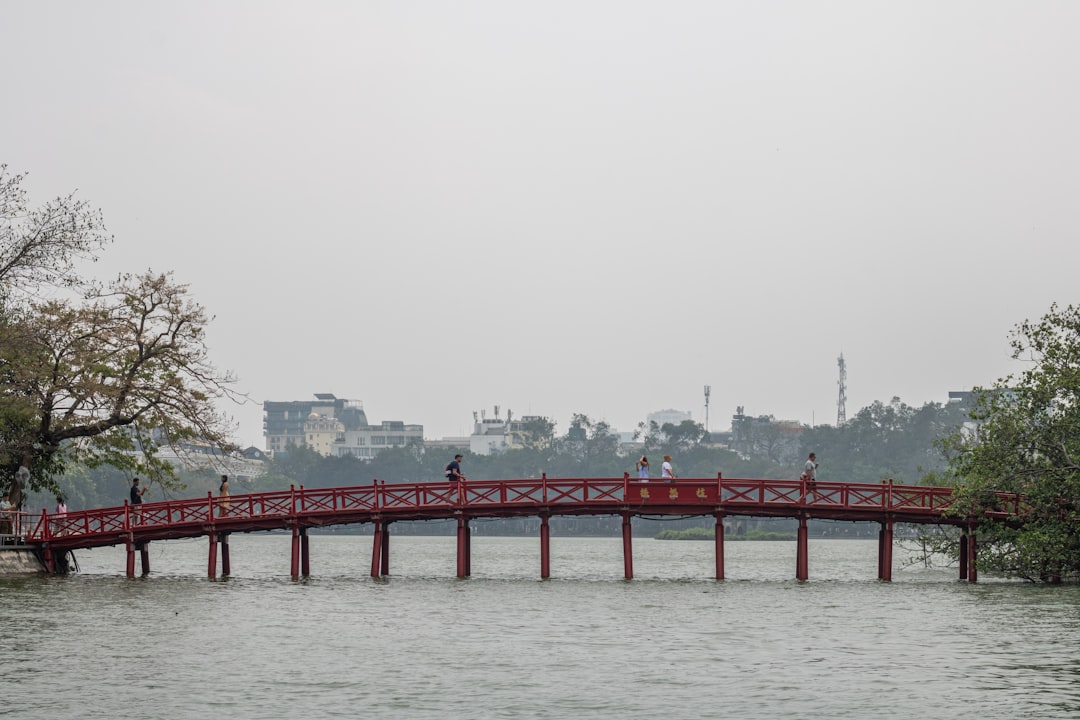
- 08:15 - Walk to Hoàn Kiếm Lake and cross The Húc Bridge to Ngọc Sơn Temple. Allow 45 minutes. Entry is about 30,000 VND.
- 09:15 - Continue to St. Joseph’s Cathedral, 40 Nhà Chung, for a quick exterior stop and a look at the lanes behind the church.
- 10:00 - Wander Hàng Gai, Hàng Bạc, and nearby lanes in the Old Quarter. Focus on the old merchant streets rather than trying to cover every block.
Afternoon
By midday, Hanoi gets warmer and busier, so this is the moment to duck into historic interiors and food stops. Lunch should be one classic Hanoi dish, not a generic café meal. After that, stay inside the Old Quarter rather than bouncing across town.
- 12:00 - Lunch at Bún Chả Đắc Kim, 1 Hàng Mành. A set with grilled pork, noodles, herbs, and spring rolls usually runs 60,000 to 90,000 VND.
- 13:15 - Visit the Ancient House at 87 Mã Mây in the Old Quarter. Entry is about 10,000 VND.
- 14:00 - Explore Đồng Xuân Market, Đồng Xuân Street, for fabrics, snacks, housewares, and the market atmosphere more than shopping perfection.
- 15:15 - Stop at Bạch Mã Temple, 76 Hàng Buồm. Entry is usually free, with donations welcome.
- 16:00 - Return to your hotel for a shower or short rest if you are visiting between May and September.
Evening
Hanoi’s center changes mood after sunset. The heat loosens, the pavements fill, and the lake edge starts to glow. The ideal first evening mixes one cultural performance with one informal food-and-drink stretch, because that gives you both the city’s heritage and its nightly energy.
- 17:30 - Thăng Long Water Puppet Theatre, 57B Đinh Tiên Hoàng. Book a show around 17:30 or 18:30. Tickets are usually 100,000 to 200,000 VND.
- 19:00 - Dinner on Tống Duy Tân food street or head to Phở Cuốn Hương Mai, 25 Ngũ Xã, for Hanoi-style rolled pho. Expect 70,000 to 120,000 VND per person.
- 20:30 - End on Tạ Hiện Beer Street. Fresh bia hơi is often 10,000 to 20,000 VND a glass.
- Insider tip: From Friday to Sunday, the Hoàn Kiếm area becomes a walking zone in the evening, so arrive on foot early and do not rely on a car pickup right at the lake.
Day 2: Ba Dinh monuments, literary Hanoi, and a French Quarter evening
If Day 1 is about atmosphere, Day 2 is about context. Hanoi’s political and intellectual history sits west and south of the Old Quarter in a set of sites that explain how the city sees itself: revolutionary, scholarly, layered, and deeply symbolic. This is your earliest start of the trip, because the Ho Chi Minh Mausoleum complex works best first thing.
The emotional arc of this day is strong. You move from the formal choreography of Ba Đình Square to the quieter courtyards of the Temple of Literature, then into the colonial geometry of the French Quarter by evening. It is the clearest day for understanding how many eras coexist inside Hanoi.
Morning
Arrive early and dress conservatively. Shoulders and knees should be covered for the mausoleum area and temples. Leave large bags at the hotel if possible to move faster through security and queues.
- 07:15 - Arrive at Ho Chi Minh Mausoleum, 2 Hùng Vương, Ba Đình. Entry is free, but opening hours are limited and often morning-only.
- 08:15 - Walk the grounds to the Presidential Palace area and Ho Chi Minh’s Stilt House. Combined access is usually around 40,000 VND.
- 09:00 - Stop at One Pillar Pagoda, Chùa Một Cột Street. Free entry.
- 09:30 - Short ride or walk to the Imperial Citadel of Thăng Long, 19C Hoàng Diệu. Allow 90 minutes. Entry is usually around 30,000 to 70,000 VND depending on current pricing.
Afternoon
After a heavy morning, pause for a proper bowl of pho before continuing. The afternoon works well because the Temple of Literature is spacious and shaded, while Hoa Lò Prison is indoors and easier in late-day heat.
- 12:00 - Lunch at Phở Thìn, 13 Lò Đúc, Hai Bà Trưng. A bowl is usually 60,000 to 80,000 VND.
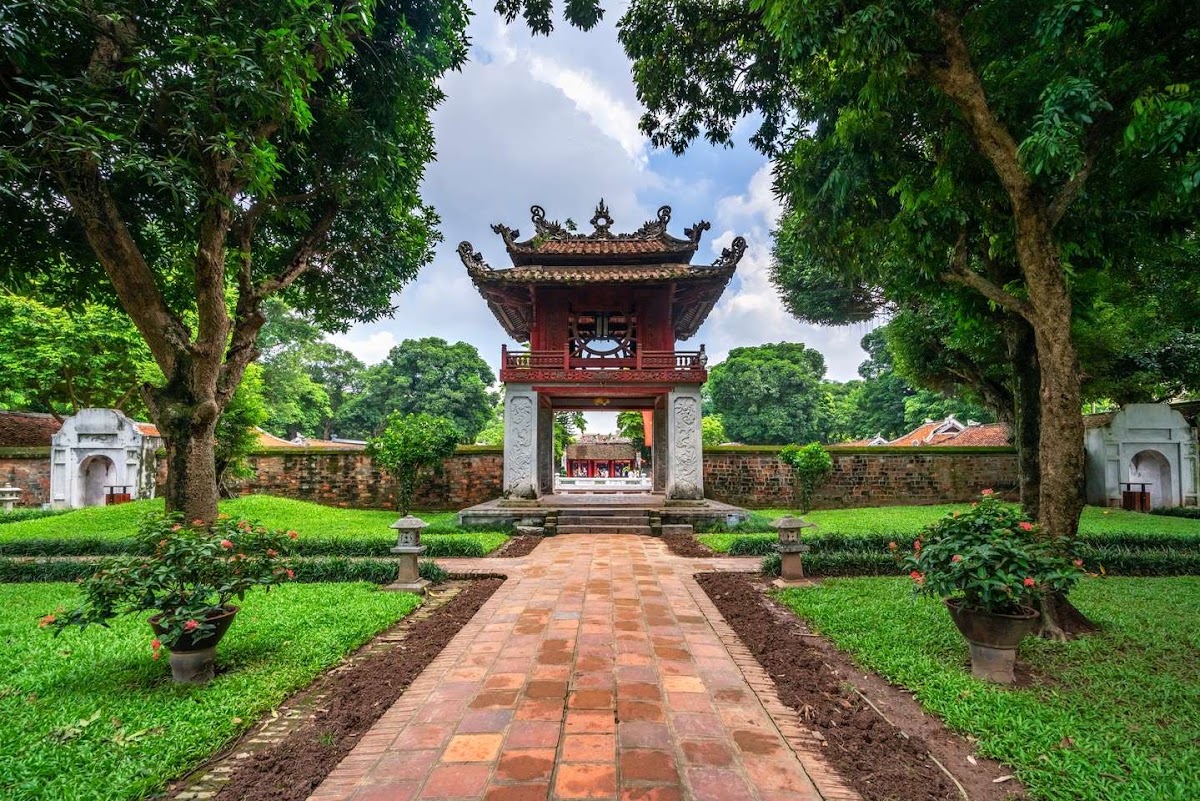
- 13:15 - Visit the Temple of Literature, 58 Quốc Tử Giám, Đống Đa. Allow 75 to 90 minutes. Entry is typically around 70,000 VND. Check hours on the official site.
- 15:00 - Hoa Lò Prison Relic, 1 Hỏa Lò, Hoàn Kiếm. Allow about an hour. Entry is around 50,000 VND.
- 16:30 - Coffee break on Tràng Tiền or near the Hanoi Opera House. Budget 40,000 to 80,000 VND.
Evening
The French Quarter feels almost theatrical after the Old Quarter’s density. The boulevards widen, façades turn pale and formal, and the city shifts from tangled to composed. This is a good night for a seated dinner rather than street snacking.
- 18:00 - Walk the French Quarter around the Hanoi Opera House, Tràng Tiền, and Lý Thái Tổ Garden.
- 19:00 - Dinner at Chả Cá La Vọng, 14 Chả Cá. Hanoi’s turmeric fish with dill is a signature dish. Expect about 170,000 to 220,000 VND per person.
- 20:45 - Optional rooftop or terrace drink near Hoàn Kiếm or the Opera House area. Budget 70,000 to 180,000 VND.
- Insider tip: Build Day 2 around the mausoleum opening, not the other way around. If the mausoleum is closed or queues are extreme, swap Hoa Lò Prison into the morning and move Ba Đình sights later.
Day 3: West Lake breezes, local neighborhoods, and a softer final day
The third day of this 3 days in Hanoi itinerary should feel lighter. By now you have seen the postcard core and the major state monuments, so the last day is about everyday rhythm: lakeside air, older temples, neighborhood cafés, and one excellent museum that broadens the story of Vietnam beyond the capital.
This is also the day that keeps many travelers from saying Hanoi felt too intense. West Lake and Trúc Bạch give you space, more sky, and a calmer tempo. You still have meaningful sights, but the city finally exhales a little.
Morning
Begin around West Lake before traffic thickens. The light on Thanh Niên Road is beautiful early, with water on both sides and temple towers rising out of the haze.
- 07:30 - Tran Quoc Pagoda, Thanh Niên Road, Tây Hồ. Free entry. Dress modestly.
- 08:15 - Walk the Thanh Niên causeway between West Lake and Trúc Bạch Lake.
- 09:00 - Visit Quán Thánh Temple, 190 Quán Thánh, Ba Đình. Entry is usually 10,000 to 20,000 VND.
- 10:00 - Late breakfast or early brunch on Ngũ Xã Street. Try pho cuon or fried pho at local shops for 50,000 to 90,000 VND.
Afternoon
Now move northwest for one of Hanoi’s best-curated museums. The Museum of Ethnology gives crucial depth to a Hanoi itinerary because it places the capital inside the much larger cultural geography of Vietnam’s 54 recognized ethnic groups. The open-air house collection is especially good if you want a break from city stone and traffic.
- 12:00 - Vietnam Museum of Ethnology, Nguyễn Văn Huyên Road, Cầu Giấy. Allow 90 to 120 minutes. Entry is about 40,000 VND.
- 14:30 - Return toward Tây Hồ for a café stop around Xuân Diệu or Tô Ngọc Vân. Budget 45,000 to 80,000 VND.
- 15:30 - Optional cooking class at Hanoi Cooking Centre, 44 Châu Long, Trúc Bạch. Most classes run about 800,000 to 1,200,000 VND and last around three hours.
Evening
Your final evening should not be overpacked. Hanoi rewards one last walk, one last good dinner, and a little unstructured time to look at the city rather than hunt your next stop. Trúc Bạch and Châu Long are excellent for that quieter finish.
- 18:30 - Sunset walk around Trúc Bạch Lake or back toward West Lake.
- 19:30 - Dinner at Home Moc, 34 Châu Long, Ba Đình, for polished northern Vietnamese dishes. Expect around 250,000 to 400,000 VND per person.
- 21:00 - If you still have energy, return to Hoàn Kiếm for a final lake loop and dessert at Kem Tràng Tiền, 35 Tràng Tiền, where ice cream starts around 15,000 to 35,000 VND.
- Insider tip: Sunday morning is especially good for West Lake. Start early and you get cooler air, local exercise crowds, and softer traffic before brunch spots fill up.
Best time to go for 3 days in Hanoi
The best months for 3 days in Hanoi are October to November and March to April. In autumn, the air is drier, skies are often clearer, and walking the Old Quarter is much easier. In spring, temperatures are pleasant enough for full sightseeing days, though light mist and drizzle can appear.
Summer from May to September is greener but harder work. Expect humidity, sudden downpours, and afternoons that feel much longer than they look on a plan. Winter from December to February is not freezing, but it can be grey, damp, and surprisingly chilly indoors. If you are comparing early summer travel windows elsewhere too, June 2026 Trip Planner: 6 Places Before Peak Summer is useful for weather context.
- Best overall: October, November, March, April
- Good with heat planning: May and early June
- Most challenging for long walks: July and August
- Quietest atmospheric season: January and February
Estimated Hanoi travel budget per person
For a realistic 3 days in Hanoi budget, assume two hotel nights, three full sightseeing days, local transport, food, drinks, and entry fees, but not international flights. Hanoi can be excellent value, yet costs rise quickly if you choose rooftop drinks, private transfers, or a cooking class.
A useful rule is to separate fixed costs from flexible ones. Your hotel and airport transfer are the predictable part. Food, cafés, and optional extras are where your trip style really shows.
| Budget tier | Estimated total for 3 days | What it covers |
|---|---|---|
| Budget | 3.6 to 5.6 million VND, about 140 to 220 USD | Simple hotel in Old Quarter, street food, bus or basic car rides, core entry fees |
| Mid-range | 6.6 to 11 million VND, about 260 to 430 USD | Boutique stay, sit-down dinners, airport transfer, museum entries, one paid show |
| Comfort | 13.3 to 23 million VND, about 520 to 900 USD | Upscale hotel, private transfers, refined dining, rooftop drinks, optional cooking class |
Big optional add-ons:
- cooking class: 800,000 to 1,200,000 VND
- rooftop drinks: 70,000 to 180,000 VND each
- airport transfer by private car: 300,000 to 450,000 VND each way
Where to stay in Hanoi
For this itinerary, location matters more than hotel amenities. If this is your first visit, stay as close as possible to Hoàn Kiếm District. You will save time, simplify the first and second days, and keep your evenings walkable.
West Lake is attractive, greener, and calmer, but it works better for repeat visitors or longer stays. For only 3 days in Hanoi, most travelers are happiest when they can walk back from dinner around the lake or the Old Quarter without a long ride.
- Old Quarter, Hoàn Kiếm: best for first-timers, food access, and walkability. Budget rooms often run 450,000 to 900,000 VND; mid-range 1.2 to 2.2 million VND.
- French Quarter, south Hoàn Kiếm: best for quieter nights and more polished hotels. Mid-range usually 1.8 to 3.5 million VND; upscale 4 to 8 million VND.
- Tây Hồ and Trúc Bạch: best for café life, lakeside mornings, and longer stays. Mid-range 1.3 to 2.8 million VND; upscale 3.5 to 7 million VND.
How to get there
Most international travelers arrive via Nội Bài International Airport, code HAN, about 27 to 30 kilometers north of central Hanoi. Depending on traffic, the ride to Hoàn Kiếm takes roughly 35 to 60 minutes. If you are arriving from elsewhere in Vietnam, Hanoi is also well connected by rail and express bus, though flying is far quicker from the south.
The smartest arrival plan is simple: land, withdraw some cash, get to your hotel in Hoàn Kiếm, and do not schedule a sight-heavy afternoon if you arrive after lunch. Hanoi can feel overwhelming on hour one; give yourself a softer landing.
- From Nội Bài Airport to Hoàn Kiếm by public Bus 86: about 45,000 VND, usually 50 to 60 minutes
- From Nội Bài Airport by licensed taxi or pre-booked hotel car: about 300,000 to 450,000 VND, usually 35 to 60 minutes
- From Ninh Bình by limousine van or bus: 2 to 2.5 hours, roughly 180,000 to 250,000 VND
- From Hạ Long by express bus: 2.5 to 3 hours, roughly 220,000 to 350,000 VND
- From Ho Chi Minh City by flight: about 2 hours 10 minutes; by train, roughly 32 to 36 hours
Useful official links:
- Nội Bài International Airport
- Vietnam e-visa portal
- Temple of Literature official site
- Ho Chi Minh Mausoleum opening updates
How to get around Hanoi
Inside Hoàn Kiếm, walking is still the best option. The streets are dense with detail, and much of the pleasure of Hanoi comes from wandering half a block off your plan and finding something better than what you expected. That said, sidewalks are often blocked by parked scooters, stools, or food prep, so walk alertly and patiently.
For longer hops, use app-based car or motorbike rides, or ask your hotel to call a reputable taxi. Public buses are cheap, but they make less sense on a short visit unless you already know the system.
- Walking: best in the Old Quarter, around Hoàn Kiếm Lake, and in the French Quarter
- Short motorbike rides: often 20,000 to 60,000 VND
- Short car rides across central districts: often 50,000 to 150,000 VND
- Public bus fares: usually 8,000 to 15,000 VND
- Weekend note: roads near Hoàn Kiếm can close to cars in the evening
Things to do in Hanoi if you add a fourth day
If your 3 days in Hanoi turns into four, do not just stuff more museums into the center. Use the extra day for a different texture: a craft village, a major day trip, or a quieter local landmark that would feel forced inside the main three-day route.
These are the best add-ons that fit naturally after the itinerary above:
- Long Biên Bridge at sunrise, connecting Hoàn Kiếm and Long Biên, for market activity and river views
- Bat Tràng Pottery Village, Gia Lâm, for ceramics workshops and kiln-town lanes
- Vietnam Fine Arts Museum, 66 Nguyễn Thái Học, if you want visual culture after the political history of Day 2
- Quảng Phú Cầu incense village, Ứng Hòa District, for a half-day craft photography outing
- Ninh Bình day trip for Tràng An or Tam Cốc if you want karst scenery beyond the city
- Chợ Đồng Xuân food stalls by night if you want a more local second evening in the Old Quarter
Where to eat in Hanoi
Food is not a side activity in Hanoi; it is the structure of the day. Breakfast is broth, lunch is smoke and herbs, afternoon is coffee, evening is street-side sharing or one focused specialty dish. If you only have 3 days in Hanoi, eat the local classics where they make the most sense instead of chasing too many trendy stops.
Keep expectations aligned with setting. Some of the best meals will come with tiny stools, fast turnover, and no lingering. That is part of the point.
- Phở Gia Truyền, 49 Bát Đàn, for classic morning pho, around 60,000 to 80,000 VND
- Bún Chả Đắc Kim, 1 Hàng Mành, for Hanoi’s essential lunchtime dish, around 60,000 to 90,000 VND
- Chả Cá La Vọng, 14 Chả Cá, for turmeric fish with dill, around 170,000 to 220,000 VND per person
- Phở Cuốn Hương Mai, 25 Ngũ Xã, for rolled pho near Trúc Bạch, around 70,000 to 120,000 VND
- Café Giảng, 39 Nguyễn Hữu Huân, for egg coffee, around 35,000 to 45,000 VND
- Kem Tràng Tiền, 35 Tràng Tiền, for a classic Hanoi ice cream stop, around 15,000 to 35,000 VND
Practical tips for a first Hanoi itinerary
Hanoi feels easier when you accept its rhythm instead of fighting it. Cross streets slowly and predictably rather than darting. Carry tissue, water, and small cash. Plan a hotel break in hot months. And always assume a trip across town will take longer than the map suggests.
Pack for humidity, temple dress codes, and short bursts of rain. Breathable clothing, sandals or trainers with grip, and a compact umbrella go further here than heavy city fashion. If you are traveling light through several stops, Carry-On Packing Rules 2026: Fit 10 Days in One Bag is a practical starting point.
- Currency: Vietnamese đồng, with cash still useful for small eateries and markets
- Cards: widely accepted in nicer restaurants and hotels, less so at tiny stalls
- Connectivity: buy an eSIM or local SIM on arrival so you can navigate and call rides easily
- Safety: Hanoi is generally manageable for travelers, but watch phones and wallets in crowded areas
- Temple etiquette: cover shoulders and knees, remove hats, keep voices low
- Heat planning: from May to September, the toughest hours are usually 13:00 to 16:00
FAQ
Is 2 days in Hanoi enough?
Two days is enough for a highlights-only visit: Hoàn Kiếm Lake, the Old Quarter, one major history cluster, and a couple of signature meals. It is not enough for the pace that makes Hanoi enjoyable. If you can add one more day, do it.
Is 3 days in Hanoi enough for first-timers?
Yes. For most travelers, 3 days in Hanoi is the sweet spot. You can cover the Old Quarter, Ba Đình monuments, the Temple of Literature, West Lake, and several essential food stops without turning the trip into a checklist sprint.
Should I stay in the Old Quarter or West Lake?
For a first trip this short, stay in the Old Quarter or nearby Hoàn Kiếm. West Lake is calmer and stylish, but it is better for longer stays or return visits. The center saves time and makes evenings much easier.
What should I book ahead?
Book your first hotel nights, airport transfer if arriving late, and water puppet show if you want a prime time slot. If a cooking class is part of your plan, reserve that too, especially in high season.
Is Hanoi walkable?
Parts of it are, especially the Old Quarter, Hoàn Kiếm Lake, and the French Quarter. But walkable does not always mean comfortable. Sidewalks are irregular, traffic is constant, and heat can slow you down, so combine walking with short rides.
With three full days, Hanoi stops feeling like a blur of horns and heat and starts feeling like a city of layers, rituals, and neighborhoods you can actually read. That is the moment when planning the trip becomes part of the pleasure.
---