Switzerland is small enough to cross in a week and dramatic enough to make every train window feel cinematic. That is exactly why an 8 days in Switzerland route works so well: you can pair medieval old towns with lakeside promenades, glacier viewpoints, vineyard terraces and the Matterhorn without turning the trip into a blur.
This itinerary is designed for first-time visitors who want the classic Swiss highlights in a logical order by rail, with precise stops you can actually rebuild. For a trip with this many moving pieces, it helps to keep train times, hotel bases and ticket-heavy mountain days organized in one place, whether on paper or in a planner like TravelDeck.
The route starts in Zurich and ends in Bern, with onward departure from Zurich Airport or an extra night if you want a softer finish. If you only have 5 or 6 days, cut Montreux or Bern; if you have more, add an extra night in Wengen or Zermatt.
How to get there
Photo by Adam Tinworth on Unsplash
The easiest entry point for this itinerary is Zurich Airport, also called ZRH. It has direct rail connections into Zurich HB in about 10 to 15 minutes, usually for around CHF 7 to CHF 10. If you prefer an open-jaw trip, you can fly into Zurich and out of Geneva Airport, also called GVA, after extending the Montreux section.
Switzerland is one of the simplest countries in Europe to do without a car. The rail network is fast, punctual and built for this exact kind of trip. Check official train times on SBB, airport details on Zurich Airport and Geneva Airport, and the current Swiss Travel Pass options before you book.
- Fly into Zurich Airport if you want the cleanest start for Day 1.
- If arriving from Paris, Milan, Munich or Vienna, long-distance trains into Zurich, Basel and Geneva are straightforward.
- A round-trip flight in and out of Zurich is easiest if you keep Day 8 light and continue from Bern to Zurich Airport, about 1 hour 15 minutes by train.
- If you are traveling in March, shoulder-season planning pairs well with March Holiday Ideas 2026: Pick by Weather, Budget, Pace.
Day 1: Zurich old town and lake light
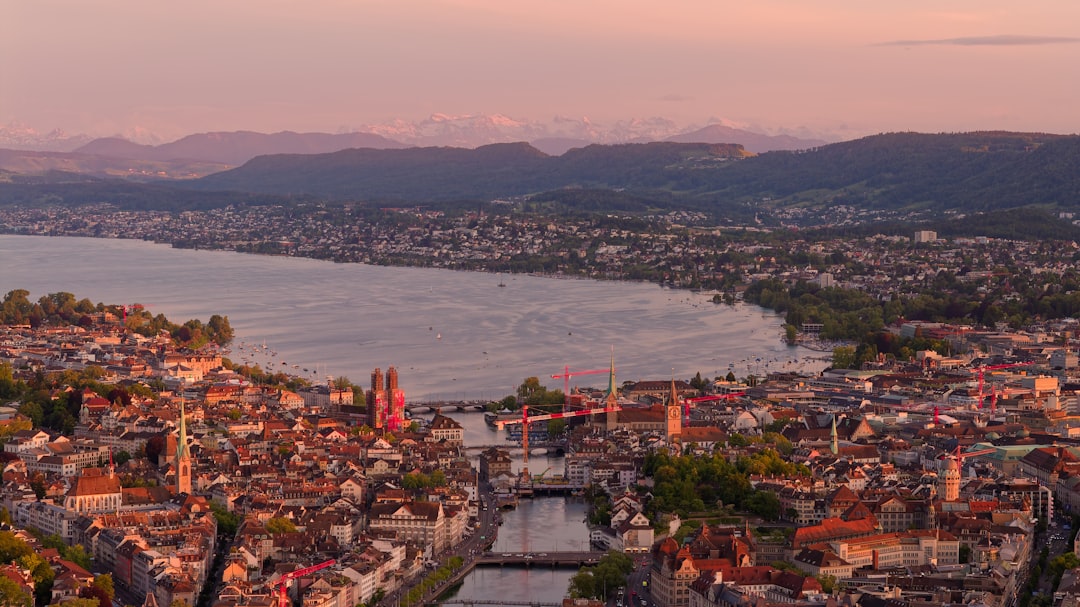
Photo by Daniel R. on Unsplash
Zurich is not the place to rush through with jet lag. The city works best as a soft landing: riverfront stone lanes, church spires, polished cafés and a lake that instantly resets your pace. Start here so you ease into Switzerland before the mountain transfers begin.
The best part of central Zurich is how walkable it is. From the Hauptbahnhof area to Lindenhof, Bahnhofstrasse and the lakefront at Bürkliplatz, you can cover a lot on foot without spending your first day underground or hauling bags around. Stay around Altstadt or near the station to make tomorrow's train effortless.
Morning
- 09:00 Check in or leave bags near Zurich HB, the main station.
- 09:30 Walk Bahnhofstrasse toward Paradeplatz, then cut into Altstadt via Augustinergasse in the Old Town.
- 10:30 Stop at Lindenhof for river and old-town views over the Limmat. Cost: free.
- 11:15 Visit Grossmünster in Rathaus quarter. Tower access is usually around CHF 5.
Afternoon
- 12:30 Lunch in Niederdorf or around Münsterhof. Budget CHF 18 to CHF 30 for a casual plate; CHF 35 to CHF 50 for a sit-down lunch.
- 14:00 Walk to Fraumünster to see the Chagall windows. Entry is usually around CHF 5.
- 15:00 Continue to Bürkliplatz and the Lake Zurich promenade in Enge district for an easy waterside walk.
- 16:00 Optional short lake cruise from Bürkliplatz if the weather is clear. Expect roughly CHF 9 to CHF 15 for a short sector without a pass.
Evening
- 18:00 Apéro in Niederdorf, Zurich's most atmospheric evening quarter.
- 19:30 Dinner around Oberdorfstrasse or Schipfe. Expect CHF 25 to CHF 45 for a casual dinner, more for classic Swiss dishes.
- 21:00 If you still have energy, walk back along the lit-up Limmat embankment.
Insider tip: if you want the cleanest old-town photos, cross Münsterbrücke just before sunset, when the church towers and pastel façades catch warm side light.
Day 2: Lucerne and Mount Rigi by boat and cogwheel train
Day 2 is where the postcard version of Switzerland begins to click. Lucerne has painted façades, a lake wrapped by mountains and one of the prettiest station-to-old-town walks in the country. It is also a brilliant base for a first mountain day because the transport links are smooth and the scenery feels high-impact without being exhausting.
Instead of trying to cram in several peaks, focus on one classic outing and do it well. Mount Rigi gives you the lake, the boat, the cogwheel railway and a manageable amount of walking in a single day. It is especially good for first-timers who want alpine views without committing the whole day to a single cable car queue.
Morning
- 08:10 Train from Zurich HB to Lucerne station. Travel time is about 45 to 50 minutes. Point-to-point fare is usually around CHF 25 second class.
- 09:15 Walk from Luzern Bahnhof to Kapellbrücke, the Chapel Bridge, then through Weinmarkt and Hirschenplatz in the Old Town. Cost: free.
- 10:30 Coffee by the Reuss River or quick visit to the Lion Monument in the New Town area. Cost: free unless you add a museum.
Afternoon
- 12:12 Boat from Lucerne to Vitznau on Lake Lucerne. Full-fare lake plus mountain combination tickets vary, but budget around CHF 70 to CHF 85 if you are paying as you go.
- 13:20 Board the Rigi Bahn from Vitznau to Rigi Kulm. Views open gradually over the lake system and central Swiss peaks.
- 14:15 Walk the summit paths around Rigi Kulm and Rigi Staffel. Allow 60 to 90 minutes. Cost: free once you are up.
- 15:45 Descend toward Weggis or back to Vitznau depending on weather and energy.
Evening
- 17:30 Return to Lucerne and stroll the lakeside by the station, then through the covered arcades around the KKL area.
- 19:00 Dinner in the Old Town. Expect CHF 25 to CHF 45 casual, CHF 50 and up for lake-view dining.
- 20:30 Overnight in Lucerne near Bahnhof or Altstadt for an easy departure tomorrow.
Insider tip: sit on the right-hand side of the boat from Lucerne to Vitznau for some of the best forward views of the shoreline villages and rising mountain walls.
Day 3: Luzern-Interlaken Express and Lauterbrunnen Valley
Today is less about a single attraction and more about the feeling of entering the Bernese Oberland. The Luzern-Interlaken Express is one of the most rewarding transfers in Europe, sliding past lakes, forests and small station towns before delivering you into a region that looks almost unreal.
Once you reach Interlaken, avoid lingering too long in town. The real magic is in Lauterbrunnen Valley, where cliffs rise vertically above chalets and waterfalls. This is the day Switzerland shifts from elegant to epic.
Morning
- 08:06 Take the Luzern-Interlaken Express from Lucerne to Interlaken Ost. Journey time is about 1 hour 50 minutes.
- 10:00 Leave bags at your hotel in Interlaken Ost, Interlaken West or Wengen.
- 10:45 Continue by regional train from Interlaken Ost to Lauterbrunnen. Travel time is about 20 minutes.
Afternoon
- 11:15 Walk through Lauterbrunnen village along Bahnhofplatz and the main valley road toward Staubbach Falls. Cost: free.
- 12:30 Lunch in Lauterbrunnen village. Budget CHF 18 to CHF 30 for a simple lunch.
- 14:00 Optional cable car and train up to Grütschalp and Mürren for balcony views over the valley. Budget around CHF 25 to CHF 35 return without a pass.
- 16:30 Return to Interlaken or continue to Wengen if that is your base.
Evening
- 18:00 Walk Höhematte Park in central Interlaken for the classic paragliders-and-mountains view.
- 19:30 Dinner around Marktgasse or near Interlaken Ost. Expect CHF 25 to CHF 45.
- 21:00 Early night, because tomorrow is the biggest excursion day of the trip.
Insider tip: if you stay in Wengen instead of Interlaken, you trade nightlife for a much quieter mountain evening and a faster start into the Jungfrau region the next morning.
Day 4: Grindelwald, Eiger Express and Jungfraujoch
This is the splurge day, and it earns it. Jungfraujoch is expensive, busy and very weather-dependent, but on a clear day it is one of the most memorable mountain outings in Europe. The trick is to go early, pre-book if needed and build in a lower-altitude backup if clouds close in.
Grindelwald gives the day structure. The modern Grindelwald Terminal is easy to navigate, and the Eiger Express cuts the ascent time enough that the whole excursion feels less punishing than it used to. Do not overstuff this day with extra villages; let the high Alps take center stage.
Morning
- 07:30 Train to Grindelwald Terminal from Interlaken Ost, about 35 minutes.
- 08:15 Board the Eiger Express tricable gondola to Eigergletscher, then connect onward to Jungfraujoch. Check the official Jungfraujoch site for live weather and ticket options.
- 09:30 to 12:00 Explore the Sphinx Observatory, Ice Palace and Aletsch Glacier viewpoints. Expect roughly CHF 170 to CHF 220 round trip depending on your starting point and discounts.
Afternoon
- 12:30 Descend to Kleine Scheidegg for lunch with Eiger views if the weather is stable.
- 14:00 Continue to Wengen for a village stroll or return to Grindelwald for a short walk around the terminal side of town.
- 15:30 If Jungfraujoch is clouded out, swap to First or simply spend the afternoon around Wengen and Lauterbrunnen instead of forcing the summit.
Evening
- 18:00 Return to your base in Interlaken or Wengen.
- 19:30 Reward yourself with a proper Swiss dinner. Expect CHF 35 to CHF 55 for fondue or a mountain-restaurant meal.
- 21:00 Pack tonight, because tomorrow is another scenic transfer.
Insider tip: the clearest mountain windows are often first thing in the morning, so resist a slow breakfast and aim for the earliest practical ascent.
Day 5: GoldenPass to Montreux and Lavaux vineyards
After two mountain-heavy days, the shift to Lake Geneva feels almost Mediterranean. The GoldenPass route from the Bernese Oberland down to Montreux is one of those train rides where you stop reading, stop scrolling and simply watch the landscape change from alpine meadows to vineyard terraces and palms.
Montreux makes an excellent one-night base because it is compact, pretty on foot and perfectly placed for Chillon Castle and the Lavaux wine villages. The mood changes completely here: less hiking boot, more lakefront promenade.
Morning
- 08:00 Depart Interlaken for Montreux on the GoldenPass route. Total travel time is usually around 3 hours 15 minutes, with easy changes if needed.
- 11:30 Check in or drop bags in Montreux near the station or lakefront.
- 12:00 Walk the lakeside promenade from the station toward the Freddie Mercury statue and flower-lined waterfront. Cost: free.
Afternoon
- 13:00 Regional bus or train to Château de Chillon, just outside Montreux in Veytaux. Entry is usually around CHF 15 to CHF 16.
- 14:30 Explore the castle interiors, lakeside walls and courtyards. Allow 90 minutes.
- 16:30 If you still have energy, continue toward the Lavaux vineyard terraces around Saint-Saphorin or Lutry, a UNESCO-listed stretch above the lake.
Evening
- 18:30 Return to Montreux for sunset on the promenade.
- 19:30 Dinner by Grand Rue, the station quarter or the lakeside. Budget CHF 25 to CHF 50 depending on the view.
- 21:00 Overnight in Montreux.
Insider tip: Chillon is calmest late in the day, when many coach groups have already gone and the castle walls reflect amber light from the lake.
Day 6: Zermatt arrival and Gornergrat views
The move to Zermatt is one of the most satisfying shifts in the itinerary because the whole destination feels self-contained. Cars disappear, electric taxis hum quietly through the lanes and, if the weather plays along, the Matterhorn starts appearing between rooftops like a visual drumroll.
Try not to spend too long indoors after arrival. Zermatt is best absorbed on foot first, before you go high. Walk the old wooden barns of Hinterdorfstrasse, hear the church bells, breathe the dry alpine air, and then head up to the viewpoint that matters most on a short trip: Gornergrat.
Morning
- 08:37 Train from Montreux to Zermatt via Visp. Travel time is roughly 2 hours 35 minutes.
- 11:20 Check in near Zermatt Bahnhof or leave bags at your hotel.
- 11:45 Walk Bahnhofstrasse to the parish church and the old quarter around Hinterdorfstrasse. Cost: free.
Afternoon
- 13:30 Ride the Gornergrat Railway from Zermatt station. Full-fare return tickets are often around CHF 120 to CHF 140 depending on season and booking.
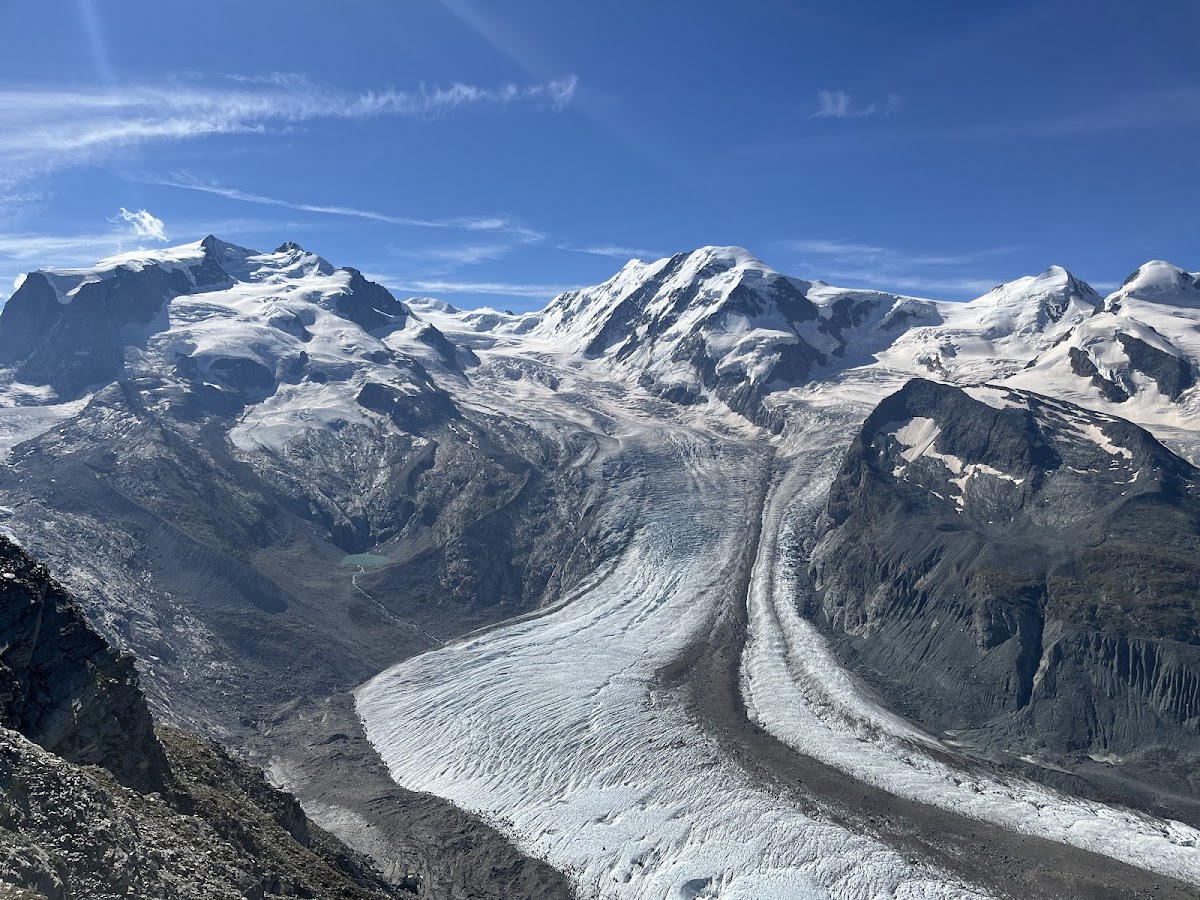
- 14:15 to 16:30 Explore the summit terraces and short paths near the top station. The Matterhorn and Monte Rosa massif views are the reason to come.
- 16:45 Descend before dusk unless you specifically want blue-hour photos.
Evening
- 18:00 Apéro or hot chocolate back in the village center.
- 19:30 Dinner in central Zermatt. Expect CHF 30 to CHF 60 for dinner, higher for classic fondue rooms.
- 21:00 Night stroll along Bahnhofstrasse if the Matterhorn is still visible in evening color.
Insider tip: on the way up, sit on the right-hand side of the Gornergrat train for the best chance of uninterrupted Matterhorn views.
Day 7: Matterhorn Glacier Paradise and a slow Zermatt evening
If Day 6 gave you the cinematic view, Day 7 gives you the high-altitude sensation. Matterhorn Glacier Paradise is more about scale than village charm: cable cars lifting over rock and snow, thin sharp air and broad white horizons that feel almost otherworldly even in summer.
Keep the rest of the day deliberately soft. Zermatt rewards downtime more than most resort towns do, especially if you are balancing high-altitude sightseeing with a long multi-stop itinerary. This is a good afternoon for a museum, a spa booking or simply walking until you find the perfect Matterhorn angle.
Morning
- 08:30 Walk or take the local e-bus to the Matterhorn Express valley station in southern Zermatt.
- 09:00 Ride up to Matterhorn Glacier Paradise, changing as required. Full-fare return is usually around CHF 95 to CHF 120 depending on season.
- 10:00 to 12:00 Enjoy the viewing platform, glacier palace and panoramic terraces. If skies are clear, this is your highest viewpoint of the trip.
Afternoon
- 13:00 Lunch back in Zermatt or at an intermediate station if the weather is stable. Budget CHF 20 to CHF 40.
- 14:30 Visit the Matterhorn Museum - Zermatlantis near Kirchplatz. Entry is usually around CHF 10 to CHF 12.
- 16:00 Take an easy village walk toward Winkelmatten for quieter Matterhorn photo angles.
Evening
- 18:30 If your hotel has a spa, use it tonight. If not, take a long aperitif break and enjoy a slower dinner.
- 20:00 Final Zermatt dinner. This is the night to order raclette or fondue if you have not yet done it.
- 21:30 Pack for tomorrow's transfer to Bern.
Insider tip: if the summit is clouded over, check the webcam before you go up; a lower walk from Winkelmatten or Sunnegga can produce better photos than paying for a whiteout.
Day 8: Bern arcades, river views and departure
Bern is the perfect closing note because it returns you from mountain spectacle to urban grace. The old town sits in a loop of the Aare River, with sandstone arcades, fountains and clock towers that feel timeless rather than showy. After a week of constant wow-factor, Bern lands gently.
You will not see everything in half a day, but you do not need to. This final stretch is about walking, eating well and giving the trip a composed ending before you head to the airport or your next city.
Morning
- 08:06 Train from Zermatt to Bern. Travel time is about 2 hours 15 minutes.
- 10:30 Leave bags at Bern station and walk into the UNESCO-listed Old Town via Spitalgasse and Marktgasse.
- 11:00 See the Zytglogge clock tower and continue toward Kramgasse and the Nydegg side of town. Cost: free.
Afternoon
- 12:30 Lunch under the arcades or near the Federal Palace. Budget CHF 20 to CHF 35.
- 14:00 Walk to the Rose Garden for the classic view back over Bern's old town and river bend. Cost: free.
- 15:30 Optional quick museum stop, or head back to Bern station for your onward train.
Evening
- 17:00 Bern to Zurich Airport takes about 1 hour 15 minutes; Bern to Geneva is roughly 1 hour 45 minutes.
- 18:30 If your flight is tomorrow, stay one final night in Bern or Zurich rather than forcing a same-evening departure.
- 20:00 Simple farewell dinner near your final station hotel.
Insider tip: Bern's covered arcades are ideal in bad weather, so this is the most reliable sightseeing day of the whole route if the forecast turns wet.
Best time to go for an 8 days in Switzerland trip
The sweetest spots for this itinerary are late May to early July and September to early October. You usually get longer daylight, greener valleys and better odds of clear lake-and-mountain contrast than in peak August. September is especially strong for a first trip: summer lifts are still running, the air is crisper and the biggest crowds begin to soften.
Winter changes the trip completely. Zermatt and the Jungfrau region become more snow-reliant, village atmospheres turn magical and prices often rise in ski periods, but some hiking routes close and weather flexibility matters more. If you are still comparing seasons for Europe as a whole, Best Destinations by Month 2026: Weather-Wise Trip Planner helps narrow your month.
If you are packing for changeable alpine weather, layers matter more than fashion categories. You can start a day in a T-shirt by the lake and end it in a puffer at altitude. For a practical wardrobe approach, Holiday Outfit Ideas 2026: Where to Go and What to Pack is a useful companion.
- Best overall months: June and September.
- Best for wildflowers and green valleys: late May to early July.
- Best for vineyard and lake days: September.
- Best for snow atmosphere: late December to March, with more weather risk for sightseeing views.
Estimated budget per person
Switzerland rewards planning because transport, mountain railways and hotel locations can swing your total by a lot. The biggest cost drivers on this route are Jungfraujoch, Gornergrat, Zermatt hotel rates and whether you sleep in city-center properties close to stations.
A useful rule: spend strategically on transport-heavy days and trim elsewhere with supermarket breakfasts, picnic lunches and one or two simpler dinners. If you use points for flights or pre-trip spending strategy, Travel Rewards Card Strategy 2026: Earn Trips, Not Fees can help offset the most expensive leg.
| Budget tier | Approx total for 8 days | What it usually includes |
|---|---|---|
| Budget | CHF 1,250 to CHF 1,650 | Hostel or simple guesthouse rooms, self-catered breakfasts, regional trains, one premium mountain excursion instead of all of them |
| Mid-range | CHF 1,950 to CHF 2,750 | Well-located 3 to 4 star hotels, mixed casual dining, Swiss Travel Pass or point-to-point rail, Jungfraujoch and Gornergrat |
| Luxury | CHF 3,800 to CHF 5,500+ | 4 to 5 star station-area or resort hotels, scenic class upgrades, lake-view dining, spa time and all major mountain lifts |
These numbers exclude international flights but include internal transport, hotels, food and major sightseeing.
Where to stay in Switzerland for this route
For an 8-day trip, fewer hotel moves almost always make the itinerary better. Three main bases work well: Lucerne for central Switzerland, Interlaken or Wengen for the Jungfrau region, and Zermatt for the alpine finale. Montreux is worth a one-night stop because it breaks the route cleanly and gives Lake Geneva proper time.
Stay close to train stations whenever possible. In Switzerland, paying a little more for walkability often saves you time, cab costs and luggage stress.
- Lucerne Bahnhof and Altstadt: best for Day 2, beautiful in the evening, very convenient for the station and lake. Expect roughly CHF 150 to CHF 280 per night for solid mid-range options.
- Interlaken Ost or Wengen: best for Jungfrau logistics. Interlaken is easier for connections and dining; Wengen is prettier and quieter. Expect CHF 160 to CHF 320 per night mid-range.
- Montreux lakefront or station quarter: best for one-night transit convenience and evening lake walks. Expect CHF 160 to CHF 300 per night.
- Zermatt Bahnhofstrasse, Kirchplatz area or Winkelmatten: best for Gornergrat, Glacier Paradise and village atmosphere. Expect CHF 190 to CHF 380 per night mid-range, more in ski season.
If you are renting apartments or private stays, station proximity matters as much as aesthetics. The filtering mindset in Airbnb Tips 2026: How to Book Better, Safer, Smarter is especially useful in Swiss destinations where hills and transfer time can be deceptive.
How to get around Switzerland
This itinerary is built for trains, funiculars, boats and mountain railways, not for driving. Public transport is reliable enough that a car adds more friction than freedom on this route, especially with car-free Zermatt and expensive parking in major bases.
Use SBB for the backbone journeys and book mountain routes directly when required, especially for Jungfraujoch and Gornergrat. For first-timers, the biggest decision is whether to buy a Swiss Travel Pass or book point-to-point tickets.
- Swiss Travel Pass: easiest for simplicity, includes most regular trains, many boats and city transport, plus discounts on several mountain excursions.
- Point-to-point tickets: can be cheaper if you book early and skip one or two premium mountains.
- Saver Day Passes: worth checking if your dates are fixed and you book well ahead.
- No car needed: Zermatt is car-free and the major scenic sectors are better by rail.
A practical strategy is to price your full route first, then compare it against the pass instead of buying a pass automatically. On this specific 8 days in Switzerland route, the pass often pays off best for travelers who are doing both Jungfraujoch and Gornergrat and moving between all four bases.
FAQ
Is 8 days enough for Switzerland?
Yes. Eight days is enough for a first trip if you focus on a rail route and limit yourself to four main bases. You will not see every region, but you can cover Zurich, Lucerne, the Jungfrau area, Montreux, Zermatt and Bern without the trip feeling like pure transit.
Should I buy a Swiss Travel Pass for this itinerary?
Often yes, but not always. It makes the trip smoother, especially if you like flexibility and are taking multiple long rail legs, boats and city transport. If you plan to skip Jungfraujoch or find good advance fares, point-to-point tickets can come out cheaper.
Is Jungfraujoch worth the price?
If the forecast is clear and this is your first Swiss trip, usually yes. It is one of the most memorable summit experiences in the country. If visibility is poor, save the money and spend the day lower down around Wengen, Mürren or Grindelwald.
Lucerne or Interlaken: which is better?
They do different jobs. Lucerne is stronger for a city-meets-lake feel and easier first mountain access; Interlaken is more practical for the Jungfrau region. On a one-week-plus route, using both gives the best balance.
Can I do this itinerary in winter?
Yes, but it becomes a different trip. Winter adds snow atmosphere and festive resort energy, especially in Zermatt, but daylight is shorter, some walks close and weather backups matter more. Keep at least one flexible afternoon for mountain conditions.
Switzerland only feels rushed when the route is messy. Get the sequence right, leave room for weather on the big mountain days, and this trip turns into one of those rare itineraries where almost every transfer is part of the pleasure.
---