Seoul is the kind of city that punishes bad planning. Cross the Han River at the wrong hour, stack too many far-flung stops into one day, and a dream trip turns into a week spent underground on transfers. That is why this 7 days in Seoul itinerary is built by neighborhood, not by random bucket-list pins.
For most first-timers, four days covers the essentials, five days feels comfortable, and seven lets Seoul breathe. With a full week, you can do the royal palaces, market food, youthful west-side neighborhoods, modern Gangnam, a proper river evening, and one easy day trip without feeling like you are sprinting. If you are arriving from far away, read Long Haul Flight Comfort Checklist 2026: Sleep, Water, Seat before takeoff, and skim Local Customs Checklist 2026: 12 Things Before You Fly before you land.
The route below is fully rebuildable stop by stop. If you like seeing each district laid out as a clean day block, sketching it in TravelDeck before you fly makes the week much easier to visualize.
How many days do you need in Seoul?
Photo by Andrea De Santis on Unsplash
If you are asking how many days in Seoul is enough, the honest answer depends on whether Seoul is a city break or your main Korea stop. Four days is enough for palaces, old Seoul, one shopping district, and one youthful neighborhood. Five days adds breathing room. But 7 days in Seoul is the sweet spot for first-timers because it lets you see the city in layers instead of as a checklist.
The reason this 7 days in Seoul plan works is simple: each day stays geographically coherent. You will not bounce from Gyeongbokgung to Gangnam to Hongdae in a single afternoon. Instead, you move through Jongno, Jung-gu, Mapo, Gangnam, eastern Seoul, and one nearby historic city in an order that feels natural and realistic.
How to get to Seoul
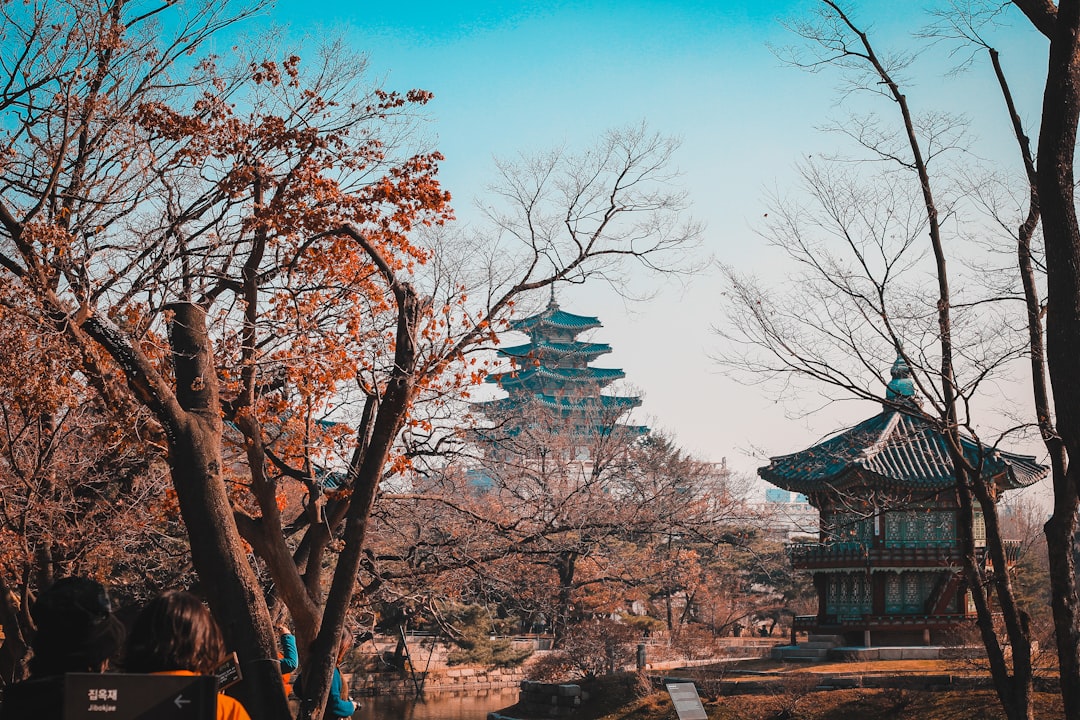
Photo by Louie Nicolo Nimor on Unsplash
Most international travelers arrive at Incheon International Airport, or ICN, west of the city. A smaller number arrive at Gimpo Airport, or GMP, which is closer and mainly serves regional flights. For official transport information, check Incheon Airport, AREX, and Seoul Metro.
The airport transfer is the first place where smart routing matters. If you stay in Hongdae, the all-stop airport train is usually the easiest. If you stay near Seoul Station or Myeongdong, the express train is quicker. Late arrivals may find airport buses simpler than navigating the subway with luggage.
- Incheon Airport to Seoul Station by AREX Express: about 43 minutes, usually around 11,000 KRW
- Incheon Airport to Hongik University Station by all-stop train: about 55 to 65 minutes, around 4,500 KRW
- Incheon Airport airport bus to central districts: 60 to 90 minutes depending on traffic, around 17,000 to 18,000 KRW
- Gimpo Airport to Hongdae by airport line: about 15 minutes, around 1,600 KRW
- Gimpo Airport to Seoul Station by airport line: about 22 minutes, around 1,700 KRW
Day 1: Royal Seoul in Jongno
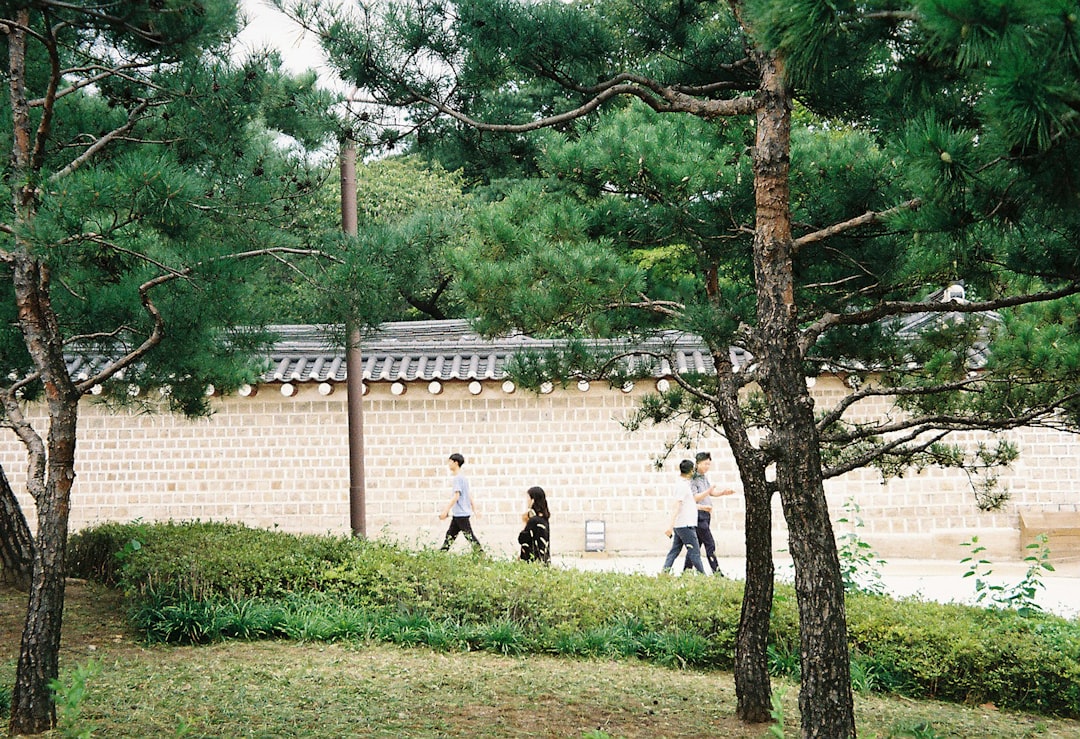
Photo by Ros on Unsplash
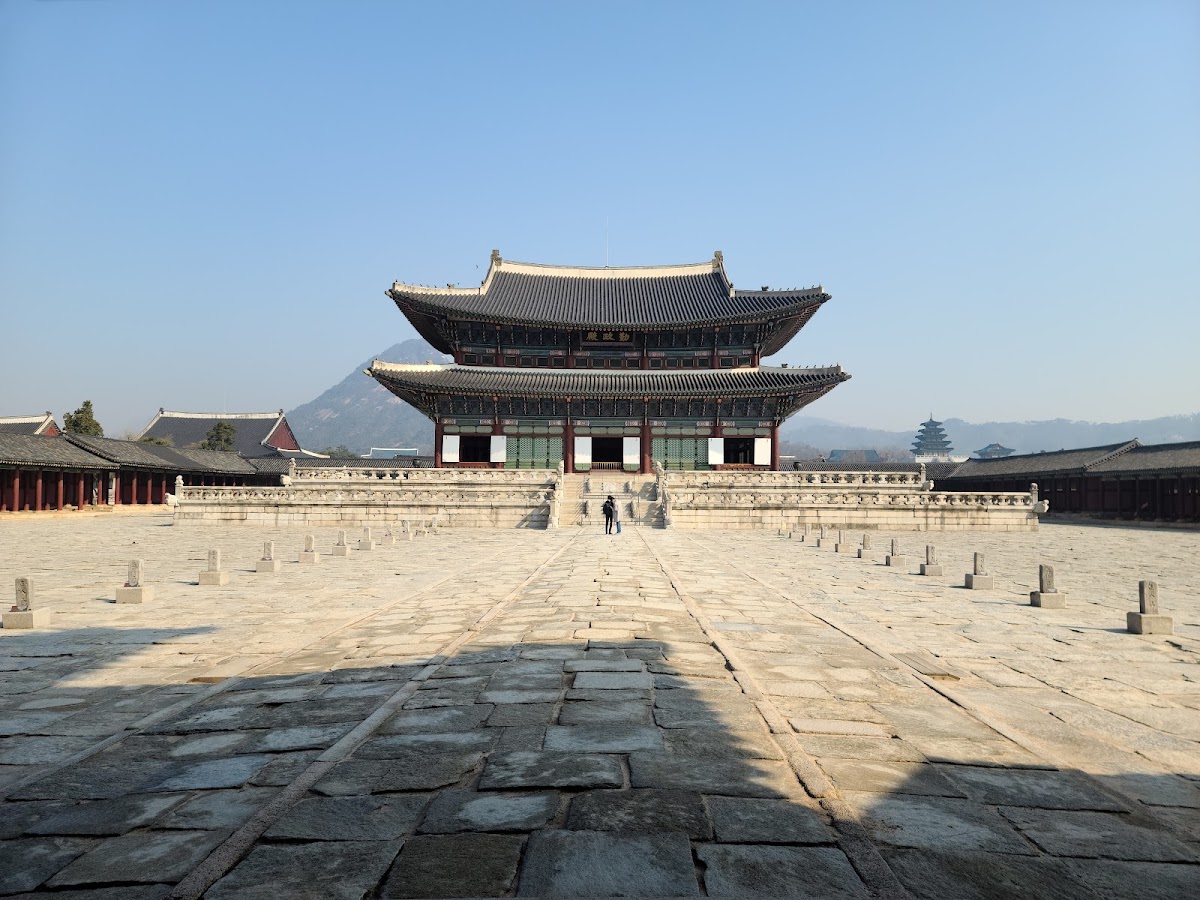
Your first full day should begin where Seoul still feels ceremonial: broad palace courtyards, mountain-backed gates, hanok roofs, and quiet alleys that suddenly open onto busy craft streets. Jongno-gu is the city most first-timers imagine before they arrive, and seeing it early helps everything else make sense.
Start early. The palace grounds are most beautiful before the tour buses pile up, when the gravel is still quiet and the light catches the painted eaves in blue, green, and red. By afternoon, move slowly through Bukchon and Insadong, where the old city gives way to teahouses, calligraphy shops, and narrow lanes scented with sesame oil and grilled meat.
Morning
Begin with the biggest royal statement in the city and keep the first hours simple and walkable.
- 8:30 Gyeongbokgung Palace, 161 Sajik-ro, Jongno-gu — 3,000 KRW, allow 90 minutes
- 10:15 National Folk Museum of Korea, inside the palace grounds — free, allow 45 minutes
- 11:15 Walk via Samcheong-ro toward Bukchon Hanok Village — free
Afternoon
The afternoon is about textures rather than speed: sloped lanes, tiled roofs, craft shops, and old Seoul seen at human scale.
- 12:30 Lunch around Insadong-gil or Samcheong-dong — 12,000 to 18,000 KRW
- 1:30 Bukchon Hanok Village, especially Bukchon-ro 11-gil viewpoints — free
- 3:00 Insadong-gil for stationery, ceramics, tea, and souvenirs — free to browse
- 4:15 Jogyesa Temple, 55 Ujeongguk-ro, Jongno-gu — free
Evening
By evening, the mood softens. Ikseon-dong is older Seoul reworked into a lantern-lit maze of low roofs, tiny dining rooms, and courtyards that glow after dark.
- 6:00 Ikseon-dong Hanok Village for dinner — 15,000 to 25,000 KRW
- 7:45 Cheonggyecheon Stream walk from Jongno 3-ga toward Gwanghwamun — free
- 9:00 Return to your hotel before the first full-day fatigue hits
Insider tip: arrive at Gyeongbokgung before 9:00 am. Even in busy seasons, that first hour feels far calmer than the rest of the day and gives you the best palace photos without crowds in every frame.
Day 2: Namdaemun, Myeongdong and Namsan after dark
If Day 1 is Seoul in historical layers, Day 2 is central Seoul at full volume. Markets, beauty stores, church bells, office towers, and smoky street-food stalls all crash into one another here. It is busy, commercial, and very useful for first-timers because so much of practical Seoul happens in this zone.
This is also the day to lean into classic city energy. Eat a market breakfast, browse Myeongdong in daylight, and save Namsan for late afternoon so the skyline opens up in softer light. Seoul rarely looks romantic at noon, but it absolutely does from the hill at sunset.
Morning
Namdaemun is best in the morning, when stalls are opening and the market still belongs mostly to locals buying clothes, kitchenware, and breakfast.
- 8:30 Namdaemun Market, 21 Namdaemunsijang 4-gil, Jung-gu — free entry
- 9:00 Breakfast in Kalguksu Alley inside the market — 8,000 to 10,000 KRW
- 10:30 Deoksugung Palace and Deoksugung Stone Wall Road, 99 Sejong-daero, Jung-gu — 1,000 KRW
Afternoon
Myeongdong is at its best when you accept it for what it is: dense, flashy, snack-heavy, and fun in short bursts.
- 12:30 Lunch in Myeongdong — 10,000 to 15,000 KRW
- 1:30 Myeongdong Cathedral, 74 Myeongdong-gil, Jung-gu — free
- 2:00 Myeongdong shopping streets between Eulji-ro entrance and Myeongdong Station — free to browse
- 4:00 Head to the Namsan Cable Car lower station in Hoehyeon — cable car around 15,000 KRW round trip
Evening
The skyline reveal is the payoff today. The city spreads out in gray, silver, and neon layers, and after sunset the south mountain feels like a balcony over all of Seoul.
- 5:00 N Seoul Tower observatory, 105 Namsangongwon-gil, Yongsan-gu — around 21,000 KRW
- 7:00 Walk or ride back down to Myeongdong — free if walking
- 8:00 Myeongdong night market dinner with skewers, hotteok, dumplings, and grilled seafood — 12,000 to 20,000 KRW depending on appetite
Insider tip: go up Namsan about an hour before sunset, then walk down instead of queuing for the return ride. You save time, see the city change from day to night, and end up back near dinner.
Day 3: Hongdae, Yeonnam and a Hangang evening
West Seoul feels younger, looser, and more improvisational than the palace districts. In Mapo-gu, the city swaps gates and shrines for cafés, record shops, street performances, and park paths where people actually linger. This is the day when Seoul starts to feel lived in rather than merely visited.
Do not over-schedule it. Hongdae and Yeonnam reward wandering, and the best moments are often small: a bakery tray full of glossy buns, a side street full of photo booths, a song drifting from a busker set, or the first can of beer beside the river as the sun drops.
Morning
Yeonnam-dong is ideal for a slow start, especially if you need a softer pace after two big sightseeing days.
- 9:00 Breakfast and coffee in Yeonnam-dong near Donggyo-ro 38-gil — 8,000 to 15,000 KRW
- 10:30 Gyeongui Line Forest Park, Yeonnam section — free
- 11:30 Browse the side streets between Hongik University Station Exit 3 and Yeonnam-dong — free
Afternoon
The afternoon works best with a market lunch and some open sky. Mangwon gives you a more local market feel than central Seoul.
- 12:30 Mangwon Market, 27 Poeun-ro 6-gil, Mapo-gu — street-food lunch 10,000 to 15,000 KRW
- 2:00 Walk or bus to Mangwon Hangang Park — free
- 2:30 Optional bike rental or convenience-store picnic by the river — 3,000 to 6,000 KRW for a simple bike rental, 8,000 to 15,000 KRW for snacks
Evening
After dark, move back into Hongdae proper, where the city feels louder, brighter, and more playful. This is one of the easiest places in Seoul to stay out without committing to a full club night.
- 6:00 Hongdae Shopping Street around Eoulmadang-ro — free to browse
- 7:30 Watch buskers near Hongdae Playground, 188 Yanghwa-ro, Mapo-gu — free
- 8:30 Dinner in Hongdae — 15,000 to 25,000 KRW
- 10:00 Noraebang session or dessert café stop — roughly 8,000 to 20,000 KRW depending on the room and group size
Insider tip: Hongdae performances are strongest from Thursday to Sunday after 7:00 pm. If rain is forecast, switch the river part earlier and keep the evening flexible under cover.
Day 4: Changdeokgung, Gwangjang Market and Dongdaemun lights
By Day 4, you can go deeper instead of bigger. Changdeokgung is more intimate than Gyeongbokgung, with wooded grounds and a softer mood, and the Secret Garden adds the kind of quiet Seoul many travelers miss when they only do the headline sights.
The rest of the day slides naturally into food and design. Gwangjang Market gives you one of the city's most famous snack circuits, while Dongdaemun shows how aggressively modern Seoul can look after dark. It is a strong contrast day: courtly and calm in the morning, kinetic and illuminated by night.
Morning
Reserve the first part of the day for Seoul's most elegant palace complex and its garden tour.
- 9:00 Changdeokgung Palace, 99 Yulgok-ro, Jongno-gu — 3,000 KRW
- 10:00 Huwon Secret Garden tour inside Changdeokgung — around 5,000 KRW, timed entry
- 11:45 Walk toward Jongmyo or down Donhwamun-ro depending on your pace — 1,000 KRW if you add Jongmyo
Afternoon
Gwangjang is loud, hot, and fragrant with oil, stock, mung-bean batter, and sesame. Come hungry and share dishes so you can sample more than one thing.
- 12:30 Gwangjang Market, 88 Changgyeonggung-ro, Jongno-gu — lunch 8,000 to 15,000 KRW
- 2:00 Coffee break in Euljiro around Sewoon Plaza or Euljiro 3-ga — 5,000 to 8,000 KRW
- 4:00 Dongdaemun Design Plaza, 281 Eulji-ro, Jung-gu — outdoor grounds free, exhibitions extra
Evening
Dongdaemun shines after sunset, when the silver curves of DDP glow and the retail district stays awake long after many other neighborhoods slow down.
- 6:00 Walk around DDP and nearby plazas — free
- 7:00 Browse Dongdaemun shopping complexes — free to enter
- 8:30 Dinner near Dongdaemun, especially dakhanmari or grilled fish streets — 15,000 to 25,000 KRW
Insider tip: book the Secret Garden slot before your trip if possible. Same-day times often disappear, especially in spring blossom season and autumn foliage weeks.
Day 5: Gangnam, Bongeunsa and a Banpo river night
A Seoul itinerary feels incomplete if you never cross south of the river. Gangnam is not just a song reference or a luxury-shopping cliché; it is one of the cleanest windows into modern Seoul, where temples sit beside trade centers and mirrored office towers throw light onto old pine trees.
Today works because it mixes polished and peaceful. Bongeunsa Temple cuts through the corporate geometry, COEX gives you the scale of contemporary Seoul, and the evening finishes not in a tower but along the river, where locals gather with takeaway dinners and folding chairs.
Morning
Start with one of the best old-meets-new juxtapositions in the city.
- 9:00 Bongeunsa Temple, 531 Bongeunsa-ro, Gangnam-gu — free
- 10:15 Starfield Library inside COEX Mall, 513 Yeongdong-daero, Gangnam-gu — free
- 11:00 Optional COEX Aquarium — around 33,000 KRW
Afternoon
The afternoon is for browsing rather than box-ticking. Let Gangnam show off a little.
- 1:00 Lunch in Samseong-dong or COEX — 12,000 to 20,000 KRW
- 2:30 Apgujeong Rodeo area around Dosan-daero and Seolleung-ro — free to browse
- 4:30 Garosu-gil, Sinsa-dong — cafés, fashion, and side-street shopping, coffee 6,000 to 9,000 KRW
Evening
Banpo is one of the best easy evenings in Seoul, especially if the weather is dry. The river widens, the skyline relaxes, and dinner can be as simple as noodles, fried chicken, and a drink on the grass.
- 6:30 Banpo Hangang Park, 40 Sinbanpo-ro 11-gil, Seocho-gu — free
- 7:00 Convenience-store picnic or delivery-zone dinner at the park — 10,000 to 20,000 KRW
- 8:00 Moonlight Rainbow Fountain on Banpo Bridge in season — free
Insider tip: do not cross the river by taxi during the worst of evening rush unless you absolutely must. On this day, the subway is usually faster and far less annoying.
Day 6: Suwon day trip for fortress walls and royal history
A full week gives you space for one day outside Seoul, and Suwon is the most practical first choice. It is close enough to feel easy, different enough to justify the train, and rich in exactly the kind of history that complements Seoul rather than competing with it.
What makes Suwon work in a 7 days in Seoul plan is the shift in scale. The city walls are walkable, the gates are photogenic, and the old center feels more open and breathable than Seoul's packed core. It is a reset day without being a rest day.
Morning
Leave early enough to enjoy the fortress before the midday heat, especially from May through September.
- 8:30 Train from Seoul Station or Line 1 route toward Suwon Station — about 35 to 60 minutes, roughly 2,800 to 5,000 KRW
- 10:00 Start at Paldalmun Gate, 212 Jeongjo-ro, Paldal-gu, Suwon — free exterior
- 10:30 Walk sections of Hwaseong Fortress toward Banghwasuryujeong Pavilion and Hwahongmun Gate — mostly free, allow 90 minutes
Afternoon
Suwon is famous for galbi, and lunch here is one of the best meals of the week if you plan for it.
- 1:00 Suwon galbi lunch in Paldal-gu or near Janganmun — 25,000 to 40,000 KRW
- 2:30 Hwaseong Haenggung Palace, 825 Jeongjo-ro, Paldal-gu — around 1,500 KRW
- 4:00 Haengnidan-gil café streets near the palace — dessert or coffee 6,000 to 10,000 KRW
Evening
Return to Seoul before you are exhausted, not after. That keeps the day feeling like a pleasure rather than a march.
- 6:00 Train back to Seoul
- 7:30 Dinner around Euljiro or your hotel neighborhood — 12,000 to 20,000 KRW
- 9:00 Easy night or final shopping stop
Insider tip: start the fortress walk at Paldalmun and finish nearer the palace and cafés. The route feels more natural and avoids making you repeat the same climb twice.
Day 7: Seongsu, Seoul Forest and a high-rise finale in Jamsil
For your final day, skip one more palace and see where contemporary Seoul is heading. Seongsu-dong, with its converted industrial spaces and design-heavy streets, gives you a more current mood than the standard first-timer districts. It is stylish without feeling staged, and it pairs naturally with Seoul Forest for a slower morning.
Ending in Jamsil also makes sense emotionally. Seokchon Lake and the tower skyline give you a polished, final-night version of Seoul: broad paths, city reflections, and a chance to look back over the week from above.
Morning
Give yourself a softer last day with green space and a late breakfast.
- 9:00 Seoul Forest, 273 Ttukseom-ro, Seongdong-gu — free
- 10:30 Walk to Seongsu-dong café streets around Yeonmujang-gil — coffee and pastry 7,000 to 12,000 KRW
- 11:30 Browse Seongsu side streets, pop-ups, and small design shops — free to browse
Afternoon
Keep the afternoon open enough for shopping, people-watching, and one last café stop.
- 1:00 Lunch in Seongsu — 15,000 to 22,000 KRW
- 2:30 More time in Seongsu shoe street and back lanes — free
- 4:00 Subway to Jamsil and walk Seokchon Lake, Songpa-gu — free
Evening
For the final night, choose either a high view or a grounded lakeside stroll. Both work.
- 5:30 Seoul Sky at Lotte World Tower, 300 Olympic-ro, Songpa-gu — around 31,000 KRW
- 7:30 Dinner in Songnidan-gil — 15,000 to 25,000 KRW
- 9:00 Final walk around Seokchon Lake with the skyline lit up — free
Insider tip: if you are running low on energy or budget, skip the observatory and stay at lake level. Seokchon at dusk is one of the prettiest free evenings in the city.
Best time to visit Seoul
The best time to visit Seoul is usually spring, from late March to early May, or autumn, from late September to early November. Spring brings blossom season and mild temperatures, while autumn gives you the crispest walking weather and the most photogenic foliage in the palace grounds and mountain edges.
Summer can still work, but expect humidity, monsoon rain, and sticky afternoons that make long walking days harder. Winter is cold enough to change how you plan entirely, yet the trade-off is thinner crowds, sharper skies, and lower hotel prices outside holiday periods. For city events and seasonal updates, the official Visit Seoul portal is useful.
- Best overall for first-timers: April, May, October, early November
- Best for cherry blossom atmosphere: early to mid April
- Best for foliage and comfortable walking: late October
- Hardest months for long sightseeing days: July and August
- Coldest but often best value: January and February
Estimated Seoul budget per person
Seoul can be done on a moderate budget if you use the subway, eat a mix of market meals and casual restaurants, and do not shop heavily. The biggest budget swing is accommodation, followed closely by shopping and nightlife.
Below is a realistic per-person estimate for 7 days in Seoul excluding international flights.
| Budget tier | Daily budget | 7-day total | What it covers |
|---|---|---|---|
| Budget | 90,000 to 130,000 KRW | 630,000 to 910,000 KRW | Hostel or simple guesthouse, subway, market meals, selective paid sights |
| Mid-range | 180,000 to 260,000 KRW | 1,260,000 to 1,820,000 KRW | Good hotel room share, mix of restaurants and cafés, a few taxis, most major sights |
| Comfort | 330,000 to 500,000 KRW | 2,310,000 to 3,500,000 KRW | Well-located hotel, observatories, shopping, regular taxis, polished dining |
Add 70,000 to 200,000 KRW if you plan a serious skincare, fashion, or souvenir shopping session. Seoul makes it very easy to spend more than you meant to.
Where to stay in Seoul
For a first trip, the best base is not the fanciest district. It is the place that keeps your airport transfer easy and your evening returns simple. In a city this large, shaving 20 minutes off your daily transit adds up fast.
These three areas work best for most travelers.
- Myeongdong
- Typical room range: 110,000 to 220,000 KRW per night for a solid mid-range hotel
- Hongdae
- Typical room range: 90,000 to 200,000 KRW per night
- Euljiro or Jongno
- Typical room range: 100,000 to 240,000 KRW per night
If you are deciding between Myeongdong and Hongdae, choose Myeongdong for convenience and Hongdae for atmosphere. For most travelers doing this 7 days in Seoul route, either works well.
How to get around Seoul
You do not need a car in Seoul. In fact, a car would slow you down. The subway is extensive, stations are clearly marked in English, and buses are useful once you are comfortable with the layout. A rechargeable transit card is essential from the first day.
Plan each day around one main area, one nearby lunch zone, one afternoon district, and one evening stop. That formula is the difference between a good Seoul itinerary and a frustrating one.
- Subway rides typically cost about 1,500 to 1,700 KRW depending on distance
- Buses are similarly priced and often useful for short links between neighborhoods
- Taxis are reasonable for late nights or when you are tired, but cross-river traffic can be slow
- The subway usually stops around midnight, so late returns need a taxi plan
- Walking is crucial in Bukchon, Insadong, Hongdae, Seongsu, and market districts
FAQ
Is 4 days enough for Seoul?
Yes, if you only want the highlights. But 7 days in Seoul gives you a far better pace and lets you add both modern districts and one nearby day trip.
Is 7 days in Seoul too long?
Not at all. Seoul is spread out, and the city rewards slower neighborhood-based days. A week lets you experience old Seoul, local café districts, riverside evenings, and life south of the Han River.
Should I stay in Myeongdong or Hongdae?
Stay in Myeongdong if this is your first Korea trip and you want central convenience. Stay in Hongdae if you care more about nightlife, cafés, and a younger atmosphere.
Do I need cash in Seoul?
Cards are widely accepted, but carry some cash for markets, small food stalls, and transit top-ups. Around 50,000 to 100,000 KRW in cash is a comfortable starting amount.
Can I visit Seoul without speaking Korean?
Yes. Major stations, signs, and many restaurant menus have English support. Learning a few basic greetings and polite phrases still goes a long way.
Give Seoul a week and the city stops feeling like a list of famous stops. It starts to unfold district by district, meal by meal, with enough room for both palace gates and late-night convenience-store dinners by the river.
---