Most travel blunders happen before you say a single word. They happen at the doorway, at the table, or when you lift your phone for a photo. A good local customs checklist turns cultural etiquette from vague advice into trip planning you can actually use.
Instead of trying to memorize every rule for every country, build one note with 12 checks: how to greet, what to wear, whether shoes come off, how the bill works, when photos are sensitive, and what counts as rude in public. That small prep often matters more than a perfect itinerary.
Why a local customs checklist works better than vague travel etiquette

Custom Irish Tours
The mistake most travelers make is researching only landmarks, restaurant lists, and transit. Then they arrive in a place where the real friction is social: a shop greeting skipped in France, a temple outfit rejected in Bangkok, a tip left awkwardly in Tokyo, or shoes worn into a space where everyone else stepped out of them at the door.
A practical local customs checklist fixes that because it is not theoretical. It gives you a page you can read in the airport queue or in the taxi from arrivals. The best version is short, specific, and tied to your actual route, not the whole country.
Write down these six fields for each destination:
- Greeting style: handshake, bow, nod, cheek kiss, or wait and follow
- Dress rules: shoulders, knees, head covering, shoes off, beachwear limits
- Food rules: tipping, right-hand eating, shared dishes, when to start
- Photo rules: people, markets, worship, military sites, no-photo interiors
- Public behavior: queueing, volume, affection, smoking, feet, touching
- Cash needs: temple donations, small tips where standard, scarf or sarong backup
If you do nothing else before a trip, do this. A local customs checklist is faster than learning everything and far more useful than hoping common sense will travel well.
The 12 checks to make before traveling
Photo by Mika Baumeister on Unsplash
You can build this whole note in 10 to 15 minutes per country. I like to do it right after booking flights, while dates, neighborhoods, and major sights are still fresh. If you keep trip details in one place, something like TravelDeck works well for holding dress reminders, opening hours, and cash notes alongside your route.
Start with these 12 questions:
- Do I greet people before asking for help in shops or hotels?
- Is physical contact normal, limited, or better avoided at first?
- Do shoulders or knees need covering at any place on my route?
- Should I carry a scarf or socks for mosque or temple visits?
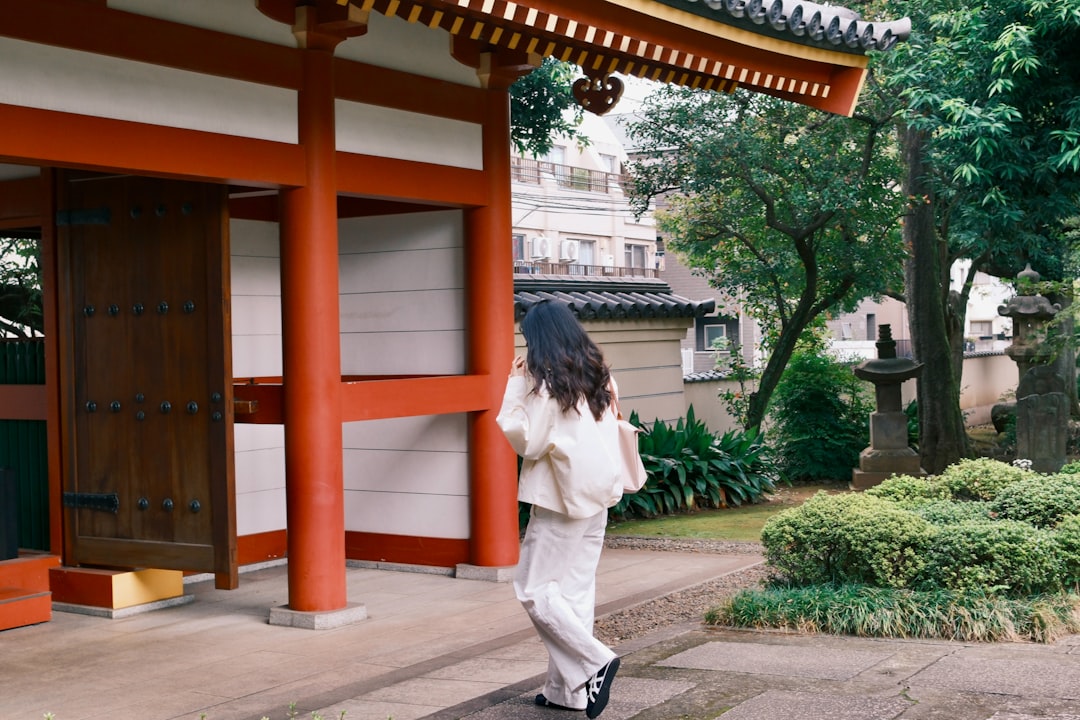
- Do shoes come off in homes, temples, guesthouses, or fitting rooms?
- Is tipping expected, optional, built in, or awkward?
- Are shared plates common, and who starts eating first?
- Is it rude to finish everything on the plate, or rude to waste food?
- Are photos sensitive around people, rituals, police, or sacred objects?
- What gestures should I avoid, especially with feet, hands, or pointing?
- How quiet should I be on public transport and in queues?
- Do I need small cash for donations, shoe storage, or modest clothing fixes?
Before a sacred-site day, check the current visitor rules on the official pages for the Royal Grand Palace, Vatican Museums access rules, or Angkor Enterprise visitor information. General travel etiquette advice is useful, but official site rules are what decide whether you get through the gate.
Greeting customs and personal space on day one
Photo by Mika Baumeister on Unsplash
Greeting customs shape the whole mood of a trip because they happen in the first five seconds. In Paris, entering a bakery and saying bonjour before ordering feels basic and polite. In Japan, a slight bow reads better than a fast, enthusiastic handshake. In the Gulf, a warm verbal greeting may matter more than immediate physical contact, especially across genders.
What catches travelers out is not hostility. It is speed. They walk up to a counter, go straight into a question, or mirror the wrong level of familiarity. Cultural etiquette is often less about doing something impressive and more about not doing too much too soon.
Safe defaults that work in most places:
- Smile lightly, greet first, and pause for a response
- Let the other person decide whether the exchange becomes formal or warm
- Keep your hands visible and relaxed, not overly animated
- Avoid touching children, elders, or strangers unless clearly welcome
- When unsure, follow the eldest person, the host, or the staff member leading the interaction
A useful rule for travel etiquette is this: greet, pause, then ask. That order works in train stations, riads, cafés, temple ticket lines, and hotel desks almost everywhere.
Dress codes for temples, mosques, churches, and homes
Clothing is where good intentions meet real gates, real signs, and real floor staff who can say no. You feel it most at sacred sites: hot streets outside, cool stone inside, a quiet room full of people who understood the assignment better than you did.
Across Southeast Asia, the Middle East, and parts of Southern Europe, modest clothing is less about fashion and more about respect. Even when enforcement varies, showing up prepared changes how smoothly the day goes. If your route includes Angkor temples, the planning in 4 Days in Siem Reap in 2026: How Many Days You Need pairs especially well with checking temple clothing rules the night before.
Here is a copyable cheat sheet for common last-minute fixes:
| Place type or city | Safe default | Common last-minute cost |
|---|---|---|
| Bangkok temples and palace areas | Covered shoulders and below-knee bottoms | THB 150-300 for a basic scarf or wrap near tourist areas |
| Istanbul mosques | Shoes off, modest clothes, carry a light scarf and clean socks | TRY 150-300 for a simple scarf near Sultanahmet |
| Vatican area churches and museums | No bare shoulders, no very short hemlines, no beachwear | EUR 10-20 for an emergency shawl nearby |
| Siem Reap temple circuit | Shoulders and knees covered, sun layer that also works for respect | USD 3-8 for a scarf in local markets |
A few dress rules save a surprising amount of hassle:
- Pack one light scarf or shawl even in hot weather
- Choose shoes you can slip on and off quickly
- Keep a spare pair of socks for mosque floors or shoe-off interiors
- Do not wear swimwear or shirtless outfits away from beach zones
- If visiting Istanbul mosques, review the rhythm of the city in 7 Day Turkey Itinerary 2026: Istanbul, Cappadocia, Ephesus and plan modest clothing into the day, not as an afterthought
Dining etiquette abroad and the bill
Meals are where local customs become intimate. The room slows down. Steam rises from bowls, bread lands in the center of the table, tea appears before anyone talks business, and suddenly the question is not what to eat but how to behave once it arrives.
Dining etiquette abroad changes more than many travelers expect. In Japan, tipping can create awkwardness rather than gratitude. In Morocco, the mint tea or small welcome snack is part of the exchange, not a delay. In India and parts of the Middle East, the right hand still matters in traditional eating contexts. In Italy, coffee has its own rhythm, and a late-night cappuccino is not wrong so much as conspicuously touristy.
Use this table when budgeting and planning meals:
| Destination | Typical tip | One quiet table rule | Casual meal budget |
|---|---|---|---|
| Tokyo | Usually no tip | Do not stick chopsticks upright in rice | JPY 1200-2500 |
| Istanbul | Around 5-10% in restaurants | Bread and meze often set the pace before mains | TRY 350-800 |
| Marrakech | Around 10% if service is not included | Tea is hospitality, so do not rush it | MAD 60-150 |
| Rome | Coperto or service may appear, rounding up is common | Espresso anytime, cappuccino mostly breakfast culture | EUR 15-30 |
When you sit down, look for three clues before you touch anything:
- Who starts first: the host, the eldest person, or the whole table at once
- Whether plates are individual or built for sharing
- How the bill is handled: split openly, paid quietly, or left to the inviter
This is where a local customs checklist pays off twice. It helps you avoid awkward moments, and it stops you underbudgeting for places where service charges, tea, or small tips are part of the real meal cost.
Photos, gestures, and public behavior that travelers often misread
Some of the sharpest cultural etiquette mistakes happen when no one says anything. A camera comes out too fast in a market. A voice carries across a quiet train carriage. A foot points toward an altar while someone adjusts their bag. Nothing dramatic happens, but the room cools.
This is why local customs are not just about festivals or ceremonies. They live in body language, queueing, volume, and how you take up space. In Thailand and other Buddhist contexts, the head is treated with special respect and feet are considered low; pointing them at people or sacred objects is impolite. In Japan, trains can be strikingly quiet. In conservative destinations, public displays of affection may be read very differently from beach towns or large Western cities.
Use these safe defaults when you are unsure:
- Ask before photographing people, especially elders, children, artisans, and worshippers
- Respect no-photo signs without trying to test the line
- Keep your voice low on public transport and in sacred compounds
- Avoid touching anyone's head in Buddhist cultures
- Sit with awareness of where your feet point
- Queue where a queue exists, even if it looks loose or informal
- Bargain only where bargaining is clearly part of the setting
If you land after an overnight flight, your social judgment will be worse than you think. That is one reason it helps to keep the first day simple and calm, especially after long routes; Long Haul Flight Comfort Checklist 2026: Sleep, Water, Seat is useful if fatigue is part of the problem.
A 10-minute arrival routine for respectful travel
The easiest way to use cultural etiquette well is not to rely on memory. Build a short arrival routine and do it every time you reach a new country or region. Ten quiet minutes can prevent the most common mistakes of the next three days.
My version looks like this:
- Read your local customs checklist before leaving the airport or station
- Put scarf, socks, and small cash where you can reach them quickly
- Watch how people greet staff at the first café, kiosk, or hotel desk
- Notice whether locals queue tightly, loosely, or not at all
- Check what people are wearing in the neighborhood you are actually staying in
- Ask your host one specific question such as Do shoes come off here or Is service included nearby
- Mark your sacred-site days so you do not accidentally wear beach clothes to a temple or church
That routine matters because respect is situational. Zanzibar beach clubs, Istanbul mosque courtyards, Kyoto train platforms, and Roman basilicas all ask for different versions of awareness. A local customs checklist does not make you perform like a local. It helps you arrive like a considerate guest.
FAQ
What if I make a cultural mistake?
Apologize briefly, adjust fast, and do not overdramatize it. Most people understand that visitors are learning. Effort matters more than perfection, and a quick correction usually lands better than a long explanation.
How do I find the rules for one specific temple, mosque, or church?
Check the official visitor page for that exact site, not just general country advice. Dress codes, photo permissions, and shoe rules can vary from one building to the next, even in the same city. Save the page the night before your visit so you are not guessing at the entrance.
Is tipping part of cultural etiquette or just budgeting?
Both. Tipping is a social signal and a money category at the same time. In the United States and Canada it is often expected, in Japan it can feel awkward, and in parts of Europe service may already be included or partially built into the bill.
What should I pack if I am visiting conservative or sacred places?
Pack one scarf, one pair of easy-off shoes, one pair of clean socks, and at least one outfit that covers shoulders and knees. In hot weather, loose linen or thin cotton works better than heavy layers. Budget a small emergency amount for a local wrap or shawl if your plans change.
Cultural etiquette is rarely about mastering hundreds of rules. More often, it is about noticing thresholds: the doorway where shoes come off, the counter where a greeting comes first, the table where the pace changes, and the shrine where your camera should stay down. If you prepare for those moments before you fly, the trip usually feels warmer from the minute you land.