A long-haul cabin can drop below 20% humidity, which is drier than many homes and rough on skin, eyes, and sinuses. That is exactly why long flight body care matters: if you treat a 10 to 14 hour flight like a low-cost spa day for your body, you land foggy and swollen; if you plan for dry air, pressure, and hours of sitting, you step off feeling far more human.
Most travelers focus on entertainment and forget the physical basics. The best long flight body care is simple, cheap, and very practical: control dryness, reduce swelling, support sleep, and make movement automatic.
Why long-haul flights feel harder than they should
Photo by Ross Parmly on Unsplash
The discomfort of a long flight is rarely one big thing. It is several small stresses stacking up: dry cabin air, too much salt, not enough water, awkward sleep angles, and hours with your knees bent. By hour eight, your lips feel papery, your lower back starts to complain, and even your rings or shoes can feel tighter.
That is why body-focused planning works better than generic "travel hacks." Instead of asking how to pass time, ask how to protect the parts that suffer first: eyes, skin, neck, hips, calves, and feet. If you are also planning a time-zone shift, pair this article with Science-Backed Jet Lag Plan for Long-Haul Arrivals so comfort in the air turns into a smoother first day on the ground.
Three physical problems cause most long-haul misery:
- Dryness: eyes, lips, skin, and nasal passages all lose moisture fast.
- Swelling: feet, ankles, and fingers often puff up after 6 to 8 hours of sitting.
- Stiffness: neck, lower back, and hip flexors tighten when you stay in one position too long.
A useful rule of thumb: if your flight is over 8 hours, plan it like a small recovery project, not just transport.
Before you board: build a real plane comfort kit
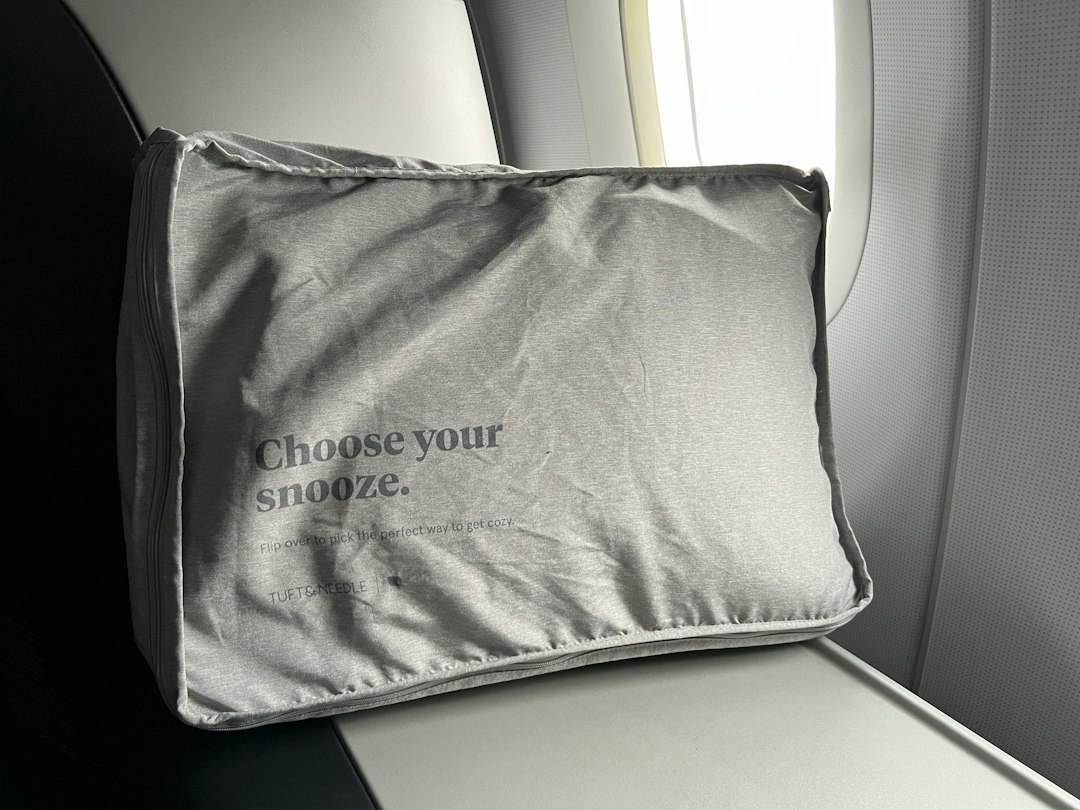
Photo by Frugal Flyer on Unsplash
Good long flight body care starts before security. The outfit matters, the seat matters, and the items you can reach without opening the overhead bin matter even more. If you have ever watched a passenger stand in the aisle juggling a neck pillow, charger, lip balm, and one sock, you already know that comfort is mostly access.
Choose soft layers, not one heavy hoodie. Aircraft cabins swing between chilly during boarding and stuffy during meal service. Wear loose trousers or leggings with a forgiving waistband, a breathable T-shirt, a light mid-layer, and shoes that can handle foot swelling. Slip-on trainers or soft loafers usually beat boots.
If a new nonstop route lets you skip a connection, take it when the price difference is reasonable. One less airport sprint often means one less dehydrating, stressful, sleep-breaking travel day; New Flight Routes 2026: 6 Easier Trips to Plan Now is useful for spotting those opportunities.
Pack this small body-care pouch in the seat pocket zone, not deep in your bag:
- Empty 500 to 750 ml water bottle to fill after security.
- Lip balm and a richer face moisturizer than you use at home.
- Preservative-free eye drops.
- Saline nasal spray.
- Compression socks, ideally 15 to 20 mmHg, put on before leaving for the airport.
- Electrolyte sachets, usually about $0.50 to $1.50 each in 2026.
- One fresh pair of soft socks.
- Small toothbrush and toothpaste for the last 90 minutes of the flight.
- Pain relief or personal medication in original packaging.
For U.S. departures, the TSA liquids rule is still the key limit for cabin liquids, and the FAA PackSafe page is worth checking for batteries, power banks, and medication guidance.
What to drink and eat so you do not land bloated and drained

Photo by Zachary Kadolph on Unsplash
Food and water are where many long-haul flights go wrong. The classic mistake is coffee at the gate, wine with dinner, almost no water, then a salty snack when you cannot sleep. It feels normal in the moment and awful at landing: dry mouth, puffy eyes, heavy legs, and a stomach that cannot decide if it is hungry or just irritated.
A better long flight body care plan is not dramatic. Start hydrated before boarding, sip regularly in the air, and keep your salt and alcohol lower than usual. If you want one easy number to remember, aim to empty and refill a 500 ml bottle at least twice on a 10 to 12 hour flight, more if the cabin feels hot or you are prone to headaches.
Use this eating pattern as a baseline:
- Eat a balanced meal 2 to 3 hours before departure: protein, carbs, and something fresh rather than fast food.
- Say yes to water every time the crew passes, even if you are not very thirsty.
- Use one electrolyte drink during the flight, especially on overnight routes.
- Go lighter on very salty meals, instant noodles, and heavy airport fries.
- Limit alcohol to one drink maximum, or skip it if sleep is a priority.
- Stop caffeine about 8 hours before your planned in-flight sleep window.
If your goal is sleep, do not feel obliged to eat every tray put in front of you. On some routes, skipping one meal service and sleeping through the clatter of carts is the better trade. For arrival-day planning, I often add a simple note in TravelDeck to keep the first meal after landing light and local-time appropriate rather than turning the airport into a second dinner.
How to sleep on a plane without waking up sore
The fantasy version of plane sleep is a full night under a blanket by the window. The real version is more mechanical: you are trying to protect your neck, lower back, and circulation while getting enough rest to function after immigration. That means position matters more than willpower.
Window seats are better if you truly intend to sleep because you can lean and control light a bit more. Aisle seats are better if you know you must stand up often to stretch, pee, or manage swelling. If you sleep lightly and hate being climbed over, aisle usually wins even if you lose the wall.
For better sleep and less pain, set up your body in this order:
- Buckle the seat belt over your blanket so crew do not wake you to check it.
- Support the neck first, then the lower back. A small scarf, hoodie, or lumbar pillow helps more than a giant neck pillow alone.
- Recline as soon as allowed, but not to the point that your chin drops hard toward your chest.
- Put your foot bag or personal item under the seat only if it lets your knees relax; if it crowds your shins, move it.
- Use an eye mask before you feel tired. Light control works best early, not after the cabin brightens.
- Switch screens off 30 minutes before trying to sleep so your eyes and brain stop fighting the plan.
If you are desperate to sleep, do not experiment with strong medication for the first time in the air. It is far smarter to rely on timing, darkness, warmth, and a stable posture than to gamble on grogginess, dry mouth, or missing meals and connection announcements.
Avoid swelling on long flights with the 90-minute rule
Feet swelling inside shoes is one of the most predictable long-haul problems, yet it is still the one people act surprised by at landing. The cabin pressure is lower than at sea level, you sit for hours, and blood pools more easily in the lower legs. This is why your shoes suddenly feel half a size smaller on descent.
The fix is not one heroic walk to the galley. It is regular, boring movement. I like the 90-minute rule: at least every 90 minutes, do something that changes your posture and gets your calves working. That can be a proper aisle walk, a bathroom trip, or a seated mini-routine if the seat belt sign is on.
Try this sequence each cycle:
- 10 ankle circles each way.
- 20 heel raises or toe lifts while seated.
- 10 seconds of glute squeezes, repeated 5 times.
- One short walk to the rear galley or lavatory when safe.
- Refill water after every second movement round.
Compression socks are worth it for flights over 6 hours, especially if you are petite, prone to swelling, pregnant, or connecting onward by train or road. Basic pairs usually cost $15 to $35 in 2026, and they work best if you put them on before the airport journey starts. For general guidance on clot risk and symptoms, the NHS advice on deep vein thrombosis is clear and practical.
The copyable long-haul comfort table
Long flight body care gets much easier when you match each item to the moment you will actually use it. The table below is the version I would copy straight into a trip note before any 9 hour plus journey.
| Item | When to use it | Why it helps | Typical 2026 cost |
|---|---|---|---|
| Compression socks | Put on at home before leaving | Reduces ankle and foot swelling | $15-$35 |
| Refillable bottle | Fill after security, refill in flight | Keeps hydration easy and visible | $10-$30 |
| Electrolyte sachet | Mid-flight or after a salty meal | Helps replace fluids more efficiently | $0.50-$1.50 each |
| Eye drops | Every 3-4 hours if using screens | Cuts burning, gritty eye feeling | $6-$15 |
| Saline nasal spray | Once before sleep, once after waking | Eases dry nose and throat | $4-$10 |
| Rich moisturizer and lip balm | Before takeoff and before landing | Prevents tight, cracked skin | $5-$25 |
| Soft spare socks | Halfway through ultra-long flights | Fresh, warm feet improve comfort fast | $5-$20 |
| Toothbrush kit | Last 60-90 minutes before landing | Mentally resets you for arrival | $3-$8 |
Two final details matter more than travelers expect. First, brush your teeth before descent: it makes you feel less travel-worn than almost anything else for the effort involved. Second, change back into your shoes 30 minutes before landing, not at the last second, when the aisle is blocked and everyone is scrambling for bags.
FAQ
Is aisle or window better for a long-haul flight?
Choose window if sleep is your top priority and you are good at staying put for a few hours. Choose aisle if your body tends to swell, you drink a lot of water, or you know you need frequent movement to stay comfortable.
How much water should I drink on a 12-hour flight?
There is no perfect universal number, but a practical target is about 1 to 1.5 liters across the flight, plus more if you drink caffeine or alcohol. The real goal is steady sipping, not chugging one large bottle at once.
Do compression socks really help on long flights?
Yes, especially on flights over 6 to 8 hours. They are one of the simplest long flight body care tools for reducing swelling, and they work best when combined with regular calf movement and short walks.
Should I eat the airline meals or skip them?
Eat if the timing supports your sleep and arrival plan. If a meal service lands right in the middle of your best sleep window, it is often smarter to eat lightly before boarding and sleep through one tray service.
What is the most overlooked item for long-haul comfort?
For many people, it is saline nasal spray or eye drops rather than a neck pillow. Dry nose, dry eyes, and that scratchy "plane throat" feeling can make the whole journey feel longer than it is.
A comfortable long-haul flight is rarely about luxury. It is usually about a few small decisions made early: looser shoes, more water, less salt, better posture, and movement before stiffness becomes pain. Get those right, and the aircraft still feels like a metal tube in the sky, but not one that steals the first day of your trip.