Long Haul Flight Comfort Tips for 2026: Feel Better on Arrival
Cabin air on a long flight can be drier than many deserts, your body clock can be thrown across half the planet in a single night, and your knees may spend 11 hours negotiating with a tray table. That is why long haul flight comfort tips matter so much more than most travelers think. The difference between landing dazed and landing functional is rarely luck. It is usually a chain of small decisions made before boarding, during the first two hours in the air, and in the groggy final stretch before descent.
The good news is that comfort on a long route is not reserved for business class. Some of the most effective long haul flight comfort tips cost almost nothing: choosing the right seat, timing caffeine, wearing the right socks, eating less strategically, and moving at the right moments instead of only when you feel miserable. If you have ever stumbled off a red-eye with swollen feet, fuzzy eyes, and a headache that feels baked into your skull, this guide is for you.
Why most long haul flight comfort tips start too late
Photo by Sevcan Alkan on Unsplash
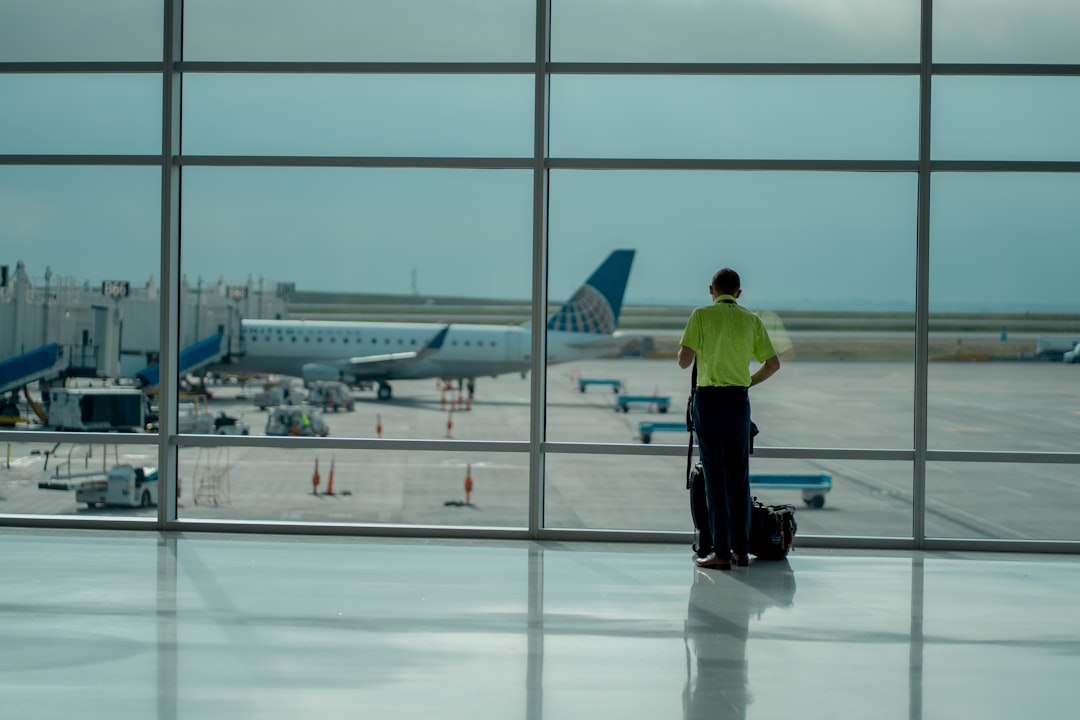
A long-haul flight does not begin when the wheels leave the runway. It begins when you decide what time to wake up, what you eat before leaving home, how much you rush through security, and whether you treat the airport like a sprint or a slow setup. Most discomfort that shows up over Greenland or the Pacific has already been building for hours on the ground.
Think about the classic bad flight day. You wake early, grab a salty breakfast, drag an overloaded backpack through a hot terminal, buy a coffee because you are tired, then another because the gate changes, then a beer because vacation has officially started. By the time you sit down, you are dehydrated, tense, slightly underfed in a useful way but overfed in a bloating way, and mentally convinced the seat is the only problem. It usually is not.
The smartest long haul flight comfort tips work because they deal with the hidden layers of strain: dry air, static posture, circadian confusion, bright screens, airport stress, digestive slowdown, and the tiny emotional abrasion of being unable to leave. Once you see the flight as a system instead of a seat, you start making better choices.
Here is what makes long routes feel harder than they should:
- Cabin humidity is extremely low, which dries your eyes, skin, lips, and nasal passages.
- Sitting still for 8 to 16 hours encourages stiffness, swelling, and restless legs.
- Poor seat choice can turn a manageable trip into a shoulder-crushing endurance test.
- Alcohol, heavy meals, and poorly timed caffeine make it harder to sleep on a plane.
- Jet lag is often made worse by random eating and sleeping rather than the time zone itself.
- In-flight boredom pushes people toward nonstop screen time, which increases eye strain and mental fatigue.
- Small annoyances compound: cold ankles, low battery, missing lip balm, no water within reach, no plan.
Book smarter: the best seat for long flights is not always the obvious one
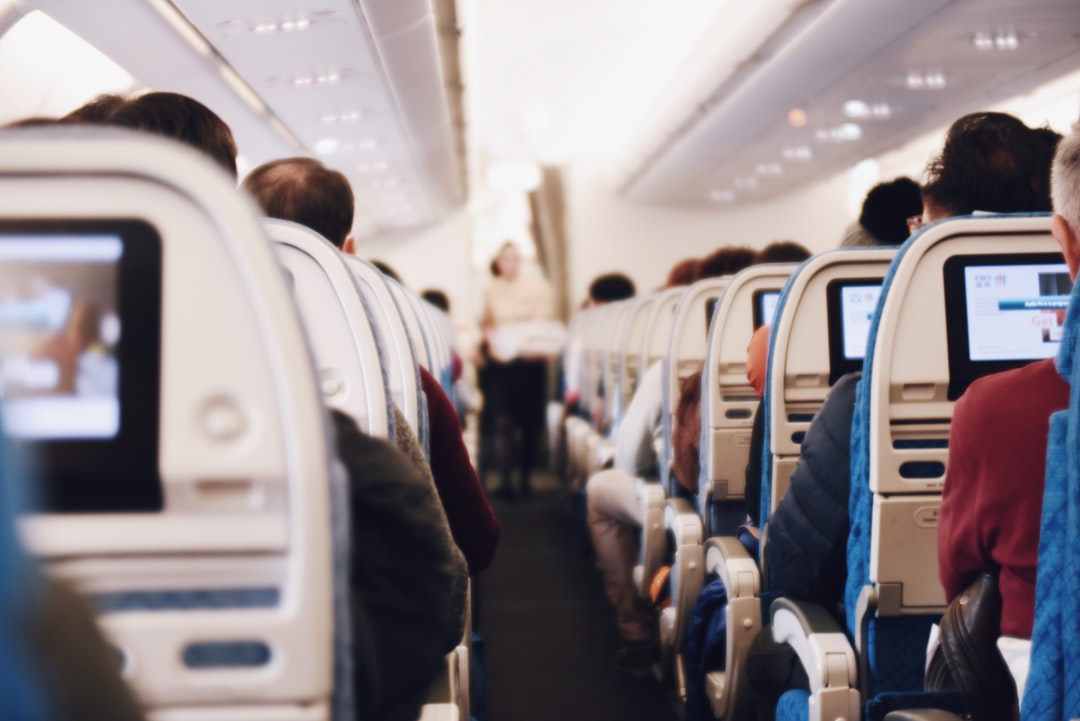
Photo by Suhyeon Choi on Unsplash
When people talk about the best seat for long flights, they often reduce the whole question to window or aisle. In reality, comfort is more architectural than that. Where you sit in relation to the wing changes how much motion you feel. Which side of the cabin you pick can affect sun exposure on daytime routes. A seat near a lavatory may look convenient on a map and sound like a flushing subway station in real life.
One of the most useful long haul flight comfort tips is to treat seat selection like gear selection. The best seat for long flights depends on what bothers you most. If you sleep easily and hate being climbed over, the window is worth it. If you need to stretch often or have a cautious bladder, the aisle wins. If turbulence makes you tense, sit closer to the wing where the ride usually feels less dramatic. If you want a shot at empty adjacent seats, the back half of a large cabin can occasionally work in your favor, though that trade-off often means more galley noise.
For travelers who can spend a little more, premium economy is sometimes the best-value upgrade in aviation. You are not buying glamour so much as buying geometry: more recline, wider armroom, better head support, and a few extra degrees of personal dignity. If you collect points, it is worth reading How to Use Travel Points in 2026 for a Smart Paris Trip for a useful reminder that points are often better spent on comfort than on tiny fare savings.
A quick seat strategy table
| Seat type | Best for | Watch out for | Typical verdict |
|---|---|---|---|
| Window | Sleepers, wall leaners, scenic routes | Harder to get up, more temperature swings | Great if you want to sleep on a plane with fewer interruptions |
| Aisle | Frequent movers, taller travelers | Cart bumps, being brushed by passing traffic | Often the safest all-round pick |
| Bulkhead | Leg movement, bassinets nearby on some routes | Fixed armrests, entertainment in armrest, baby rows possible | Good only if the exact aircraft layout is favorable |
| Exit row | Legroom | Some seats do not recline, bags may need to go overhead | Excellent if you confirm the specific seat details |
| Over-wing rows | Turbulence-sensitive travelers | Wing view, engine noise on some aircraft | Often the best seat for long flights if motion bothers you |
| Last rows near galley | Chance of empty seats nearby | Noise, queues, limited recline on some planes | Risky but sometimes worth it on lightly booked routes |
Practical seat rules that work on most routes:
- For overnight eastbound flights, pick the side least likely to get strong sunrise light in your face near landing.
- For daytime long-haul sectors, choose the aisle if you know you need to move every 90 minutes.
- Avoid the row directly in front of lavatories if possible.
- If you are traveling as a pair on a wide-body in a 3-4-3 or 2-4-2 layout, two seats by the window can feel more private than sitting in the center block.
- Check the aircraft map after booking and again at online check-in. Aircraft swaps happen.
Build a real comfort kit: economy flight essentials that earn their space
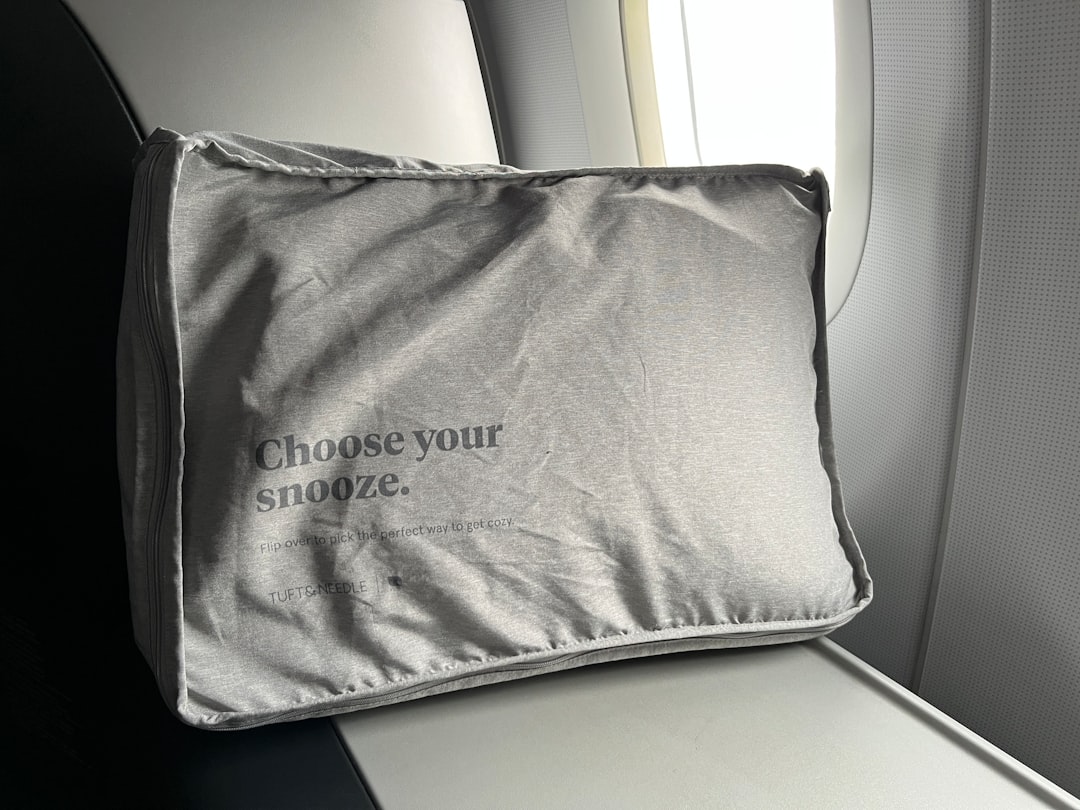
Photo by Frugal Flyer on Unsplash
The best economy flight essentials are not the glamorous ones from airport gift shops. They are the quiet, utilitarian items that prevent problems before they start. A soft eye mask. Compression socks that actually fit. Lip balm you can reach without excavating your bag in the dark. A refillable water bottle clipped where your hand can find it by feel. The right kit makes the cabin feel less like a sealed tube and more like a space you can manage.
Good long haul flight comfort tips almost always come down to friction. If an item is annoying to access, you will not use it. If your power bank is buried, your phone dies. If your moisturizer is in the overhead bin, your skin stays dry. If your sleep mask is tangled in cables, you stare at the moving map until 3 a.m. local time somewhere over Kazakhstan. Your economy flight essentials should live in one slim pouch or seat-pocket setup, ready before takeoff.
This is also where digital prep matters. Download maps, playlists, movies, boarding passes, hotel confirmations, and a backup copy of your passport before leaving home. Must-Have Travel Apps for 2026: Build a Lean Phone Setup is a solid companion read if your phone tends to become a junk drawer before a trip.
The comfort kit I would not board without
| Item | Why it matters | Ideal version |
|---|---|---|
| Refillable bottle | Helps you stay hydrated on flights without waiting for service | Empty 500 ml to 750 ml bottle filled after security |
| Compression socks | Reduces swelling and supports circulation | Knee-high, graduated, comfortable enough to wear all day |
| Eye mask | Makes it easier to sleep on a plane even during day departures | Contoured or soft padded mask |
| Earplugs or noise-canceling headphones | Cuts engine hum and cabin chatter | Headphones for long use, earplugs as backup |
| Lip balm and moisturizer | Cabin dryness is relentless | Unscented, travel-size |
| Saline nasal spray | Helps with dryness in the nose on long routes | Travel-size bottle |
| Power bank and short cable | Seat power often fails | Fully charged, airline-compliant battery pack |
| Slip-on shoes or warm socks | Feet swell, cabin floors get cold | Flexible shoes plus a fresh sock pair |
| Small toothbrush kit | A five-minute reset before landing changes everything | Foldable brush and mini toothpaste |
| Electrolyte packets | Useful on ultra-long routes or after alcohol or poor sleep | Low-sugar packets |
A strong economy flight essentials list should also include:
- A light layer you can remove easily, such as a zip hoodie or thin sweater.
- A pen for arrival forms when digital systems fail or lines are moving fast.
- One clean T-shirt if you are facing a long connection.
- Basic medication in your personal item, never in checked luggage.
- A snack you genuinely like, not a sad emergency bar you will ignore.
If you are unsure about liquid limits or medical items, check the current rules at TSA or the security page for your departure airport before you leave home.
Your airport routine decides the flight: comfort begins before boarding
A terminal can either sharpen your day or scatter it. Bright light, long walks, espresso machines hissing, rolling suitcase wheels on polished floors, departure boards flickering with gate numbers: it is easy to absorb the airport as background stress. The better approach is to build a sequence. Some of the most underrated long haul flight comfort tips happen in the 90 minutes before boarding.
I like a simple airport rhythm: fill the bottle, eat lightly, walk for ten or fifteen minutes, use the restroom before the queue forms, set my watch to destination time, then sit down only when I am ready to board. That sequence reduces the chaos. If I am leaving from a huge airport, I often map that order in TravelDeck so the day feels intentional rather than improvised. And if your focus is trimming airport friction and avoiding overpriced mistakes, Airport Budget Travel Tips for 2026: Faster, Cheaper Flights is worth a skim before your next departure.
This is also the moment to start jet lag prevention. If your destination is going to bed soon, switch to gentler light, skip the second coffee, and avoid a giant burger just because the airport smells like fries and toasted bread. If your destination is waking up, seek brighter light, eat something with protein, and stay awake until you would reasonably sleep there.
Pre-boarding routine that pays off in the air
- Arrive early enough that your heart rate is normal before boarding starts.
- Refill your bottle after security and take a few steady sips before takeoff.
- Eat a meal that is light, warm, and familiar rather than greasy or enormous.
- Walk the terminal instead of sitting at the gate for an hour.
- Use the restroom right before boarding, especially if you have a window seat.
- Put compression socks on before you get to the airport, not halfway through the flight.
- Move your must-have items into one easy-access pocket or pouch.
- Switch your devices to night mode if you are planning to sleep soon after takeoff.
How to sleep on a plane without arriving foggy and furious
People talk about how to sleep on a plane as if there is a magic pillow that solves everything. There is not. Sleeping well in economy is an orchestration problem. You need darkness, noise control, neck support, temperature control, a seat position that does not torque your spine, and a sleep window that actually matches your destination. That is why long haul flight comfort tips around sleep are less about gadgets and more about timing.
If you board a late-night eastbound flight, do not start by watching three action movies under bright blue light and then wonder why your body refuses to cooperate. The cabin after dinner is a negotiation between the glow of seatback screens, the hiss of ventilation, the occasional clink of ice in plastic cups, and the gentle awkwardness of everyone trying to become smaller than they are. To sleep on a plane, you need to reduce inputs fast and consistently.
The most reliable formula is simple: eat lightly, brush teeth, lower screen brightness, put on warmer socks, use the restroom, then settle into sleep mode before the cabin gets noisy again for breakfast. If you know you are sensitive to supplements or sleep aids, be cautious and talk to a clinician before using anything new. For most travelers, the basics outperform experimentation.
Best timing for sleep by route type
| Route style | Best approach | What to avoid |
|---|---|---|
| Eastbound overnight, such as New York to London | Sleep as soon as practical after takeoff | Long movie marathons, heavy alcohol, late caffeine |
| Westbound daytime, such as Europe to North America | Stay awake longer, nap only briefly if needed | Forcing a full sleep too early |
| Ultra-long haul 12 to 17 hours | Split rest into one main sleep block plus one shorter quiet period | Grazing constantly and drifting in and out all flight |
| Early morning departure | Stay strategic with caffeine and take only a planned nap | Random dozing that ruins destination bedtime |
How to sleep on a plane more successfully
- Choose a window seat if uninterrupted rest matters more than easy aisle access.
- Use a neck pillow that supports the chin, not just the back of the neck.
- Put your seat belt over your blanket so crew do not need to wake you during turbulence checks.
- Keep your feet warm. Cold ankles are a surprisingly common sleep killer.
- Avoid alcohol as a sleep tool. It fragments rest and worsens dehydration.
- Use an eye mask before you feel tired, not after the cabin has already irritated you.
- If you cannot sleep on a plane, at least create restful wakefulness: mask on, audio only, body relaxed, no doom-scrolling.
The phrase sleep on a plane sounds simple, but it is really about reducing the reasons you wake up. Once that clicks, your odds improve fast.
Eat and drink for comfort, not entertainment: real jet lag prevention starts here
One of the most overlooked long haul flight comfort tips is that airline food is not a schedule. It is a service pattern. If you let trays and trolleys decide when you eat, your body clock takes another hit on top of the time-zone jump. Real jet lag prevention begins when you decide whether the meal being offered actually matches where your body needs to go.
The cabin is a strange place to eat. Your sense of taste is muted, salt and sugar feel louder, dry bread becomes a small punishment, and fizzy drinks can turn into trapped discomfort. On the wrong route, a heavy pasta and two glasses of wine feel cozy for twenty minutes and regrettable for six hours. Better jet lag prevention often means eating less but eating more deliberately.
If you are flying east overnight, a lighter dinner and an earlier attempt to sleep usually work better than treating the flight like a restaurant with armrests. If you are flying west and trying to stay awake, a normal meal at the destination lunch or dinner time can help anchor the day. None of this requires perfection. It only requires not being random.
A practical food and hydration strategy
- Start trying to stay hydrated on flights before boarding, not after the first drink service.
- Drink water steadily instead of chugging huge amounts at once.
- Use electrolytes on very long routes, after poor sleep, or if the cabin feels especially dry.
- Choose meals with protein, vegetables, rice, potatoes, oats, yogurt, or fruit over rich fried foods.
- Go easy on carbonated drinks if you tend to bloat in the air.
- Treat alcohol as optional flavor, not sedation.
- Stop caffeine roughly 8 hours before your target sleep time if sleep matters on that leg.
What usually feels best in the air
| Better choices | Why they work |
|---|---|
| Oatmeal, eggs, yogurt, fruit | Gentle on the stomach, useful for morning arrivals |
| Rice bowls, grilled chicken, soups, simple noodles | Easier digestion, less greasy heaviness |
| Nuts, bananas, crackers, cheese, dark chocolate | Solid backup snacks with decent staying power |
| Water and low-sugar electrolyte drinks | Helps you stay hydrated on flights without a sugar crash |
| More troublesome choices | Why they can backfire |
|---|---|
| Large burgers and fries | Heavy, salty, often bloating |
| Several alcoholic drinks | Dehydration, poor sleep, more bathroom trips |
| Energy drinks late in the flight | Harder to sleep on a plane or adapt on arrival |
| Very spicy meals right before takeoff | Risky if you have a sensitive stomach |
For jet lag prevention, meal timing matters almost as much as meal content. Try this easy rule: eat when you want your body to believe it is daytime, and go light when you want it to believe it is night.
Move before you ache: circulation, swelling, and the body-care basics
The body keeps score on long flights. Ankles puff against socks. Hips harden. Shoulders creep upward. The back of the neck becomes its own weather system. Good long haul flight comfort tips do not promise you will feel fresh after 14 hours in economy. They help you avoid feeling dramatically worse than you need to.
Movement should be preventive, not heroic. Do not wait until your legs feel like borrowed furniture. Stand up every 90 minutes or so if conditions allow. Roll the ankles. Lift the heels. Tighten and release the calves. If the aisle is clear, walk a few slow lengths of the cabin. The goal is not exercise in the gym sense. It is circulation, joint mobility, and a mental reset.
Compression socks help many travelers, especially on flights over four hours. So does wearing shoes with enough give for swollen feet. This is also where another of the classic long haul flight comfort tips proves its value: stay hydrated on flights consistently, because dehydration makes everything feel tighter, drier, and harder.
Simple in-seat movements that actually help
- Ankle circles: 10 each direction per foot.
- Heel lifts and toe lifts: 15 to 20 reps each.
- Glute squeezes: hold for 5 seconds, repeat 10 times.
- Shoulder rolls: slow and wide, 8 to 10 reps.
- Chin tucks: gentle neck reset without forcing a stretch.
- Seated figure-four stretch if space allows and your hips tolerate it.
Signs you need to get up sooner
- Shoes suddenly feel tighter.
- Your lower back starts throbbing or burning.
- You are crossing and recrossing your legs because nothing feels comfortable.
- You feel oddly chilly in the feet or hands.
- You are getting restless but keep opening another app instead of moving.
If you have risk factors for clotting or circulation issues, check travel guidance from a clinician and review basic information from the CDC before a very long route.
Screen fatigue, anxiety, and the tiny luxuries that save the day
Some long-haul misery is physical. Some is mental. The cabin becomes a compressed little world of blinking reading lights, seatback maps drifting over oceans, children asleep at impossible angles, and the low mechanical hum that never quite disappears. This is where long haul flight comfort tips can become almost emotional. A better flight is often about reducing irritation before it becomes mood.
If you feel anxious in the air, give yourself a job. Follow a routine. Breathe on a count. Read six pages. Listen to one album. Stand and stretch. Reapply lip balm. Wipe your face. The mind handles confinement better when time has shape. The same goes for screen use. If you stare into a bright device for ten straight hours, the flight feels both fast and exhausting. Break it up.
A good rule is to alternate stimulation and recovery. Watch something, then listen to something. Read, then close your eyes. Work for forty minutes, then walk for five. The more variety you create, the less cabin time turns syrupy.
Small comforts with oversized impact
- Reduce screen brightness more than you think you need.
- Follow the 20-20-20 eye rule as best you can: every 20 minutes, look down the cabin for 20 seconds.
- Pack one thing that feels emotionally comforting, such as a familiar scarf, playlist, or tea bag.
- Use a face mist sparingly if dry skin really bothers you.
- Freshen up halfway through with a toothbrush and gentle face wash.
- If turbulence triggers you, keep your seat belt fastened loosely and focus on a long exhale.
These softer long haul flight comfort tips do not look dramatic in a packing photo, but they often decide whether the flight feels survivable or strangely civilized.
How to get there
Even on a story about cabin comfort, ground transport matters. Your long-haul day starts with getting to the airport in a way that protects your energy instead of draining it. If you are leaving from one of the world's big hubs, these routes are usually the cleanest, least stressful options in 2026.
Use official airport sites for live updates and first-train times, especially on early departures or strike days: Heathrow, JFK, Changi, and Dubai Airports.
| Airport | From city center | Best option | Typical time | Typical cost | Notes |
|---|---|---|---|---|---|
| London Heathrow, LHR | Paddington or central London | Elizabeth line for value, Heathrow Express for speed | 15 to 40 min | About £13.30 on Elizabeth line, about £25 on Heathrow Express | Piccadilly line is cheapest from many areas but slower |
| New York JFK, JFK | Manhattan | AirTrain plus LIRR for balance of speed and price | 35 to 50 min | About $13.25 total with CityTicket timing, more at peak | Taxi can take 45 to 90 min and costs more with tolls and tip |
| Singapore Changi, SIN | City Hall, Bugis, Orchard | MRT for value, taxi for very early departures | 30 to 50 min | About SGD 2 on MRT, roughly SGD 25 to 45 by taxi | Changi is efficient, but allow time for Jewel if visiting |
| Dubai International, DXB | Downtown Dubai or Deira | Metro Red Line or taxi | 15 to 35 min | About AED 3 to 8 by metro, AED 35 to 70 by taxi | Check terminal carefully, especially for Terminal 2 |
If your flight departs before 8 a.m., think hard about whether saving money is worth a pre-dawn transfer. Sometimes the best long haul flight comfort tips involve paying for the quieter option the night before.
Things to do
If you have a long layover or an intentionally early arrival, do something that helps your body rather than just killing time. Bright light, a real shower, a calm walk, or a decent meal can improve the flight ahead more than another hour at the gate. Airports are often more humane than they look once you stop treating them like corridors.
The trick is to choose activities that reset one of four things: muscles, hydration, mood, or circadian rhythm. Sunlight or bright interior gardens help. So does anything that gives you space, greenery, or warm water.
Here are useful pre-flight or layover activities at major hubs:
- Watch the Rain Vortex at Jewel Changi, 78 Airport Boulevard, Singapore
- Visit the Butterfly Garden in Changi Terminal 3
- Take a shower at Plaza Premium Lounge at Heathrow Terminal 2 or 5
- Book a short rest pod at sleep 'n fly, Dubai International Terminal 3
- Use the rooftop pool or lobby spaces at TWA Hotel, JFK
- Head to the Observation Deck at Haneda Airport Terminal 3, Tokyo
- Walk the Sunflower Garden at Changi Terminal 2
Where to stay
If you have a dawn departure, a late arrival, or a self-made long connection, sleeping near the airport can be one of the smartest long haul flight comfort tips of all. You trade one hotel night for a calmer body, a shorter transfer, and a much better chance of boarding without already feeling spent.
Below are airport-friendly stays that make sense by budget tier. Prices vary by season and event dates, but these are realistic 2026 ballparks.
| Budget tier | Hotel | Airport | Typical price | Why it works |
|---|---|---|---|---|
| Budget | ibis budget London Heathrow Central | LHR | £65 to £95 | Simple, reliable, useful for early departures |
| Budget | Hampton Inn NY-JFK | JFK | $170 to $240 | Shuttle convenience and breakfast included on many rates |
| Budget | Premier Inn Dubai International Airport | DXB | AED 190 to AED 320 | Good value, frequent choice for overnight layovers |
| Mid-range | Hilton Garden Inn London Heathrow Terminal 2 and 3 | LHR | £170 to £240 | Walkable to terminals, which is gold on early mornings |
| Mid-range | TWA Hotel | JFK | $280 to $420 | Stylish and practical for Terminal 5 access |
| Mid-range | Crowne Plaza Changi Airport | SIN | SGD 280 to SGD 420 | Directly connected feel and consistently smooth for transit stays |
| Luxury | Sofitel London Heathrow | LHR | £230 to £360 | Direct Terminal 5 access and deeply quiet rooms |
| Luxury | Fairmont Vancouver Airport | YVR | CAD 320 to CAD 520 | Soundproof comfort inside the airport itself |
| Luxury | Grand Hyatt at SFO | SFO | $320 to $480 | Excellent for long-haul departures and Bay Area early flights |
Where to eat
Airport food is often framed as a last resort, but the right pre-flight meal can be part of your comfort plan. Think warm, digestible, protein-forward, and not absurdly salty. You want food that steadies you, not food that makes the next six hours feel like you swallowed a brick.
If you are eating at an airport before a long sector, favor places where you can order something simple even if the menu leans indulgent. Soup, rice, grilled fish or chicken, eggs, noodles, and vegetables usually perform better in the air than giant fried platters.
Useful options at major long-haul hubs:
- Gordon Ramsay Plane Food, Heathrow Terminal 5
- The Perfectionists' Café, Heathrow Terminal 2
- Violet Oon Singapore, Jewel Changi
- Shake Shack, JFK Terminal 4
- Jones the Grocer, Dubai International Terminal 3
- Wagamama, various major airports including Heathrow
If your stomach is delicate when flying, keep it simple and save the celebratory feast for after landing. And if your trip continues straight into a street-food-heavy destination, bookmark Street Food Safety Abroad in 2026: Eat Like a Local for the next phase of the journey.
Practical tips
The most useful long haul flight comfort tips are the ones you can reuse on every route, whether you are flying six hours or sixteen. Comfort comes from season, clothing, timing, packing, and knowing what kind of airport day you are walking into.
Northern winter often means weather delays, bulkier clothing, and drier cabin-to-terminal transitions. High summer means crowds, thunderstorm disruptions in some regions, and terminals that feel hotter and louder. Shoulder seasons usually offer the easiest airport experience, which is one reason frequent flyers love them.
Season-by-season flight comfort guide
| Period | What to expect | Smart move |
|---|---|---|
| Jan to Feb | Winter storm risk in North America and Europe, dry cabin skin feels worse | Wear layers, build in extra connection time |
| Mar to May | More manageable crowds, easier airport transfers | Great months for testing a stricter sleep routine |
| Jun to Aug | Peak travel volume, family travel, heat, storm delays in some hubs | Travel with patience, refill water constantly |
| Sep to Oct | Strong shoulder season, often smoother operations | Good time for overnight long-haul routes |
| Nov to Dec | Holiday surges, longer security lines, weather disruptions | Arrive earlier and keep essentials in your personal item |
Fast practical advice you will actually use
- What to pack: compression socks, eye mask, lip balm, moisturizer, thin layer, refillable bottle, power bank, charger, toothbrush kit.
- Customs and biosecurity: finish fresh fruit before arrival in countries with strict controls such as Australia, New Zealand, and sometimes the U.S. depending on the item.
- Currency: keep a small amount of destination cash only if you truly need it; cards and mobile payments cover most hub-airport needs now.
- Connectivity: download an eSIM before departure if your phone supports it; airport Wi-Fi is fine for basics, not something to build your entire arrival around.
- Safety: keep medication, passport, wallet, and one bank card on your person, not loose in the seat pocket.
- Clothing: stretch fabrics, warm socks, and a layer you can zip on one-handed beat stylish airport outfits every time.
Jet lag prevention also works better when you commit early. Once you decide whether the flight is for sleeping or staying awake, let the rest of your choices support that decision.
FAQ
What is the best seat for long flights in economy?
For many people, the best seat for long flights is an aisle seat near the wing. You get easier access to stand up, and the ride often feels steadier there. If uninterrupted sleep matters most, a window seat near the wing is usually better.
How often should I move on a long-haul flight?
Aim to stand, stretch, or walk roughly every 60 to 90 minutes when it is safe to do so. Even small in-seat movements help between walks. This is one of the simplest long haul flight comfort tips to maintain on every trip.
Is it better to eat or fast on a long flight?
That depends on your body and your route. For many travelers, lighter eating timed to the destination works better than grazing all flight. If you are prone to headaches, low blood sugar, or anxiety when hungry, do not force fasting. Jet lag prevention is about consistency, not punishment.
Do compression socks really help?
Yes, many travelers find that they reduce swelling and improve leg comfort, especially on flights over four hours. Put them on before you leave for the airport for the best effect.
I never manage to sleep on a plane. What should I do instead?
If you cannot sleep on a plane, aim for deep rest rather than full sleep. Use an eye mask, listen to audio only, keep your body warm, skip alcohol, and close your eyes for planned quiet periods. Rest still helps, and it keeps you from arriving completely depleted.
The part most travelers miss
The best long haul flight comfort tips are not glamorous. They are ordinary, repeatable, almost boring choices made in the right order. A good seat. A lighter meal. Water within reach. Socks before swelling starts. A screen turned down. A walk before you feel trapped. That is how a punishing travel day becomes a manageable one.
And that, more than any miracle gadget, is what makes a long-haul flight feel comfortable: not luxury, but control. When you land with clear eyes, a calmer stomach, and enough energy to find the train, the hotel, or the first coffee in a new city, you feel the difference immediately.