Marrakech Medina Safety 2026: Outsmart Scams, Stay Well
The first scam in Marrakech rarely feels like a scam. It feels like help. A man points down a sun-bleached alley and tells you your riad is closed. A woman takes your hand for henna before you have time to answer. A taxi driver smiles, loads your bag, and skips the meter. That is why Marrakech medina safety matters so much: the city is warm, beautiful, theatrical, and full of moments that blur the line between hospitality and hustle.
Step through Bab Doukkala or drift toward Jemaa el-Fnaa at sunset and the medina hits every sense at once. Brass lamps flash in shopfronts, scooters brush past your elbow, orange juice carts glow beneath dusty pink light, and the air smells like cumin, leather, wood smoke, mint tea, and hot stone. It is thrilling. It is also mentally loud. When your attention is split, you become easier to steer, rush, flatter, confuse, or overcharge.
This guide looks at Marrakech medina safety through a practical lens: not fear, not paranoia, just sharper habits. You will learn how common street scams work, how to handle a Marrakech taxi scam without drama, where fake guides in Marrakech usually appear, what changes after dark, and how to enjoy the city without spending your trip in defensive mode. If you like comparing scam patterns across busy tourist hubs, Bangkok Tourist Scams 2026: Street Smarts for Safer Days is a useful companion read too.
Why Marrakech medina safety feels harder than it is
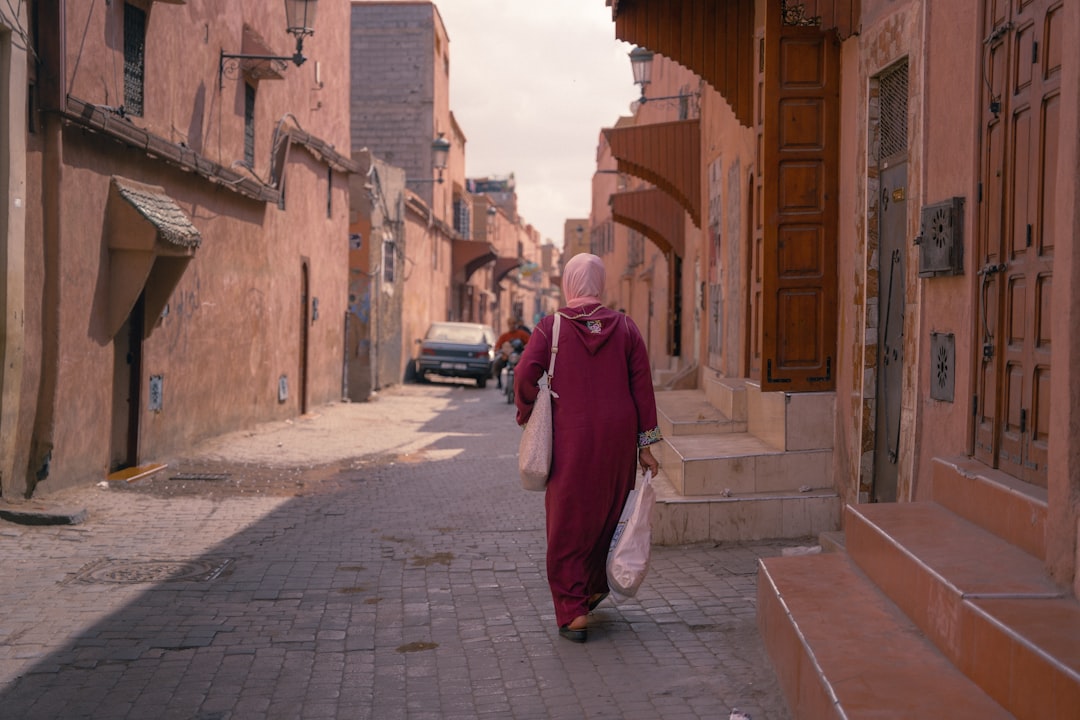
Photo by Mr Harter on Unsplash
On a map, the old city looks compact. On foot, it feels like a living maze. Alleys narrow and widen without warning. A lane lined with woven baskets suddenly turns into a motorbike shortcut. Signs switch between Arabic, French, and nothing at all. Your phone GPS may lag under thick walls, and addresses are often more poetic than precise. That confusion is exactly where many Marrakech scams begin.
Most visitors do not get targeted because they are reckless. They get targeted because they are overstimulated, polite, jet-lagged, heat-tired, or carrying obvious arrival energy. The scammer is usually reading body language, not your nationality. Slow walking, swiveling to look for street names, holding a phone out like a compass, or dragging luggage through the medina are all signals. Good Marrakech medina safety starts with understanding that scammers are opportunists, not masterminds.
The good news is that the city becomes easier very quickly. By day two, you start recognizing landmarks, the rhythm of the lanes, the difference between genuine directions and a setup, and which offers are simply part of the theatre. Strong Morocco travel safety habits do not require you to be suspicious of everyone. They require you to reduce ambiguity.
Most common moments when travelers get caught off guard:
- Arriving from Marrakech Menara Airport with no transfer plan
- Searching for a hidden riad for the first time after dark
- Stopping in Jemaa el-Fnaa to photograph performers without asking the price first
- Agreeing to a taxi ride before checking the fare range
- Accepting unsolicited help at an ATM or ticket machine
- Following a stranger to a second location for tea, carpets, argan oil, or a shortcut
- Letting fatigue, heat, or hunger make every small decision feel urgent
| Situation | What it feels like | What is really happening | Best response |
|---|---|---|---|
| Someone says your riad is closed | Helpful local advice | Diversion to a paid guide or another property | Ask your riad directly and keep walking |
| Henna artist grabs your hand | Friendly street interaction | Pressure sale with inflated price | Pull back politely and say no firmly |
| Taxi refuses meter | Normal local bargaining | Overcharge setup | Agree fare before entering or take another cab |
| Stranger offers ATM help | Courtesy | Card or PIN theft attempt | Use indoor bank ATMs only |
| Performer poses for your camera | Fun local scene | Paid photo opportunity | Set the fee before taking any shot |
How to get there
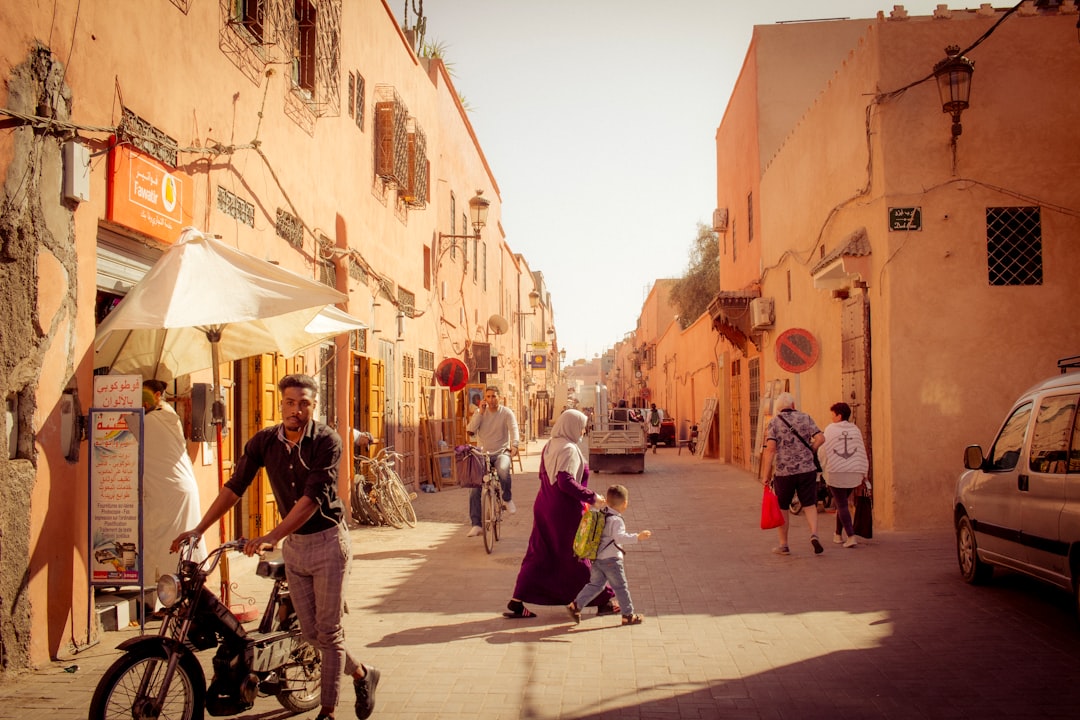
Photo by jewad alnabi on Unsplash
Marrakech announces itself before you even reach the walls. From the plane, the land looks baked and coppery, with the Atlas Mountains sometimes standing pale on the horizon. Then you land at Marrakech Menara Airport, code RAK, and the arrival hall starts humming with drivers, transfers, currency exchange desks, and the usual post-flight decision fatigue. That is the first place where Marrakech medina safety becomes practical rather than theoretical.
If you are staying inside the old city, solve your arrival before you fly. Many riads can arrange a driver who knows exactly which gate to use and where a porter should meet you. That small step is worth more than most travelers realize, because fake guides in Marrakech feed on the gap between the taxi drop-off and the final 200 meters to a hidden doorway. I usually save the riad address in French and Arabic, the WhatsApp contact, and an offline pin before departure; storing all that in TravelDeck or your notes app makes a late arrival much smoother.
Marrakech also works well overland. Trains from Casablanca and Rabat are comfortable, buses from Essaouira and Agadir are common, and self-drive itineraries are straightforward once you reach the ring roads outside the medina. Just remember that the final approach into the old city is a pedestrian puzzle, not a front-door hotel drop-off.
Best ways to arrive in Marrakech:
- Fly into Marrakech Menara Airport, RAK: about 15 to 20 minutes by taxi to Koutoubia or the medina edge in light traffic.
- Airport shuttle bus L19: usually around 30 MAD one way or 50 MAD return, with stops near Jemaa el-Fnaa, Hivernage, and Gueliz. It is the cheapest simple option for daylight arrivals.
- Official airport taxi: typically 100 to 150 MAD by day to central areas, often higher at night. Confirm the fare before loading your bags.
- Train from Casablanca: from Casa Voyageurs to Marrakech, usually around 2 hours 40 minutes to 3 hours. If starting at Casablanca Mohammed V Airport, add transfer time into the city.
- Train from Rabat: usually 3 hours 30 minutes to 4 hours 30 minutes depending on service.
- Bus from Essaouira: about 3 hours with CTM or Supratours.
- Bus or drive from Agadir: roughly 3 to 3.5 hours.
- Drive from Casablanca: around 2.5 to 3 hours on the A7 toll road, not counting city traffic.
- From Spain via ferry: take the ferry to Tangier Med, then continue by train or car; it is a long but workable overland route.
| Route | Typical duration | Usual cost | Best for |
|---|---|---|---|
| RAK to medina by L19 bus | 20 to 30 min | 30 MAD | Budget travelers arriving by day |
| RAK to medina by taxi | 15 to 20 min | 100 to 150 MAD day, more at night | Easy arrivals with luggage |
| Casablanca to Marrakech by train | 2h40 to 3h | roughly 150 to 250 MAD depending on class | Fast intercity transfers |
| Rabat to Marrakech by train | 3h30 to 4h30 | roughly 200 to 350 MAD | Comfortable capital connection |
| Essaouira to Marrakech by bus | around 3h | roughly 80 to 120 MAD | Coast-to-city travel |
| Agadir to Marrakech by bus | 3 to 3.5h | roughly 100 to 160 MAD | Southern Morocco routes |
Useful official links: Marrakech Menara Airport, ONCF trains, CTM buses, Visit Morocco.
The most common Marrakech scams and how to avoid them
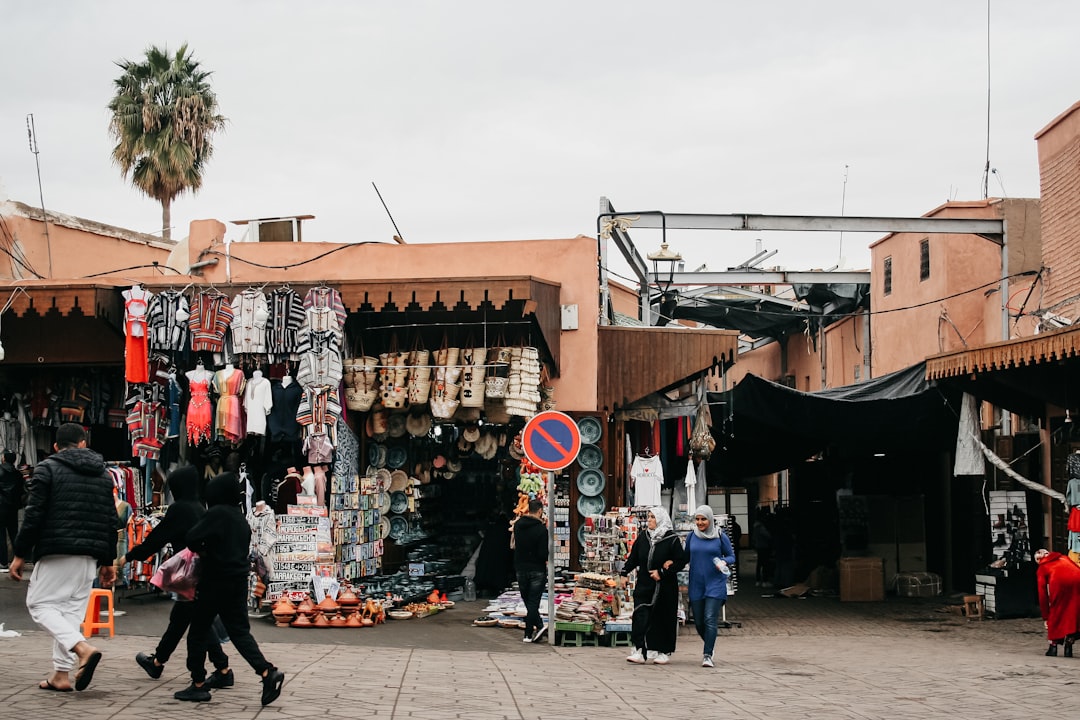
Photo by Taneti on Unsplash
By late afternoon, the medina glows the color of terracotta and dried apricots. Shopkeepers call out from shadows full of lanterns and wool blankets, teenagers cut through the crowd on scooters, and from some corner you cannot quite place comes the metallic tap of a hammer shaping brass. This is the hour when many travelers relax into the romance of the city. It is also when the most effective Marrakech scams feel natural, even charming.
The pattern is almost always the same. Someone creates urgency, confusion, guilt, or social pressure. You are told a road is closed, a sight is shut, a service is official, a price is obvious, a tip is tiny, or a free gesture is a cultural norm. Good Marrakech medina safety means slowing the interaction down. Ask a question back. Step away physically. Keep your hands on your things. Look for a fixed sign, official counter, or bank branch. Scammers thrive when you feel too awkward to pause.
Below are the scams first-time visitors are most likely to meet, plus the easiest ways to defuse them.
- The 'your riad is closed' or 'this road is blocked' setup
This is one of the classic Marrakech scams. You are walking toward your accommodation, often with luggage, and someone insists the lane ahead is closed, flooded, under repair, or inaccessible. Then comes the solution: follow them. The end point may be a demanded tip, a fake guide fee, or a push toward a different riad or shop.
How to avoid it:
- Contact your riad directly by WhatsApp or phone rather than trusting street advice.
- Screenshot the entrance instructions before arrival.
- Use the nearest gate, not a vague medina pin.
- If someone persists, say no once, clearly, and keep moving.
- Book a pickup for first arrival, especially after dark.
- Henna pressure sales in Jemaa el-Fnaa
Near the square, a woman may take your hand with impressive speed and start applying henna before you have agreed to anything. Once the pattern begins, the price rises fast. This is less dangerous than some scams, but it can become loud and stressful, especially for tired travelers.
How to avoid it:
- Keep your hands close to your body while walking through the square.
- Decline before contact, not after.
- If you want henna, choose a riad recommendation or a reputable salon and agree on a full price first.
- Be cautious if you have sensitive skin; some black henna products can cause reactions.
- Photo fees with snake charmers, monkey handlers, and performers
Jemaa el-Fnaa safety is not just about pickpockets. It is also about managing staged interactions. A performer may wave you closer, place an animal on you, or step into your frame. The demand comes after the photo, when social pressure is hardest to resist.
How to avoid it:
- Treat all performer photos as paid, even if nobody mentions money first.
- Ask the fee before taking out your phone.
- Avoid handling monkeys or snakes for both ethical and health reasons.
- Wash or sanitize your hands if you touch any shared surfaces or animal equipment.
- The carpet, argan, spice, or tea detour
Fake guides in Marrakech often begin with directions and end in commerce. You ask for a landmark; they say it is nearby; moments later you are sitting in a shop with mint tea and a long sales pitch. Sometimes the seller is friendly and transparent. Sometimes the pressure becomes intense, with inflated shipping fees or claims that you owe a purchase because you accepted tea.
How to avoid it:
- Never follow a stranger to a second location for directions.
- If you want to shop, go on your own terms and compare several stores.
- Do not hand over a passport for shipping paperwork.
- Pay by card only at established places, and check the amount before tapping.
- The counterfeit or confusing change trick
In busy transactions, especially with small notes, travelers sometimes receive the wrong change and realize only later. This is not always malicious; markets are chaotic. But it is common enough to watch carefully.
How to avoid it:
- Carry small notes: 20, 50, and 100 MAD are useful.
- Separate large notes from daily spending cash.
- Count change immediately, with the seller present.
- Learn the look and color of Moroccan notes before you arrive.
- ATM helpers and fake machine issues
Digital versions of old scams are increasingly common. A stranger may hover at an outdoor ATM and point out the 'right' settings, or a machine may appear to have an added panel. In busy tourist zones, a helpful tone can mask a card-skimming attempt.
How to avoid it:
- Use ATMs inside bank branches during opening hours whenever possible.
- Cover your PIN completely.
- Tug lightly on the card slot and keypad if anything looks loose.
- Decline all help, even if offered politely.
- Set card alerts in your banking app before travel.
- QR menu and fake Wi-Fi traps
In newer cafés and tourist-facing restaurants, digital convenience can become a vulnerability. A stickered QR code on a table may lead to a fake payment page, and open Wi-Fi networks with official-sounding names can harvest data.
How to avoid it:
- Ask staff whether the QR code is current before scanning.
- Type the restaurant website manually if payment is required.
- Avoid logging into banks or email on public Wi-Fi.
- Use mobile data or a trusted VPN for any sensitive action.
- The inflated desert tour or transfer booking
Around the medina, you may see desks selling last-minute Sahara trips, Ourika Valley excursions, hot air balloon rides, or Essaouira day tours. Some are fine. Some take a deposit and disappear, downgrade the vehicle, or swap the promised hotel for a much cheaper one.
How to avoid it:
- Book through accommodations with a reputation to protect.
- Ask for the operator name, pickup point, inclusions, and return time in writing.
- Pay deposits by card where possible.
- Be extra cautious with anyone who pushes same-minute decisions.
Quick rules that neutralize most Marrakech scams:
- If help is unsolicited, pause before accepting it.
- If a price is unclear, ask before the service starts.
- If someone wants you to move to a second location, decline.
- If a person touches you, your bag, or your phone unexpectedly, create space immediately.
- If the interaction feels rushed, slow it down.
- If you are tired, hot, or lost, step into a café or shop you chose yourself and reset.
Marrakech taxi scam red flags
A Marrakech taxi scam is so common because it sits at the perfect intersection of urgency and uncertainty. You need to get somewhere. The streets are noisy. You may not know the route. The fare difference does not sound huge in the moment. By the time the ride is over, you have paid two or three times the local rate and feel too drained to argue about it.
Petit taxis in Marrakech are beige and built for short urban rides, but the rules do not always translate cleanly for visitors. Some drivers will use the meter without fuss. Others will say it is broken, insist on a flat fare, or quote airport-style prices for normal city trips. Marrakech medina safety improves dramatically once you know the rough fare zones and stop treating every taxi ride as a mystery.
Night arrivals are where the Marrakech taxi scam hits hardest. The air is still warm, the lights around the airport make everyone look official, and ten people may offer a ride at once. Keep your voice calm, your bag close, and your destination simple. If a driver will not agree to a reasonable price or meter, move on without debate.
How to avoid a Marrakech taxi scam:
- Use the official airport taxi queue, not random curbside offers.
- Ask your riad what a fair fare should be before you arrive.
- Show the destination on your phone map, preferably with the nearest gate.
- Confirm meter or total price before the trunk opens.
- Carry smaller notes so the driver cannot claim no change.
- Avoid getting into any taxi that already has an unofficial 'assistant' or extra negotiator nearby.
- For early or late arrivals, pre-book a transfer.
| Common route | Typical fair range | Notes |
|---|---|---|
| RAK to Jemaa el-Fnaa or medina edge | 100 to 150 MAD by day | Night rides may rise to 150 to 200 MAD |
| RAK to Gueliz | 80 to 120 MAD | Slightly easier than medina drops |
| ONCF station to medina | 30 to 50 MAD | Heavier luggage may trigger higher asks |
| Medina to Jardin Majorelle | 30 to 50 MAD | Traffic can change the feel of a fair price |
| Gueliz to Hivernage | 20 to 30 MAD | Short city ride |
| Medina to airport | 100 to 150 MAD | Leave buffer time for traffic |
If you are traveling with friends, set one person to handle the negotiation and one person to watch luggage. Mixed groups often lose time and focus at exactly the wrong moment; Group Trip Planning Tips for Friends Who Travel Differently (2026) has smart ways to assign roles before chaotic arrivals.
Jemaa el-Fnaa safety after dark
Jemaa el-Fnaa at dusk is one of the great public stages of the world. Smoke rises from grill carts in silvery columns. Drums pulse from one side of the square while juice vendors stack oranges into glowing pyramids. Storytellers, musicians, and food sellers all compete for your attention under pink evening sky. It is exhilarating, and no one should skip it. But Jemaa el-Fnaa safety changes by the hour.
In the early evening, families, tourists, and locals mix easily. Later, the square becomes denser, louder, and more transactional. That does not automatically mean unsafe; it means you need more awareness. Pickpockets like compressed crowds. Photo-fee hustles get more aggressive after dark. You may also be tired, hungry, and disoriented by the sensory overload, which is exactly when bad calls happen.
Health matters here too. Jemaa el-Fnaa safety is not just about money. Shared cups, rushed food choices, smoke, animal contact, and heat exposure can ruin the next day faster than any overcharge. If you have asthma, the grill smoke may be intense. If you have a weak stomach, choose food stands with visibly high turnover and cooked-to-order dishes.
How to enjoy the square more safely:
- Go once in daylight and once at sunset so the layout feels familiar.
- Keep your phone in a zipped front pocket or crossbody bag.
- Carry only the cash you need for the evening.
- Never let anyone place a monkey, snake, or bird on you for a photo.
- Ask food prices before sitting down, including drinks.
- Choose stalls with busy local traffic and fresh grilling in front of you.
- Skip raw garnishes if your stomach is sensitive.
- Use hand sanitizer before eating.
- Pick a rooftop café such as Café Glacier or Café de France to watch the square first from above before dropping into the crowd.
- If someone blocks your path for money after a photo, stay calm, pay only the agreed amount if any, and move on without arguing in the middle of the crowd.
Things to do
A smarter approach to Marrakech medina safety does not mean hiding from the city. It means seeing it on purpose. The safest days in Marrakech usually look full rather than timid: an early museum visit before the lanes heat up, lunch in a calm courtyard, a planned market wander, then a rooftop pause before sunset. When you know where you are going, you look less vulnerable and enjoy more.
The medina rewards structure. Start with the big anchors, then drift. Let the call to prayer ripple above tiled courtyards. Touch the cool plaster in a historic school. Watch light cut across the carved cedar ceilings of a palace. Even the busiest souks feel friendlier when you are not trying to solve everything at once. Good Marrakech medina safety often comes down to sequencing: museums early, shopping later, square at sunset, taxi before you are exhausted.
Here are the best places to experience the city while keeping common friction points manageable.
- Bahia Palace
- Why go: intricate courtyards, zellige tilework, painted cedar ceilings, orange trees, and some of the most graceful architecture in the city
- Typical ticket: around 70 to 100 MAD depending on current pricing
- Safety note: arrive early to avoid both heat and the cluster of unsolicited guides outside
- Ben Youssef Madrasa
- Why go: one of the medina's most atmospheric interiors, where carved stucco, cedar lattice, and silence contrast beautifully with the surrounding market noise
- Typical ticket: around 50 MAD or more depending on updates
- Safety note: combine it with nearby sights on foot so you minimize repeated navigation stress
- Le Jardin Secret
- Why go: a calmer pocket of restored gardens, fountains, and rooftop views above the medina chaos
- Typical ticket: around 80 to 100 MAD, rooftop extra in some cases
- Safety note: a perfect reset stop if the souks are becoming overwhelming
- Jardin Majorelle and Musée Yves Saint Laurent Marrakech
- Why go: cobalt blue walls, cactus gardens, bamboo, shade, and one of the most photogenic color palettes in Morocco
- Typical ticket: often around 170 MAD or more depending on combined entry
- Safety note: buy tickets through the official sites when possible to avoid resellers; use a taxi with an agreed price to get there
- Official links: Jardin Majorelle, Musée Yves Saint Laurent Marrakech
- Maison de la Photographie
- Why go: a small but memorable collection that gives visual context to Morocco beyond the postcard version, plus a lovely rooftop café
- Typical ticket: usually around 50 MAD
- Safety note: good midday choice when you want indoor time and fewer street interactions
- Saadian Tombs and the Kasbah
- Why go: historic tombs, atmospheric lanes, and an easier rhythm than the busiest central souks
- Typical ticket: around 70 MAD or current posted rate
- Safety note: the Kasbah is a good area to practice walking confidence before plunging back into the center
- Sunset rooftop over Jemaa el-Fnaa
- Why go: you get all the theatre, light, smoke, and music of the square with more distance and less pressure
- Typical spend: 25 to 60 MAD for tea, coffee, or juice; more for a meal
- Safety note: one of the best Jemaa el-Fnaa safety hacks is to watch from above first, then decide whether you want to enter the crowd
- Souk Semmarine and Rahba Kedima
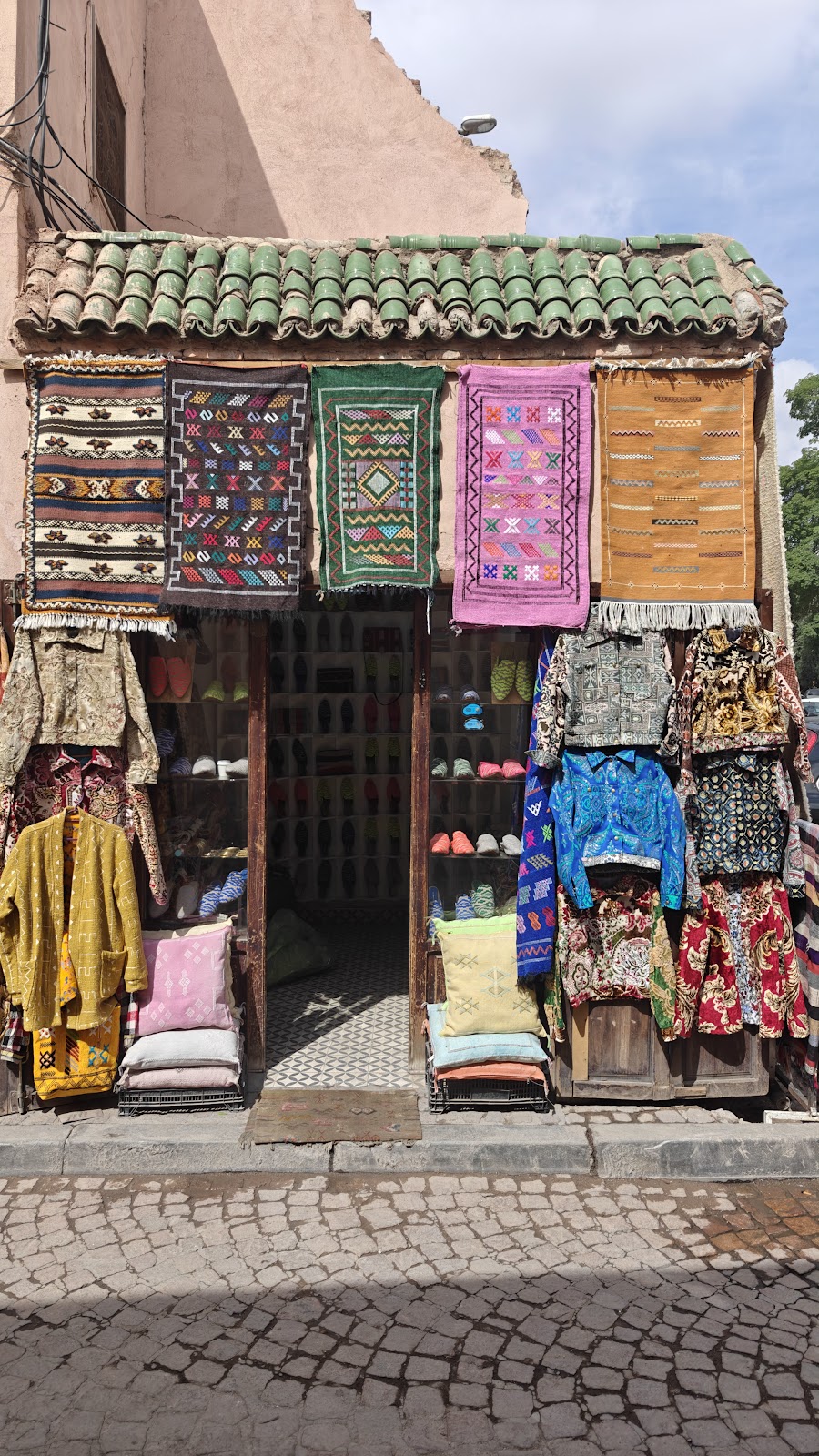
- Why go: textiles, lanterns, baskets, spice displays, and the classic medina atmosphere people imagine before they arrive
- Safety note: shop late morning or late afternoon, but keep bargaining relaxed and never feel obliged to buy after tea or demonstrations
Where to stay
Where you sleep changes your entire experience of the city. A hidden riad behind a plain wooden door can feel magical: rose petals on a tiled courtyard, birdsong above a plunge pool, breakfast with msemen and honey under citrus trees. But a gorgeous riad in the wrong micro-location can also mean stressful night walks, confusing first arrivals, and repeated encounters with fake guides in Marrakech.
For first-time visitors, the smartest choice is usually not the cheapest room but the easiest arrival. Look for clear pickup instructions, a host who sends exact gate directions, and recent reviews that mention late-night access. If you want quieter evenings and easier taxis, Gueliz or Hivernage are simpler. If you want atmosphere and walking access, stay in the medina but near a known gate rather than deep in the tiniest lanes. That balance is central to Marrakech medina safety.
| Budget tier | Best areas | Typical nightly rate | Best for |
|---|---|---|---|
| Budget | Bab Doukkala, Kasbah, medina edge | 150 to 600 MAD | Backpackers and short stays |
| Mid-range | Mouassine, Kasbah, Bab Doukkala, Riad Zitoun | 900 to 2,500 MAD | First-time visitors wanting comfort and character |
| Luxury | Hivernage, medina luxury riads, Palmeraie | 4,500 MAD and up | Resort-style stays and premium service |
Budget stays
- Rodamon Riad Marrakech Hostel: sociable, stylish, and useful for travelers who want staff help with routes and transfers; roughly 180 to 500 MAD depending on dorm or private.
- Equity Point Marrakech: a long-running hostel option near the medina, often around 160 to 450 MAD.
- Hotel Ali: simple and very central near Jemaa el-Fnaa, often around 300 to 600 MAD; convenient, though the area is busier and noisier.
Mid-range stays
- Riad Dar Anika: polished service in the Kasbah, often around 1,500 to 2,500 MAD, with excellent guest support.
- Riad Les Yeux Bleus: elegant and calm near Bab Doukkala, often around 1,000 to 1,800 MAD.
- Riad BE Marrakech: photogenic and design-forward, usually around 1,200 to 2,200 MAD depending on season.
Luxury stays
- El Fenn: one of the city's style icons, often 4,500 to 8,000 MAD and up.
- La Mamounia: classic grand luxury with legendary gardens, often 7,000 MAD and up. Official site: La Mamounia
- Royal Mansour Marrakech: among the most refined stays in Morocco, often well above 12,000 MAD. Official site: Royal Mansour Marrakech
Booking tips that improve Marrakech medina safety:
- Ask whether the property can arrange airport pickup.
- Request the closest taxi drop-off point and gate name.
- Avoid first arrivals after 10 pm if you are anxious about navigation.
- Save the riad phone number offline.
- Check whether the neighborhood is lively, quiet, or hard to access with rolling luggage.
Where to eat
Marrakech smells delicious before it tastes delicious. In the morning there is butter melting into hot msemen, coffee drifting through courtyard riads, and the sweet sharp scent of oranges being pressed. By evening the city turns smokier and richer: tanjia slow-cooked in earthenware, cumin on lamb, charred brochettes, cinnamon dusting over pastries. Eating well here is part of the pleasure, but the most memorable meals are often the ones where comfort, hygiene, and atmosphere line up together.
This is also where travel health slips into daily routine. Good Morocco travel safety is not only about wallets and directions. It is about hydration, hand hygiene, and letting your stomach set the pace. The medina is not a place to prove toughness. Drink bottled or reliably filtered water if your body is adjusting. Choose busy kitchens. Avoid meals that make you uneasy just because the setting looks cinematic.
Reliable places and what to order:
- Nomad in Rahba Kedima
- Try: lamb burger with Moroccan spices, zaalouk, seasonal salads
- Safety note: reserve ahead in busy seasons
- Le Jardin near Mouassine
- Try: chicken tagine, couscous, mint tea
- Safety note: a strong option for midday heat breaks
- Amal Women's Training Center in Gueliz
- Try: tagines, pastries, cooking classes
- Safety note: easier to reach by taxi than some deep-medina spots
- Al Fassia in Gueliz
- Try: lamb dishes, pastilla, cooked salads
- Safety note: excellent choice if you want a break from bargaining and street noise
- Café Clock in the Kasbah area
- Try: camel burger if you are curious, though the Moroccan plates are the main draw
- Safety note: useful as a meeting point because it is easy to identify
- Jemaa el-Fnaa food stalls
- Try: grilled brochettes, harira, tanjia from trusted vendors, fried fish from high-turnover stalls
- Safety note: pick stalls with visible cooking, posted prices, and lots of local customers; skip anything sitting out too long
Local dishes worth seeking out:
- Tanjia marrakchia: the city's signature slow-cooked meat dish, traditionally prepared in a clay pot
- Mechoui: tender roast lamb, often deeply savory and rich
- Harira: comforting soup that is especially welcome on cool evenings
- Msemen and baghrir: breakfast pancakes with honey, butter, or cheese
- Fresh orange juice: everywhere, but choose busy stands and watch preparation
Practical tips
By the second morning, the city starts making more sense. The call to prayer becomes part of the background. The turns that looked identical now each have their own clues: a turquoise doorway, a pharmacy sign, a grilled sardine smell, a cat asleep on a carpet stack. That is when Marrakech medina safety shifts from defensive thinking to practical rhythm. You are not trying to outsmart the city anymore; you are learning how to move through it without friction.
The details matter. Summer heat can flatten your judgment by noon. Winter nights can surprise you with real chill once the sun drops behind the walls. Friday prayer times change the pulse of some neighborhoods. Cash is still useful, but not every exchange desk offers a fair spread. And while Morocco travel safety is solid for most visitors using common sense, the combination of heat, navigation fatigue, and social pressure is what catches people off guard.
Best months and weather
| Month | Weather feel | Why go or skip |
|---|---|---|
| January | Cool days, cold nights | Good for sightseeing, pack layers |
| February | Mild, occasionally wet | Pleasant if you prefer fewer crowds |
| March | Warm and lively | One of the best months overall |
| April | Sunny, comfortable | Excellent for walking and day trips |
| May | Warm to hot | Great, but midday shade matters |
| June | Hot | Early starts are essential |
| July | Very hot | Tough for long medina days |
| August | Very hot | Pool breaks and air-con become important |
| September | Hot easing to warm | Better than midsummer, still intense |
| October | Warm, golden light | Another top month |
| November | Mild, pleasant | Great value and easier pacing |
| December | Comfortable days, chilly nights | Festive and atmospheric with layers |
What to pack for better Marrakech medina safety and comfort:
- Lightweight long sleeves and breathable trousers or skirts
- A scarf or shawl for sun, dust, and respectful coverage
- Closed shoes or sturdy sandals with grip for uneven lanes
- SPF 30+ sunscreen and lip balm
- Refillable bottle if you know where you can safely fill it, otherwise bottled water budget
- Electrolyte packets for hot months
- Hand sanitizer and basic stomach meds
- A crossbody bag with secure zip closures
- Power bank so you are not navigation-blind late in the day
Money, connectivity, and street habits:
- Currency is the Moroccan dirham, MAD. Keep small notes handy.
- Withdraw cash from bank ATMs rather than exchange too much at the airport.
- Maroc Telecom, Orange, and Inwi all have tourist SIM options; 50 to 100 MAD often gets you enough data for city use.
- Do not flash large amounts of cash in the souks.
- Ask before photographing people, especially performers, artisans, or women in the square.
- Dress modestly enough to blend rather than stand out as a novelty.
- If you feel lost, step into a café or shop you chose yourself and reorient there.
- Share your live location with a trusted contact if walking back to a medina riad late.
Health precautions worth taking seriously:
- Heat exhaustion is more common than dramatic crime issues. Plan indoor or shaded breaks between 1 pm and 4 pm in warm months.
- Drink more water than you think you need, especially after flights.
- If you have asthma or smoke sensitivity, limit long evening stretches in grill-heavy parts of Jemaa el-Fnaa.
- Avoid animal contact in the square to reduce bite, scratch, and hygiene risks.
- Build a small pharmacy kit: oral rehydration salts, antidiarrheal medication, plasters, and your usual prescriptions.
- Travel insurance remains one of the simplest Morocco travel safety tools you can buy.
Cultural habits that help everything run smoother:
- A calm, firm no works better than a long explanation.
- Politeness matters, but boundaries matter more.
- Learn a few basics in French or Arabic: hello, no thank you, how much, and where.
- During Ramadan, opening hours and meal rhythms may change.
- Friday can feel different around prayer times; be patient with schedules.
FAQ
The same questions come up again and again because travelers are often less worried about dramatic danger than about the steady drip of small uncertainty. That is exactly where Marrakech medina safety planning helps: fewer surprises, fewer awkward moments, and more room to enjoy the city.
If you are deciding where to stay, whether to use taxis, or how cautious to be in the square, these are the answers that matter most on the ground.
Is Marrakech safe for tourists in 2026?
Yes, for most travelers Marrakech is manageable and enjoyable with normal awareness. The bigger issue is usually nuisance pressure rather than violent crime. Marrakech medina safety comes down to navigation confidence, money habits, and staying calm when approached. Use official transport, avoid isolated alleys late at night, and do not follow strangers offering unsolicited help.
What is the most common scam in Marrakech?
Among the most common Marrakech scams are fake directional help, henna pressure sales, performer photo fees, and taxi overcharging. Fake guides in Marrakech are especially common when travelers are trying to find riads or landmarks in the medina for the first time.
Are taxis in Marrakech safe?
Usually yes, but a Marrakech taxi scam is common enough that you should confirm the price or meter before the ride starts. Airport taxis are the most frequent friction point. If you want the lowest-stress option, pre-book your first transfer and use taxis for simpler daytime routes after that.
Is Jemaa el-Fnaa safe at night?
Jemaa el-Fnaa safety is generally fine if you stay aware, keep valuables zipped, and treat every photo or performance interaction as potentially paid. The square is busiest and most intense after sunset. Go first to a rooftop to orient yourself, then decide how much crowd energy you want.
Should I stay in the medina or in Gueliz?
For atmosphere, the medina wins. For easier navigation and quieter evenings, Gueliz is simpler. First-timers who want character without maximum confusion often do best in a medina riad near a known gate or in the Kasbah. Your best choice depends on whether romance or ease matters more on this trip.
Marrakech is not a city to rush through. It asks you to slow down, notice details, and let confidence build by repetition. Once you stop reacting to every voice in the lane, the old city softens. The tiled courtyards feel cooler, the call to prayer feels steadier, and the market theatre becomes something you can watch rather than something that controls your mood.
That, really, is the point of Marrakech medina safety. Not to turn a vivid place into a checklist of threats, but to give yourself enough calm and structure that the city can be what it should be: fragrant, dazzling, human, imperfect, and unforgettable.