Solo travel feels most vulnerable in tiny moments: the 11:40 p.m. walk from a tram stop, the dead phone in arrivals, the overly friendly stranger who seems to know exactly where tourists hesitate. A good solo travel safety plan is not paranoia. It is friction reduction. Build it before you leave, and traveling alone starts to feel less like a test and more like freedom.
The goal here is simple: give you a system you can copy for any city, whether you are landing in Tokyo under fluorescent station lights, crossing a windy square in Lisbon, or checking into a hostel after sunset in Mexico City. If you want tips for traveling alone safely that actually change what you book, pack, and do on the ground, start with the steps below.
Build your solo travel safety plan before you book
Cliffs of Moher Experience
The safest solo trips are usually decided long before the plane takes off. Safety starts with boring choices that pay off later: a daytime arrival, a hotel near transit, a second bank card, a screenshot of the address in the local language. When those pieces are in place, you move through a new city with less visible stress, and that alone lowers risk.
Before booking anything, zoom in on the exact neighborhood. Not just the city. Open the map, switch to Street View where available, and inspect the last 300 to 500 meters between the station or taxi drop-off and your stay. A central hotel can still sit on a dark side street with shuttered storefronts and no foot traffic after 9 p.m. A slightly less charming block near a pharmacy, grocery store, and late café is often the smarter solo choice.
Use this pre-booking routine:
- Check current government advice at the U.S. State Department Travel Advisories or UK foreign travel advice.
- Prefer arrivals between 10 a.m. and 6 p.m. when possible.
- Save your accommodation address in both English and the local script.
- Buy travel insurance with medical cover and 24-hour emergency assistance.
- Upload passport, visa, insurance, and card details to secure cloud storage.
- Share a day-by-day outline with one trusted person and set check-in times.
- Learn three local phrases before departure: help, police, and I am lost.
- Keep bookings, flight numbers, and the hotel pin in one shareable trip file. I like doing that inside TravelDeck, especially for solo trips with moving parts.
A simple timeline helps:
- 7 days before: confirm arrival route from airport to hotel.
- 48 hours before: download offline maps and translation files.
- 24 hours before: screenshot hotel address, embassy details, and card support numbers.
- Departure day: charge your power bank and carry one pen for arrival forms.
Safe accommodation tips for solo travelers
One Traveller | Mature Solo Holidays
Your room is not just where you sleep. It is your reset point, your charging station, and the place where bad days become manageable. The right stay makes you feel less exposed the second you walk through the door: bright reception, clear exits, solid locks, staff who answer questions without making you feel silly.
When you read reviews, skip the first glowing paragraph and search for the practical words: neighborhood, lockers, reception, late check-in, women, noise, tram, walk. A beautiful boutique stay is less useful if you have to drag a bag over cobblestones for 12 minutes after the last airport bus. For many first-time solo travelers, paying an extra 25 to 60 euros for a private room on the first two nights is money well spent.
Choose a stay using these filters:
- Minimum rating: 8.5 with at least 50 recent reviews.
- Distance rule: under 800 meters from your main transit stop if arriving by train or metro.
- Arrival rule: if you land after 9 p.m., book a place with 24-hour reception or keypad entry.
- Room rule: avoid ground-floor rooms when possible; ask for a room between the second and sixth floors.
- Hostel rule: bring your own combination padlock. A decent one costs about 8 to 15 dollars.
- Solo female travel safety rule: if a city feels socially new to you, a female-only dorm or women-run guesthouse can be a smart first base.
Three things to check on the map around your stay:
- A pharmacy within 500 meters
- A grocery store or convenience shop within 300 meters
- A well-lit main road or transport stop within a 5 to 8 minute walk
If you want a city example where these choices are relatively easy to get right, Porto Solo Travel Guide 2026: Safe Stays, Walks, and Nights is a useful reference point.
The first 6 hours: arriving alone without looking lost
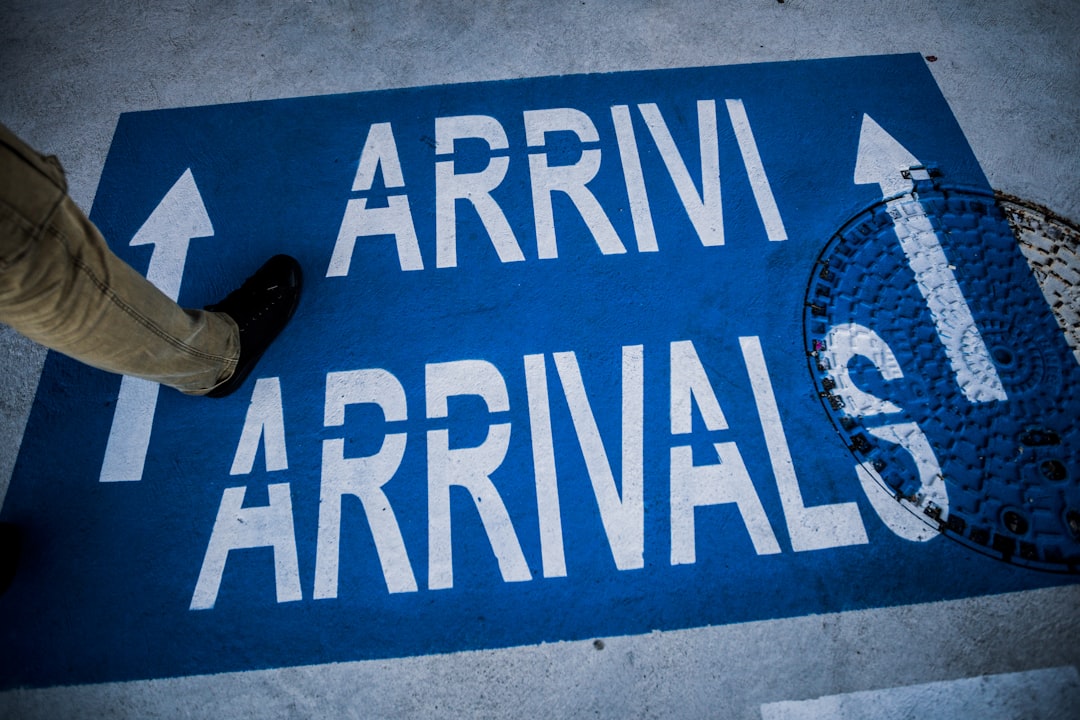
Photo by Kipras Štreimikis on Unsplash
Most solo travel mistakes happen in the blur of arrival: dry airplane mouth, low battery, too many signs, too many drivers offering help. Airports and stations are noisy theaters of urgency. That is exactly why your first moves should be slow, boring, and pre-decided.
If you arrive after dark, spend a little more to remove guesswork. An official airport taxi rank, pre-booked transfer, or verified rideshare pickup is usually worth the extra 8 to 20 euros over improvising. This is also the moment when scam pressure is highest, so it helps to review Travel Scam Checklist for 2026: From Booking to Taxi before you travel.
Copy this arrival table into your notes app:
| Situation | Best move | Risky move |
|---|---|---|
| Landing after dark | Use the official taxi rank or app pickup point | Following a driver who approaches you first |
| Need mobile data | Activate an eSIM before departure or buy one in the terminal | Hunting for free Wi-Fi outside the airport |
| Need cash | Use an ATM inside arrivals or inside a bank branch | Using a standalone street ATM at night |
| Need directions | Step into a hotel lobby or café to check your phone | Standing on the curb with luggage open |
| Need food | Choose a bright, busy counter-service place | Going straight to an empty bar with your bag on the floor |
| Feel overwhelmed | Sit for 15 minutes, drink water, orient yourself | Forcing sightseeing on autopilot |
My first-6-hours rule is simple:
- Get data
- Get to the room
- Lock the door
- Send one check-in message home
- Eat somewhere busy
- Sleep before making the city perform for you
That is how to stay safe traveling alone on day one. Not by squeezing more into the evening, but by reducing decisions when you are most tired.
How to stay safe traveling alone after dark
Cities change personality at night. Pavements empty, station announcements echo louder, and a five-minute wrong turn can feel much longer when the shutters are down. The answer is not to avoid evenings completely. Some of the best solo travel memories happen after sunset: a riverfront walk, live music drifting from a basement bar, one slow glass of wine under yellow streetlamps. The key is to pre-design the night.
Pick one neighborhood, one route home, and one backup transport option before you go out. If you are in a city with a reliable metro, know the last train time. If you are using rideshare, confirm the local app in advance. In many places that means Uber, Bolt, Grab, or a trusted local equivalent.
Use these night rules:
- If the walk home is more than 15 minutes through unfamiliar streets, book a ride.
- Keep one ear free and your phone off the street side of your body.
- Carry only the cash and card you need for the night.
- Cap alcohol lower when solo than when traveling with friends. Two strong drinks is a sensible ceiling for many people.
- Never give a new acquaintance your exact hotel or room number.
- If asked where you are staying, name the general area, not the property.
- Share your ride details when heading home late.
- If the energy of a street changes suddenly, trust that feeling and reroute.
A few scripts make tips for traveling alone safely easier to use in real life:
- I am heading out now, have a good night.
- No thanks, I already have plans.
- I am meeting someone in a minute.
- I do not share my hotel details, but thanks.
When strangers insist on helping, flirting, or guiding after you have already said no, that pattern often follows the same logic explained in Avoid Tourist Scams Abroad in 2026: The Politeness Trap. Politeness matters less than distance.
Solo trip money and phone backup system
A wallet stolen on a group trip is inconvenient. On a solo trip, it can wreck two days if your cards, SIM, room key, and ID all lived in the same pocket. Your solo travel safety plan should separate the items that keep the trip functioning.
Think in layers. One card for daily spending. One backup card out of sight. One stash of emergency cash. One digital copy of everything. You are not trying to hide from a movie villain. You are preparing for the ordinary failures that happen in real cities: a phone dropped into a canal, a card frozen for suspicious activity, a backpack left in a cab.
Use this split system:
- Primary card: in your wallet or crossbody bag
- Backup card: hidden in your luggage or money belt
- Emergency cash: 50 to 100 dollars or local equivalent, separate from your wallet
- Phone security: face ID or PIN, remote wipe enabled, lock-screen contact email
- Documents: one printed copy plus secure cloud copies
- Battery: one 10,000 mAh power bank, usually 20 to 35 dollars
Digital habits matter too:
- Avoid logging into banking apps on open public Wi-Fi without a VPN.
- Screenshot your hotel booking and check-in instructions in case data fails.
- Save important numbers offline: card issuer, insurance line, accommodation, embassy.
- Turn off live social posting if it reveals you are alone in real time.
This is one of the least glamorous safe solo travel tips, but it is the one that saves the trip fastest when something goes wrong.
Meeting people without dropping your guard
The irony of solo travel is that you are often more social when you are alone. People talk to the person at the bar seat, the walking tour edge, the hostel kitchen table. That openness is one of the best parts of traveling alone: the smell of garlic from a cooking class, the clink of glasses after a day trip, the easy conversation that starts because no one else is there to buffer it.
The safest social settings are structured ones. A food tour, surf lesson, museum walk, hostel family dinner, or coworking day pass gives you both contact and context. Random street invitations give you neither.
Start with these safer ways to meet people:
- Free or tip-based walking tours in daylight
- Small-group cooking classes, often 30 to 80 euros
- Day trips booked through established operators with many recent reviews
- Hostel common rooms with staffed reception nearby
- Cafés with counter seating rather than isolated park meetups
Red flags when socializing solo:
- Someone pushes for a venue change immediately
- They ask where you are staying more than once
- They want to hold your phone, ticket, or wallet
- They make you feel rude for setting a boundary
- They try to separate you from the group
If you use dating apps, solo female travel safety and general solo caution overlap here: meet in a public place, arrive and leave on your own, tell someone where you are, and never move to a second location just because the first drink went well. Good connection can survive a clear boundary.
Your solo trip emergency plan in one note
The best solo trip emergency plan fits on one phone note and one piece of paper. In a bad moment, you will not want to dig through email folders. You want names, numbers, and steps in the order you need them.
Build one note titled Emergency Plan and keep it pinned. Include your accommodation name and address, your emergency contact, allergies, insurance policy number, and the nearest clinic or hospital. In Europe, the general emergency number is 112. U.S. travelers can also register trips with STEP.
Your emergency note should contain:
- Full accommodation address
- Local emergency number
- Embassy or consulate phone number
- Insurance emergency line
- One family or friend contact
- Card cancellation numbers
- Any medication and allergy details
And rehearse these three scenarios once before you leave:
- Lost passport: go to the police if required, contact your embassy, use your cloud copies.
- Stolen phone: lock or wipe it remotely, move your SIM or eSIM, log out of banking apps.
- Illness at night: contact the accommodation, call the insurance line, go to the nearest 24-hour clinic or hospital.
That rehearsal takes ten minutes. It can save you hours of panic.
FAQ
Is solo travel safe in 2026?
Yes, for many travelers it is very safe when the trip is designed well. A solid solo travel safety plan matters more than bravado: good arrivals, smart accommodation, backup money, and a night routine lower your risk dramatically.
What is the safest type of accommodation for solo travelers?
For most people, the safest first choice is a well-reviewed hotel, guesthouse, or hostel with 24-hour reception, recent safety-focused reviews, and an easy route from transit. If you are unsure about a city, paying extra for a private room for the first one or two nights can make the whole trip smoother.
How much emergency cash should I carry on a solo trip?
Carry enough to reach your room, eat, and handle one transport problem without your cards. In practice, that usually means 50 to 100 dollars or the local equivalent, hidden separately from your main wallet.
How do I meet people if I still want to stay safe traveling alone?
Choose social settings with structure: walking tours, cooking classes, hostel dinners, coworking spaces, and small group day trips. Avoid invitations that depend on secrecy, urgency, or changing plans fast.
What should I do on my first night alone in a new city?
Keep it deliberately small. Check in, message home, eat somewhere bright and busy within a short walk or quick ride, and learn the route back before you start exploring. Your first night is for orientation, not proving confidence.
Traveling alone safely is less about acting fearless and more about making calm choices early. The nicest solo trips do not feel tense from morning to night. They feel light because the hard thinking happened before the taxi ride, before the late train, before the battery hit 4 percent.
Once your solo travel safety plan is built, you get the real reward of solo travel: moving at your own speed, hearing your own instincts clearly, and ending the day knowing you handled a new place well.