Many visa applications look financially solid and still stumble because the itinerary reads like a wish list. A strong travel itinerary for visa purposes does the opposite: it proves that your days are realistic, your route makes geographic sense, and every night is accounted for. Paris is one of the easiest cities to do this well, because you can sleep in one central area and build a full week of believable, detailed sightseeing without frantic transfers. This guide gives you a complete 7 days in Paris plan designed to be rebuilt line by line. It works well for a first Schengen trip, a couple, or a solo traveler who wants a Paris day by day itinerary that can actually be submitted with a visa file and then used on the ground. If you are keeping flights, hotel addresses, and museum slots aligned inside TravelDeck, this is exactly the level of detail that keeps everything consistent. The first day is intentionally gentle; if you land tired after an overnight flight, borrow the pacing ideas from Recover From Jet Lag in 2026: A Smarter First 48 Hours. Use this as a 7-day, 6-night Paris travel plan. For a visa application, add your actual arrival and departure flights, plus the full name and street address of your hotel for each night. The route below assumes one hotel base in central Paris, which keeps the trip logical and easy to verify. - Trip length: 7 days, 6 nights
- Best base for this route: Opéra, Le Marais, or the Latin Quarter
- Good fit for: first-time Paris visitors, Schengen visa applicants, couples, and solo travelers
- Daily style: one major area per day, realistic walking distances, timed attractions where useful
- What to add in your visa file: flight numbers, hotel address, and exact travel dates beside each day ## Day 1: Arrival and a gentle Left Bank landing The smartest first day in Paris is not a sprint to every postcard sight. It is a soft landing that shows a visa officer your schedule is believable and gives you a real chance to enjoy the city. Stay close to the Seine and the 5th and 6th arrondissements, where even a slow walk feels cinematic. The Left Bank is ideal for your arrival afternoon because it gives you classic Paris without complicated logistics. You get tree-lined gardens, old churches, bookshop-lined streets, and river views within a compact radius. If your flight lands late, you can shorten the afternoon and keep the evening Seine walk. ### Morning - 08:00-11:30 Arrive at Paris Charles de Gaulle Airport, CDG, or Paris Orly Airport, ORY.
- Transfer to central Paris by RER B from CDG in about 45 minutes, around 11.80 euros, or by official taxi at a fixed fare of roughly 56 to 65 euros depending on bank of the Seine.
- 11:30-12:30 Check in or leave bags at your hotel in Opéra, Le Marais, or the Latin Quarter. ### Afternoon - 13:30-14:30 Walk through Jardin du Luxembourg, 75006, free.
- 14:40-15:10 Visit Saint-Sulpice Church, 2 Rue Palatine, 75006, free.
- 15:15-16:30 Stroll Boulevard Saint-Germain toward Place Saint-Michel and the Seine, free. ### Evening - 17:00-18:00 Cross Pont Neuf and pause at Square du Vert-Galant on the western tip of Île de la Cité, free.
- 18:15-19:00 See the exterior of Notre-Dame de Paris, 6 Parvis Notre-Dame, 75004, free.
- 19:15-21:00 Dinner around Rue de Buci or Place Saint-Michel. Budget 18 to 35 euros per person.
- Return to the same central hotel base for Night 1. - Insider tip: On arrival day, keep all activities on foot within the Left Bank and Île de la Cité. A lighter opening day makes your 7 days in Paris feel credible instead of overpacked. ## Day 2: Louvre, Tuileries, and the classic royal axis Your second day should look like what first-time visitors really do in Paris: one major museum, one major garden, and an evening in the elegant center. This is exactly the kind of structure that makes a travel itinerary for visa review feel serious and thought through. Start in the 1st arrondissement, where Paris feels formal and symmetrical. The glass pyramid at the Louvre, the clipped lines of the Tuileries, and the arcades of Palais-Royal all sit close together, so you spend your time seeing the city instead of commuting across it. ### Morning - 08:45-09:15 Metro to Palais Royal-Musée du Louvre station.
- 09:15-10:00 Walk Cour Napoléon and the exterior courtyards of the Louvre, Rue de Rivoli, 75001, free.
- 10:00-13:00 Visit the Louvre with a timed ticket. Entry is about 22 euros. ### Afternoon - 13:10-14:00 Lunch near Rue de Rivoli or inside the Carrousel du Louvre area. Budget 15 to 25 euros.
- 14:05-15:00 Walk through Jardin des Tuileries, 75001, free.
- 15:10-15:40 Continue to Place de la Concorde, 75008, free.
- 15:50-16:30 Explore the columns and arcades of Palais-Royal, 8 Rue de Montpensier, 75001, free. ### Evening - 17:00-18:15 Visit Opéra Garnier, Place de l'Opéra, 75009, from about 15 euros if open for self-guided visits.
- 18:30-19:15 Walk Boulevard Haussmann toward Madeleine and Place Vendôme, free.
- 19:30-21:30 Dinner in the Opéra district. Budget 22 to 45 euros per person.
- Return to the same hotel base for Night 2. - Insider tip: For a Paris visa travel itinerary, one flagship museum per day is enough. Two big museums on the same day often makes the schedule look copied rather than lived. ## Day 3: Medieval Paris, stained glass, and the Latin Quarter Day 3 moves from grand royal spaces into older, tighter streets. The mood shifts here: bells, stone facades, narrow lanes, and the slightly scholarly rhythm of the Latin Quarter. This is one of the most convincing days in a Paris travel plan because the route is dense but still completely walkable. Begin on Île de la Cité, the historic heart of Paris, then climb gently south into the 5th arrondissement. You will see some of the city's oldest layers without zigzagging all over town, which keeps your Paris day by day itinerary practical. ### Morning - 09:00-10:00 Visit Sainte-Chapelle, 10 Boulevard du Palais, 75001. Entry is about 13 euros.
- 10:05-11:00 Visit the Conciergerie, 2 Boulevard du Palais, 75001. Entry is about 13 euros or as part of a combined ticket.
- 11:10-11:40 Walk around the flower market and bridges near Île de la Cité, free. ### Afternoon - 12:00-13:00 Lunch near Rue de la Huchette or Rue Saint-Jacques. Budget 15 to 25 euros.
- 13:15-14:30 Visit the Panthéon, Place du Panthéon, 75005, about 13 euros.
- 14:40-15:20 See Église Saint-Étienne-du-Mont, Place Sainte-Geneviève, 75005, free.
- 15:30-16:30 Walk through the Jardin des Plantes, 57 Rue Cuvier, 75005, free in the main garden. ### Evening - 17:00-18:15 Wander Rue Mouffetard and Place de la Contrescarpe, free.
- 18:30-20:30 Dinner in the Latin Quarter or around Rue Mouffetard. Budget 20 to 35 euros.
- 20:45 Optional blue-hour walk back toward the Seine via Boulevard Saint-Germain, free.
- Return to the same hotel base for Night 3. - Insider tip: Sainte-Chapelle is at its best late morning or early afternoon when light catches the stained glass. If you swap timings, keep it in daylight on your actual visa document. ## Day 4: Eiffel Tower, the Seine, and Belle Époque art No first week in Paris feels complete without the Eiffel Tower, but the best way to do it is not to rush under it and leave. Build a whole Right Bank to Left Bank arc around it: a view from Trocadéro, time on the Champ de Mars side, then an art-filled afternoon at the Musée d'Orsay. This day balances icons and atmosphere. You get the metallic geometry of the tower, the broad riverbanks of the 7th arrondissement, and then the soft light and color of 19th-century painting. It reads well on paper and works even better in real life. ### Morning - 08:30-09:00 Metro to Trocadéro, 75016, free viewpoint.
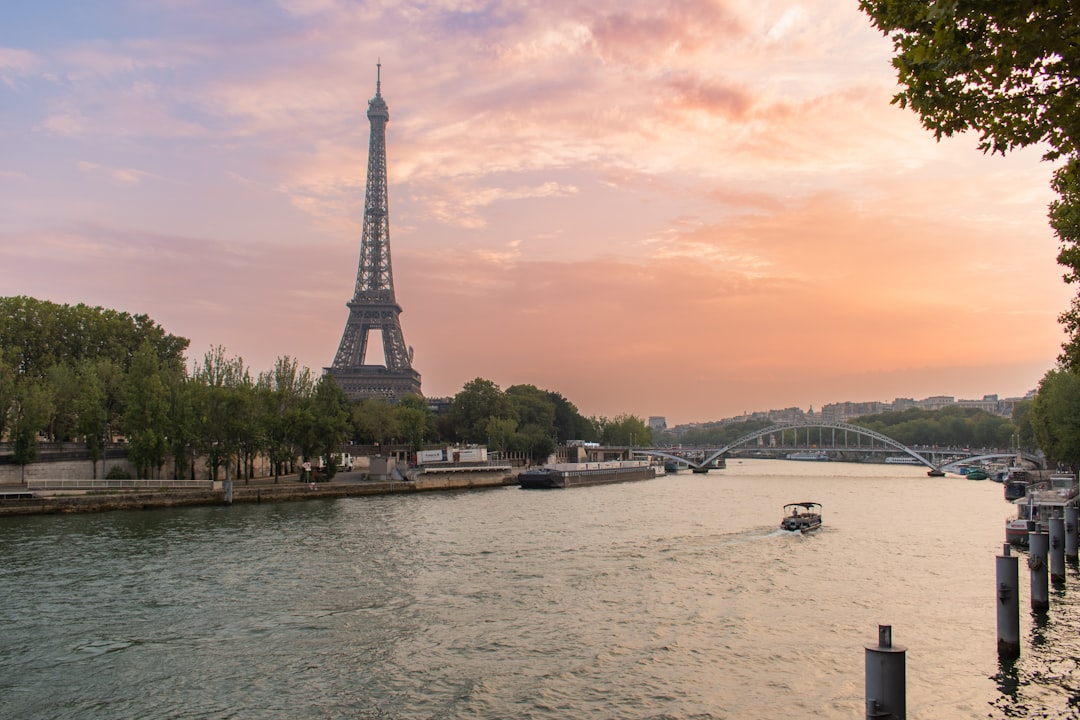
- 09:00-09:45 Walk from Place du Trocadéro across Pont d'Iéna toward the Eiffel Tower, free.
- 10:00-12:00 Visit the Eiffel Tower with a timed ticket. Expect roughly 18 to 30 euros depending on stairs or lift level. ### Afternoon - 12:15-13:15 Lunch near Avenue de la Bourdonnais or Rue Saint-Dominique. Budget 18 to 30 euros.
- 13:30-14:00 Walk the Champ de Mars, 75007, free.
- 14:30-17:00 Visit the Musée d'Orsay, Esplanade Valéry Giscard d'Estaing, 75007. Entry is around 16 euros. ### Evening - 17:15-18:00 Cross Passerelle Léopold-Sédar-Senghor for Seine views toward the Tuileries, free.
- 18:30-19:45 Optional river cruise from Port de la Bourdonnais, around 18 to 20 euros.
- 20:00-21:30 Dinner in the 7th arrondissement or near Invalides. Budget 25 to 45 euros.
- Return to the same hotel base for Night 4. - Insider tip: Book the Eiffel Tower and Musée d'Orsay in advance on official sites, then keep those exact time slots in your file. Timed entries make a travel itinerary for visa purposes look far stronger than vague sightseeing notes. ## Day 5: Montmartre mornings and Canal Saint-Martin evenings After several classical days, Day 5 should feel looser and more local. Montmartre gives you staircases, artists' corners, and rooftop views, while Canal Saint-Martin brings a younger, more everyday Paris by late afternoon. Together they create a fuller picture of the city. This is also a good place to show pacing. You are not cramming in another palace or all-day museum; you are walking one neighborhood deeply, then moving to a second district for the evening. That is exactly how a rebuildable travel itinerary for visa review should feel. ### Morning - 08:45-09:15 Metro to Anvers or Abbesses.
- 09:15-10:00 Climb to Sacré-Cœur Basilica, 35 Rue du Chevalier de la Barre, 75018, free.
- 10:00-11:15 Walk around Place du Tertre and nearby Montmartre lanes such as Rue de l'Abreuvoir and Rue Lepic, free.
- 11:30-12:30 Optional visit to Musée de Montmartre, 12 Rue Cortot, 75018, around 15 euros. ### Afternoon - 12:45-13:45 Lunch on Rue des Abbesses or Rue Lepic. Budget 18 to 30 euros.
- 14:15-15:00 Walk downhill via Pigalle to Rue des Martyrs in the 9th arrondissement, free.
- 15:15-16:00 Pause at Square d'Anvers or continue by metro to Canal Saint-Martin, free.
- 16:15-17:30 Stroll Quai de Valmy and Quai de Jemmapes, 75010, free. ### Evening - 18:00-19:00 Apéritif or coffee along the canal. Budget 6 to 12 euros.
- 19:15-21:30 Dinner in the Canal Saint-Martin area. Budget 20 to 40 euros.
- Return by metro to your central hotel for Night 5. - Insider tip: Arrive in Montmartre before 09:30 if you want the square and steps without the shoulder-to-shoulder midday crowds. ## Day 6: Versailles as a clean, logical day trip A one-day trip to Versailles makes sense on a 7 days in Paris itinerary because it is simple, famous, and easy to document. It also strengthens a Schengen visa itinerary by showing a clear out-and-back route rather than an unrealistic attempt to add multiple cities. The palace can be overwhelming if you only do the central rooms. Give yourself the full day: palace interiors, gardens, then the quieter estate of Trianon and the Queen's Hamlet. It is a richer experience and a more honest use of time. ### Morning - 08:00-08:20 Walk or metro to an RER C station serving Versailles Château Rive Gauche.
- 08:20-09:10 Train to Versailles. Expect around 7 euros each way from central Paris.
- 09:30-12:30 Visit the Palace of Versailles. The Passport ticket usually ranges from about 24 to 32 euros depending on the day and fountain program. ### Afternoon - 12:30-13:15 Lunch near the palace grounds or inside the estate area. Budget 15 to 28 euros.
- 13:30-15:30 Walk the formal gardens, free on some days and included or ticketed on others.
- 15:30-17:00 Continue to the Grand Trianon, Petit Trianon, and Queen's Hamlet, included with the Passport ticket. ### Evening - 17:15-18:05 Return by train to Paris.
- 19:00-21:00 Casual dinner near your hotel or in the 6th arrondissement. Budget 18 to 35 euros.
- Return to the same hotel base for Night 6. - Insider tip: Keep Versailles as your only out-of-town movement in this Paris visa travel itinerary. One easy day trip looks convincing; stacking several intercity detours often does not. ## Day 7: Le Marais, a final museum, and departure Your last day should be compact, attractive, and easy to trim if your flight leaves early. Le Marais is perfect for that. Its medieval lanes, hidden courtyards, and food streets let you enjoy a final slice of Paris without drifting too far from airport transfer routes. This final day also solves a common visa-itinerary problem: what to do before departure without inventing a full sightseeing marathon. Keep it to one neighborhood, one museum, a good lunch, then a clear transfer to the airport. ### Morning - 09:00-09:30 Check out or leave bags at the hotel.
- 10:00-10:45 Walk Place des Vosges, 75004, free.
- 10:50-12:00 Visit Musée Carnavalet, 23 Rue de Sévigné, 75003. The permanent collection is free. ### Afternoon - 12:15-13:15 Lunch at Marché des Enfants Rouges, 39 Rue de Bretagne, 75003. Budget 12 to 25 euros.
- 13:30-15:00 Visit the Musée Picasso, 5 Rue de Thorigny, 75003, around 16 euros, or keep it lighter with a walk along Rue des Rosiers and Hôtel de Ville, free.
- 15:15-16:00 Collect bags from your hotel. ### Evening - 16:00-17:00 Transfer to CDG by RER B or to ORY by OrlyBus or metro connection. Allow extra time for rush hour.
- 19:00 onward Departure flight. - Insider tip: On your departure day, do not schedule a timed museum after 14:00 unless your flight is very late. A travel itinerary for visa should always leave visible buffer time before departure. ## Things to do in Paris if you need to rebuild the itinerary Sometimes museum closures, weather, or a visa officer's preference for a lighter schedule means you need to swap one stop. Keep replacements in the same part of town so your route still makes sense. Here are the easiest switches that preserve the logic of this Paris day by day itinerary. - Swap Musée d'Orsay for the Musée de l'Orangerie, Jardin des Tuileries, 75001, around 12.50 euros.
- Swap the Panthéon for the Cluny Museum, 28 Rue du Sommerard, 75005, around 13 euros.
- Swap the Canal Saint-Martin evening for Bastille and the Port de l'Arsenal, 75012, free.
- Swap Musée Picasso for the free permanent collections at the Petit Palais, Avenue Winston Churchill, 75008.
- Add the Arc de Triomphe, Place Charles de Gaulle, 75008, around 16 euros, if Day 4 runs smoothly.
- Add a second garden stop at Parc des Buttes-Chaumont, 75019, for a more local-feeling afternoon. ## How to get there Paris is straightforward to reach by air and rail, which is one reason it works so well for a first European itinerary. Keep your arrival and departure airports consistent with your day-by-day route, and always leave enough time for airport transfers in your actual booking record. The best official planning starting points are Paris Aéroport for flights and airport transfers, plus the official city visitor portal at Paris je t'aime for neighborhood orientation and major events. - Fly into Paris Charles de Gaulle, CDG, for the widest long-haul network. RER B to central Paris takes about 45 minutes and costs around 11.80 euros.
- Fly into Paris Orly, ORY, if fares are better. Central transfers usually take 30 to 45 minutes and cost roughly 11 to 15 euros depending on the route.
- From London, the Eurostar train to Gare du Nord takes about 2 hours 20 minutes.
- From Brussels, high-speed rail to Paris usually takes around 1 hour 20 minutes.
- From Amsterdam, direct rail takes roughly 3 hours 20 minutes.
- Driving is possible, but parking costs and traffic make it a poor fit for a central 7 days in Paris stay. ## Best time to go for a Paris travel itinerary for visa Paris is rewarding year-round, but not every season suits the same style of trip. For a travel itinerary for visa submission, shoulder season is easiest to document: attractions are open, daylight is generous, and the route stays realistic without heatwaves or holiday shutdowns. April to June and September to October are the sweet spots for most travelers. You get café weather, long walking days, and fewer extremes. August can be lovely but some local businesses close, while winter gives lower hotel rates at the cost of shorter daylight. | Period | What it feels like | Why it works | Watch for |
| --- | --- | --- | --- |
| April-June | Mild, green, bright | Best overall for walking and gardens | Popular museums sell out |
| July-August | Warm, busy, sometimes hot | Long days, lively riverbanks | Crowds and occasional closures |
| September-October | Crisp, golden, comfortable | Excellent for a Paris day by day itinerary | Fashion-week pricing spikes |
| November-March | Cooler, moodier, cheaper | Lower room rates, museum-friendly days | Short daylight and rain | ## Estimated budget per person Your budget depends heavily on hotel category, not on the sightseeing itself. Paris can be done sensibly if you stay central enough to walk and keep most meals simple. For a visa file, make sure your stated funds match the style of trip you are presenting. These ranges are for 7 days in Paris, 6 nights, excluding international flights. | Tier | Hotel per night | Food per day | Local transport | Attractions total | 7-day estimate |
|---|---|---|---|---|---|---|---|---|---|---|
| Budget | 110-150 euros | 25-40 euros | 20-35 euros total | 90-130 euros | 1,000-1,450 euros | |||||
| Mid-range | 180-260 euros | 45-70 euros | 20-35 euros total | 100-160 euros | 1,650-2,350 euros | |||||
| Comfort | 320-500 euros | 80-130 euros | 30-50 euros total | 120-200 euros | 2,900-4,700 euros | ## Where to stay in Paris For this particular route, the right neighborhood matters more than chasing the absolute lowest room rate. A central base keeps every day simple, cuts airport-transfer stress, and makes your Schengen visa itinerary easier to explain because you are not changing hotels unnecessarily. These three areas fit this 7-day Paris travel plan best. | Area | Best for | Typical nightly rate | Why it suits this itinerary |
| Opéra and Grands Boulevards, 2nd and 9th | First-time visitors who want easy metro links | 140-280 euros | Central for Louvre, Montmartre, and airport transfers | |||||||
| Le Marais, 3rd and 4th | Walkable charm and lively evenings | 170-320 euros | Strong for Days 1, 3, and 7 with plenty of food nearby |
| Latin Quarter, 5th | Classic atmosphere and Left Bank walks | 130-260 euros | Excellent for Day 1, Day 3, and relaxed nights | If you are applying for a visa, the cleanest setup is one hotel for all six nights. Add the hotel's full street address to each overnight line in your document. ## How to get around Paris Paris rewards walking more than almost any major city, but the metro is what makes the plan rebuildable. Almost every day in this itinerary mixes one or two metro rides with long, scenic walks. That balance is efficient and believable. Use the official RATP network for metro, buses, and city transport updates. A stored-value card or contactless setup is usually the easiest choice for a week in the city. - Single metro or bus rides are usually around 2.50 euros.
- Expect most in-city rides to take 10 to 25 minutes.
- RER trains are essential for CDG airport access and for Versailles.
- Walking 15,000 to 20,000 steps per day is normal on this itinerary, so bring supportive shoes.
- Taxis are useful only for very early flights, late arrivals, or heavy luggage. ## Where to eat in Paris A good Paris itinerary should include food that matches the neighborhoods you are already visiting. That means market lunches in the Marais, simple bistro dinners on the Left Bank, and pastries or café stops built into your walking route. You do not need a reservation-heavy dining schedule for this trip. One nice dinner, one market lunch, and several casual café meals create a much more realistic Paris travel plan. - In the Latin Quarter, look for onion soup, croque monsieur, duck confit, and fixed-price lunch menus.
- In Le Marais, Rue des Rosiers is ideal for falafel and quick lunches before Day 7 museum stops.
- Around Canal Saint-Martin, expect more contemporary bistros and natural-wine bars in the 10th arrondissement.
- Near Rue Cler and the 7th arrondissement, build a picnic lunch with cheese, fruit, bread, and pastries for Eiffel Tower day.
- Marché des Enfants Rouges, 39 Rue de Bretagne, 75003, is one of the easiest and most flexible lunch stops in the city. ## Practical tips for a travel itinerary for visa submission A strong travel itinerary for visa review is specific, but it should never look robotic. Paris works best when each day has one anchor attraction, one neighborhood walk, and some buffer time for transport, queues, or weather. Before you submit, cross-check every date, transport leg, and overnight line. Small inconsistencies create far more trouble than a simple itinerary ever will. For extra caution on airport transfers, card payments, and street approaches, review Travel Scam Checklist for 2026: From Booking to Taxi. Solo travelers can also borrow useful habits from Solo Travel Safety Guide 2026: Room, Route, Routine. - Currency: euro.
- Language: French, but English is common in central visitor areas.
- Packing: comfortable walking shoes, a light rain layer, a compact umbrella, and one smarter outfit for evening dining.
- Connectivity: eSIMs and airport SIM counters are easy to find; keep offline copies of hotel addresses and tickets.
- Museum closures: many major museums close one day per week, so confirm official schedules before fixing dates.
- Safety: central Paris is manageable, but pickpocketing is common around major monuments and on busy metro lines.
- Visa logic: do not write vague entries such as explore Paris. Name specific places and keep travel times plausible. ## FAQ ### Is 7 days enough for Paris? Yes. Seven days is enough to see the city's major highlights, add one day trip to Versailles, and still keep the pace realistic. It is also a strong duration for a first Schengen visa itinerary because you can stay in one city and show a coherent plan. ### What should a travel itinerary for visa include? It should include your exact travel dates, where you sleep every night, your arrival and departure transport, and a day-by-day activity plan with named places. For Paris, that means not just sightseeing, but entries such as Louvre in the 1st arrondissement, Sainte-Chapelle on Île de la Cité, and Versailles by RER C. ### Can I stay in one hotel for all 6 nights? Yes, and for this trip it is the smartest choice. One hotel base in Opéra, Le Marais, or the Latin Quarter keeps your route cleaner, cuts check-in friction, and makes your visa paperwork easier because every overnight line is consistent. ### How much money should I show for this itinerary? A sensible mid-range budget for 7 days in Paris is usually around 1,650 to 2,350 euros excluding international flights. Your bank balance should comfortably support the level of hotel, food, and attractions shown in your planned trip. ### Is Versailles worth including in a Paris visa itinerary? Yes, because it is famous, easy to reach, and geographically logical. It shows one clear day trip and a return to the same Paris hotel, which strengthens the overall credibility of your travel itinerary for visa purposes. A good Paris visa itinerary should feel like a trip a real person would actually take: specific, balanced, and easy to follow from arrival gate to final train or flight. Once your dates, hotel address, and museum times line up, Paris stops being a vague dream and starts looking like a journey you can genuinely build.
---