A ruined trip rarely begins with a dramatic scene. More often, it starts with a small moment of confusion: a bracelet tied on too quickly, a taxi driver who says the meter is broken, a stranger who seems a little too helpful when you are tired, jet-lagged, and staring at a map in the heat. That is why common travel scams are so effective. They do not always look like crimes. They look like interruptions, favors, shortcuts, or harmless misunderstandings.
The truth is that most tourist scams work because travelers are in motion. You are dragging a suitcase over cobblestones, juggling a passport and a phone, trying to understand a new currency, or arriving in a city where the air smells like diesel, rain, coffee, and possibility all at once. In those first distracted minutes, even confident people make expensive decisions. If you learn the patterns behind common travel scams, you will spot them much faster and keep your trip focused on discovery instead of damage control.
What follows is not a list designed to make you fearful. It is a field guide for moving through busy train stations, old town squares, airport taxi ranks, hotel lobbies, and nightlife streets with a calmer eye. Think of it as practical street wisdom: how tourist scams actually unfold, which red flags matter most, and what to do without freezing, arguing, or making yourself a bigger target.
Why common travel scams still work in 2026
Photo by Markus Winkler on Unsplash
Scams survive because they exploit human habits, not because travelers are careless. Most of us are wired to avoid conflict, trust uniforms, respond to urgency, and accept help when we look lost. Add fatigue, noise, unfamiliar customs, and a phone battery sitting at 12 percent, and even obvious tourist scams can feel surprisingly convincing. The person approaching you understands that your attention is split. They only need a few seconds of hesitation.
There is also a reason scams cluster around arrival points and famous landmarks. Airports, train stations, ferry docks, cathedral squares, and museum entrances create a perfect mix of confusion and momentum. Everyone is carrying bags, everyone wants to keep moving, and nobody wants to create a scene in public. That is the emotional weather in which common travel scams thrive. Good travel safety tips are less about paranoia and more about slowing down the moment before you hand over cash, a card, or your attention.
| Scam pattern | Typical setting | Red flags | Best response |
|---|---|---|---|
| Forced gift scam | Monument zones, bridges, plazas | Someone touches you or places an item on you | Step back, remove it, return it, keep walking |
| Fake taxi scam | Airports, stations, nightlife areas | Driver avoids meter or price clarity | Use official rank or app, confirm fare before entry |
| ATM skimming | Busy streets, older ATMs, convenience stores | Loose card reader, hidden camera, stranger offering help | Use bank branch ATM, shield PIN, walk away if unsure |
| Ticket scam | Outside sold-out attractions | Street seller offering last-minute access | Buy only from official site or desk |
| Hotel booking scam | Messaging apps, fake payment links | Host asks for payment outside platform | Keep everything on the official booking channel |
| Distraction theft | Crowded squares, transit, queues | Spill, petition, commotion, group encircling you | Protect bag first, ignore drama, move to a safe spot |
Street tourist scams: the old tricks still catch people
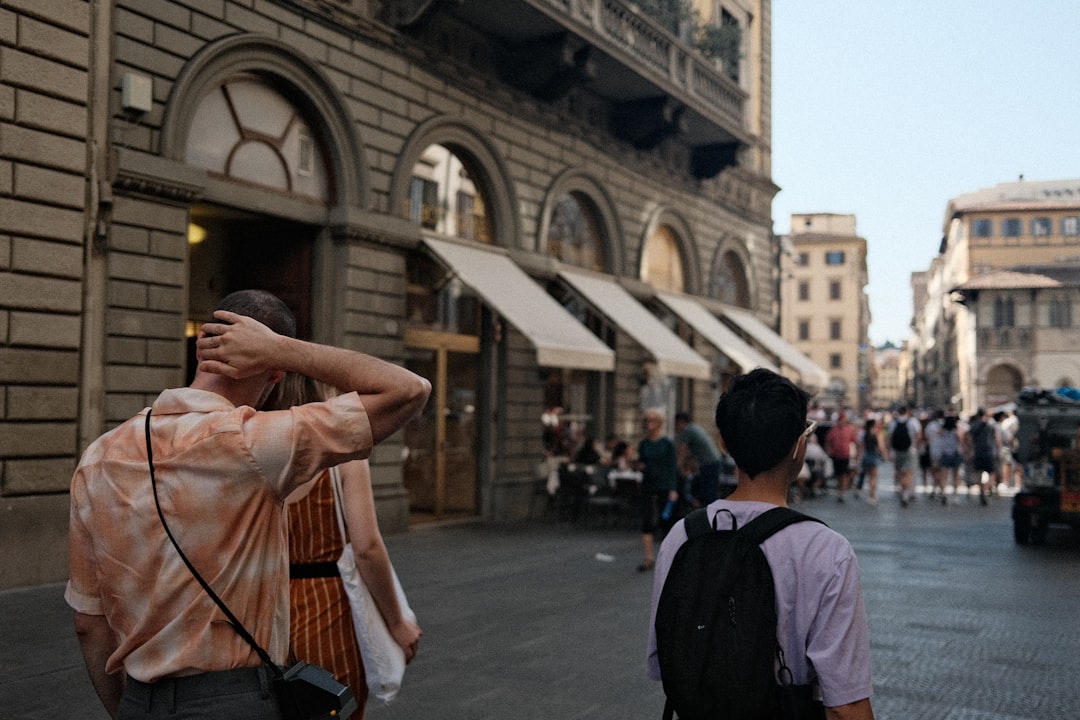
Photo by Valentin Lacoste on Unsplash
Some of the oldest tourist scams are still the most profitable because they rely on proximity. In a packed square near a cathedral, with buskers playing and cameras clicking, it takes almost nothing to invade your personal space. A thread bracelet appears on your wrist. A clipboard blocks your path. A stranger points to your shirt and says something spilled. Another person bends down to help. By the time your brain catches up, your wallet may already be gone.
These scenes tend to happen where travelers are softened by atmosphere. You are looking up at a dome glowing in late afternoon light, not down at the zipper on your bag. The stone underfoot is warm, church bells are echoing, and you are thinking about photos, not risk. To avoid pickpockets and other street hustles, your goal is simple: do not let strangers control your hands, your pace, or your focus.
Watch for these common travel scams in pedestrian-heavy areas:
- Bracelet, flower, or friendship string scam: Someone offers a free item, then fastens it to your wrist or places it in your hand and demands payment. Do not accept anything. If it is already on you, remove it, hand it back, and leave without negotiating.
- Fake petition scam: A person with a clipboard, often pretending to support a charity or school, asks for a signature and then pressures you for money. The paper is often just a distraction so an accomplice can avoid pickpockets becoming harder for them. Keep walking.
- Spill scam: Someone squirts sauce, bird mess, or another liquid onto your clothes and then insists on cleaning it. While you look down, your pockets or bag are checked. Turn away, secure your belongings, and clean yourself up later.
- Found ring scam: A stranger pretends to discover a gold ring on the ground and offers it to you cheaply. It is almost always fake. If a bargain feels theatrical, it is a performance, not a deal.
- Fake monk or blessing scam: A person in religious dress offers a blessing or bracelet and then demands a donation. Genuine religious figures at temples and monasteries do not usually stop tourists in the street to sell trinkets.
- Closed attraction trick: Someone near a famous site tells you the attraction is closed and offers a better alternative nearby. The alternative often includes a shop, commission stop, or inflated private tour.
- Photo help theft: A friendly stranger offers to take your picture, then lingers with your unlocked phone or tries to pull you into conversation while a second person targets your bag.
- Child distraction theft: A child selling tissues, flowers, or small toys may work with adults nearby. Compassion matters, but keep your valuables secured and do not open a money belt or passport pouch in public.
A few habits matter more than any gadget. Keep only the money you expect to spend that day in an easy-to-reach wallet. Store your main card, passport, and reserve cash separately. If you want a deeper setup for organizing valuables, How to Pack a Carry-On in 2026 Without Leaving Anything Out has useful ideas for splitting essentials across your bag without making access awkward.
Body language also matters. Scammers scan for hesitation. Walk as if you know where you are going, even when you are checking directions. Stop inside a café, hotel, pharmacy, or shop to look at your map instead of freezing in the middle of the pavement. The less exposed your confusion is, the less attractive you become to street-level tourist scams.
Taxi overcharges, fake rides, and arrival-day traps
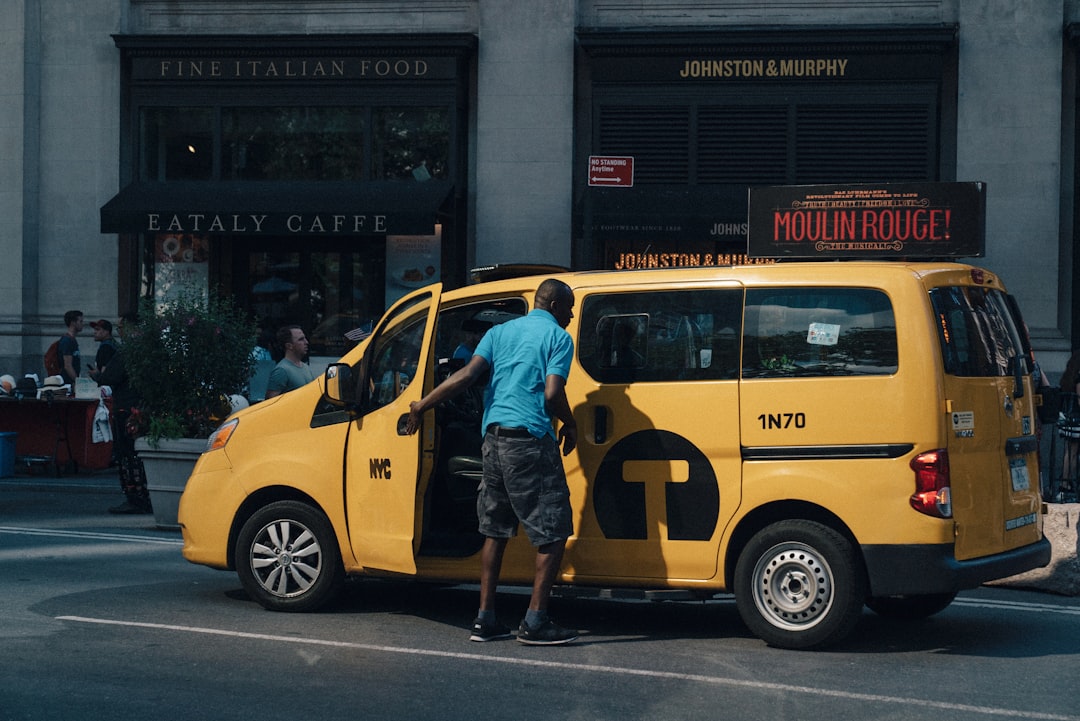
Photo by Matthew LeJune on Unsplash
Arrival day has a particular texture: fluorescent terminals, sleep-deprived decisions, warm air after a long flight, a local SIM that may or may not be working, and a line of drivers who seem to know exactly where you need to go. This is the hour when a fake taxi scam feels most plausible, because all you want is movement. You want the hotel bed, the shower, the first meal, the relief of no longer negotiating baggage and borders.
That urgency is why transport scams remain one of the most common travel scams worldwide. A driver may say the meter is broken, claim your hotel is closed, insist that official taxi rates changed yesterday, or try to wave you into a private car before you even reach the licensed rank. In nightlife districts, the variation is subtler: a driver or fake rideshare pickup counts on the fact that you are tired, distracted, or a little drunk.
The most common transport and arrival scams include:
- Fake taxi scam: Unlicensed drivers approach inside the terminal or station and quote an inflated flat fare. Use the official taxi queue, airport desk, or a verified app. Never follow a driver to a random parking area.
- Meter refusal or meter tampering: The driver claims the meter is broken or starts with an already-high reading. If the city normally uses meters, get out before the ride begins if the driver refuses.
- Hotel closed scam: The driver says your hotel is overbooked, shut, or moved, then takes you to another property where a commission is waiting. Go to the hotel you booked unless the property contacts you directly through the official channel.
- Fake rideshare pickup: Someone calls your name, knows you are waiting for a car, and asks if you are going to your destination. Match the plate, car model, and driver name in the app before entering.
- Long route padding: The driver loops through traffic-heavy streets to inflate the fare. Follow the route on your own map, preferably with offline navigation.
- Rental scooter or car damage scam: You return a vehicle and the owner points to damage that was already there or created after you parked. Photograph and video every angle before departure and return.
Three simple checks prevent most transport losses. First, know the rough fare and journey time before you move. Second, keep small bills ready so you do not flash a larger stack of cash. Third, save the address in the local language and in map form. If you use trip-planning tools and offline maps from Best Travel Apps 2026: 17 Essentials for Easier Trips, you reduce the confusion scammers rely on.
If you are already inside a car and something feels wrong, do not wait for proof. Ask to stop in a bright, public place such as a hotel entrance, petrol station, or busy café. The best travel safety tips are often about exiting early, not arguing better. A short awkward moment is cheaper than a long bad ride.
Hotel booking scams, fake tours, and attraction tickets that are not real
Accommodation scams feel especially personal because they hit when you think the hard part is over. You have landed, navigated transport, and rolled your suitcase to a front door only to hear that your room is unavailable, the listing was inaccurate, or payment must now be made again through a new link. At that point, exhaustion becomes leverage. Many travelers accept an inferior room, a last-minute switch, or a suspicious payment request simply because the alternative is standing on a pavement with luggage.
The same logic applies to tickets and tours. Outside a famous museum or archaeological site, the line looks long, the sun is hot, and somebody appears with a shortcut. They offer skip-the-line access, a private guide, or an official discount that expires in the next five minutes. That pressure turns ordinary caution into wishful thinking. Among common travel scams, these are some of the easiest to avoid if you decide in advance that convenience will never come from a stranger on the sidewalk.
Pay close attention to these booking-related tourist scams:
- Accommodation bait-and-switch: The property in the photos is not the one you receive, or you are told on arrival that a different room is the only option. Photograph everything immediately and contact the booking platform before accepting the substitute.
- Off-platform payment request: A host sends a message asking for bank transfer, card details, or an extra deposit outside the booking site. Decline. Legitimate charges should stay inside the platform.
- Fake booking page or cloned listing: Scammers build lookalike pages that mimic a hotel or apartment site. Type URLs carefully and use bookmarks from official confirmations.
- Fake tour guide scam: Someone near the entrance says official tickets are sold out and offers a private guide without credentials. Use the attraction website, licensed guide office, or clearly marked official desk.
- Ticket resale scam: Street sellers offer event or museum tickets at a discount or as a scarce last chance. If a site is sold out online, buy only from an official resale partner, never from a passerby.
- Closed-for-today diversion: A stranger says the monument is closed for prayer, lunch, or a state visit and suggests a shop or tour instead. Verify at the entrance itself.
Keep your travel documents and confirmations organized. Panic grows when you cannot find the booking email, the app will not load, and the hotel Wi-Fi is weak. Keeping reservations in one place, whether in a paper folder or at TravelDeck, makes it much harder for anyone to rush you into a fake payment.
A good rule: if a person is asking you to act immediately, spend privately, or change the original booking terms outside a documented channel, assume the burden of proof is on them. Real hotels, real guides, and real ticket offices can all wait long enough for you to verify. Scammers cannot. That difference is one of the clearest tells behind common travel scams.
ATM skimming, wrong change, hotel phone phishing, and unsafe Wi-Fi
Not all travel scams happen face to face. Some unfold through devices, card readers, and subtle payment moments when nothing dramatic seems to be happening. You withdraw money under a flickering fluorescent ATM light. You tap your card in a crowded bar. You answer the hotel room phone half asleep because the caller says there is a problem with your credit card. These scenes feel routine, which is exactly why they are dangerous.
Money scams also create a second wave of damage. Lose cash in a bad taxi and the pain is limited. Lose card details to ATM skimming or a fake Wi-Fi network and the problem can keep following you across borders. The strongest travel safety tips are therefore financial: use systems that are easy to monitor, hard to clone, and quick to freeze if something goes wrong.
Be alert for these money and tech-related common travel scams:
- ATM skimming: Criminals attach a device over the card slot and often pair it with a camera or shoulder-surfer for your PIN. Use ATMs inside bank branches, tug the card reader gently, and shield the keypad with your hand.
- Helpful stranger at the ATM: Someone offers to explain fees or machine steps while standing too close. Decline and move on. No stranger needs to be within arm's reach while you enter a PIN.
- Wrong change scam: In countries where bills look similar, a cashier returns less money and counts on your politeness or rush. Count change before stepping away.
- Dynamic currency confusion: A terminal asks whether you want to pay in your home currency instead of the local one. Choosing local currency is usually better and easier to verify later.
- Hotel room phone phishing: A caller pretending to be reception asks you to confirm your card details. Hang up and call the front desk using the number on the room phone or by going down in person.
- Fake Wi-Fi hotspot: A network name resembles the hotel or café Wi-Fi, but it is unsecured or slightly misspelled. Confirm the exact network name with staff and avoid banking on public Wi-Fi.
- Contactless distraction: In a crowded place, a seller rushes you through payment, hoping you will not notice double charges or a different amount on screen. Always check the display before tapping.
For spending abroad, credit cards are usually safer than debit cards because dispute protections are stronger and the money does not leave your bank account immediately. If you are comparing fraud protection, notification settings, and backup card strategy, Best Travel Credit Cards 2026 and Smarter Ways to Use Points is a useful companion read.
Digital hygiene matters just as much as street awareness. Use a screen lock that is fast and strong. Turn on transaction alerts for every card. Keep a backup card in a different bag. Save the international phone numbers required to freeze your cards. Common travel scams often succeed because the victim delays action. Speed is your friend once something feels off.
Nightlife scams, fake friendships, and health precautions after dark
A city changes character at night. Neon replaces sunlight. Decisions get softer at the edges. Music spills into the street, scooters buzz past, glasses clink, and people who felt guarded by day can become overly trusting by midnight. That is why nightlife districts attract a different family of tourist scams: less about maps and queues, more about chemistry, embarrassment, and impaired judgment.
These scams can move from financial annoyance to physical risk quickly. A flirtatious stranger may guide you to a venue with inflated drink prices. A seemingly friendly local may invite you to a tea house, club, or private room where pressure escalates. In the worst cases, drink spiking, extortion, or fake police involvement enter the picture. This is where travel safety tips overlap directly with health advice. Protecting your money and protecting your body are part of the same plan.
Watch for these late-night scams and precautions:
- Bar bill scam: You are invited to a club or karaoke venue, then presented with a wildly inflated bill and pressured by staff to pay. Choose your own venue and check menu prices before ordering.
- Flirt-and-switch setup: An attractive stranger encourages heavy drinking or moves you to a second location where your leverage disappears. Be especially cautious if the person is driving every decision.
- Tea ceremony or invitation scam: A seemingly harmless cultural invitation turns into a large bill or coercive sales pitch. Decline private invitations from strangers you just met.
- Drink spiking: Never leave a drink unattended, and do not accept open drinks from strangers. If you suddenly feel unusually disoriented, get help from venue staff, trusted friends, or a hotel immediately.
- Fake police shakedown: Someone claiming to be police demands cash on the spot because of alleged infractions. Ask for identification, remain calm, and request to go to the nearest station or call emergency services yourself.
- Drug setup scam: A stranger offers illegal substances, then an accomplice posing as law enforcement appears and demands a cash fine. The easy prevention is total: do not buy drugs abroad.
After dark, simple health precautions matter. Stay hydrated, especially in hot cities where alcohol hits harder after long days walking in the sun. Eat before drinking. Share your live location with a trusted person. If you are traveling alone, tell someone where you are going and what time you expect to return. Common travel scams succeed when they isolate you physically or mentally. A charged phone, a glass of water, and one reliable contact can interrupt that chain.
If you feel suddenly ill, dizzy, or confused after just one or two drinks, trust that sensation. Get to a staffed, brightly lit place. Ask the venue to call medical assistance or your hotel. Money can be replaced. Health complications from a scam, especially one involving substances, can become the more serious emergency.
What to do immediately if you get scammed
Even careful travelers get caught sometimes. The worst response is shame, because shame slows action. You may replay the moment in your head and wonder how you missed it, but that does nothing for the card that is still active or the phone that is still logged in. Common travel scams are designed to feel normal until the last second. The right move now is administrative, not emotional.
Take a breath and switch into sequence mode. Your priorities are safety, access, documentation, and recovery. Handle the risk that can keep growing first, then deal with reports and refunds.
- Move to a safe place. Get indoors or into a populated, well-lit area.
- Freeze the vulnerable account. Lock the card, sign out of the device, or change the password immediately.
- Document what happened. Photograph the taxi plate, ATM, storefront, receipt, or room if possible.
- Notify the official channel. Contact the bank, booking platform, hotel, rideshare company, or attraction support.
- File a police report if needed. This is often required for insurance claims or major theft.
- Monitor accounts for 48 to 72 hours. Small test charges often appear before larger fraud.
- Replace essentials. If your passport was taken, contact your embassy or consulate right away.
The practical goal is not revenge. It is containment. Many tourist scams rely on the victim feeling too rattled to act. If you can protect your accounts within minutes, you cut most of the real damage off at the knees.
How to get there
The most scam-prone moment of a trip is often the transfer from airport or station to your accommodation. The smell of jet fuel, the drag of wheels over terminal tiles, the pressure of deciding quickly in a crowd of drivers holding signs: this is where a fake taxi scam or overcharge often begins. Knowing your safest route before takeoff changes the whole tone of arrival.
Below are four common gateway routes where travelers often get targeted. The details change slightly over time, but these routes are stable enough to use as a planning model. The point is not memorizing every fare. It is arriving with one official option already chosen.
| Arrival route | Safest official option | Typical time | Typical cost | Notes |
|---|---|---|---|---|
| Paris Charles de Gaulle Airport, CDG, to central Paris | RER B train or official taxi rank | 35 to 45 min by RER B | about EUR 11.80 by train or EUR 56 to EUR 65 by official taxi | Ignore anyone offering rides inside arrivals; use signed taxi queue only |
| Rome Fiumicino Airport, FCO, to Roma Termini | Leonardo Express | 32 min | EUR 14 | Fixed-fare official taxis to central Rome are around EUR 55; confirm before entering |
| Bangkok Suvarnabhumi Airport, BKK, to Sukhumvit | Airport Rail Link plus BTS, or official metered taxi rank | 35 to 60 min | about THB 70 to THB 90 by rail combo or THB 350 to THB 500 by taxi including surcharge and tolls | Follow airport taxi signage and insist on meter |
| Mexico City Airport, MEX, to Reforma or Centro | Authorized taxi kiosk or app ride from designated zone | 25 to 45 min | about MXN 350 to MXN 450 | Do not accept terminal approaches from freelance drivers |
A few official resources are worth bookmarking before departure: U.S. travel advisories, UK foreign travel advice, Uber safety guidance, and Grab for much of Southeast Asia. Reading five minutes before landing can spare you an expensive first hour.
Things to do
If you want to stay ahead of common travel scams, the smartest moves happen in the first ninety minutes after arrival. Before you chase a sunset viewpoint or the best noodle shop, build a small layer of order around yourself. Travelers who look settled are less likely to be approached by opportunists. That does not mean looking tough. It means looking occupied, informed, and difficult to rush.
Think of this as a short ritual that belongs in every new city, whether you land in rain-soaked London, steamy Bangkok, bright Lisbon, or high-altitude Mexico City. You are not losing spontaneity. You are buying it back for the rest of the trip.
- Withdraw a modest amount of local cash from a bank branch ATM, not a random street machine.
- Buy or activate mobile data immediately so you can check routes without standing exposed on the sidewalk.
- Screenshot your hotel address, booking reference, and emergency card numbers.
- Walk the block around your accommodation in daylight and identify one pharmacy, one convenience store, and one staffed café.
- Ask reception how licensed taxis work in that city and whether ride apps are legal and reliable.
- Store your passport in the room safe or a hidden pouch unless local law requires you to carry it.
- Learn the local emergency number and how to say help, hospital, and police in the local language.
Where to stay
Where you sleep influences how exposed you are to scams. A beautiful bargain far from transit can leave you arriving after dark through empty streets with bags and poor signal. A central hotel directly on a noisy nightlife lane can create a different problem: inflated taxi offers, fake guides, and heavy foot traffic right outside the door. The safest stay is usually not the absolute cheapest or the most glamorous. It is the one that reduces friction.
When choosing accommodation, look for a 24-hour front desk or clearly documented self-check-in, recent reviews that mention smooth arrival, and a location on a well-lit street with easy access to official transport. If reviews repeatedly mention last-minute changes, payment disputes, or confusing pickup instructions, move on.
| Budget tier | Good fit for scam-resistant travel | Typical nightly range | Examples |
|---|---|---|---|
| Budget | Reliable hostel or budget chain with staffed reception | USD 25 to USD 80 | YHA properties, Generator, Meininger |
| Mid-range | Business hotel or trusted mid-scale brand in a connected area | USD 90 to USD 220 | Hampton by Hilton, Premier Inn, NH Hotels |
| Luxury | Full-service hotel with concierge, official transport help, and strong security | USD 250 to USD 600 | Hyatt Regency, JW Marriott, Shangri-La |
Useful booking filters:
- Reception open late or 24 hours
- Verified guest reviews in the last 90 days
- Clear tax and fee breakdown before payment
- Free cancellation window long enough to react if something looks wrong
- Address that matches map pins across more than one platform
- No requests for messaging-app payments or bank transfers
Where to eat
Food is one of the best ways to settle into a place, and it is also where some travelers lower their guard. Hunger makes people impatient. After a delayed flight, the smell of frying garlic, grilled meat, butter, coffee, or broth can pull you into the nearest option without checking the menu, the bill format, or whether prices are displayed. Most meals go perfectly well, but a few simple choices reduce the chance of inflated bills or card confusion.
High-turnover places with posted prices, visible kitchens, and a mixed local crowd are your friends. They feel lively for a reason: trays clatter, cooks shout orders, steam fogs the glass, and nobody has time for elaborate hustles. Quiet tourist-trap restaurants with aggressive greeters just outside a monument are far more likely to produce surprise cover charges, mystery specials, or card machine sleight of hand.
Safer and smarter food picks in major travel cities include:
- Bangkok: Pier 21 Food Court at Terminal 21 for clearly priced pad kra pao, noodle soups, and mango sticky rice.
- Rome: Mercato Centrale Roma near Termini for high-turnover counters and easy-to-read pricing before ordering supplì or cacio e pepe.
- Singapore: Lau Pa Sat for satay, laksa, and visible stalls with posted menus.
- Mexico City: Mercado de Coyoacán for tacos, tostadas, and busy lunch traffic that keeps things transparent.
- Lisbon: Time Out Market for shared seating, clear payment systems, and classic bites like bifana and pastéis de nata.
- Paris: Traditional bouillon restaurants such as Bouillon Chartier, where printed menus and fast service reduce bill confusion.
At sit-down restaurants anywhere, ask for the total before tapping your card if something feels unclear. Check whether service is included. Watch the terminal screen yourself. Travel safety tips do not have to ruin dinner; they just make sure the evening ends with dessert instead of a dispute.
Practical tips
Most common travel scams become easier during peak season, extreme weather, and fatigue-heavy itineraries. When cities are overcrowded, tempers shorten and attention fragments. In heat, people get dehydrated and stop checking details. In heavy rain, everyone rushes toward the first available vehicle. Even your schedule matters: back-to-back transit days leave you mentally slower, which is exactly when tourist scams feel most persuasive.
The best prevention is not constant vigilance. It is building enough slack into your travel days that you can pause. A fifteen-minute buffer after arrival, a backup payment method, a reusable water bottle, and a fully charged phone often do more for safety than expensive gear. Good habits are quiet protection.
Keep these practical precautions in mind:
- Best months: Shoulder seasons are often easier for scam awareness because crowds are lighter. In many city destinations, April to June and September to November strike the best balance.
- Weather: Heat and humidity can make you rush decisions. Carry water and do not sort money or documents while overheated in public.
- What to pack: Crossbody bag with locking zipper, slim day wallet, backup card, small power bank, and printed copies of reservations.
- Customs: Learn how tipping, taxi payment, and queueing work locally. Confusion about normal etiquette often creates openings for overcharging.
- Currency: Keep a mix of small notes and one backup card. Avoid changing large amounts at airports unless rates are clearly displayed.
- Safety: Never hand your phone to a stranger, even for a quick call or photo. If you need help, ask staff inside a business.
- Connectivity: Use your own data or a trusted eSIM for banking and bookings. Treat public Wi-Fi as view-only unless protected by a VPN.
- Documents: Carry a photocopy or secure digital copy of your passport, but keep the original protected unless required.
- Local research: Before every trip, search your destination plus tourist scams, fake taxi scam, and ATM skimming so you know the current patterns.
FAQ
What are the most common travel scams right now?
The most common travel scams are still taxi overcharges, fake rideshare pickups, bracelet and petition distractions, ATM skimming, ticket resales outside attractions, hotel booking scam payment requests, and fake Wi-Fi networks. The details change by city, but the pattern is usually the same: pressure, confusion, and urgency.
Are tourist scams more common in certain regions?
Yes, but not in the simplistic way people assume. Tourist scams appear wherever there is a steady flow of distracted visitors with luggage, cards, and limited local knowledge. That can mean Europe, Southeast Asia, North America, the Middle East, or Latin America. Famous places are not dangerous because of culture; they are profitable because of traffic.
How can I avoid pickpockets without wearing obvious anti-theft gear?
Use a small crossbody bag worn in front in crowded places, keep your phone off café tables, split your money into two locations, and stop indoors when checking directions. The goal is not to look armored. It is to avoid pickpockets by removing easy access and visible distraction.
Should I use cash or cards when traveling?
Use both. Carry some local cash for small purchases, tips, and transport, but rely on credit cards for larger payments because fraud protections are usually better. Keep one backup card separate from your daily wallet in case a loss or theft happens.
What should I do if someone claiming to be police asks for money?
Stay calm, ask for identification, and say you are happy to go to the nearest police station or contact emergency services directly. Do not hand over cash on the street. Real officers can handle a matter through official channels.
Travel should sharpen your senses, not harden your heart. Most strangers you meet on the road are simply busy with their own day, and many will be genuinely kind. The point of learning common travel scams is not to mistrust every smile. It is to recognize when friendliness turns into pressure, when urgency replaces clarity, and when a small pause can save your money, your time, and sometimes your health.
The best travelers are not the ones who never make mistakes. They are the ones who move through stations, markets, hotel lobbies, and night streets with a steady rhythm: pause, verify, proceed. Once that rhythm becomes habit, the world opens back up. You notice the food, the weather, the architecture, the music, and the thrill of arrival again, which is exactly what travel was meant to feel like.