International Pet Travel Tips 2026 for Smooth Journeys
Traveling with an animal can turn a simple weekend away into a choreography of vet appointments, carrier drills, border checks, bathroom breaks, and hotel calls. That is exactly why strong international pet travel tips matter: one missed vaccine window or one wrong carrier size can derail a trip faster than a canceled train. The good news is that traveling with pets is much easier when you treat it less like a last-minute add-on and more like part of the itinerary from day one.
The biggest mistake travelers make is assuming a calm pet at home will automatically cope with airports, stations, ferries, new smells, and strange hotel corridors. A dog that naps happily on the sofa may freeze on polished terminal floors. A cat that seems easygoing may panic at the hum of luggage wheels, the metallic echo of a departure hall, or the scent of ten unfamiliar dogs in a check-in queue. Good international pet travel tips are not only about rules and documents. They are about rhythm, timing, and respect for how animals actually experience travel.
Done well, pet travel can be deeply rewarding. Sunrise walks in a new city feel different with a leash in hand. Country lanes become slower and richer when you stop to let your dog sniff pine needles after rain. Ferry decks, lakeside promenades, and shaded café terraces suddenly become part of your route planning. This guide is a complete, practical companion for travelers who want the real thing: paperwork that clears, transport that works, pet-friendly hotels that do not just tolerate animals, and routines that keep stress low for both species.
If you are planning your route with stops, green space, and backup options in mind, a visual planner helps. I often sketch the whole trip in TravelDeck so I can see airports, stations, vet clinics, walking breaks, and overnight stays on one timeline before booking anything.
Start here: the pet travel checklist that saves trips
Photo by TA-WEI LIN on Unsplash
The most useful international pet travel tips begin long before departure. The first part of the journey happens at home, in the kitchen with your calendar open, not at the airport counter. If you leave planning too late, everything becomes expensive and rigid. Airlines may have only one or two pet spaces left in cabin. Ferries may already be sold out of pet cabins. A vet certificate may need official endorsement. And the pet who seemed fine yesterday may still hate the carrier when travel day arrives.
Think of your pet travel checklist as three parallel tracks. First comes compliance: microchip, vaccine record, health paperwork, and any import permits. Second comes logistics: which route, which airline, which hotel, which backup plan. Third comes behavior: crate training, short practice trips, meal timing, motion sickness management, and calm exposure to busy environments. Ignore any one of those tracks and you create avoidable friction.
This is where many international pet travel tips get too generic. They tell you to prepare early, but not how early. In practice, the right timeline depends on the border, the transport mode, and the animal. A domestic road trip next month is very different from flying into a country that requires a rabies titer or a government-endorsed health certificate. Build the calendar backward from departure.
| Timeline before departure | What to do | Why it matters |
|---|---|---|
| 6 months | Check country entry rules, breed restrictions, and rabies titer needs | Some destinations have long lead times |
| 8-12 weeks | Update microchip registration and core vaccines | Records must match the pet exactly |
| 4-8 weeks | Start carrier training and short practice rides | Reduces stress on travel day |
| 3-4 weeks | Book pet space on plane, train, ferry, or cabin | Pet capacity is often limited |
| 10-14 days | Schedule health certificate if required | Many certificates have short validity windows |
| 72 hours | Recheck airline or ferry rules, weather, and check-in procedures | Policies change and heat restrictions can apply |
| 24 hours | Pack food, meds, cleanup kit, paperwork folder, and tags | Prevents departure-day chaos |
A reliable pet travel checklist should include:
- Microchip number and registration login details
- Rabies certificate and full vaccine record
- Health certificate if required
- Carrier measurements and weight of pet plus bag
- Hotel pet policy in writing
- Food for the whole trip plus at least three extra days
- Leash, harness, collar, and temporary ID tag
- Medication list with dosing schedule
- Photos of your pet from multiple angles
- Emergency vet contacts at each overnight stop
Pet travel documents and vet timeline
Photo by Yiheng Fang on Unsplash
Among all international pet travel tips, paperwork is the least glamorous and the most important. It is also the part travelers underestimate because it looks simple on paper. A certificate is not just a certificate. Dates must line up. Vaccine timing must be valid for the country you are entering. The microchip must have been placed before certain vaccinations in many jurisdictions. A missing endorsement stamp can matter as much as a missing document.
For travel within parts of Europe, many pet owners use an EU pet passport issued by an authorized vet. For travel from outside the EU into the EU, you may need an animal health certificate or country-specific import documentation. For dogs entering the United States, rules can be stricter depending on where the dog has been and what documentation is required before arrival. Always verify the latest rules on official portals such as USDA APHIS, the EU pet travel rules portal, and the CDC dog import page.
Good international pet travel tips also insist on something travelers hate hearing: do not rely on memory or screenshots alone. Carry printed copies in a waterproof folder and keep digital copies on your phone, in cloud storage, and emailed to yourself. At check-in desks, border control points, and ferry terminals, paper often moves faster than your phone battery.
A strong set of pet travel documents usually includes:
- Microchip details and proof of registration
- Current rabies certificate
- Full vaccination history
- Health certificate issued within the required window
- Import permit if the destination requires one
- Tapeworm treatment record where mandatory for dogs
- Proof of ownership and your passport copy
- Recent pet photos in case of loss
Common paperwork traps
Two small errors cause outsized problems. The first is vaccine timing. If it is your pet's first rabies vaccination, many destinations require a waiting period before entry. The second is mismatched information. A pet name spelled one way on the vaccine sheet and another on the health certificate can trigger extra scrutiny. The same applies to outdated microchip registration.
Another problem is assuming airline approval equals border approval. It does not. Airlines care about carrier size, route rules, breed restrictions, and available pet capacity. Border authorities care about entry compliance. You need both. One can approve you while the other blocks you.
Use this quick reference for a practical pet travel checklist:
| Document | Typical domestic travel | Typical international travel |
|---|---|---|
| Microchip | Strongly recommended | Often required |
| Rabies proof | Commonly required | Almost always required |
| Health certificate | Sometimes required by airline | Often required by destination |
| Import permit | Rare | Destination dependent |
| Tapeworm treatment | Rare | Required for some countries and routes |
| Carrier approval | Airline dependent | Airline dependent |
Before the trip, ask your vet five precise questions:
- Is every vaccine valid for the full travel window, including return?
- Does my destination require extra parasite treatment or lab testing?
- Is my pet healthy enough for this specific mode of transport?
- What medication is safe if anxiety, nausea, or diarrhea appears?
- What should I do if my pet misses a meal or refuses water during transit?
These international pet travel tips matter most when the schedule gets tight. If your trip includes multiple countries, the first border you enter may be the one that checks your papers most carefully, even if your final destination is elsewhere. Build slack into the plan. Border rules are not where you want to gamble with timing.
How to get there with your pet
Pet Transport Ireland
The best international pet travel tips are not automatically about flying. Sometimes the smoothest route is a train, a ferry, or a long drive broken into calm overnight stops. Choosing the right transport is less about what looks fastest on a booking screen and more about how your pet handles noise, confinement, temperature, motion, and transitions. A three-hour flight can become a ten-hour ordeal once you add ground transfers, security, waiting time, and airport rules. A seven-hour train ride, by contrast, may feel gentler because you can move, hydrate, and keep your pet beside you.
Picture the different atmospheres. Airports are bright, echoing, and rule-heavy. Ferry ports smell of salt, diesel, and wet ropes, with gulls crying over loudspeakers. Train stations pulse with footsteps and rolling bags, but usually offer shorter check-in routines. Road trips can feel wonderfully flexible, with rest areas under pine trees and the chance to reset every few hours, yet they demand constant attention to heat, safety restraints, and overnight stops. Good international pet travel tips always match the mode to the animal, not just the traveler.
If you are deciding between transport types, start with these route examples and typical costs. Prices vary by season and provider, but this table gives a realistic planning framework.
| Mode | Example route | Typical duration | Typical pet cost | Notes |
|---|---|---|---|---|
| Flight | New York JFK to Miami MIA | 3h to 3h 30m | $125-$200 each way in cabin | Book pet space early; arrive 2-3 hours ahead |
| Flight | Paris CDG to Rome FCO | 2h 5m | €50-€125 each way depending on airline | Full-service carriers are usually easier than low-cost airlines |
| Train | Paris Gare de Lyon to Milan Centrale | about 7h | Often €10-€30 or half fare for larger dogs | Easier for bathroom breaks before boarding |
| Train | Berlin Hbf to Munich Hbf | about 4h | Small pets in carriers often free; larger dogs commonly half fare | Muzzle rules can apply |
| Ferry | Dover to Calais | 1h 30m crossing | From about £15-£30 for pet add-on | Good UK-EU option with car |
| Shuttle | Folkestone to Calais via Eurotunnel | 35 min crossing | Around £22-£30 pet fee | Pet stays with you in vehicle |
| Road trip | Los Angeles to San Francisco | 6-7h drive without long stops | Fuel plus pet-friendly hotel if split overnight | Stop every 2-3 hours |
| Road trip | Munich to Lake Garda | about 5h 30m | Tolls, fuel, overnight optional | Summer heat can be intense |
Air travel
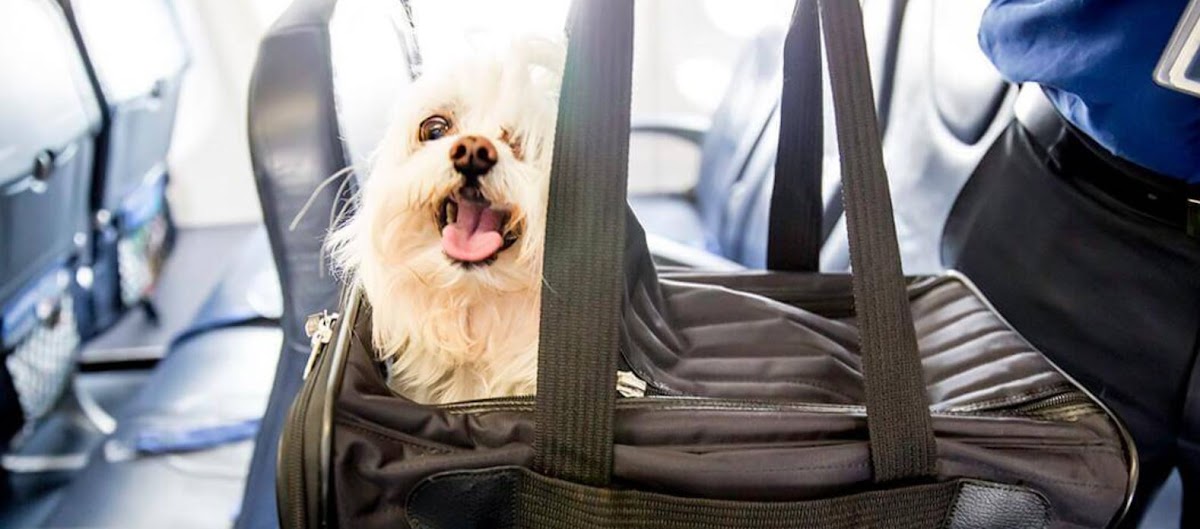
If you need to fly with a pet, choose a route with the fewest handoffs. Nonstop is almost always better than a cheaper itinerary with a layover. Every transfer adds new noise, temperature change, paperwork exposure, and waiting. Many small pets can travel in cabin if the combined weight of pet and carrier fits the airline rule and the soft carrier fits under the seat. Larger animals often cannot travel in cabin and may need to fly in the hold or via a pet transport service.
When comparing airports, think beyond airfare. A short taxi ride to a calmer airport hotel near Amsterdam Schiphol AMS, Munich MUC, or Lisbon LIS may be worth more than saving a small amount on a more complex route. Airports with straightforward terminal layouts and good nearby green space make departure and arrival noticeably easier.
Train travel
For many dogs and some cats, rail is the sweet spot. The motion is smoother than a car, the routine is gentler than an airport, and stations are usually easier to reach from city centers. In much of Europe, small pets in carriers can travel at low cost or free, while larger dogs may need a leash, muzzle, and separate ticket. If you are shaping a rail-heavy itinerary, Pet-Friendly Europe by Train 2026: Routes, Stays, Tips is a useful companion read.
Example rail journeys that work well for many pet owners include:
- Paris to Brussels in about 1h 20m
- Milan to Florence in about 1h 55m
- Vienna to Salzburg in about 2h 30m
- Berlin to Hamburg in about 1h 45m
- Madrid to Barcelona in about 2h 30m, though pet rules depend heavily on operator and size limits
Ferries and tunnel crossings
Ferries can be surprisingly pet-friendly, especially on routes where cabins or kennels are available. The air is cooler, there is often more flexibility, and for car travelers it can break up a long drive. The catch is that some operators require pets to remain in designated areas or in the vehicle, which may be uncomfortable in peak summer. For UK-Europe routes, check Eurotunnel Le Shuttle and DFDS directly because pet rules, check-in procedures, and document checks are specific.
Driving
A road trip with a dog or cat can be the least stressful option if your pet already handles the car well. You control the soundtrack, the air conditioning, the pace, and the bathroom breaks. But freedom can tempt travelers into overdriving. Eight hours on a map can become eleven with heat stops, fueling, walking, feeding delays, and traffic. A humane road trip with a dog is often slower than a human-only drive.
Buses and ride services
Long-distance buses are the least reliable option for pet travel. Policies vary, cargo storage can be unsafe for animals, and drivers may refuse boarding if rules are unclear. Rideshares and private transfers can work for short hops, but message the driver first and confirm the pet size, carrier, and cleaning expectations.
These international pet travel tips can help you choose the right mode:
- Choose nonstop flights over tight layovers whenever possible
- Avoid the hottest part of the day for summer departures
- Favor trains for medium distances in Europe
- Use ferries with pet cabins for overnight sea crossings
- Split long drives with one calm overnight stop rather than forcing a marathon day
- Confirm every policy directly with the operator before paying for nonrefundable tickets
Carrier training, packing, and the home practice phase
The wisest international pet travel tips start in your living room, not on departure day. The carrier should feel like a den, not a trap. Leave it open for weeks before the trip. Drop treats inside. Feed meals there. Let your pet nap on familiar bedding with the door open. You want the smell of home inside the carrier: fabric, fur, shampoo, crumbs of ordinary life. A pet that enters the carrier willingly is already halfway to a smoother journey.
Many people focus on the bag and forget the body language. Watch how your pet reacts to zippers, lifting, moving floors, and background noise. Can your cat rest quietly while you carry the bag around the block? Can your dog settle inside the carrier under a café table for fifteen minutes? The practice sessions should grow slowly, from a few minutes to full simulations. Add train-station noise on your phone. Walk through a parking garage. Sit in a parked car. Then drive five minutes, ten minutes, twenty minutes.
Good international pet travel tips also keep the packing list boring and consistent. Travel is not the time to experiment with a new harness, flashy treats, or unfamiliar food. The best kit is the one your pet already understands.
Pet travel checklist for the bag you carry
- Regular food measured into daily portions
- Foldable water bowl and bottled water for the first transit stretch
- Two leashes if you are traveling with a dog
- Harness plus collar with ID tag
- Waste bags and paper towels
- Puppy pads or absorbent liners
- Small towel for rain, mud, or accidents
- Familiar blanket or T-shirt that smells like home
- Medication and dosing instructions
- Vet contact details and document folder
- Cat litter tray setup for longer car or hotel stays if needed
- Treats used only for calm behavior, not constant bribery
How to choose a carrier
A good carrier should allow your pet to stand, turn, and lie down comfortably when the route and operator require it. Soft-sided carriers are often better for cabin travel because they flex under the seat. Hard crates can be better for car travel or cargo requirements if they are the correct size and well ventilated. Measure the carrier and weigh your pet inside it before booking. Do not estimate.
Look for:
- Strong ventilation on multiple sides
- Secure zippers or latches
- Waterproof base or removable liner
- Easy top and side access
- Luggage strap or shoulder comfort for you
- Space for absorbent bedding without reducing comfort
One of the smartest international pet travel tips is to do a full dress rehearsal. Pack the bag exactly as you would on the trip, place your pet inside the real carrier, and leave home at the same hour your journey will start. You will discover what squeaks, what spills, what gets forgotten, and whether your pet settles after ten minutes or spirals after two.
Flying with a pet: airport routine, airline rules, and cabin comfort
When people search for international pet travel tips, flying is usually what they fear most. Airports compress every possible stressor into one day: early alarms, rushed packing, bright light, crowds, queues, strict staff, unfamiliar smells, and a long period where normal routines disappear. But a calm, methodical airport routine can prevent many problems.
Try to make departure morning emotionally boring. Your pet does not need your dramatic farewell energy. They need the same collar, the same breakfast pattern, the same tone of voice, and the same practiced carrier routine. If you are anxious, they notice. If you move quickly and speak sharply, they notice. Keep the pace deliberate. Before leaving for the airport, give dogs a proper walk, not a token two-minute stop on the pavement. Let them sniff. Let them empty out fully. For cats, keep the room calm and avoid chasing or last-second wrangling.
These international pet travel tips are especially important for human comfort too. On a long travel day, your tension rebounds onto the animal. Dress simply, carry less, and eat before you get trapped in airport lines. If your own long-haul habits need work, Survive Long-Haul Flight Comfortably 2026: Practical Travel Hacks pairs well with any pet itinerary because your pet reads your stress as clearly as your luggage weight.
Before you book the flight
- Confirm the airline accepts your species, breed, and route
- Verify in-cabin weight and carrier limits
- Ask whether online check-in is disabled for pet bookings
- Request written confirmation of the pet reservation
- Avoid the last row or seats where under-seat space may be restricted
- Avoid very tight self-transfer itineraries
Typical in-cabin fee range
For many major carriers, small pets traveling in cabin often cost roughly $125-$200 or €50-€150 each way. Policies vary sharply by airline, route, and aircraft type. Low-cost carriers in Europe often do not accept standard pets at all, except assistance dogs.
Airport day routine
- Arrive early enough that you are never rushed
- Reconfirm document folder, tags, and reservation before entering the terminal
- Offer a small drink of water, not a huge bowl all at once
- Keep food light unless your vet recommends otherwise
- Use absorbent padding inside the carrier
- Ask staff where the nearest relief area is before security if traveling in the United States
- Keep spare wipes and a plastic bag somewhere instantly reachable
Should you sedate a pet for flying?
Usually, no, unless a veterinarian who knows your animal specifically advises otherwise. Sedation can affect balance, breathing, temperature regulation, and stress response. For anxious pets, vets may sometimes recommend other supportive strategies, but do not improvise with over-the-counter solutions because a friend said they worked once. Test nothing for the first time on flight day.
What to do on arrival
Arrival is not the finish line; it is a vulnerable transition. Your pet may be stiff, thirsty, overstimulated, or desperate for a bathroom break. Go somewhere quiet first. Do not meet friends in the arrivals hall for a celebratory crowd moment. Get outside, find shade, let your dog decompress, or settle your cat in a quiet transfer vehicle. Check the hotel room slowly before releasing the animal. Look for gaps behind beds, open balconies, exposed cords, loose cleaners, and reachable snacks.
If you frequently fly with a pet, keep a standing airport kit packed between trips. The less you reinvent, the fewer mistakes you make. That is one of the most durable international pet travel tips there is.
Road trip with a dog or cat: safety, rest stops, and motion comfort
A road trip with a dog has a romance that flight itineraries never will. There is more sky, more flexibility, more fresh air, more room for error. You can stop at a farm shop, a forest lay-by, a roadside bakery, or a lake view that was never on the itinerary. But the best road trip with a dog is not carefree in the sloppy sense. It is carefully structured freedom.
The car should feel secure, cool, and predictable. Loose pets are dangerous. In sudden braking or a crash, an unrestrained animal becomes a projectile, and even minor incidents can turn into escape scenarios on busy roads. Use a crash-tested harness or a secured crate. Put familiar bedding inside. Keep the temperature stable, especially when crossing sunny regions where the cabin heats up fast.
A road trip with a dog works best when the day has texture. Think in chapters rather than hours: sunrise walk, two-hour drive, shady rest stop, light snack, another drive, lunchtime field, short town stroll, final approach, evening decompression. Your pet does not care that the hotel is three hundred kilometers away. They care whether the next hour feels manageable.
Safe driving rules for pet owners
- Stop every 2-3 hours for water and movement
- Never leave a pet in a parked car, even briefly in warm weather
- Keep windows safely cracked, not wide open for jumping risks
- Use a harness, crate, or secured barrier system
- Pack three extra days of food in case of delays
- Carry cleaning supplies where you can reach them fast
- Keep a slip lead available if a collar breaks
Best overnight rhythm for long drives
If the route exceeds 7-8 hours of real driving, split it. Airports and highways create the illusion that speed matters more than steadiness, but animals often travel better with one extra night on the road. Look for pet-friendly hotels near parks rather than right beside a major interchange. A fifteen-minute detour to a calmer town can improve sleep for everyone.
Practical drive-time examples:
- London to Cornwall: 5-7 hours depending on traffic, better split with a stop around Somerset in summer weekends
- Paris to Annecy: about 5h 30m, add breaks every 2-3 hours
- Chicago to Nashville: about 7h 30m, ideal with one longer midday park stop
- Sydney to Byron Bay: about 8h 30m, more humane as an overnight route for many pets
Motion sickness and mealtime timing
Some pets travel best on a light meal several hours before departure. Others do better fasting for a bit longer, with a proper meal once they arrive. Discuss this with your vet, especially if your pet has a sensitive stomach. Bring the usual food and do not rely on convenience stores en route.
These international pet travel tips still apply on domestic drives too. Borders may be absent, but stress, dehydration, noise, and poor planning can create the same outcomes.
Trains, ferries, city transit, and crossing borders on foot
Some of the most practical international pet travel tips live in the overlooked middle spaces of travel: station platforms, taxi ranks, metro systems, ferry terminals, and border crossings. That is where plans can fray. The long-haul part might be booked perfectly, but the ten-minute transfer between train and hotel may run through escalators, crowded trams, and confusing exits.
On trains, board early when possible. Choose seats with a little floor space or those at the end of a carriage. Keep your pet out of busy aisles. For ferry travel, know in advance whether your pet remains with you, stays in the vehicle, uses a kennel, or can book a pet cabin. Each option changes how you pack water, blankets, and walking time before embarkation.
City transit is more cultural than technical. In some places, dogs are a normal sight on trams and commuter rail. In others, staff may tolerate pets but fellow passengers expect quiet, space, and impeccable manners. If you are unsure how much personal space, restraint, and discretion matter in public, Travel Etiquette Around the World 2026: Invisible Rules is helpful background reading.
Transit habits that make a huge difference
- Avoid rush hour when entering a new city with a pet
- Use elevators instead of escalators whenever possible
- Keep the harness on even if your dog seems calm
- Muzzle-train in advance if rail rules may require it
- Have a lightweight towel to create a clean down-stay spot
- Ask before taking pets inside station cafés or waiting rooms
Crossing borders by train or car can feel anticlimactic after all the paperwork, but stay organized. Keep passports and pet travel documents in the same pouch. Do not bury them under snacks and chargers. Simple systems are among the smartest international pet travel tips because they prevent flustered mistakes.
Where to stay: pet-friendly hotels that actually work
Finding pet-friendly hotels is about more than a yes or no box on a booking site. Some properties welcome pets in name only and then charge high fees, limit room locations, ban animals from common areas, or place you beside service elevators with no easy outdoor access. The best pet-friendly hotels feel designed for real routines: quick outdoor exits, wipe-clean floors, enough room for a bed or crate, and staff who do not act surprised when you arrive with an animal.
When checking pet-friendly hotels, ask four things directly: the fee, the size limit, the number of pets allowed, and where your room is likely to be located. Ground floor is not always best if it sits beside a noisy entrance. Upper floors are not always bad if there is a quiet elevator and easy green space outside. Good international pet travel tips treat the room layout as part of the itinerary.
Below are reliable starting points in major travel markets. Prices vary by season and event calendar, so treat these as typical ranges and confirm policies before booking.
| Budget tier | Hotel | Typical rate | Why it works |
|---|---|---|---|
| Budget | B&B HOTEL Roma Fiumicino Aeroporto, Rome | €90-€150 | Practical for late flights and short airport overnights |
| Budget | Motel One Berlin-Alexanderplatz, Berlin | €95-€160 | Central access, simple modern rooms, common pet acceptance |
| Budget | ibis budget Wien Sankt Marx, Vienna | €70-€120 | Useful for road trips and short urban stays |
| Mid-range | Kimpton De Witt, Amsterdam | €220-€340 | Strong pet-friendly reputation and stylish central location |
| Mid-range | NH Collection Roma Palazzo Cinquecento, Rome | €220-€360 | Near Termini, good for rail arrivals and city walks |
| Mid-range | Scandic Grand Central, Stockholm | €160-€280 | Commonly pet-aware in a transit-friendly area |
| Luxury | Loews Regency New York, New York City | $650-$1,000+ | Established pet program and polished service |
| Luxury | Rosewood London, London | £650-£1,100+ | Excellent base for Hyde Park and central walks |
| Luxury | Four Seasons Hotel Firenze, Florence | €900-€1,600+ | Garden setting and calmer arrival experience than denser cores |
Booking rules for pet-friendly hotels
- Get the pet policy in writing by email
- Confirm whether the fee is per night or per stay
- Ask about nearby parks, dog runs, or walking streets
- Request a quiet room away from lifts and ice machines
- Bring your own bowl and bedding even if the hotel offers them
If your pet barks at corridor noise, carry a white-noise app or small travel speaker. A familiar soundscape can make pet-friendly hotels feel more like home.
Where to eat when traveling with pets
Eating well with an animal beside you is less about chasing the hottest reservation and more about understanding local rhythms. The best meals often happen on terraces at the edge of a square, at market counters with outdoor seating, or with takeaway enjoyed on a riverside bench after your pet has had a proper walk. Among all international pet travel tips, this is one of the easiest to overlook: hungry humans make bad decisions. Plan where you will eat before you arrive.
Pet owners usually do best in cities where outdoor dining is part of everyday life. Think café terraces in Rome, brasseries with pavement tables in Paris, beer gardens in Munich, waterfront kiosks in Lisbon, and broad park edges in London. Always ask before assuming pets are welcome, especially indoors, and be considerate of allergies, tight tables, and cultural norms.
Good food stops for travelers with pets
- Borough Market, London, Southwark: Great for takeaway pies, cheeses, and pastries, then a walk along the Thames path
- Marché des Enfants Rouges, Paris, 39 Rue de Bretagne: Easy for casual takeaway options and nearby pocket parks
- Testaccio Market, Rome, Via Beniamino Franklin 12E: Excellent for Roman street food like supplì and trapizzino before a neighborhood stroll
- Time Out Market Lisboa, Lisbon, Av. 24 de Julho 49: Indoor rules can vary, but takeaway works well for the waterfront nearby
- Naschmarkt, Vienna, Linke Wienzeile: Good for quick bites and produce with open-air movement
- Viktualienmarkt, Munich, Viktualienmarkt 3: Ideal for sausages, pretzels, fruit, and nearby beer-garden energy
Dishes that travel well on pet days
- Roast chicken and plain rice for cautious meal sharing with your dog, without sauces or onions
- Plain grilled fish for humans, while your pet sticks to its own packed meal
- Hard cheeses, bread, fruit, and simple picnic ingredients
- Broth-based soups for you and normal kibble or wet food for the pet once settled
Do not feed your pet random local specialties just because you are on holiday. Rich sausages, fried snacks, bones, onions, raisins, chocolate, and heavily seasoned foods cause too many emergency vet visits. A disciplined food routine is one of the least glamorous but best international pet travel tips.
Things to do: the best low-stress activities with a traveling pet
The most enjoyable pet-friendly trips are not packed with major-ticket attractions from dawn to dusk. They are built around shared, sensory experiences: parks at first light, shaded riversides, scenic ferries, open-air neighborhoods, gardens with broad paths, and slow markets. These are the kinds of outings where your pet can actually participate instead of merely being tolerated.
That does not mean your trip has to feel limited. In fact, many travelers discover that seeing a place at animal pace reveals more of its texture. You notice bakery steam drifting onto a cobbled lane at 7 a.m. You hear the first tram bell before the streets fill. You find neighborhoods you would have skipped in a taxi. Good international pet travel tips help you travel slower, but often deeper.
Here are specific activities that work well in popular cities and regions:
- Central Park, New York City, especially the Mall and the quieter early-morning loops
- Nearby area: Upper West Side and Midtown East hotels
- Hyde Park and Kensington Gardens, London
- Nearby area: South Kensington, Paddington, Mayfair
- Bois de Boulogne, Paris
- Nearby area: 16th arrondissement
- Villa Borghese Gardens, Rome
- Nearby area: Flaminio, Parioli, Spanish Steps side streets
- Englischer Garten, Munich
- Nearby area: Schwabing, Altstadt-Lehel
- Stanley Park Seawall, Vancouver
- Nearby area: Coal Harbour, West End
- Lake Bled lakeside promenade, Slovenia
- Nearby area: Bled town center, lakeside guesthouses
- The Alster paths, Hamburg
- Nearby area: St. Georg, Rotherbaum, Winterhude
When planning things to do, keep one rule: every major human activity should be paired with a pet activity before or after it. Museum in the afternoon? Long park walk first. Fancy dinner? Sunset riverside loop afterward. Balanced days are the heart of practical international pet travel tips.
Practical tips: seasons, packing, currency, safety, and local norms
The strongest international pet travel tips are seasonal. Heat changes everything. So does snow, fireworks season, mountain altitude, and holiday traffic. A route that feels easy in April may be punishing in August. Pavements become too hot for paws. Ferries fill up. City centers lose shade. Hotel prices rise just as your margin for error shrinks.
For most pet owners, the easiest months are usually the shoulder seasons: spring and early autumn. The light is gentler, the walking is better, and both transport and accommodation tend to be less intense than in peak summer. If your pet is older, brachycephalic, reactive, or simply inexperienced, this matters even more.
A practical pet travel checklist should always include weather, local customs, payment realities, and connectivity. You may need cash for rural campgrounds, a muzzle on public transit, or a stronger tick routine in forested regions. You may also discover that the supposedly pet-friendly beach bans dogs in peak summer daytime hours.
Month-by-month travel rhythm for pets
| Month | Typical conditions | Best for | Watch out for |
|---|---|---|---|
| Jan-Feb | Cold, wet, fewer crowds | Short city trips, cooler road trips | Snow, salt on paws, reduced daylight |
| Mar-Apr | Mild in many regions | First pet city breaks, rail trips | Spring allergies, rain bursts |
| May-Jun | Excellent in Europe and parts of North America | Road trips, parks, ferry routes | Early heat waves, holiday weekends |
| Jul-Aug | Peak heat and crowds | Cooler coastal or mountain trips only | Hot pavement, sold-out transport, stress |
| Sep-Oct | Often ideal | Long walks, mixed transport itineraries | Shorter daylight later in season |
| Nov-Dec | Quiet cities and festive breaks | Cozy hotel stays, calmer routes | Fireworks, icy roads, cold rain |
What to pack beyond the obvious
- Paw balm for salt or hot, dry surfaces
- Tick remover and simple first-aid items
- Cooling mat or lightweight blanket depending on climate
- LED collar light for dark evening walks
- A recent photo of you with your pet together
- Portable fan for warm station platforms or car stops
- Laundry bag for dirty towels and blankets
Currency and payments
International pet travel tips should include the boring financial details. Pet fees often appear where you least expect them: hotel cleaning charges, ferry pet supplements, rail tickets for larger dogs, airport trolleys, extra taxi fees, and emergency vet visits. Keep one payment card with room for unexpected medical costs and some local cash for smaller towns.
Safety and local norms
- Check leash laws before assuming off-leash spaces exist
- Train a simple settle command before café travel
- Ask before entering food markets or indoor shops with a pet
- Respect wildlife rules in parks and coastal paths
- Watch for processionary caterpillars, ticks, or foxtails depending on region
- Avoid fireworks-heavy nights if your pet is noise-sensitive
If other travelers in your group are managing food, dander, or medication sensitivities, Traveling with Allergies Tips 2026: Essential Safe-Travel Guide adds useful planning ideas that also help mixed human-and-pet travel groups.
Emergency planning, insurance, and what to do if something goes wrong
The most mature international pet travel tips assume that delays, accidents, and health issues are possible. Hope is not a backup plan. Before you leave, save the location and phone number of one daytime vet and one emergency clinic near each overnight stop. Learn how to say basic phrases such as emergency vet, my dog ate something, my cat is not eating, and where is the nearest clinic in the local language if needed.
Travel insurance for humans may not cover veterinary emergencies, and pet insurance may or may not reimburse care abroad. Check the details before departure, especially for international claims, out-of-hours treatment, and emergency boarding if you are hospitalized yourself.
Build a simple pet emergency file
- Your pet's normal weight and medications
- Vaccine dates and chronic conditions
- Vet contact at home
- Local emergency vet numbers
- Policy numbers for human and pet insurance
- Feeding instructions in case someone else must take over
If your pet goes missing, speed matters. Have a recent photo ready, contact the microchip registry, inform hotel staff, check stairwells and service areas first, and start at dawn when streets are quieter. Calm, repetitive search patterns beat random panic.
FAQ
What documents do I need to travel internationally with a pet in 2026?
For many trips, you will need a microchip, current rabies proof, and destination-specific pet travel documents such as a health certificate or import permit. Some countries also require parasite treatment or additional tests. Always verify on the official government portal for both the destination and any transit country.
How early should I start planning international pet travel?
For straightforward trips, start at least 4-8 weeks ahead. For more complex routes, especially those involving special tests or strict import rules, begin 4-6 months ahead. The best international pet travel tips always start with the calendar because carrier training, paperwork, and pet reservations often move slower than human bookings.
Is it better to drive or fly with a pet?
If your pet handles the car well, driving is often easier because you control the environment and can stop every 2-3 hours. Flying may still be the best option for long distances, but a nonstop route and careful airport routine make a huge difference. The right choice depends on your pet's temperament, health, and size.
Can I bring my dog into restaurants and cafés abroad?
Sometimes yes, sometimes no. Outdoor terraces are usually easier than indoor dining. Rules vary by country, city, and even neighborhood. Always ask first, keep your dog tucked beside the table, and never assume that a market or food hall accepts pets indoors.
How do I keep my cat calm during travel?
Carrier training is the foundation. Use a familiar blanket, keep the routine predictable, and practice short sessions well before the trip. For anxious cats, speak with your vet about safe options specific to your animal. Do not test new calming products for the first time on travel day.
What is the best pet travel checklist for a one-week trip?
For a one-week trip, your pet travel checklist should cover documents, food plus extra portions, medication, harness and tags, carrier, cleanup kit, bedding, water bowl, local vet contacts, and written hotel confirmation. A good pet travel checklist also includes backups: extra leash, spare absorbent pads, and digital copies of all pet travel documents.
Final thoughts
The real secret behind good international pet travel tips is not perfection. It is margin. Margin in your schedule, margin in your paperwork, margin in your luggage, margin in your pet's stress threshold. Leave earlier than necessary. Book one calmer night instead of one heroic sprint. Feed the familiar meal. Take the shady route. Ask one extra question at the hotel desk.
Traveling with pets changes the texture of a journey. It slows you down, but it also sharpens your attention. You notice cooler streets, better parks, quieter cafés, softer schedules, and the simple joy of reaching a new place together and watching your animal decide, after a cautious sniff, that this strange corner of the world is safe enough to rest in.