The priciest part of some trips is not the flight itself. It is the blur of overpriced coffee, bad transfer choices, bag fees, and wasted minutes between your front door and the gate. If you want to save money at airports, you do not need secret tricks or flashy elite status. You need a calmer system. The airport is a machine built to tempt tired people into paying for convenience, and most of us arrive distracted, under-caffeinated, and already slightly late.
Step into any terminal at 6:30 in the morning and the pattern is easy to spot: the metallic rattle of trolley wheels, the smell of burnt espresso, the glowing boards flipping gates every few minutes, the quiet panic around security trays. One traveler is buying a bottle of water for the price of lunch. Another is paying for a taxi because the train felt confusing. Someone else is checking a bag they could have carried on. None of that feels dramatic in the moment, but together it can quietly add more than the cost of a decent hotel night.
This guide is built for real travelers who want to move through terminals faster and spend less while doing it. I will focus on habits that reliably save money at airports, not mythical loopholes. Some begin at home, some happen in the security line, and some matter most when your flight is delayed and everyone around you starts making expensive decisions.
Why airports leak both time and cash
Photo by Marco López on Unsplash
Airports are expertly designed for urgency. Time feels compressed there. A ten-minute delay in a check-in line feels like half an hour. A sandwich bought in a rush feels necessary even when you ate breakfast. That pressure is exactly why so many ordinary airport decisions turn expensive. If you miss the train to the terminal, you pay for a ride-share. If your liquids are packed badly, you lose time and possibly your toiletries. If you arrive hungry, airport food prices suddenly seem less ridiculous.
The strange thing is that the most effective ways to save money at airports are rarely glamorous. They are not first-class hacks. They are small systems that stop you from entering the terminal in reactive mode. Think of airports less like a shopping space and more like a timed obstacle course. The smoother your entry, the fewer costly mistakes you make.
The biggest money leaks usually come from a handful of predictable places:
- Last-minute airport transfers instead of pre-booked trains or buses
- Checked baggage and overweight fees triggered by poor packing discipline
- Buying water, snacks, chargers, and neck pillows at terminal markups
- Currency exchange counters with weak rates and extra commission
- Lounge passes bought emotionally instead of mathematically
- Taxi rides from arrivals when rail or express buses are faster and cheaper
- Missed boarding-pass downloads that force printing or check-in desk detours
- Rebooking through third parties when buying direct would have been simpler
A good airport day starts long before you see the runway lights. That is why the cheapest terminal habit is preparation, not hunting for deals after you arrive.
Save money at airports before you leave home
Photo by Pascal Meier on Unsplash
The most reliable way to save money at airports is to make fewer decisions inside the airport. Every unresolved detail becomes expensive later. If you have not checked in, you join one more queue. If you have not looked up the terminal, you waste time walking. If your phone battery is at 18 percent, you buy a cable you did not need. The terminal punishes improvisation.
The night before a flight, I like everything to feel almost boring. Passport in the same pocket. Wallet with one backup card. Empty water bottle clipped to the side of the bag. Boarding pass downloaded and screenshotted. Airport train ticket already purchased. This is not obsessive behavior. It is what stops the airport from turning into a string of premium-priced emergencies.
A lean digital setup helps too. If your phone is cluttered with random travel tools, finding what matters gets harder under pressure. The best guide I know for that is Travel Apps for Every Trip in 2026: The 7-Icon Rule. I also keep flight numbers, rail tickets, and hotel addresses in TravelDeck so one gate change does not become ten frantic app taps.
Do these before you leave home if you want to save money at airports consistently:
- Check in online as soon as the airline opens it, usually 24 to 48 hours before departure
- Download your airline app, but also screenshot the boarding pass in case the app fails
- Weigh your carry-on and personal item at home to avoid checked bag surprises
- Fill a snack pouch with nuts, fruit, sandwiches, crackers, or protein bars
- Freeze a refillable water bottle overnight if you want cold water later, then empty any remaining liquid before security if required
- Wear your bulkiest shoes and jacket instead of packing them
- Remove prohibited liquids and sharp items before they create an expensive repacking scene at security
- Book airport rail or bus tickets in advance when discounts apply
- Check the airport map to learn your terminal, security area, and likely walking time to the gate
- Screenshot hotel address, transfer instructions, and the return journey plan
If you fly often in the United States, or arrive there often, trusted traveler programs can be worth real money because they cut stress, missed-connection risk, and impulse spending during long waits.
| Program | Best for | Typical fee | Main benefit | Official link |
|---|---|---|---|---|
| TSA PreCheck | Frequent domestic US flyers | 78 USD for 5 years | Shorter security lines, shoes and belts usually stay on | tsa.gov/precheck |
| Global Entry | Frequent international travelers entering the US | 100 USD for 5 years | Faster immigration plus TSA PreCheck access | cbp.gov/global-entry |
| UK eGates | Eligible passport holders entering the UK | No separate fee | Faster automated passport control | gov.uk |
Not everyone needs these programs. But if you take even three or four busy international trips a year, they can save money at airports indirectly by cutting missed trains, last-minute meals, and avoidable lounge buys during delays.
Airport security tips that really move the line
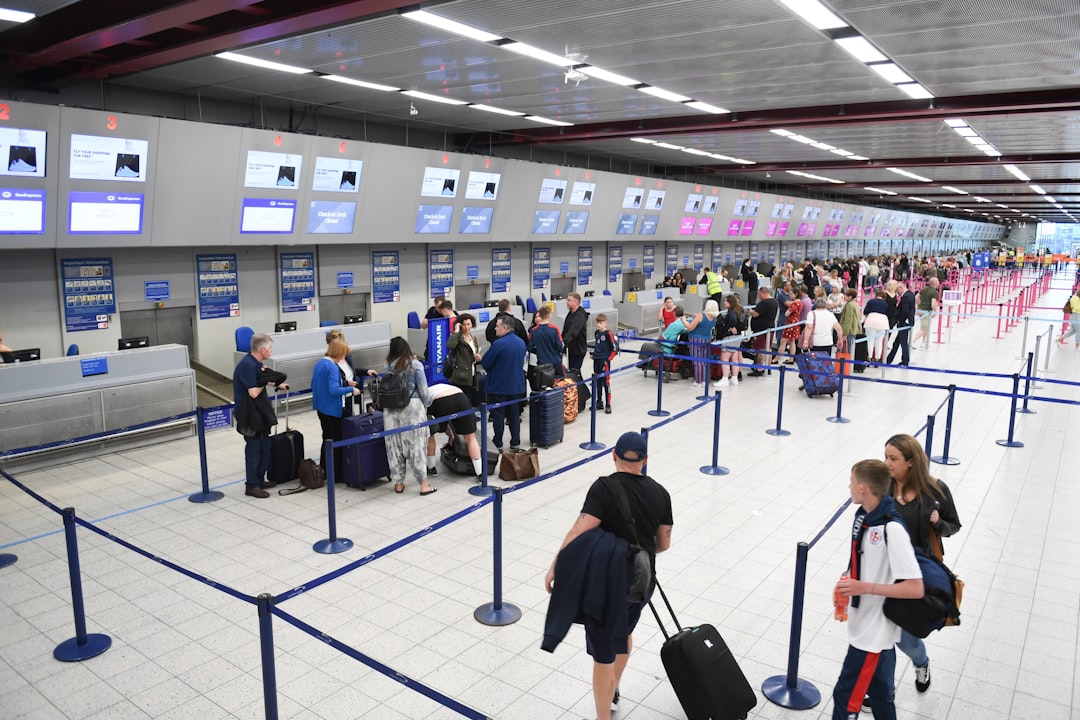
Photo by Phil Mosley on Unsplash
Security is where otherwise sensible travelers become theatrical. Shoes come off late. Laptops hide beneath scarves. Coins appear from every pocket like stage props. The line inches forward under fluorescent light while trays clap against metal rollers and people sigh at one another. This is the moment when good airport security tips pay off, because delays here ripple through the rest of the terminal.
The fastest travelers at security do not look rushed. They look pre-decided. Jacket pocket already emptied. Watch already in the bag. Laptop either easy to pull out or packed according to the airport rules. Boarding pass already open. Their body language is calm, and calm saves minutes. That matters because if security eats half an hour, your cheap breakfast becomes an expensive gate-side pastry.
There is another reason airport security tips matter: missed flights are costly. Even if the airline rebooks you, the hidden damage shows up in lost prepaid transfers, missed dinner reservations, and the low-grade misery that makes overpriced airport spending feel justified.
Use these airport security tips to move faster:
- Put metal items in your bag before joining the line, not in the tray at the last second
- Wear slip-on shoes or simple sneakers, especially on routes where shoes still come off
- Use one small pouch for liquids and one small pouch for electronics so they are easy to access
- Keep passport and boarding pass in the same place every trip
- Avoid belts with large buckles, jewelry you must remove, and heavy boots unless necessary
- Watch the line before committing: families, large tour groups, and first-time travelers often slow a lane
- Do not repack at the end of the belt; move to a bench and free the space
- If the airport has multiple security zones, use the one closest to your gate only if it is actually shorter
A few rules worth checking before every trip:
- UK hand luggage liquid rules and security restrictions can be confirmed at gov.uk/hand-luggage-restrictions
- US airport security tips and prohibited items are updated at tsa.gov
- EU passenger rights for delays and cancellations are explained at europa.eu
Good airport etiquette speeds the line for everyone. Standing close does not make the queue move faster. Blocking the belt while you repack does the opposite. If you want a sharper read on those subtle behaviors, Unspoken Travel Rules Abroad in 2026: Be a Better Guest is useful far beyond temples and dinner tables.
The truth is simple: great airport security tips are not about beating the system. They are about removing friction before it happens.
How to beat airport food prices without eating badly
Nothing distorts judgment like a delayed departure and the smell of hot bread drifting from a terminal cafe. Airport food prices feel absurd when you are thinking clearly and strangely reasonable when your gate has changed twice and lunch was four hours ago. That is why food is one of the easiest places to save money at airports. Hunger makes us reckless.
The best strategy is not to refuse airport food entirely. It is to separate necessity from markup. You may need lunch. You probably do not need the nearest glossy sandwich by the gate. In many airports, the cheapest decent meal is landside, in a train hall, staff canteen, food court, or convenience store just before security. In others, the best value is a simple chain outlet with transparent pricing rather than a themed restaurant charging city-center dinner rates for reheated pasta.
If you want to save money at airports, treat airport food prices like surge pricing. Buy essentials before the surge. That means snacks at home, water after security, and a proper meal in the city before you leave if your timing allows it. It also means understanding when lounge access includes enough food to replace a meal and when it absolutely does not.
Practical ways to cut airport food prices:
- Bring snacks with protein, not just sugar, so you do not end up buying a second meal
- Carry an empty bottle and refill it after security
- Check whether your terminal has a supermarket, convenience store, or food hall before you commit to the first cafe you see
- Eat a real meal before leaving for the airport on short-haul trips
- If traveling with children, pack familiar snacks to avoid both meltdowns and emergency meal deals
- Compare breakfast prices with lounge access if your card includes free entry or credits
- If you have a long layover, step into the linked public area such as a station concourse or airport mall when permitted
A few airport food habits cost almost nothing and feel luxurious later:
- A packed sandwich saves more money than almost any other single airport trick
- Tea bags or instant coffee sachets can turn free hot water into a cheap comfort ritual during delays
- A small reusable fork or spork makes supermarket meals practical
- Electrolyte tablets are lighter and cheaper than buying sports drinks in the terminal
Airport food prices are often highest when choice is lowest. That usually means late at night, after security, or at remote gates. The earlier you solve food, the easier it becomes to save money at airports without feeling deprived.
Airport lounge access: when it is smart and when it is silly
Airport lounge access sounds like a luxury question, but it is often a budgeting question. A lounge can be terrible value if you are paying 45 USD for twenty minutes and a sad biscuit. It can also be excellent value if your alternative is a full meal, two coffees, bottled water, and a crowded gate during a three-hour delay. The trick is emotional honesty.
Many travelers buy airport lounge access because the terminal feels chaotic. That is understandable. Quiet lighting, outlets that work, clean bathrooms, and food that is already included can feel like rescue. But lounge math matters. To save money at airports, compare the pass price with what you would actually spend outside, not what the lounge makes you imagine you deserve.
Ask these questions before paying for airport lounge access:
- How long will you really stay inside
- Does your credit card or airline status already include entry or discounts
- Will you eat enough to replace a meal you would buy anyway
- Are showers, work tables, or quiet corners valuable on this trip
- Is the lounge near your gate or a long walk away
- Does it allow children or guests if that affects your choice
A rough rule of thumb:
- Under 90 minutes: rarely worth buying unless the gate area is dreadful and you need to work
- 2 to 4 hours: often worth it if food, drinks, and seating replace other spending
- During major delays: sometimes excellent value, especially if outlets, desks, showers, or rebooking help are included
Airport lounge access becomes especially useful on long-haul days, but comfort only matters if the rest of your routine supports it. For seat strategy, hydration, and sleep timing, Long Haul Flight Comfort Tips for 2026: Feel Better on Arrival pairs well with a good pre-flight airport plan.
One last note: some lounges are attached to premium cards, travel passes, or delay-insurance benefits. If a card reimburses your fee, airport lounge access may help you save money at airports far more often than paying cash at the door.
Baggage, boarding, and connection choices that quietly cost you money
Nothing drains a travel budget quite like luggage inefficiency. The sound of a suitcase being lifted onto a check-in scale has become, for many travelers, the sound of money leaving. If you want to save money at airports, baggage discipline is not optional. It is the foundation. Checked bags cost money, slow you down, increase the odds of lost luggage, and make airport transfers on arrival more cumbersome.
This is not a manifesto against all checked bags. Families, winter travelers, photographers, and longer trips often need one. But many travelers pay fees simply because they packed without a system. One extra pair of shoes here, full-size toiletries there, and suddenly a carry-on becomes a chargeable problem. The airport then becomes a place where your overpacking gets monetized in public.
To avoid checked bag fees and connection pain:
- Check your airline size and weight rules before packing, not at the airport
- Use a soft-sided bag if it helps you fit strict sizers more easily
- Wear your heaviest layer and shoes on the plane
- Keep souvenirs in mind before departure so your return bag is not already full
- Choose solid toiletries when possible to reduce liquid limits and weight
- Place chargers, documents, medication, and one change of clothes in your personal item, not your checked bag
- If paying for one checked bag makes sense, prepay online because airport desk prices are usually higher
Connections create another money trap. A short layover looks efficient until you miss it and start buying emergency meals. A very long layover can lead to impulsive spending because boredom feels expensive. The sweet spot depends on the airport, terminal transfer, passport control, and your risk tolerance.
My general rule for self-protection is simple:
- Domestic same-terminal connection: aim for at least 75 to 90 minutes
- International or terminal change: 2 to 3 hours feels safer in big hubs
- Self-transfer on separate tickets: build in even more time and never assume kindness will fix a missed flight
If you want to save money at airports, book direct with the airline whenever possible. During disruptions, direct bookings are usually easier to rework than third-party reservations. Also learn your passenger rights before you fly. The US airline customer service dashboards at transportation.gov and EU rights pages can matter when delays start getting expensive.
How to get there
The cheapest airport decision often happens before the airport starts. Cheap airport transportation is less about finding the absolute lowest fare and more about choosing the option that balances cost, reliability, and stress. A taxi can look easier until traffic freezes. A cheap bus can become expensive if it arrives too close to departure. Rail links usually win when they are direct and frequent.
If you want to save money at airports, decide your transfer the day before and know your second-best option too. Below are reliable city-to-airport routes in major hubs where travelers most often overspend out of confusion.
| Airport | Best public route from city center | Typical time | Typical cost | Taxi or car time and cost | Best value note |
|---|---|---|---|---|---|
| London Heathrow LHR | Elizabeth line from Paddington or Tottenham Court Road | 33 to 45 min | 13 to 15 GBP off-peak | 45 to 75 min, 55 to 90 GBP | Better value than Heathrow Express unless you are very time-sensitive |
| Paris Charles de Gaulle CDG | RER B from Gare du Nord or Chatelet | 35 to 45 min | 11.80 EUR | 45 to 75 min, flat taxi fare about 56 to 65 EUR | Good for solo travelers with light bags |
| New York JFK | AirTrain plus LIRR from Penn or Grand Central | 35 to 50 min | 13 to 20 USD | 45 to 120 min, 70 to 120 USD plus tolls and tip | Best mix of speed and cost from Manhattan |
| Amsterdam Schiphol AMS | NS train from Amsterdam Centraal | 14 to 18 min | about 5.90 EUR | 25 to 40 min, 45 to 60 EUR | One of the easiest rail airport transfers in Europe |
| Singapore Changi SIN | MRT via Tanah Merah from City Hall area | 40 to 50 min | about 2 to 3 SGD | 20 to 30 min, 20 to 35 SGD plus surcharges | Excellent for budget travelers outside heavy rush periods |
| Hong Kong HKG | Airport Express from Hong Kong Station | 24 min | 115 HKD | 30 to 45 min, 300 to 400 HKD by taxi | Worth it for speed and baggage ease |
A few cheap airport transportation rules rarely fail:
- If the city has an airport express train, check it first before booking a taxi
- If you are traveling as three or four people, compare a taxi or fixed transfer with total train fares
- On very early flights, pre-book the ride the night before instead of relying on surge pricing
- If driving, compare airport parking with park-and-ride or off-site lots, not just terminal parking
- Always factor tolls, tips, fuel, and airport surcharges into car costs
Cheap airport transportation is often the single easiest way to save money at airports, because it cuts costs before the terminal gets a chance to sell you anything at all.
Things to do on a long layover without wasting money
A long layover does not have to mean buying another coffee and scrolling at the gate. Some airports have become mini-cities with gardens, art, showers, old-town-style food streets, and observation decks. If you have planned properly, these moments can make the airport feel less like a holding pen and more like part of the trip.
The key is not to turn every layover into an expensive entertainment spree. Pick one or two things, keep an eye on your gate, and remember that the best layover activity is often the one that resets your mood.
Here are smart, specific options:
- Jewel Rain Vortex at Singapore Changi SIN
- Rijksmuseum branch at Amsterdam Schiphol AMS
- Edo-Koji at Tokyo Haneda HND
- Airbrau brewery at Munich Airport MUC
- Observation Deck B at Zurich Airport ZRH
- The Orchard at Hamad International DOH
- Incheon ICN transit tours
Where to stay if an airport overnight makes financial sense
Sometimes the cheapest airport move is to sleep nearby. Early departures, late arrivals, weather disruptions, and self-transfers can make an airport hotel far cheaper than risking a missed flight from the city. This is especially true when a 5:30 a.m. taxi would erase any savings from staying downtown.
Airport hotels are not always soulless boxes. Some are genuinely good, and the right one can help you save money at airports by cutting transfer costs, reducing stress, and eliminating last-minute ride-share fares.
| Budget tier | Hotel | Airport | Typical nightly rate | Why it works |
|---|---|---|---|---|
| Budget | ibis budget London Heathrow Central | LHR | 65 to 110 GBP | Reliable low rates, easy bus links to terminals |
| Budget | ibis budget Zurich Airport | ZRH | 95 to 140 CHF | Tram connection, practical for dawn departures |
| Budget | Comfort Inn JFK Airport | JFK | 170 to 240 USD | Relative value for New York, airport shuttle convenience |
| Mid-range | Hyatt Place London Heathrow Airport | LHR | 110 to 170 GBP | Soundproof rooms and strong breakfast option |
| Mid-range | Hampton by Hilton Frankfurt Airport | FRA | 110 to 170 EUR | Good S-Bahn access, efficient for one-night stays |
| Mid-range | YOTELAIR Paris Charles de Gaulle | CDG | 120 to 190 EUR | Inside Terminal 2E secure area, excellent for transfers |
| Luxury | Crowne Plaza Changi Airport | SIN | 280 to 420 SGD | One of the best true airport hotels in the world |
| Luxury | Hilton Munich Airport | MUC | 180 to 300 EUR | Direct terminal access and generous rooms |
| Luxury | Sofitel Athens Airport | ATH | 260 to 380 EUR | Walkable from the terminal, ideal for early island flights |
The rule is simple: if the airport hotel costs less than your city hotel plus transfer, or if it protects a non-refundable onward ticket, it is probably the smarter spend.
Where to eat when you want value, not regret
Good airport food exists. It just does not always sit beside your gate under designer lighting. The best-value meals are usually where airport workers eat, where transit passengers linger without showing off, or where a strong local food culture has managed to survive terminal economics.
If your goal is to beat airport food prices, think in categories. Convenience store meal deals, staff-favorite noodle bars, airport mall food courts, and simple chain cafes often outperform flashy sit-down restaurants. Below are places where spending tends to feel fairer.
- Jewel Food Junction, Singapore Changi SIN
- Edo Koji dining zone, Haneda HND Terminal 3
- Schiphol Plaza, Amsterdam AMS
- Pret A Manger and Itsu, Heathrow LHR
- Airbrau, Munich MUC
- Shake Shack, JFK Terminal 4 or 5 depending on current concessions
The best move is still the simplest one: solve food early, solve water cheaply, and do not let airport food prices make every delay feel like a shopping trip.
Practical tips
Airports feel universal, but the smartest habits change with season, route, and timing. To save money at airports, you need the practical context: when terminals are busiest, what to pack, how weather affects operations, and which rules matter once you land.
A few timing patterns are worth remembering. Peak summer in Europe, Thanksgiving week in the US, Christmas travel almost everywhere, and school-holiday weekends tend to magnify every airport problem: longer lines, pricier transfers, and more expensive food decisions because you arrive earlier and wait longer. If you can choose, late January to early March and late September to early November often offer smoother airport days outside major holiday peaks.
Use this checklist before you fly:
- Best months for smoother airports: late January to March, then late September to early November
- Best times of day: early flights often run on time but require pricier dawn transfers; late-morning departures usually give a better balance
- What to pack in your personal item: charger, empty bottle, documents, pen, medication, snack pouch, light layer, sleep mask, and one basic hygiene item
- Currency: avoid airport exchange counters unless you need a tiny amount of emergency cash
- Connectivity: download maps, boarding passes, and hotel info before departure; offline access is still king when airport Wi-Fi stutters
- Customs and entry: complete online arrival forms in advance where available and check visa or transit requirements before your first flight
- Safety: keep valuables zipped and close during check-in, security repacking, and arrivals chaos when attention drops
A few more practical rules that help you save money at airports every single trip:
- Refill your bottle after security instead of buying water at the gate
- Decline dynamic currency conversion and pay in local currency when using cards abroad
- Keep one emergency note of cash hidden separately from your wallet
- Photograph checked baggage tags if you do check a bag
- Screenshot your hotel address in the local script if useful for taxis
- Bring a thin foldable tote so duty-free or snack purchases do not become an extra bag problem
- If traveling with children, board later when possible rather than sitting in a cramped plane for longer
Airport security tips, cheap airport transportation, and careful bag choices all work together. Ignore one and the others become less effective. A traveler who packs smart but takes an overpriced taxi is still leaking money. A traveler who takes the train but buys every meal at the gate is doing the same. The point is not perfection. It is building a repeatable system that keeps airport costs from multiplying.
FAQ
How can I save money at airports without sacrificing comfort?
Start with the biggest leaks: transport, food, and baggage. Book the train or bus in advance, carry snacks and an empty water bottle, and avoid checked bag fees whenever possible. If comfort matters, use airport lounge access only when the numbers work in your favor.
What are the best airport security tips for shorter wait times?
The best airport security tips are simple: check in online, keep liquids and electronics accessible, empty your pockets before joining the line, wear easy shoes, and move away from the belt before repacking. Calm travelers are almost always faster than frantic ones.
Is airport lounge access worth paying for?
Sometimes. Airport lounge access is worth it when you will be there long enough to replace a meal, drinks, and a workspace you would otherwise pay for. It is rarely worth buying for a very short stop unless the gate area is overcrowded or you need showers or a quiet work zone.
What is the cheapest way to get to the airport?
In many major cities, rail wins. Cheap airport transportation usually means an airport express train, metro, or dedicated bus rather than a taxi. The right answer depends on how many people are traveling, how early your flight is, and whether luggage makes public transport impractical.
How do I avoid checked bag fees on budget airlines?
To avoid checked bag fees, measure and weigh your bag at home, wear your bulkiest items, keep liquids compact, and read the airline policy carefully. Budget carriers often charge much more at the airport than online, so if you truly need a checked bag, prepay it.
Are airport food prices always higher after security?
Often yes, but not always. Airport food prices tend to rise where choices are limited, especially near remote gates. The cheapest options are usually landside convenience stores, airport-linked malls, food halls, or simple chain outlets with transparent pricing.
A quieter, cheaper way through the terminal
The real airport hack is not speed for its own sake. It is composure. When you enter the terminal with your route chosen, food handled, bag under control, and documents ready, the whole place changes character. The same departure board still flickers. The same espresso still smells tempting. The same duty-free lights still glow. But the airport stops behaving like a trap and starts behaving like infrastructure.
That is the point. To save money at airports, you do not need to outsmart the industry every single trip. You just need enough habits that stress no longer decides what you buy. And once that happens, even a crowded terminal begins to feel less like a tax and more like the start of somewhere good.