Most travelers do not need 30 glowing icons on their phone; they need the right eight. The travel apps every traveler needs in 2026 are the ones that still work when the arrivals hall is loud, the station Wi-Fi is weak, and you have just enough battery left to get from the gate to the city. In those moments, glossy promises disappear. What matters is whether you can compare a train to a taxi from Rome Fiumicino, translate a menu in Osaka, pay for a coffee in Lisbon without ugly exchange fees, and find your hotel door on a rain-dark side street in Prague.
That is why this guide is not built like a bloated app-store roundup. It is built around real travel friction: planning a route, getting from airport to center, checking in, eating well, staying connected, and recovering quickly when something changes. The travel apps every traveler needs are not always the flashiest ones. They are the tools that reduce small chaos before it becomes expensive chaos.
There is another reason to stay selective. Too many apps create their own kind of stress. Notifications stack up, logins vanish, and a folder full of forgotten downloads becomes useless exactly when you need clarity. A lean setup is better: one app for planning, one for transport comparison, one strong offline maps app, one translation tool, one accommodation platform, one money app, one connectivity tool, and one or two city-level helpers depending on where you are going. If your phone can handle those jobs gracefully, it can handle most trips.
Why a lean phone setup beats a giant download spree

Photo by Johannes Plenio on Unsplash
The best travel days often start with a little uncertainty. You wake in a city that smells like fresh bread and diesel, hear tram bells outside, and remember only half of what you planned the night before. That is normal. The point of a smart phone setup is not to remove spontaneity; it is to create a safety net underneath it. You still wander, you still change your mind, and you still take the long way home through a neighborhood that looks interesting. But you do it with tools that keep the wandering fun instead of fragile.
This is where the travel apps every traveler needs separate themselves from the rest. They earn their place not by promising everything, but by solving one problem cleanly. A route app tells you whether the airport train is really worth the premium. A maps app keeps working underground. A translation app helps you read allergy warnings. A booking app gives you one last room when your original place falls through. A travel budgeting app stops a dreamy week from becoming a nasty card statement.
The table below is a realistic, lean setup for most international trips. You do not need every app on every journey, but you will rarely regret having these categories covered.
| Travel moment | App | Why it earns a spot | Works offline |
|---|---|---|---|
| Building a route before booking | TravelDeck | Turns rough ideas into a workable multi-stop itinerary with route logic and day structure | No |
| Flexible flight search | Skyscanner | Easy month views, nearby airport comparisons, and fast route scanning | No |
| Plane, train, bus, ferry comparison | Rome2Rio | Great for understanding how one leg connects to the next | Partial |
| Street navigation | Google Maps | Saved lists, opening hours, reviews, walking routes, and a strong offline maps app | Yes |
| City transit | Citymapper | Best for supported big cities with complex subway and bus networks | Partial |
| Translation | Google Translate or DeepL | Camera translation, downloaded language packs, and quick phrase help | Yes, if downloaded |
| Accommodation | Booking.com | Broad inventory, flexible filters, and useful map view | No |
| Money abroad | Wise | Cleaner exchange rates and practical multi-currency spending | No |
| Connectivity | Airalo | Fast eSIM setup before landing | No |
| Dining reservations | TheFork or OpenTable | Useful in busy cities and popular dinner hours | No |
A final rule before we get practical: do not trust any single app with your whole trip. Even the best trip planning apps can miss a local bus suspension, a museum closure, or a neighborhood nuance that only recent reviews reveal. The smartest travelers cross-check. One app inspires, one verifies, one protects. That overlap is not redundancy; it is resilience.
How to get there
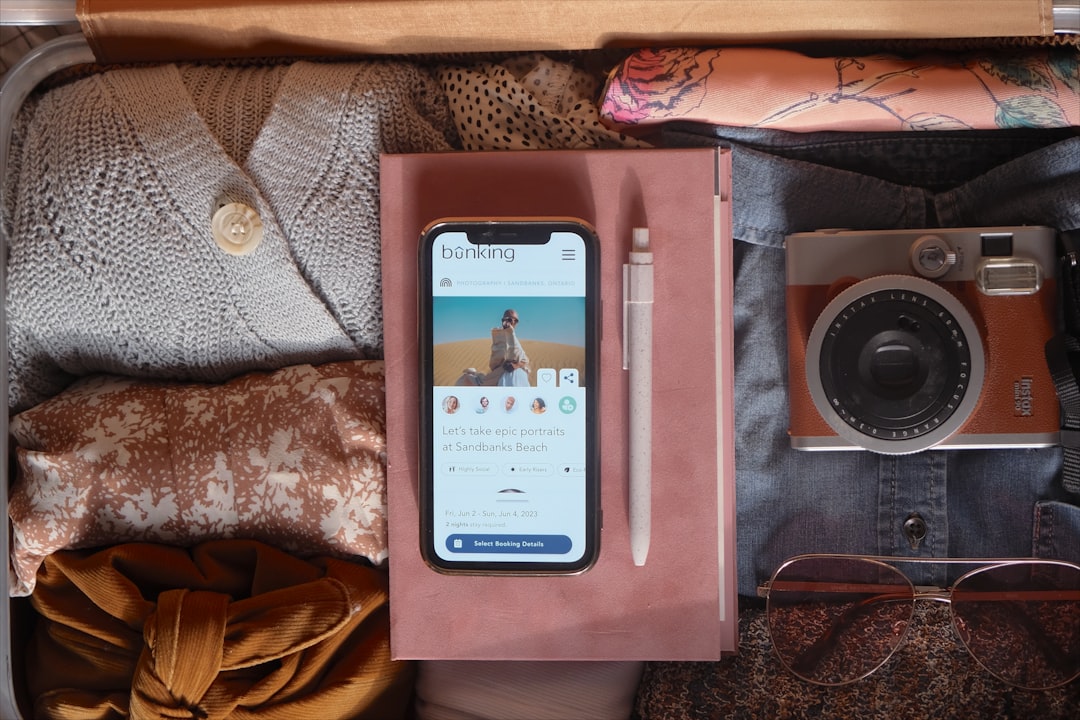
Photo by Paige Cody on Unsplash
The hardest part of many trips is not the long-haul flight. It is the messy hour after arrival, when the airport feels fluorescent and airless, your body clock is wrong, and every sign seems to point in three directions at once. This is where the travel apps every traveler needs become obvious. If your phone can answer one question fast, it should be this one: what is the best way from where I am to where I need to go right now?
A good route stack saves both money and nerves. In London, the Heathrow Express from LHR to Paddington is fast at about 15 minutes, but walk-up prices can be far higher than the Elizabeth Line, which usually takes around 30 to 35 minutes and often costs much less. In Rome, the Leonardo Express from FCO to Roma Termini takes about 32 minutes and costs around €14, while the official taxi flat fare into the center can be roughly €50 inside the Aurelian Walls. In Paris, the RER B from CDG usually lands you in central Paris in about 35 to 45 minutes for around €11.80; a taxi is more comfortable after midnight but much pricier. If you know those numbers before you step outside, you stop being easy prey for confusion and markups.
The same logic matters far beyond Europe. From Narita Airport NRT to Ueno, the Keisei Skyliner takes about 41 minutes and costs roughly ¥2,580, while the Narita Express to Tokyo Station is longer and pricier but may suit your hotel better. From JFK into Manhattan, an AirTrain plus Long Island Rail Road combo can be far cheaper than a yellow cab if you are landing at a rush-hour choke point. In Athens, the X96 bus from ATH to Piraeus is slow but budget-friendly for island hoppers, while a taxi makes more sense if you are about to miss a ferry to Paros or Naxos. The travel apps every traveler needs are the ones that surface those trade-offs before you are forced to guess.
Here are the transport tools that do the heaviest lifting:
- Skyscanner is one of the most useful trip planning apps before you buy anything. Use it to compare nearby airports, flexible dates, and one-way combinations when round-trip pricing gets strange.
- Rome2Rio is ideal when a journey is not just a flight. It shines on airport-to-city transfers, train-plus-ferry chains, and routes where the obvious answer is not the cheapest one.
- The official airline app is essential even if you booked elsewhere. It is usually the fastest place for gate changes, delay notices, seat swaps, and mobile boarding passes.
- Trainline and Omio are especially handy for rail-heavy trips in Europe, where the best route may involve a regional leg plus a high-speed connection.
- Ferryhopper is extremely practical for Greek island routes, where seasonal schedules and port changes matter more than first-timers expect.
- Google Maps remains the everyday workhorse and, for many people, the best navigation app for travelers once the plane lands.
- Citymapper is often better than generic maps on subway-heavy city breaks in places like London, Paris, Berlin, and New York.
If you want to think like a calm traveler instead of a rushed one, compare door-to-door time, not just headline time. A 15-minute airport express can become a 45-minute trip once you add platform transfers and a metro connection. A slower bus that stops outside your hotel can actually win. That logic becomes even more valuable if you are traveling with kids, carrying camera gear, or landing on very little sleep.
| Route problem | Best app combo | What to compare | Typical decision |
|---|---|---|---|
| Major airport to city center | Rome2Rio + Google Maps | Total time, last-mile walk, late-night service | Train by day, taxi late at night |
| Multi-airport city | Skyscanner + airline app | Price differences, transfer times, baggage rules | Cheaper airport only if access is easy |
| Rail-heavy Europe trip | Trainline or Omio + Google Maps | Station location, transfer buffer, seat options | Faster city-center arrivals than flying |
| Island hop | Ferryhopper + Google Maps | Port name, sailing time, weather risk | Book key ferries early in high season |
| North America airport arrival | Google Maps + official transit app | Rush-hour time, tolls, rail frequency | Rail often beats taxi into downtown |
One last practical note: screenshots still matter. Save the arrival QR code, hotel address, and transfer directions before takeoff. Even the travel apps every traveler needs can wobble the second you land. If you are trying to keep airport costs under control, pair this section with Save Money at Airports in 2026: Beat Queues, Skip Markups.
Where to stay
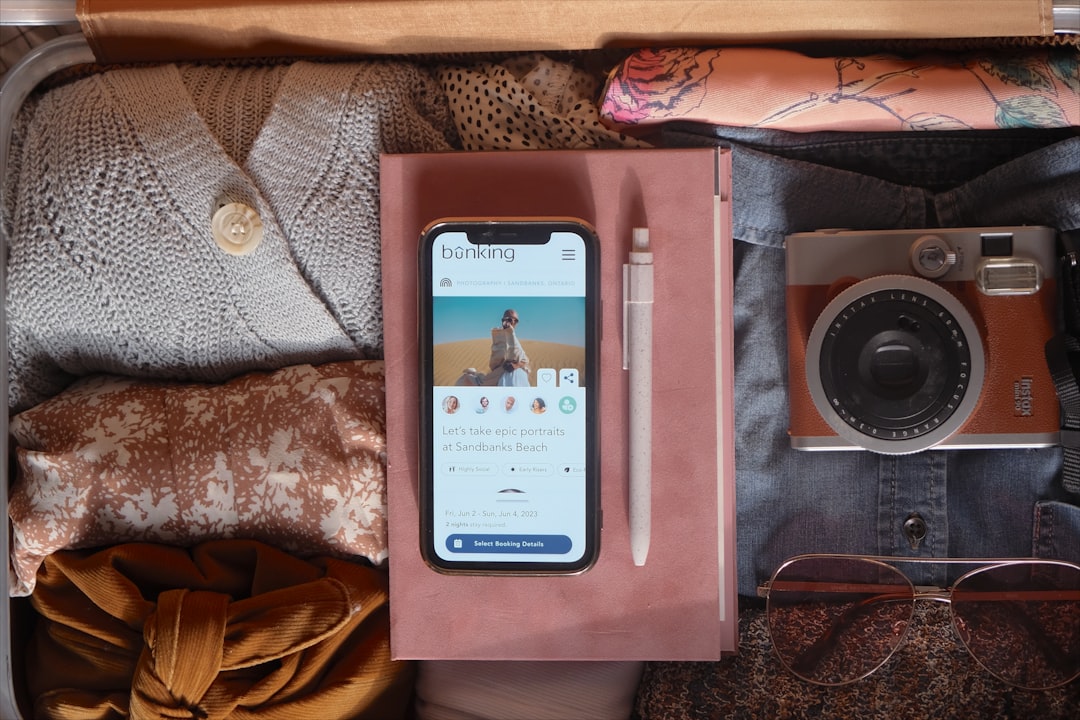
Photo by Paige Cody on Unsplash
A room is never just a room on the road. It is a morning coffee within five minutes, a late-night walk back without stress, the bakery you smell from the corner, the laundromat that saves your packing plan, and the train station you either bless or curse at 6 am. The travel apps every traveler needs should help you choose not only a property, but a neighborhood rhythm.
This is why map view matters so much. A beautiful hotel can be a terrible base if it strands you between highway ramps or forces two daily taxi rides. A simpler place on the right street can make a whole trip feel lighter. In Lisbon, staying near Baixa, Chiado, or Avenida lets you walk a lot, but you may pay more and hear more nightlife. In Kyoto, the area around Kyoto Station lacks some old-world romance but wins on convenience for day trips to Nara, Osaka, and Arashiyama. In Bangkok, Sukhumvit near a BTS station often beats a fancier room that leaves you stuck in traffic.
The travel apps every traveler needs for accommodation are not just booking tools; they are neighborhood scanners. Use them to zoom out, not in. Check transit stops, grocery stores, recent reviews, noise complaints, elevator mentions, and whether the prettiest photos are hiding a fourth-floor walk-up with no air conditioning. Booking apps for travel are strongest when paired with a skeptical eye.
Budget tiers and the apps that match them
| Budget tier | Best apps | Best for | Typical nightly range |
|---|---|---|---|
| Budget | Hostelworld, Booking.com, Agoda | Dorm beds, simple guesthouses, capsule hotels, no-frills private rooms | US$15 to US$60 |
| Mid-range | Booking.com, Airbnb, Hotels.com | Boutique hotels, aparthotels, well-located private apartments | US$80 to US$180 in many cities |
| Luxury | Booking.com, Marriott Bonvoy, Hilton Honors | Reliable chains, upgrades, concierge support, late checkout | US$220 to US$700+ |
A few rules make booking apps for travel far more useful:
- Read the worst recent reviews first, then the best. Patterns matter more than praise.
- Search the exact address in your offline maps app and look around the block virtually before booking.
- Compare the same property on the hotel’s official site, especially for breakfast, cancellation rules, and room category clarity.
- Use map filters to avoid paying luxury prices for inconvenient districts.
- Treat cleanliness, noise, and air conditioning as non-negotiables in hot-weather trips.
- In beach towns and island ports, double-check the distance from the ferry dock or bus stop rather than trusting vague neighborhood names.
If you are traveling during festivals, school holidays, or major events, booking apps for travel become less forgiving. Prices jump fast, and the best cancellation policies disappear first. That is when a backup saved list becomes gold. Keep three options pinned in each city: your ideal stay, your smart compromise, and your emergency fallback. It feels obsessive until a delay forces an unplanned extra night and you book the last decent room in two minutes instead of twenty-five.
Things to do
A good city reveals itself in layers: the first coffee bar, the street musician under a bridge, the museum you almost skipped, the viewpoint that feels too quiet to be famous. But one painful truth of 2026 travel is that many marquee sights now reward timed planning more than spontaneous optimism. You can still leave space to drift; you just do not want to drift straight into a sold-out ticket line.
That is why the travel apps every traveler needs should include at least one strong ticketing or discovery layer. For some destinations, the official venue app or website is best. In others, platforms like GetYourGuide or Klook make more sense, especially when you are bundling transport, skip-the-line entry, or same-day availability. Your offline maps app still matters here too, because tickets are only half the experience. You also need the correct gate, neighborhood, and transport exit.
The travel apps every traveler needs are especially valuable when you match them to a real activity instead of downloading them as vague insurance. Here are specific examples where the right app genuinely improves the day:
- Barcelona, Sagrada Família, Carrer de Mallorca 401 — Timed tickets matter here. Use the official booking flow or a trusted activity app, then save the nearest metro stop and your preferred cafe afterward in Google Maps.
- Paris, Louvre Museum, Rue de Rivoli 75001 — Early or late slots are often calmer than midday. A saved route from Palais Royal or Pyramides metro can save you a lot of milling around the wrong entrance.
- Tokyo, teamLab Planets, 6-1-16 Toyosu — This is one of those places where timing, transit, and weather all matter. Use ticket apps early and pair them with a strong navigation app for travelers because Toyosu is easy to misread when you are jet-lagged.
- Rome, Galleria Borghese, Piazzale Scipione Borghese 5 — Entry is tightly controlled, and last-minute hope is not a strategy. Book ahead, then pin a stroll through Villa Borghese for before or after your time slot.
- New York, Top of the Rock, 30 Rockefeller Plaza — Sunset slots go fast. Save nearby dinner options in Midtown before you head up, because the post-viewpoint decision crush is real.
- Mexico City, Chapultepec Castle, Bosque de Chapultepec — Check opening days before you go, map the correct park entrance, and do not underestimate walking time inside the complex.
- Istanbul, Kadıköy Market and Moda seafront — No ticket needed, but saved pins transform the day. Mark ferry piers, coffee stops, and a fallback route if you miss the boat back across the Bosphorus.
One of the quiet strengths of trip planning apps is that they help balance structure with air. Put one or two timed anchors in a day, then leave the rest loose. If every hour is scheduled, you travel with the emotional texture of a delivery route. If nothing is saved, you waste energy making basic decisions in the street. The sweet spot lives between those extremes.
Where to eat
Food is where travel becomes intimate. You remember the crunch of a still-warm pastry, the mineral smell of an old fish market, the hiss of oil at a night stall, the tiny ceramic cup of coffee taken standing at a crowded bar. Yet food is also where bad app habits can flatten a place. If you only chase star ratings, you often end up eating the same internet-famous meal as everyone else in the queue behind you.
The travel apps every traveler needs should help you eat better, not just faster. That means using a restaurant app, reviews, recent photos, map density, and translation tools together. A strong offline maps app tells you whether a place is thriving at 1 pm or curiously empty at 8 pm. Recent menu photos help you avoid stale listings. Translation apps matter for allergens, house specials, and the little handwritten board that never made it online.
This is also where local flavor beats global uniformity. OpenTable works well in some markets, TheFork is strong in parts of Europe, and local platforms can be even better in places like Japan, Korea, or Taiwan. The travel apps every traveler needs give you range: one broad global tool, one translation helper, and enough map literacy to spot whether the interesting street is one block away from the overhyped one.
Use apps to find these kinds of food experiences, not just generic top ten lists:
- Rome, Mercato Testaccio, Via Beniamino Franklin 12E — Great for market lunch, pizza by the slice, and Roman snacks like supplì. Save a few stalls before you arrive so you can head straight in with purpose.
- Lisbon, Time Out Market, Avenida 24 de Julho 49 — Useful on a first night when you want variety, but also use maps to branch into nearby Cais do Sodré streets for smaller tascas afterward.
- Bangkok, Yaowarat Road, Chinatown — Best navigated with pinned stalls and a little patience. Save your hotel in Thai script in your translation app before you go, because the sensory overload is half the fun and all of the disorientation.
- Tokyo, Omoide Yokocho, Shinjuku — Tiny yakitori counters, narrow lanes, smoke in the air, and queues that can mean everything or nothing. Check recent opening hours carefully.
- Mexico City, Mercado de Coyoacán, Ignacio Allende s/n — A smart place for tostadas, fruit juices, and people-watching. Pin a walk afterward through the plaza and side streets.
- Barcelona, El Quim de la Boqueria, La Rambla 91 — Famous for a reason, but timing is everything. Use maps to gauge crowd peaks and keep one backup bar nearby.
- Istanbul, Karaköy Güllüoğlu, Rıhtım Caddesi area — A classic baklava stop before or after wandering Karaköy, with ferries, cafes, and waterfront views all close enough to stitch together easily.
If you have dietary restrictions, the right translation app can be worth more than any reservation platform. Download language packs before you fly and save a plain-text allergy note in the local language. For etiquette around markets, shared dishes, and table manners, Travel Customs by Country: 8 Etiquette Lessons for 2026 is a useful companion.
Practical tips
A trip rarely falls apart in one dramatic moment. More often, it frays at the edges: a dead battery, a lost password, a card locked for suspicious activity, a storm delay, or a map that will not load just as you leave the station. The travel apps every traveler needs are only as good as the prep behind them. Before departure, think like a cautious local. What will still work if your signal disappears, your arrival is delayed, or you suddenly have to change neighborhoods?
Season matters more than most travelers expect. In much of Europe, April to June and September to October are often the sweet spots for weather, prices, and manageable crowds, which also means less pressure on reservation apps and airport transfer systems. July and August can be gorgeous on paper but punishing in Mediterranean cities if you have not planned around heat, siesta-style business hours, and heavy restaurant demand. In Japan, spring and autumn can be magical, but the most famous places get booked hard. In Southeast Asia, monsoon timing varies by country and coast, so your eSIM travel app, airline alerts, and flexible hotel cancellation rules all become more valuable.
Money and connectivity deserve the same seriousness as flights and beds. A clean multi-currency app like Wise lowers payment friction, but you still need at least one physical backup card. An eSIM travel app like Airalo can have you connected before the seatbelt sign goes off, but only if your phone is unlocked and compatible. A travel budgeting app becomes especially useful on longer trips, because memory is flattering and receipts are not. If you are splitting costs with friends, Splitwise is simple. If you want solo tracking or couple tracking with categories, TravelSpend is one of the better travel budgeting app options around.
Here is the phone-prep checklist I actually trust before an international trip:
- Download offline city areas in your offline maps app before departure, not on airport Wi-Fi.
- Save your hotel, first meal spot, nearest ATM, and main station as starred places.
- Install the official airline app and, if relevant, the official national rail app for your route.
- Add an eSIM travel app such as Airalo before takeoff and confirm compatibility on your device settings.
- Download the language pack you need in Google Translate or DeepL so camera translation works without signal.
- Set up Wise or your preferred travel-friendly card in your mobile wallet, but carry a physical backup card too.
- Use a travel budgeting app from day one if you care about staying on budget; the first two days are where loose spending hides.
- Keep passport, visa, insurance, and emergency contacts in secure cloud storage plus an offline copy on your device.
- Turn on two-factor authentication, then make sure your recovery methods work from abroad.
- Pack a real power bank, not a tiny emergency charger, plus the cable your phone actually needs.
A few situations call for extra caution:
| Travel condition | Best prep move | Why it matters |
|---|---|---|
| Peak-summer Europe | Book major sights and dinner slots earlier than you think | Heat and crowds slow everything down |
| Winter city breaks | Save indoor backups and transit alternatives | Weather makes short walks feel longer |
| Island hopping | Screenshot ferry tickets and port names | Signal can be patchy at docks |
| Multi-country rail trip | Keep station names in local spelling | Small spelling differences cause big confusion |
| Group travel | Use Splitwise from the first shared expense | Late accounting creates bad moods |
| Long trip on a budget | Use a travel budgeting app weekly, not just at the end | Course correction is easier than regret |
The travel apps every traveler needs also depend on how you pay. If points and miles are part of your setup, Travel Rewards Cards for Beginners in 2026: Spend Less is worth reading before you choose which card to preload into your wallet. And remember: an app cannot replace common sense. If a public Wi-Fi network feels sketchy, if a payment screen looks off, or if a ride-hailing pickup point seems wrong, step back and verify before you tap.
FAQ
What are the travel apps every traveler needs for an international trip?
For most people, the travel apps every traveler needs are one planning tool, one flight or route search tool, one offline maps app, one translation app, one accommodation platform, one payment tool, and one connectivity option such as an eSIM app. Add a city transit app for major metros and a travel budgeting app if you are watching costs closely.
Which travel apps every traveler needs work offline?
Your strongest offline options are usually Google Maps with saved areas, Google Translate or DeepL with downloaded language packs, saved PDFs of boarding passes, and screenshots of train or ferry tickets. The travel apps every traveler needs are far more useful when you prepare them offline before you leave home.
Do I really need an eSIM travel app if my carrier offers roaming?
Maybe not, but compare the math. Carrier roaming is convenient, yet it is often pricier than a dedicated eSIM travel app, especially on trips longer than a few days. If you rely on maps, messaging, and booking confirmations every day, stable affordable data changes the whole feel of a trip.
What is the best travel budgeting app for couples or groups?
For groups, Splitwise is usually the simplest because it is built around shared costs. For solo travelers or couples who want categories and clearer trip totals, TravelSpend is a strong travel budgeting app. The best one is the one you actually open every night for two minutes.
Should I rely on one all-in-one app for everything?
Usually, no. The travel apps every traveler needs work best as a small team rather than a single hero. One app may help you sketch the route, another may be the best navigation app for travelers on the ground, and a third may handle money or bookings more reliably.
The best travel days still have a little uncertainty in them. A side street catches your eye, a ferry leaves in an hour, rain pushes you into a cafe you never planned to find. Good apps do not erase that texture. They simply remove the avoidable friction around it.
So keep your phone setup lean. Save the map, preload the language pack, verify the transfer, pin the bakery, and carry one backup for the moments when technology blinks. If the travel apps every traveler needs do their job properly, you will notice them less and enjoy the world in front of you more.