The surprising part of getting sick abroad is that it usually is not the chili oil, the fermented tofu, or the unfamiliar spice blend. More often, it is the dull stuff: rice that sat warm too long, ice made with questionable water, cut fruit handled hours earlier, or a serving spoon that touched both raw and cooked food. That is why strong travel food safety tips matter most when you are tired, hungry, and dazzled by a new city.
Taipei is an excellent place to learn that lesson well. The city gives you neon-soaked night markets, cloud-light xiao long bao, breakfast shops perfumed with sesame and soy, and convenience stores on nearly every corner. It also rewards observation. If you know how to read heat, turnover, water, and workflow, you can eat boldly here without retreating to hotel buffets and bland room service.
This guide uses Taipei as a real-world answer to a bigger question: how do you eat safely while traveling abroad without missing the local dishes that made you book the trip in the first place? The short answer is rhythm. Sequence matters. Your first meal matters. Your drink choice matters. The right stall matters. And a little planning before landing goes further than a suitcase full of medicine.
Why travel food safety tips matter more than spice
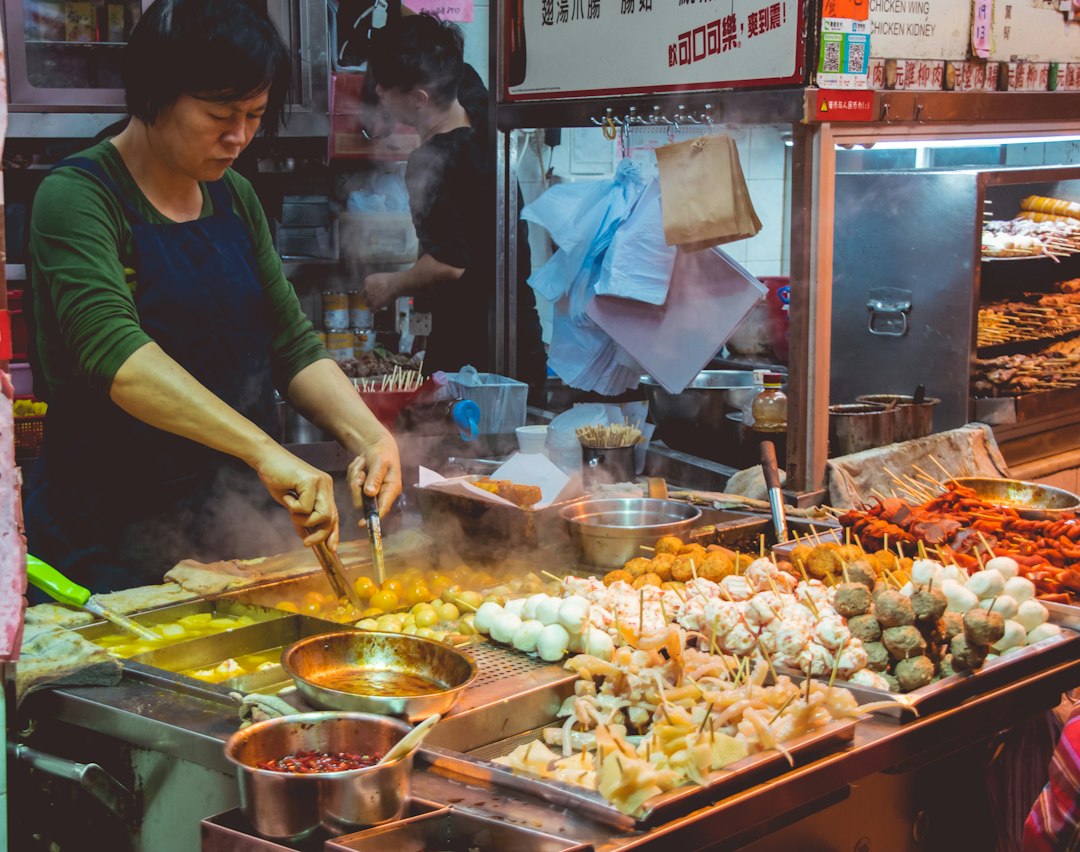
Photo by note thanun on Unsplash
The myth that spicy food causes most travel stomach trouble persists because it is easy to blame what tastes unfamiliar. In practice, the bigger risks are usually temperature control, unsafe water, raw handling, cross-contamination, and simple human fatigue. Travelers arrive jet-lagged, skip lunch, then make an impulsive first dinner choice in the busiest, most photogenic lane they can find. That is not adventurous. It is just bad timing.
Taipei makes the point clearly. A bowl of beef noodles simmering hard in a narrow shop near Taipei Main Station is usually a much smarter first-night choice than lukewarm seafood salad sitting under lights at the edge of a crowded market. A steaming pepper bun pulled from the tandoor-style oven is usually safer than peeled fruit already packed into plastic cups. Heat and speed are your allies. So are visible cleaning habits and fast turnover.
These travel food safety tips are less about fear than pattern recognition. Once you see the pattern, you can apply it in Bangkok, Mexico City, Seoul, Naples, or Marrakech just as easily. Food that is thoroughly cooked and served hot tends to beat food that is raw, damp, cut in advance, or held at room temperature. Drinks from sealed containers tend to beat fountain drinks and mystery ice. Busy vendors with tight menus tend to beat stalls trying to do twenty things at once.
Keep these rules in your head before your first meal:
- Choose food that is cooked through and served hot, ideally steaming.
- Treat raw garnishes, salads, fresh salsa, and pre-cut fruit more cautiously than cooked items.
- In places where water quality is uncertain, avoid ice unless you are sure it was made from safe water.
- Prefer pasteurized dairy and sealed drinks over anything poured from an open jug.
- If you are pregnant, immunocompromised, older, or traveling with very young children, be stricter about raw seafood, unpasteurized milk products, and buffet food.
- Wash hands with soap when you can; when you cannot, use sanitizer with at least 60 percent alcohol, then wash properly later.
Build a smart first-48-hours eating plan
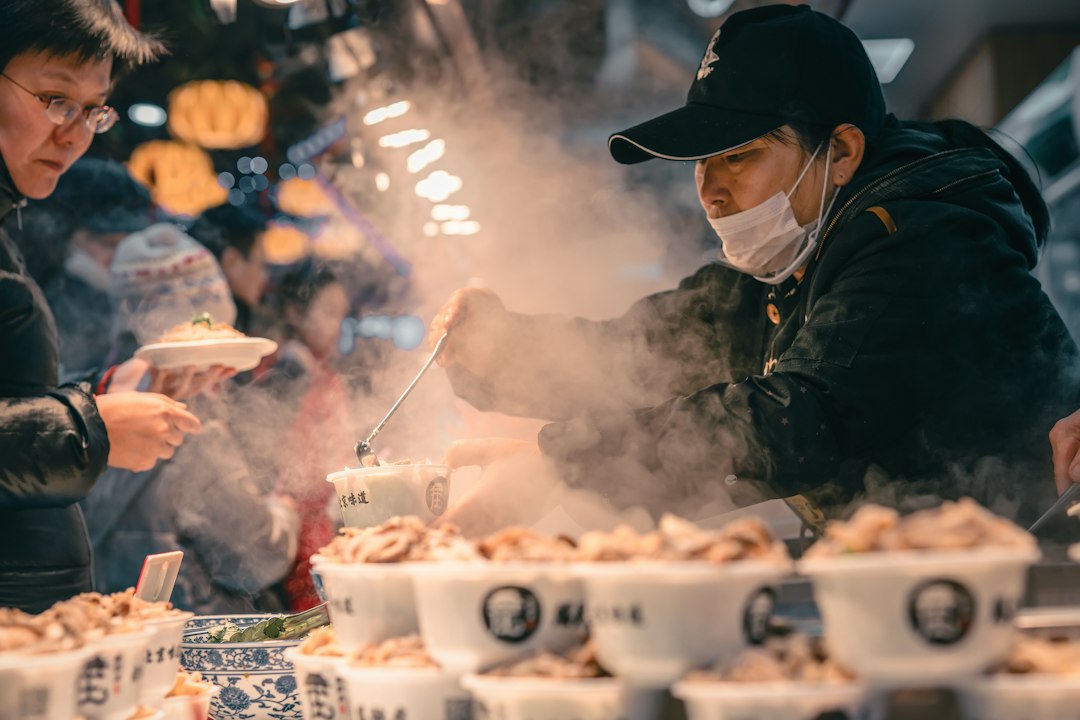
Photo by Dana Sarsenbekova on Unsplash
One of my favorite travel food safety tips is also the least glamorous: do not make your most daring meal your first meal. Your body is already processing a long flight, dry cabin air, disrupted sleep, airport snacks, and unfamiliar schedules. Even in a city as food-savvy as Taipei, the smartest move is to build your appetite in layers rather than cannonball into risk.
On arrival day, I usually save a breakfast shop, a noodle shop, a convenience store, and one night market in TravelDeck before I leave home. That way my first hungry decision is still a good one. If I land late, I do not need to improvise while carrying a bag and staring at ten kinds of skewers. I already know where the reliable hot food is, where I can buy sealed water, and which metro exit gets me there fastest.
Your first 48 hours should feel like widening circles. Start with hot, simple, high-turnover food. Then move into more complex local dishes. Save the highest-risk items for later, once you have seen how the city handles food and once you know which vendors inspire confidence.
| Timing | Best first choices | Better to delay | Typical Taipei cost |
|---|---|---|---|
| First 6 hours | Beef noodles, congee, dumplings, soy milk from busy indoor shops | Raw seafood, cut fruit, iced milk tea from unknown vendors | NT$60-250 |
| First full day | Cooked market snacks, pepper buns, oyster omelets cooked to order, braised pork rice | Buffet trays sitting out, mayonnaise-heavy salads, unrefrigerated desserts | NT$50-180 |
| After 24-48 hours | Trusted night markets, hot pot, tea house snacks, shaved ice from reputable stores | Riskier raw items unless venue is clearly excellent and fresh | NT$80-600 |
| Final days | Splurge seafood counters, chef-led tasting menus, more adventurous offal dishes | Anything that looks tired on your departure eve | NT$300-2000+ |
A practical first-day ladder looks like this:
- Land and hydrate with sealed bottled water or a hot drink.
- Eat one cooked meal in an indoor venue with visible cleaning and strong turnover.
- Snack later from low-risk cooked items, not random nibbles from multiple stalls.
- Keep alcohol moderate on night one because dehydration makes every stomach issue feel worse.
- If you want safe street food on day one, make it one or two hot items, not an all-market binge.
How to get there
Photo by Sandra Harris on Unsplash
Taipei has two main air gateways. Taoyuan International Airport, code TPE, handles most long-haul and regional international traffic. Taipei Songshan Airport, code TSA, is smaller, closer to the center, and especially convenient for some regional flights. If your goal is to eat well and waste little time, Songshan is luxurious in the best sense: you can be in central Taipei quickly, shower, and be at a dumpling house before your jet lag has fully registered.
Most travelers arrive through Taoyuan, and the city connection is straightforward. The Airport MRT is the sweet spot for cost, speed, and predictability, especially if you are heading to Taipei Main Station, Ximending, Zhongshan, or Dongmen. Taxis are easy after a late arrival, but if your hotel is steps from an MRT exit, the train often gets you fed faster. For updated routes and timetables, check Taoyuan Metro, Taipei Metro, and THSR.
Because this is a food-first trip, I would choose a hotel in Ximending, Zhongshan, Da'an, or near Taipei Main Station. Those neighborhoods give you fast access to breakfast shops, late-night noodle counters, and several of the best night markets without long taxi rides when you are hungry and tired.
| Route to Taipei | Typical duration | Typical cost | Notes |
|---|---|---|---|
| TPE to Taipei Main Station by Airport MRT | 35-50 min | NT$150 | Best value for most travelers |
| TPE to central Taipei by taxi | 40-60 min | NT$1200-1500 | Useful late at night or with luggage |
| TSA to Xinyi or Zhongshan by metro | 15-25 min | NT$25-45 | Fastest arrival option if your flight lands here |
| Taichung to Taipei by HSR | 1 hr | NT$700-1000 | Good if combining cities |
| Kaohsiung to Taipei by HSR | 1 hr 35 min to 1 hr 50 min | Around NT$1490 | Fast cross-island connection |
| Hualien to Taipei by train | 2-2.5 hrs | NT$440-800 | Scenic eastern route |
| Hong Kong to TPE by air | About 1 hr 50 min | Often US$120-250 return | Common short-haul entry |
| Tokyo to TPE by air | 3.5-4 hrs | Often US$220-450 return | Strong regional connection |
Arrival tips that directly affect how you eat:
- Buy an EasyCard or add transit payment immediately so you are not forced into random convenience eating while figuring out transport.
- If you land after 10 pm, screenshot one indoor food option near your hotel before departure.
- Keep small cash on hand for markets, though many urban shops take cards.
- If you plan to continue south, Taipei works well as your acclimatization city before more ambitious market eating elsewhere.
Things to do
Taipei is one of those cities where food and movement are braided together. You leave a temple courtyard and smell pepper and sesame. You step out of the MRT and see steam ghosting off bamboo baskets. You wander a fabric street and find a tofu pudding counter older than some governments. The best way to use Taipei is not to overbook it. Give yourself corridors of time where appetite can lead.
For travelers using Taipei to sharpen their travel food safety tips, the city is especially generous because it offers many different dining environments within a short radius. You can compare a polished dumpling institution to a standing-room breakfast shop, an indoor market to open-air night markets, a tea house to a seafood hall. That makes Taipei a living classroom in how safe street food and safe restaurant eating actually work.
Here are the most useful food-forward experiences in the city:
- Nanmen Market, Zhongzheng District, No. 8 Section 1 Roosevelt Road: A bright, organized indoor market where you can observe how vendors handle prepared foods, cured meats, rice cakes, and festival snacks. Great early in the trip because the setting is controlled and clean.
- Yongkang Street, Da'an District: Arrive around breakfast or lunch for soy milk, scallion pancakes, dumplings, and shaved ice. It is a compact area that lets you practice choosing busy, high-turnover places without feeling overwhelmed.
- Raohe Street Night Market, Songshan District: The arc of light, temple entrance, and black pepper bun ovens make this one of the most atmospheric night markets in Asia. Go early, do one loop, then decide where the freshest turnover is.
- Ningxia Night Market, Datong District: Smaller than Shilin and easier to read. Many travelers find it less chaotic, which helps when you are trying to judge workflow and food handling.
- Dihua Street and Yongle Market, Datong District: A gorgeous mix of dried goods, traditional ingredients, tea, herbs, and textile history. Excellent for understanding local pantry culture and for buying low-risk edible souvenirs such as tea and packaged snacks.
- Maokong Gondola and tea houses: Ride up in late afternoon, then sip tea with mountain views. Hot tea and simple snacks make this a gentle reset if you have overdone the markets.
- Huashan 1914 Creative Park and nearby breakfast spots: Pair a morning culture stop with Fuhang Doujiang at Huashan Market for one of Taipei's classic breakfast rituals.
- Taipei 101 Observatory or Elephant Mountain at dusk: Not a food stop first, but a useful appetite builder before dinner in Xinyi, where you can graduate from market snacks to more polished local dishes.
If you travel solo, Taipei is a forgiving city to practice confident eating alone. Counters are common, turnover is fast, and shared seating is normal. If you want a broader read on social norms around queues, table sharing, and polite behavior, International Travel Etiquette Tips for 2026 That Matter fits neatly alongside a Taipei food trip.
Where to stay
Where you sleep shapes how you eat. A hotel that looks glamorous on a booking site can quietly sabotage your meals if it strands you in a business district after 9 pm or leaves you dependent on long taxi rides for breakfast. In Taipei, proximity to metro lines and walkable food streets matters more than a rooftop pool if your real agenda is eating well.
For first-time visitors, I like four zones. Ximending is lively, central, and convenient for late snacks. Zhongshan gives you cafes, noodle shops, and polished city energy. Da'an feels more residential and stylish, with easy access to Yongkang Street and Dongmen. Taipei Main Station is practical for transport and good for early departures, though less romantic at night than Da'an or Zhongshan.
| Budget tier | Hotel | Area | Typical nightly rate | Why it works for food travelers |
|---|---|---|---|---|
| Budget | Star Hostel Taipei Main Station | Datong/Taipei Main | NT$1100-1700 dorm, NT$2800-4200 private | Clean, social, close to transit and many low-cost local dishes |
| Budget | Meander Taipei Hostel | Ximending | NT$900-1500 dorm, NT$2400-3800 private | Great for late-night eating and easy market access |
| Budget | Roaders Hotel Zhonghua | Ximending | NT$2500-3800 | Private rooms with solid location for first-timers |
| Mid-range | CityInn Hotel Plus Ximending Branch | Ximending | NT$3800-5500 | Dependable, central, easy after late arrivals |
| Mid-range | Dandy Hotel Tianjin | Zhongshan | NT$4000-6000 | Walkable neighborhood with lots of breakfast and dinner options |
| Mid-range | Swiio Hotel Da'an | Da'an | NT$4500-6500 | Stylish base near better cafes and Yongkang-area eating |
| Luxury | Regent Taipei | Zhongshan | NT$8500-13000 | Excellent dining neighborhood and refined service |
| Luxury | Kimpton Da An Hotel | Da'an | NT$8500-14000 | Boutique feel, great location for local dishes and bars |
| Luxury | Grand Hyatt Taipei | Xinyi | NT$10500-16000 | Useful if you want Xinyi access and polished comfort |
Booking advice that helps more than people expect:
- Prioritize a hotel within a 5-10 minute walk of an MRT station.
- If you land late, book somewhere with reliable food within two blocks.
- Confirm room refrigeration if you plan to store yogurt, fruit, leftovers, or medication.
- On the last night before a long flight, stay somewhere with simple breakfast nearby rather than relying on airport food.
Where to eat
Taipei's food personality shifts by the hour. Dawn smells like warm soy milk, toasted sesame flatbread, and fryer oil catching the first youtiao of the morning. Lunch is steam, broth, and quick queues. Afternoon drifts toward tea and shaved ice. Night belongs to black pepper, braise, sugar, charcoal, and neon. To eat well here, you do not need a hundred addresses. You need a handful of reliable categories and a few excellent names.
The smartest approach is to let local dishes teach you the city in increasing levels of complexity. Start with breakfasts and noodle houses. Then move into dumplings, rice bowls, and night markets. Save the flashier seafood or elaborate tasting meals for after you have found your footing. That sequence aligns perfectly with good travel food safety tips because the foods that best introduce Taipei also happen to be easier to assess for freshness and temperature.
These are strong Taipei choices, especially for travelers trying to balance curiosity with caution:
- Fuhang Doujiang, Huashan Market, Zhongzheng District: Famous for flaky shaobing, youtiao, hot soy milk, and savory soy pudding. Expect a line, but turnover is enormous, which is exactly what you want. Budget around NT$60-150.
- Yong He Soy Milk King, Da'an District: Another classic breakfast stop for sesame breads, egg pancakes, and fresh soy milk. Great if you want local dishes that are hot, fast, and easy on day one.
- Din Tai Fung, Xinyi Road branch: Not obscure, but still one of the best places to begin a trip. Dumplings are precisely handled, turnover is relentless, and the kitchen workflow is visible. Expect NT$250-700 depending on appetite.
- Liu Shandong Beef Noodles, near Taipei Main Station: Deep, peppery broth and handmade noodles in an unfussy setting. Ideal first-day food because it is hearty, hot, and unmistakably Taipei. Around NT$170-260.
- Lin Dong Fang Beef Noodles, Zhongshan area: Rich broth, tender beef, and long local loyalty. A good step up once you want a more iconic bowl. Around NT$250-350.
- Jin Feng Lu Rou Fan, near Chiang Kai-shek Memorial Hall: A benchmark for braised pork rice, plus soups and sides. Short menu, fast turnover, high satisfaction. Around NT$40-150.
- Lan Jia Gua Bao, Gongguan: Pillow-soft buns with pork belly, peanut powder, and greens. Arrive hungry but not exhausted because queues can move fast. Around NT$70-120.
- Raohe Street Night Market pepper buns, Songshan: One of Taipei's essential hot snacks. The oven heat and constant flow make it a smart choice if you are chasing safe street food rather than random fried items. About NT$60-80.
- Ningxia Night Market oyster omelets and taro ball dessert stalls: Good examples of local dishes cooked to order and served fast. Watch the griddle, watch the queue, then commit.
- Addiction Aquatic Development, Zhongshan District: For seafood lovers who want a more controlled environment. Prices vary widely, from NT$300 for a modest meal to much more for a splurge.
- Ice Monster, Yongkang Street: When you are ready for dessert, choose a reputable shaved ice shop with clear turnover instead of mystery dairy treats melting at a market edge. Around NT$180-260.
A good one-day eating route could look like this:
- Breakfast at Fuhang Doujiang
- Midday beef noodles near Taipei Main Station
- Afternoon tea or shaved ice on Yongkang Street
- Early evening loop at Raohe or Ningxia Night Market
- One final hot dish, not six cold snacks, before bed
Safe street food at Taipei's night markets
Night markets are where travelers often abandon their common sense because everything looks alive. Raohe glows under strings of light and temple lanterns. Ningxia hums with metal spatulas, sweet steam, and the citrusy scent of peeled fruit you should admire before you buy. Shilin, when you catch it at the right hour, feels like a whole edible neighborhood. The appetite these places create is real, and that is exactly why your method matters.
The best safe street food strategy is not to chase the longest line or the most viral stall. It is to look for evidence. Does the food move quickly? Is the hot food actually hot? Are raw ingredients separated from cooked ones? Do workers handle money and food with some discipline? Is the menu focused? Is the surface around the stall merely busy, or genuinely clean enough for heavy service? These are the details that matter more than online hype.
Taipei's night markets make excellent training grounds because you can compare multiple vendors selling similar local dishes within a few meters. Do one full lap before you order. Let your nose settle. Let your eyes work. That small pause is one of the most underrated travel food safety tips you can practice anywhere.
Use these rules for safe street food in Taipei and beyond:
- Walk the lane once before buying anything. Impulse purchases are where bad decisions happen.
- Choose stalls with a short menu and fast turnover. Specialists are easier to trust than generalists.
- Prefer food cooked to order or held over obvious heat.
- If something should be cold, make sure it is truly cold, not cool-ish.
- Skip pre-cut fruit, raw herbs, and wet salads on your first day, especially if the weather is hot.
- Watch for separation between raw and cooked foods, and between cash handling and plating.
- Be wary of squeeze bottles and sauces sitting in the heat all evening.
- Order one or two standout items instead of grazing endlessly from ten places.
- If a stall looks good but the finished food sits waiting under weak lamps, move on.
- Trust your discomfort. If the setup bothers you, the city has fifty other options.
| Smart safe street food picks | Why they work | Higher-risk choices to think twice about |
|---|---|---|
| Pepper buns from a busy oven | Extremely hot, fast turnover | Cut fruit cups prepared in advance |
| Oyster omelets cooked in front of you | Freshly griddled, served hot | Iced drinks from unknown machines |
| Grilled squid or skewers made to order | Heat plus visible cooking | Saucy items sitting warm but not hot |
| Scallion pancakes from a busy flat-top | Quick production, simple ingredients | Raw shellfish or sashimi from open stalls |
| Freshly filled dumplings from a rapid line | Short hold time if turnover is strong | Creamy desserts without refrigeration |
If you enjoy structured food venues, it is worth reading Safe Street Food Abroad in 2026: Singapore Hawker Lessons too. Singapore and Taipei are different food ecosystems, but both reward the same habits: watch turnover, respect heat, and understand the setup before you eat.
How to drink water safely in hotels, cafes, and on the go
For many travelers, water causes more trouble than the food itself. Ice is easy to forget. Tea looks harmless until someone drops in lemon from a cutting board you did not see. A chilled fountain soda can feel safer than a warm bottled drink, but if the water source behind that machine is uncertain, it is not the smarter option. Safe hydration is the quiet backbone of good travel food safety tips.
Taipei's municipal water situation is better than that of many destinations, but visitors still vary in their comfort level, and hotel habits matter. If you are unsure, default to sealed bottled water or water your hotel clearly identifies as safe. In markets and casual cafes, I am happiest with bottled water, sealed canned drinks, or tea served properly hot. The more tired I am, the simpler my rule becomes.
Follow these habits to drink water safely while traveling:
- In destinations where you are unsure about water quality, drink from factory-sealed bottles or cans.
- Carbonated drinks in sealed containers are often reassuring because tampering is harder to hide.
- Wipe the rim of cans and bottles before drinking directly from them.
- Ask for drinks without ice unless you know the ice is made from safe water.
- Choose tea or coffee only if it arrives properly hot, not lukewarm.
- Avoid fountain drinks when you do not know the water source.
- If you are being extra cautious, use safe water for brushing teeth too.
- Do not add uncooked cream or cut fruit to hot drinks unless you trust the venue.
Hotel breakfast deserves its own warning. Buffets look polished, but they can be risky when food sits too long in the warm middle zone between cold and steaming. Choose the omelet station over the tray of eggs that has been out for an hour. Choose hot congee over mayonnaise salad. Choose whole fruit you peel yourself over fruit salad cut at dawn. The same caution applies on planes and in lounges: packaged foods, sealed drinks, and hot dishes beat room-temperature mystery platters.
If a bottled drink seal looks odd, sticky, or strangely easy to twist off, buy somewhere else. That belongs in the same mental category as the arrival-day caution described in Travel Scam Red Flags for Your First 24 Hours Abroad in 2026: a small sign that fatigue is making you less observant than usual.
What to do if travelers diarrhea hits mid-trip
Even the best travel food safety tips cannot remove risk completely. Bodies react differently. A perfectly safe meal can still feel heavy after a sleepless flight. And sometimes you simply lose a coin toss with bacteria or a sauce that sat too long. The goal is not perfection. It is faster recovery, better judgment, and knowing when to stop pretending you are fine.
Travelers diarrhea usually becomes obvious fast: loose stools, cramping, urgency, nausea, bloating, sometimes vomiting. Mild cases often settle with rest and careful hydration. More serious cases deserve medical attention, especially if you have fever, blood in the stool, severe weakness, signs of dehydration, or symptoms that are not easing after a couple of days. Travelers diarrhea is especially important to treat cautiously in children, older travelers, pregnant travelers, and anyone with a weakened immune system.
If your stomach turns in Taipei, do this first:
- Start oral rehydration early. Electrolyte packets are worth packing from home.
- Keep eating lightly if you can tolerate it: congee, plain noodles, toast, bananas, broth.
- Avoid alcohol for a day or two, and go easy on dairy if it seems to worsen symptoms.
- Use anti-diarrheal medication thoughtfully, but do not rely on it to mask a serious infection.
- Seek medical help quickly if you have fever, blood, severe dehydration, or persistent vomiting.
Useful on-the-ground options include chain pharmacies such as Watsons and Cosmed for basics, and major hospitals such as National Taiwan University Hospital for more serious issues. Save the location of one clinic near your hotel before you need it. Travelers diarrhea feels far less dramatic when you know exactly where to go.
A few habits make recovery easier and reduce the chance of a second bad meal:
- Pause the market crawl for one evening.
- Return to simple hot local dishes rather than rich hotel comfort food.
- Replace the day's adventurous eating with one or two controlled meals.
- Keep hydrating even after you feel better.
- Treat your departure day cautiously; airports are not the place to gamble on dubious food.
Practical tips
Taipei is easiest to eat in during the cooler shoulder seasons, when the city still smells lush but you are not fighting peak heat and humidity. Spring and autumn are the sweet spots for long walking days, patient market wandering, and tea breaks that feel restorative rather than necessary. Summer can still be rewarding, but if you arrive in July or August, the heat changes what looks appetizing and what holds up safely outdoors.
Packing for a food trip is less about gadgets than about friction reduction. A slim hand sanitizer, tissues, oral rehydration salts, a foldable tote, and a small power bank matter more than fancy cutlery. If you wear contact lenses, travel with solution and be cautious about using questionable tap water around your eyes. If you have allergies, carry a translation card in Chinese that names the ingredient clearly. If you are vegetarian, note that broths and sauces can contain pork or seafood even when a dish looks meat-free.
| Season | Months | Weather feel | Food-travel note |
|---|---|---|---|
| Spring | Mar-May | Mild to warm, often 18-29 C | Excellent for market walking and day trips |
| Summer | Jun-Sep | Hot, humid, often 27-35 C | Be stricter with cold foods and hydration |
| Autumn | Oct-Nov | Warm, clearer, often 20-30 C | Arguably the best season for local dishes and night markets |
| Winter | Dec-Feb | Cool, damp, often 13-20 C | Great for noodles, hot pot, and tea houses |
Practical details worth knowing:
- Currency: New Taiwan dollar, abbreviated NT$ or TWD.
- Cards and cash: Cards are common in hotels, malls, and many restaurants, but carry cash for older shops and night markets.
- Connectivity: Airport SIMs and eSIMs are easy. A basic tourist SIM or modest eSIM plan often costs about US$8-15 or NT$300-500 depending on data and duration.
- Transport: EasyCard keeps you moving quickly between meals.
- Tipping: Not generally expected in ordinary restaurants.
- Language: Tourist areas are manageable in English, but dish names in Chinese help a lot.
- Best official trip-planning resources: Taiwan Tourism Administration and the Central Weather Administration.
- Safety: Taipei is broadly very comfortable for food-focused travelers, including solo visitors, but standard city awareness still applies.
Packing list for a smarter eating trip:
- Alcohol-based hand sanitizer
- Oral rehydration salts
- Any personal stomach medication advised by your doctor
- Tissues or pocket wipes
- Reusable water bottle for safe refills where appropriate
- Translation card for allergies or dietary restrictions
- Comfortable shoes because the best local dishes are usually reached on foot
FAQ
Is street food in Taipei actually safe?
Often, yes, especially when you choose cooked-to-order food from busy stalls with strong turnover. Taipei's best night markets reward observation: look for heat, speed, separation of raw and cooked ingredients, and a menu the stall can execute well. Safe street food is less about luck than about choosing the right vendor.
Can I drink tap water in Taipei?
Many locals do, but visitors vary in their comfort level and hotel plumbing differs. If you want the simplest travel food safety tips possible, use factory-sealed bottled water or clearly safe filtered water for drinking, and skip ice unless you know the source. Hot tea and coffee served properly hot are usually good low-drama options.
What should I eat on my first day in Taipei?
Start with hot, simple local dishes from high-turnover indoor venues. Beef noodles, dumplings, congee, soy milk breakfasts, and braised pork rice are all better first-day choices than buffet salads, raw seafood, or a random spree of cold snacks from several stalls. Your first day should feel satisfying, not heroic.
How do I avoid travelers diarrhea without hiding from local dishes?
Focus on sequencing rather than avoidance. Eat hot food first, build into night markets gradually, drink water safely, and be careful with raw foods and ice. Travelers diarrhea becomes much less likely when you stop treating every meal like a dare.
Are night markets better than restaurants for local dishes?
They are different, not better or worse. Night markets are ideal for atmosphere, snack-size tasting, and safe street food when you choose carefully. Restaurants and breakfast shops are often smarter for your first meals, for dumplings, noodle soups, and any time you need a more controlled setting.
What if I have food allergies?
Be extra cautious, because sauces, broths, and seasoning pastes can hide allergens. Carry a written translation card, confirm ingredients politely, and when in doubt choose simpler dishes with fewer components. For severe allergies, avoid vague mixed items and lean toward places where staff communication feels confident.
Eating safely abroad is rarely about being timid. It is about paying attention to the small signals that experienced travelers and experienced cooks both trust: heat, freshness, flow, water, and the discipline of the hands making your dinner. Taipei happens to be a wonderful place to practice that skill because the rewards are immediate. One smart decision gets you a steaming bun, a perfect bowl of noodles, or a tray of dumplings that tastes like the whole point of travel.
And once you learn to eat this way, the habit stays with you. You stop seeing foreign food as risky and start seeing each city as readable. That is when meals abroad become what they should be: not a gamble, but a deeper way of understanding where you are.