Most travel stomach bugs do not come from the wildest thing you ate. They come from the forgettable lunch: the warm rice, the salad rinsed in bad water, the mayo sauce sitting in the sun. The best travelers diarrhea prevention tips are not about hiding from local food; they are about reading heat, turnover, and water risk fast enough to keep saying yes to the fun meals.
If you love culinary travel, that is good news. You can still eat grilled skewers in Seoul, noodle soup in Hanoi, tacos from a crowded taqueria in Mexico City, or a paper-thin dosa at a breakfast stand in Chennai. You just need a field routine that works when you are tired, hungry, jet-lagged, and standing in a busy market with ten good smells fighting for your attention.
Build a safer first-day eating plan
Photo by Ella Olsson on Unsplash
Arrival day is when smart travelers make dumb food choices. You land dehydrated, you skipped lunch on the plane, the hotel room is not ready, and suddenly the first sandwich under a heat lamp looks like a great idea. If you want travelers diarrhea prevention tips that actually work, start with your first 24 hours abroad.
Think of day one as a low-risk flavor day, not a bland day. Choose one excellent local meal that is cooked fresh and served hot, then keep the rest simple. If your long-haul flight already wrecked your routine, pair this with Long Haul Flight Routine 2026: Before, During, After so hunger and fatigue do not drive your decisions.
A good first-day eating plan looks like this:
- Within the first hour after landing, drink 500 to 750 ml of sealed bottled water or properly filtered water.
- Make your first real meal a hot, cooked local dish, not a buffet plate or random cold snack.
- Add a plain carb if you feel shaky: rice, bread, noodles, potatoes, or congee.
- Pick one trusted vendor or restaurant for your first street-food experience instead of grazing from six stalls.
- Wait one day before raw seafood, heavy dairy desserts, or anything with uncertain ice.
These are strong first-meal examples with typical price ranges:
- Pho in Hanoi: about $1.50 to $3
- Tacos al pastor in Mexico City: about $2 to $4 for two tacos
- Kalguksu or seolleongtang in Seoul: about ₩8,000 to ₩12,000
- Okonomiyaki in Osaka: about ¥900 to ¥1,500
If you want more low-risk ideas before you fly, Safe Local Dishes Abroad in 2026: What to Order First is a useful companion read.
Use the 30-second stall scan before you order
Photo by Jametlene Reskp on Unsplash
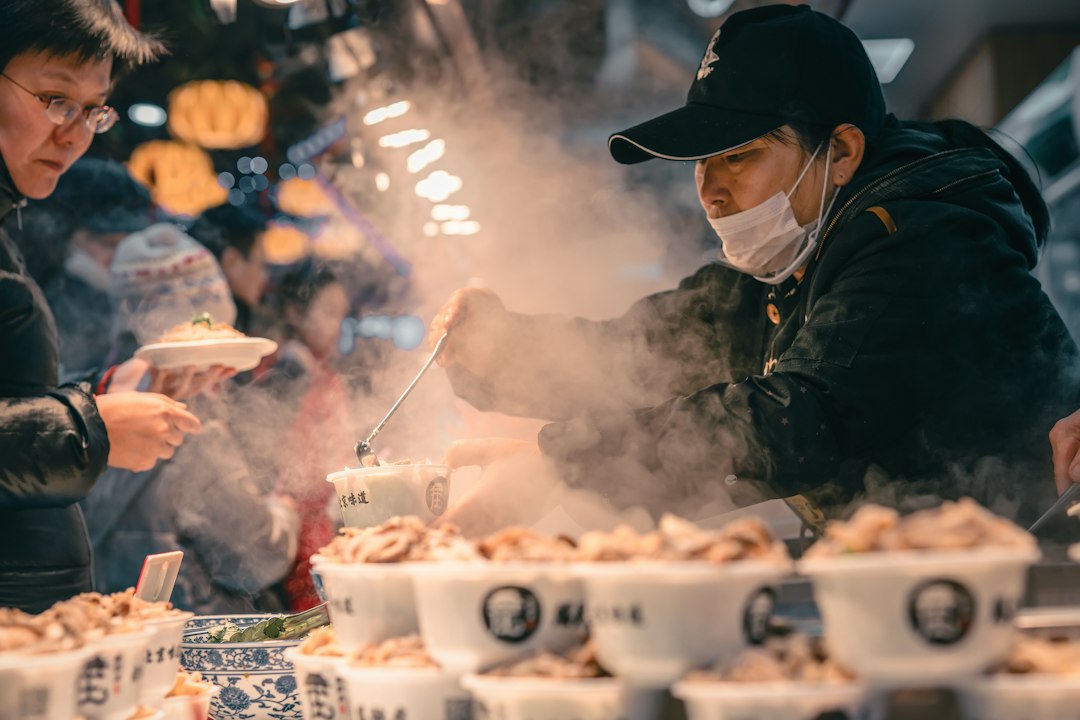
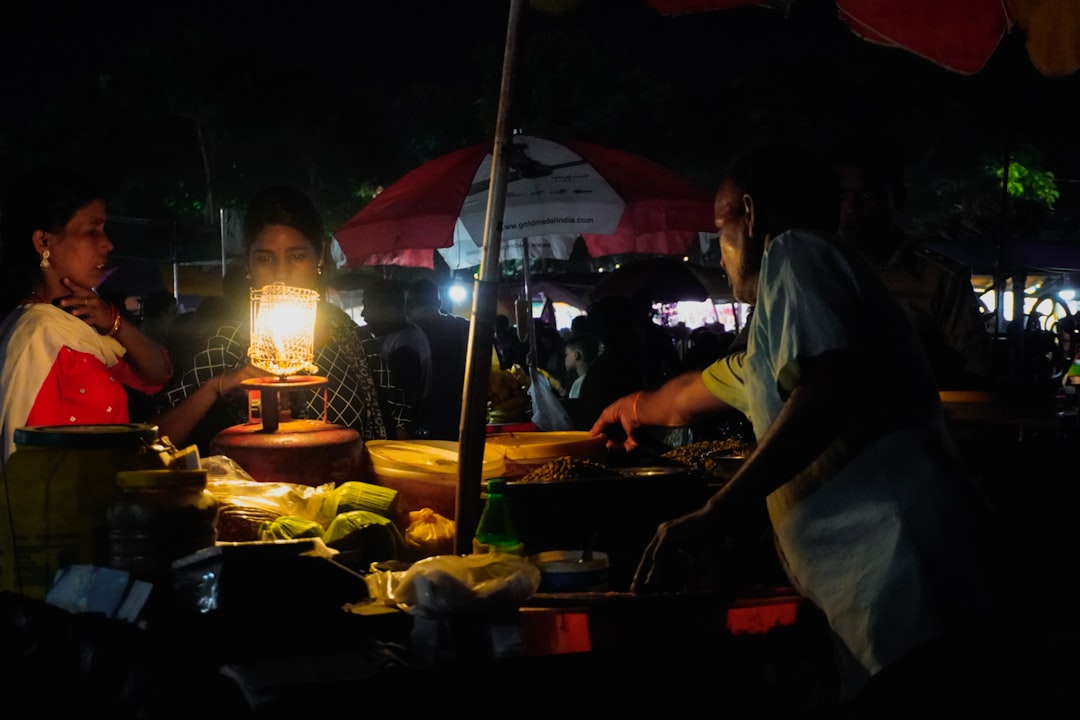
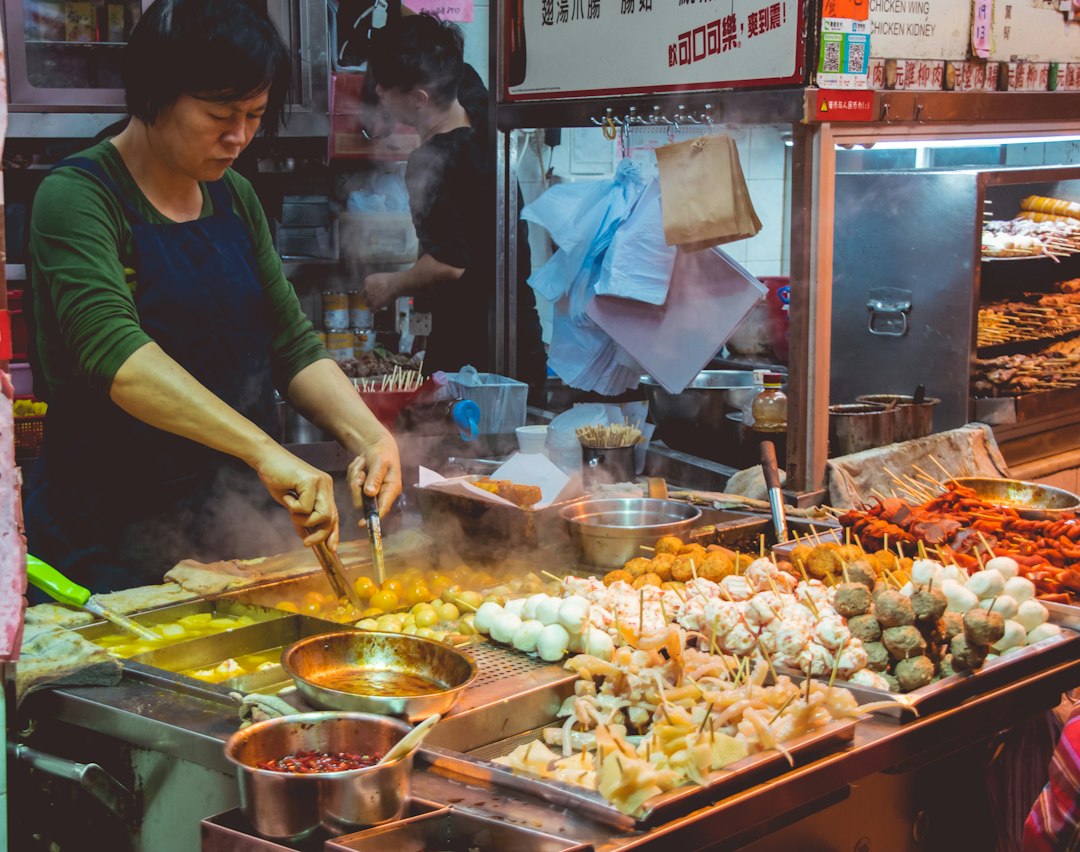
The safest market stall often looks lively rather than polished. You hear tongs hitting metal, smell oil and garlic, see steam or smoke, and notice a line of locals or office workers buying the same two dishes over and over. That is turnover, and turnover is one of the strongest street-food safety signals you can spot with your own eyes.
The danger is not usually the dramatic grill. It is the sleepy tray of food sitting at room temperature while the vendor waits for customers. Good safe street food abroad is rarely still. It is being cooked, replenished, plated, and sold fast.
Use this quick scan before you commit:
| Situation | Order when you see this | Walk away when you see this |
|---|---|---|
| Soup stall | Broth actively simmering, bowls assembled to order | Pot only warm, garnishes sitting uncovered for hours |
| Grill or skewer stand | Meat going straight from prep to fire to plate | Cooked skewers sitting in sun or warm air for long stretches |
| Fried snack stall | Batch coming fresh from hot oil | Limp, cool snacks from an old tray |
| Taco, wrap, or sandwich stand | Ingredients assembled in front of you with heated fillings | Dairy sauces, meat, or chopped vegetables left unrefrigerated |
| Rice or noodle counter | Constant batches, visible steam, fast turnover | Large shallow trays of barely warm rice |
| Seafood stall | Specialist vendor, busy service, quick cooking | Strong smell, dull flesh, raw shellfish in midday heat |
Two more clues matter. A short menu is often safer than a giant menu, because specialization usually means faster rotation. And if the vendor handles cash and food with at least some system, even a simple utensil switch or hand wipe, that is better than bare-hand chaos.
Choose dishes by heat and turnover, not by fear
Photo by Samuel Wibisono on Unsplash
Travelers often divide food abroad into safe and unsafe, as if whole cuisines belong in one bucket. That is the wrong frame. A bubbling fish stew in Lisbon, a stir-fried noodle plate in Bangkok, and a griddled arepa in Bogotá can all be better bets than a tired salad in an air-conditioned café.
The better rule is simple: fresh heat beats long exposure. Fully cooked food served hot is usually your friend. Raw, lukewarm, pre-cut, or long-holding food needs more caution. These travelers diarrhea prevention tips let you keep the flavor while lowering the odds of losing two days of your trip.
Safer choices on most trips:
- Noodle soups served boiling hot
- Stir-fries made to order
- Grilled meats or fish cooked in front of you
- Fresh flatbreads, dosas, rotis, or crepes off the pan
- Steamed dumplings straight from the basket
- Fruit you peel yourself, such as bananas, oranges, or mangoes
- Pasteurized yogurt or dairy sold from properly chilled refrigerators
Higher-risk choices to save for later or skip:
- Raw oysters, ceviche, or undercooked shellfish unless the setting is highly trusted
- Buffet food that has been sitting out
- Cream-filled pastries in very hot weather
- Leafy salads in places where tap water abroad is not considered reliably safe
- Pre-cut fruit exposed to flies, dust, or warm air
- Rice dishes that look warm rather than hot
- Chutneys, salsas, or mayonnaise-based sauces left on the counter
A simple sentence to remember: order the version of the local dish that still shows signs of life. Steam, char, bubbling broth, and rapid turnover are your best clues.
Water, ice, salads, and sauces cause more trouble than travelers expect
A perfect plate can still go wrong because of the details around it. The lettuce may have been washed in unsafe water. The iced tea may be fine except for the ice. The grilled chicken may be excellent, but the green sauce sat in 33 C heat since lunch. For many travelers, tap water abroad is the bigger problem than the main dish itself.
In places such as Japan, South Korea, Singapore, and most of Western Europe, tap water is generally dependable. In many other destinations, sealed bottled water or trusted filtered water is the safer default. If you are unsure, act like uncertainty itself is the answer.
Use these rules every day, not just on arrival:
- Drink only sealed bottled water or water from a trusted filtration system when local safety is unclear.
- Brush your teeth with safe water in higher-risk destinations.
- Skip ice in small stalls unless you are confident about the water source.
- Be cautious with salads, fresh herbs, and raw garnishes when water standards are uncertain.
- Avoid fresh juices if you did not see the water and ice source.
- Wipe the tops of cans and bottles before drinking directly from them.
- Do not assume alcohol makes unsafe ice safe.
For country-specific planning, save the official CDC food and water precautions page before departure and skim the WHO food safety overview if you want a broader refresher.
If you like planning meals ahead instead of improvising them while hungry, mapping a few conservative food stops in TravelDeck can help you avoid the classic mistake of eating the first dubious thing you see after check-in.
Pack a tiny food-safety kit that saves entire days
Great food trips are not won by fear. They are won by resilience. A five-minute pharmacy stop at home can spare you a full day in bed in Marrakech, Oaxaca, or Ho Chi Minh City. The goal is not to carry a clinic in your bag. It is to have just enough backup to recover from a mild stomach issue, manage an allergy, or skip one risky meal without panic.
This matters even more if you self-cater. Supermarket sandwiches, cut fruit, deli salads, and leftovers create a different kind of food poisoning travel risk because no vendor is monitoring how long they sit in your room or daypack.
Pack this micro kit:
- Hand sanitizer with at least 60% alcohol
- 4 to 6 oral rehydration salt sachets
- Anti-diarrheal medication that suits you and matches medical advice you trust
- Your regular prescription medicines
- Antihistamines if you have mild allergies
- An epinephrine auto-injector if prescribed for severe allergies
- A translated allergy card listing exact trigger ingredients
- Plain crackers, biscuits, or other bland backup snacks
For self-catering days, follow these rules:
- Buy chilled food only when you can refrigerate it quickly.
- Check seals, use-by dates, and fridge temperature by touch.
- Do not leave leftovers at room temperature for hours in your accommodation.
- Wash reusable cutlery, bottles, and baby items with safe water, not a quick rinse from an uncertain tap.
- If you are on a longer trip, check official food recall alerts for your destination country before stocking up.
These travelers diarrhea prevention tips are boring in the best possible way: tiny habits, huge payoff.
Know when to stop guessing and get medical help
Most short stomach upsets settle with rest, safe fluids, and a pause on rich food. But there is a line between an inconvenient travel bug and something that needs proper medical attention. Missing that line is how people turn a bad meal into a much worse week.
If symptoms start, make hydration the priority. Sip water or oral rehydration solution regularly, even if you are not hungry. Then reduce the variables: no alcohol, no dairy-heavy meals, no adventurous market crawl until you are stable again.
Get medical help promptly if you have any of these red flags:
- Fever above 38.5 C
- Blood in stool
- Repeated vomiting that prevents you from keeping fluids down
- Signs of dehydration such as dizziness, very dark urine, confusion, or faintness
- Severe abdominal pain
- Symptoms lasting more than 48 hours
- Symptoms in a young child, older adult, pregnant traveler, or immunocompromised traveler that are getting worse rather than better
The official NHS traveller's diarrhoea guidance is worth saving offline before you leave. It is clear, practical, and easy to use when your brain is not operating at full speed.
FAQ
Is street food always riskier than restaurants?
Not always. A busy street stall with fast turnover and visible cooking can be safer than a quiet restaurant serving food that has been sitting around. The key is not the format; it is whether the food is hot, fresh, and moving quickly.
What is the safest first meal after I land?
Pick one cooked local dish served piping hot: noodle soup, grilled chicken with rice, stir-fried noodles, steamed dumplings, or a fresh dosa. Skip buffets, raw seafood, and pre-cut fruit on day one.
Is ice safe abroad?
Sometimes, yes. In reputable restaurants, hotels, and regulated food halls, ice is often fine. In small stalls where you cannot tell the source, order drinks without ice or switch to hot drinks.
Can I still eat local food if I have allergies?
Yes, but do not guess. Carry a translated allergy card, ask direct ingredient questions, and be extra careful with broths, marinades, sauces, and garnish oils, where hidden ingredients often show up.
Should I avoid all raw food while traveling?
No, but raw food deserves a higher standard of trust. Fruit you peel yourself is usually a much better bet than raw shellfish, a salad washed in uncertain water, or a platter that has been sitting out.
The best meals abroad usually come with noise, steam, smoke, and a little beautiful chaos. Once you learn how to read those scenes properly, safe eating stops feeling restrictive and starts feeling confident. That is when culinary travel gets good: you are not eating timidly, just intelligently, and the memory you bring home is the dish itself rather than the recovery day after it.