A ruined trip rarely begins with a dramatic mistake. More often, it starts with one innocent iced drink, one buffet egg that sat too long, or one gorgeous plate of cut fruit glistening in the heat. If you want to avoid food poisoning abroad, the best strategy is not fear. It is timing, observation, and a few disciplined habits that let you keep the joy of eating local food without gambling with your itinerary.
I have learned this the hard way in markets that smelled of charcoal and lemongrass, in ferry ports where lunch sat under plastic domes, and in hotel breakfast rooms where everything looked polished but not everything was truly safe. The travelers who avoid food poisoning abroad are usually not the pickiest eaters. They are the ones who read a food scene quickly: who notice turnover, steam, water sources, and whether a cook is handling cash and noodles with the same hand.
That is what this guide is about. Not sterile travel advice, and not a command to skip the dishes that make a place memorable. This is a practical, food-lover's method to avoid food poisoning abroad while still tasting congee at dawn, grilled skewers at midnight, and the dish everyone at the next table seems to order without hesitation. When I am plotting a food-heavy route with train times and market stops, I like keeping it organized in one place with TravelDeck, but the real protection starts once you are standing in front of a menu and deciding what your next bite should be.
The first 48 hours matter more than most travelers think
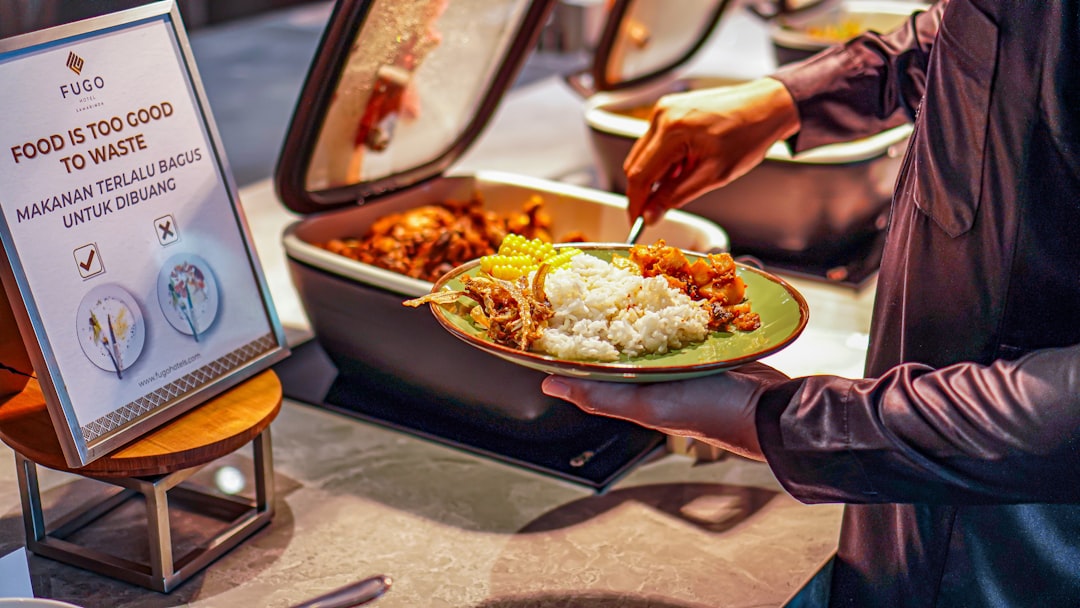
Photo by Samuel Wibisono on Unsplash
The simplest way to avoid food poisoning abroad is to stop treating every meal equally risky. Your first 48 hours in a new country are different. Your body is tired, often dehydrated, sometimes jet-lagged, and suddenly dealing with new microbes, new spice levels, new meal times, and maybe a cabin-dry immune system after a long-haul flight. That first day is when bravado causes the most unnecessary trouble.
I do not mean you should eat blandly. I mean you should eat strategically. On arrival day, order food that is cooked hard, served hot, and eaten quickly. Think steaming noodle soup, rice porridge, grilled meats straight off the fire, curry ladled from a pot in constant rotation, or a wok dish that goes from flame to plate in under two minutes. Save raw herbs piled high on a room-temperature platter, cut fruit sitting on ice, mayonnaise-heavy salads, and half-warm buffet items for another time or skip them entirely.
Travelers who avoid food poisoning abroad often follow a quiet rule: widen your risk as your confidence widens. Start with dishes that have high heat, low handling, and rapid turnover. Once you have seen how a market behaves, what locals are eating, and how your stomach responds, you can experiment more boldly.
Here is the arrival framework I use:
- First 6 hours: sealed bottled water, hot tea or coffee, one fully cooked meal, no ice, no raw garnish unless you wash or peel it yourself.
- First dinner: choose one popular specialty that is cooked to order and eaten hot, not a tasting spree from six random stalls.
- First morning: skip the decorative breakfast spread if you are unsure and choose the station where food is made in front of you.
- First 48 hours: avoid raw shellfish, undercooked eggs, unpasteurized dairy, food sitting in lukewarm trays, and juices blended with unknown water.
- First street-food crawl: eat from one busy stall at a time and give your body a chance to tell you how it feels.
A quick decision table helps when everything smells irresistible:
| Situation | Better first choice | Higher-risk choice to delay | Why it matters |
|---|---|---|---|
| Breakfast after landing | Congee, omelet cooked through, hot noodles | Cut melon, yogurt in open bowls, lukewarm pastries with cream | Fatigue and dehydration make your stomach less forgiving |
| Market lunch | Stir-fry, grilled skewers, soup from a rolling boil | Room-temperature salads, chopped fruit cups | High heat and turnover reduce bacterial growth |
| Drinks | Sealed sparkling water, canned soda, hot tea | Fountain drinks, fresh juice made by others, drinks with ice | Water quality is often the invisible problem |
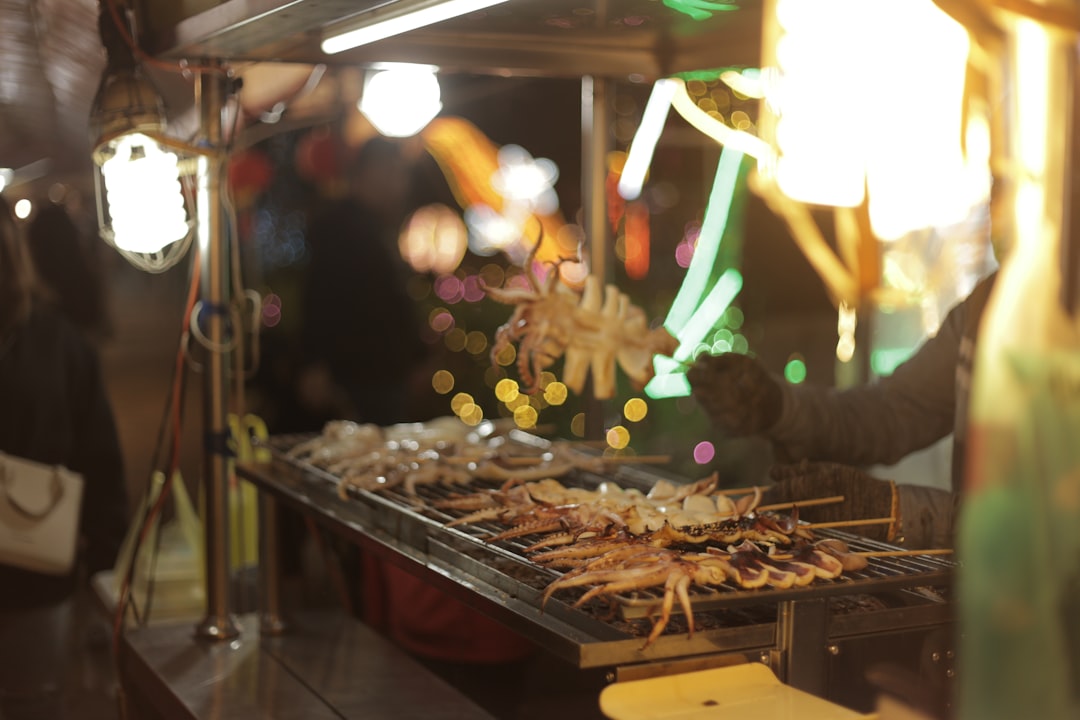
| Seafood night | Busy grill house with visible cooking | Raw oysters, ceviche in hot weather, buffet shrimp | Seafood punishes sloppy storage fast |
| Late-night snack | Freshly fried snack, hot broth | Sandwiches in display cases, sauces sitting out | Time and temperature are everything |
Street food safety starts before the first bite
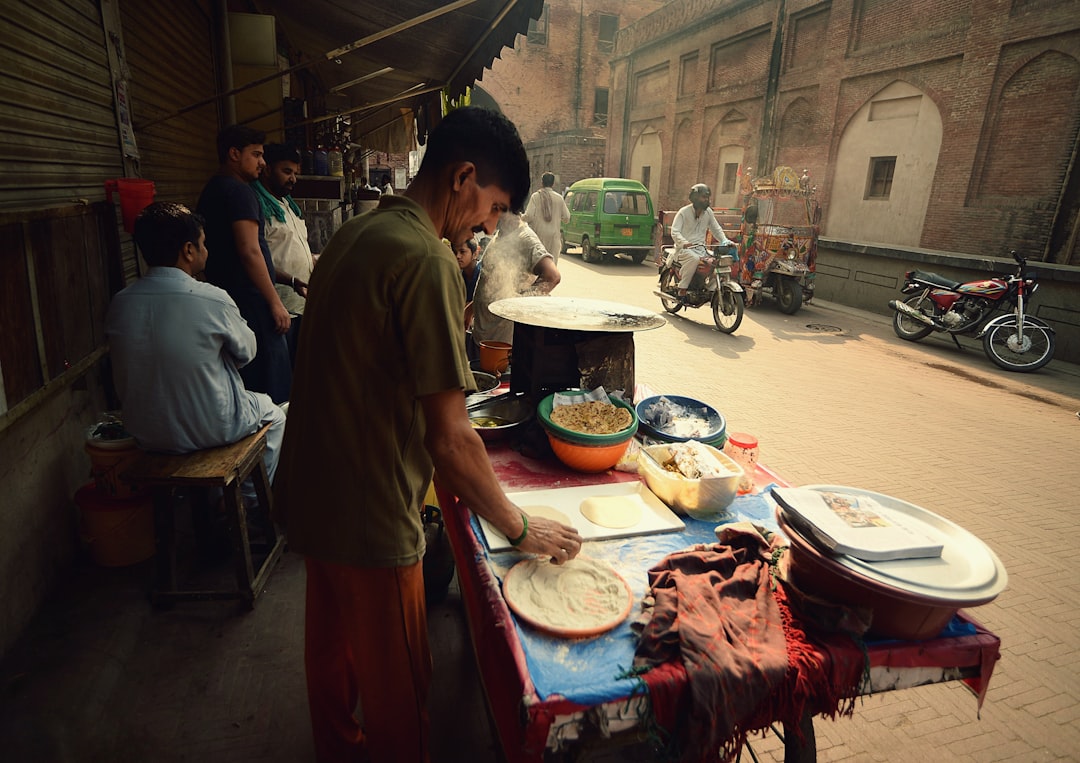
Photo by LumenSoft Technologies on Unsplash
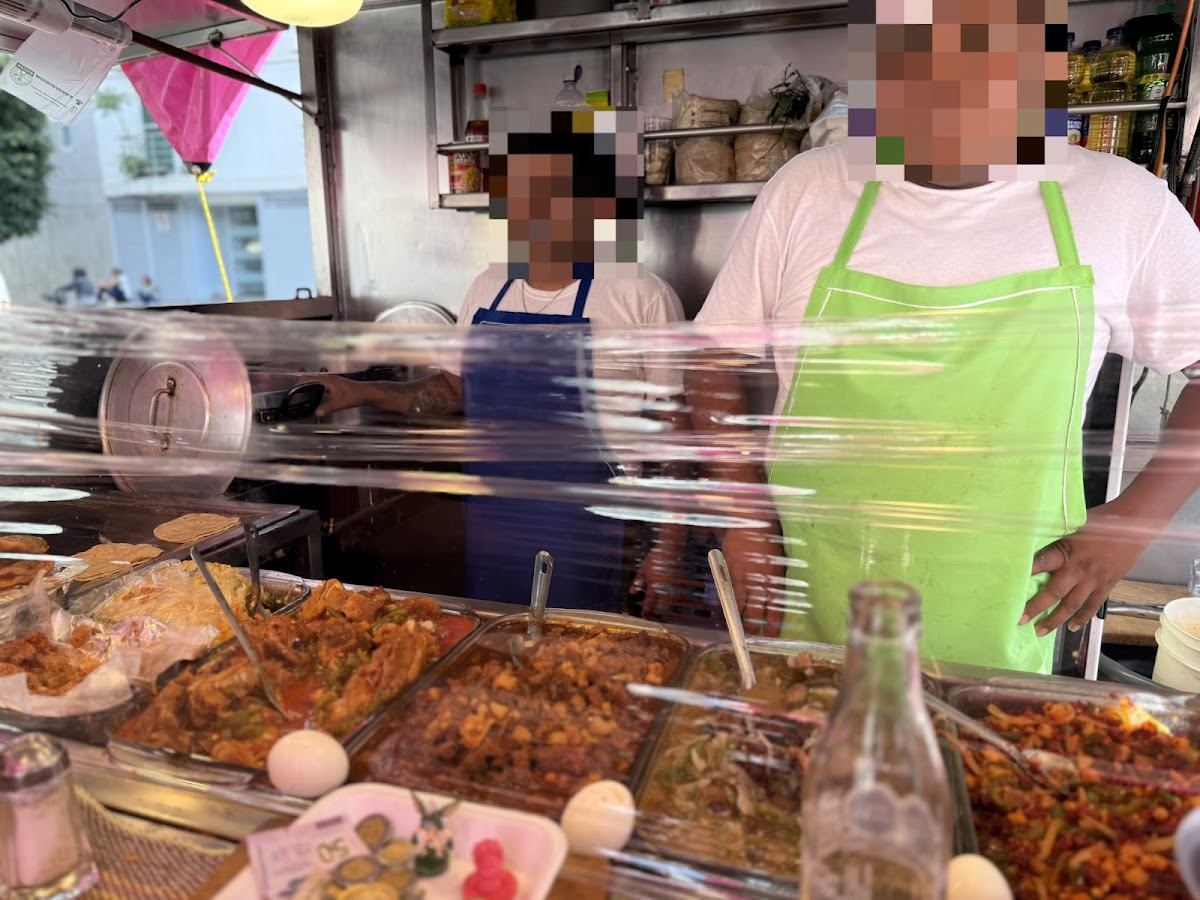
Street food is not automatically dangerous, and restaurants are not automatically safe. In fact, a busy stall with constant turnover can be safer than a pretty dining room where sauces sit all afternoon in a lukewarm pass. To avoid food poisoning abroad, learn to read the stall before you read the menu.
Watch the rhythm. Is there a queue? Are ingredients moving? Is someone wrapping dumplings, another working the broth, another handing out bowls? You want motion. You want smoke, steam, repetitive practice, and a cook who looks busy in the good way. The safest stalls often sound alive: metal ladles striking the wok, stock bubbling, orders being shouted, plastic stools scraping the pavement as people sit, eat, and leave. A silent stall with ten untouched trays can be beautiful and still be a terrible idea.
Then look closer. Are raw proteins separated from cooked food? Is the chopping board a battlefield or reasonably controlled? Does the vendor handle cash and then go back to food bare-handed? Is the sauce station exposed to flies? To avoid food poisoning abroad, you do not need laboratory certainty. You need enough small positive signals to say yes with confidence, and enough discipline to walk away when your instincts say no. If you want a city-specific example of that stall-reading process in action, Safe Street Food Mexico City 2026: Taste More, Risk Less is a useful companion read.
Use this 30-second street-food check before ordering:
- Crowd test: locals are lining up and eating fast.
- Heat test: food is grilled, fried, boiled, or wok-cooked to order.
- Turnover test: ingredients are replenished constantly, not languishing.
- Separation test: raw meat and cooked items are not piled together.
- Surface test: tongs, ladles, and boards look actively cleaned, not crusted over.
- Water test: drinks are sealed or prepared with obviously safe water.
- Cash test: separate food handling is ideal; if not, choose fully cooked items only.
- Exit test: if you feel doubtful, leave. Curiosity is good; stubbornness is not.
Some of the best street-food stalls are incredibly simple. A single dish, a short line, one old fan turning above the fryer, and a smell you can follow from half a block away. Simplicity is often an advantage. Fewer menu items usually means stronger turnover, more specialized technique, and less chance that something has been sitting all day waiting for the rare customer who orders it.
Safe water while traveling is the rule most people break first

Photo by Rei Yamazaki on Unsplash
Ask travelers what made them sick, and many will blame the most memorable meal. Often the real culprit is quieter: a cube of ice, rinsed lettuce, fruit juice diluted with local water, mint in a mojito, a toothbrush rinsed under the tap, or a fountain drink in a restaurant that seemed more polished than the street outside. If you want to avoid food poisoning abroad, treat water as seriously as meat.
This matters because water exposure hides inside ordinary routines. You may refuse tap water and still get caught by ice in a cocktail, cut fruit washed in unsafe water, or a smoothie blended with questionable cubes. Hot climates make this harder because the most tempting things are also the riskiest: fresh juice, crushed-ice drinks, cold fruit cups, and refillable bottles from a hotel jug with no clear source.
The safer alternative is not miserable. In many places, the best beverage choices are also the most refreshing: sealed sparkling water, canned tea, coconut water opened in front of you if the tool looks clean, or hot tea that arrives properly steaming. To avoid food poisoning abroad, remember that drinks are part of your meal safety strategy, not separate from it.
Follow these water rules closely:
- Buy factory-sealed bottled water and check the cap before opening.
- Choose carbonated drinks when you are unsure because the intact fizz is a reassuring sign of original sealing.
- Skip ice unless you know it was made from purified water.
- Avoid fountain sodas in places where tap water quality is uncertain.
- Be cautious with fresh juice made by others, especially if ice, water, or unwashed produce is involved.
- Use bottled or treated water for brushing your teeth when local water safety is unclear.
- Order tea or coffee steaming hot, not warm.
- Be wary of milk and dairy that are not clearly pasteurized and chilled.
A simple beverage ranking helps:
| Safer drink choice | Usually fine when | More caution needed when | Notes |
|---|---|---|---|
| Sealed bottled water | Cap is intact | Bottle looks tampered with | Still inspect before buying |
| Sparkling water or canned soda | Container is unopened | Served over ice | Bubbles are your friend |
| Hot tea or coffee | Served steaming | Mixed with room-temp cream | Heat protects, add-ins may not |
| Beer or wine | Bottle/can is sealed or poured cleanly | Served with ice or questionable mixers | Alcohol does not magically sterilize bad ice |
| Fresh coconut | Opened in front of you with clean tool | Pre-opened and sitting out | Great in heat when handled well |
Hotel breakfasts, buffets, and food courts can be trickier than street stalls
People often relax their standards indoors. Air-conditioning, polished plates, and neat labels create a false sense of security. But hotel buffets can hold food for too long, and food courts vary wildly depending on turnover, refrigeration, and how aggressively trays are replenished. To avoid food poisoning abroad, judge the food, not the furniture.
Breakfast is the classic trap. There is often a grand spread of sliced fruit, yogurt, cheese, pastries, sausage, eggs, and little dishes of condiments, all arranged to look abundant and indulgent. But abundance is not the same as freshness. A pan of scrambled eggs can sit on low heat for a long time. Fruit can be cut early, handled by multiple staff members, and rewarmed by the room. Yogurt may be perfectly safe in one hotel and risky in another if temperature control is weak.
Food courts are a mixed picture. A well-run food hall with fast turnover, hot woks, and visible cleaning can be excellent. A sleepy station in a transit mall with sauce trays, pre-plated rice, and tired proteins under heat lamps is not. To avoid food poisoning abroad, choose the counters where food is being assembled now, not the ones where it was assembled earlier.
In buffets and food courts, choose like this:
- Go for made-to-order eggs, noodle stations, dosa griddles, carving stations, or anything finished in front of you.
- Prefer steaming soups, curries, rice, and stir-fries over warm trays that look untouched.
- Take small portions first so you do not feel committed to a questionable dish.
- Skip cut fruit, leafy salads, and creamy desserts if temperature control looks weak.
- Avoid sauces, salsas, and condiments sitting open for hours.
- Check whether cold items are actually cold, not merely cool.
- If the breakfast room is nearly empty late in service, be more selective than you would be at peak time.
One of the smartest ways to avoid food poisoning abroad is to build your mornings around certainty. I would rather have a plain but excellent bowl of hot rice porridge from a street-side specialist than six photogenic buffet items chosen from doubt.
What to order first: safer local dishes that still feel exciting
The fear-based version of food safety tells you to eat cautiously by eating boringly. That is exactly how travelers miss the emotional core of a place. The real trick is choosing dishes that are both expressive and structurally safer. To avoid food poisoning abroad, ask not only what is delicious, but how it is cooked, held, and served.
High-heat local dishes are often the most vivid anyway. A bowl of pho with fragrant basil added at the last second, clay-pot tagine arriving with a hiss of trapped steam, ramen with broth at a near boil, tacos handed over straight from the griddle, or biryani lifted from the hot center of a pot can all be glorious first choices. They are tied to local identity and safer than the generic Caesar salad many nervous travelers default to.
Texture can guide you too. Crisp fried edges, bubbling broth, crackling skewers, and rice lifted from a hot cooker are reassuring. Limp garnish, watery sauces at room temperature, and protein that feels pre-cooked then reheated should make you slow down. Travelers who avoid food poisoning abroad often become unusually attentive eaters, and that attention usually makes them better eaters overall.
Here are reliable first-order ideas by region:
| Region | Smart first dishes | Why they work | Typical local price |
|---|---|---|---|
| Thailand | Jok, pad kra pao, boat noodles, grilled pork skewers | Cooked hot, fast turnover, easy to judge freshness | THB 50-150 |
| Vietnam | Pho, bun cha from a busy grill, banh xeo, com tam hot off the grill | Broth and grill heat reduce risk when chosen well | VND 40,000-120,000 |
| Japan | Ramen, udon, katsu, yakitori, curry rice | Excellent turnover and strong heat in specialist shops | JPY 800-2,500 |
| Turkey | Doner carved fresh, mercimek corbasi, pide, grilled kofte | High heat and constant service in busy shops | TRY 150-500 |
| Morocco | Tagine, harira, grilled brochettes, msemen cooked fresh | Steam and griddle heat are your allies | MAD 15-120 |
| Mexico | Tacos from a busy plancha, quesadillas, tlacoyos, caldo | Fast turnover and visible cooking matter most | MXN 20-120 |
| Portugal | Grilled sardines in season, caldo verde, bifana, pasteis de nata from busy bakeries | Better when service is brisk and heat is obvious | EUR 2-18 |
| India | Fresh dosa, idli, thali at busy lunch service, chai | Hot griddles and fast replenishment improve safety | INR 40-350 |
A few foods deserve extra caution almost everywhere, especially in your first days:
- Raw oysters and raw shellfish
- Undercooked eggs
- Buffets with seafood in warm weather
- Pre-cut fruit
- Unpasteurized dairy
- Raw salads in places with uncertain water quality
- Sauces with raw ingredients left at room temperature
- Rice dishes that look old and dry around the edges
Travelers' diarrhea prevention is mostly about tiny decisions
The phrase travelers' diarrhea makes the problem sound inevitable, like part of the ticket price. It is not. Yes, some destinations carry more risk, and yes, even careful travelers can get unlucky. But travelers' diarrhea prevention is usually a story of small choices repeated consistently: clean hands before eating, safer water, hot food, sensible pacing, and not getting seduced by every colorful tray at once.
Hand hygiene is boring right until you watch a vendor take cash, wipe a counter, and hand over your snack. Soap and water are best when you have them. When you do not, alcohol-based sanitizer is worth carrying and actually using. This matters before meals, after transport, after handling menus, and especially before you eat street food with your hands.
Travelers' diarrhea prevention also means respecting your body's limits. The night you land after eleven hours in the air is not the night to test raw shellfish, six cocktails, and a dairy-heavy dessert in tropical heat. You do not have to become timid. You just have to remove the obviously unnecessary risks.
Pack this compact food-safety kit:
- Hand sanitizer with at least 60% alcohol
- A small packet of tissues or wipes
- Oral rehydration salts
- Any doctor-approved anti-diarrheal medication you normally use
- Electrolyte tablets
- A reusable bottle you fill only with safe water
- Allergy translation cards if relevant
- A short list of trusted clinics or pharmacies at your destination
Another underrated part of travelers' diarrhea prevention is sleep. A tired body is worse at regulating hydration, appetite, and judgment. If you are arriving eastbound and already feel wrecked, Eastbound Jet Lag Tips 2026: London Arrival by Body Clock is useful because the sharper your brain is, the better your food decisions tend to be.
How to recover fast if a meal still goes wrong
Even careful travelers sometimes lose the lottery. Maybe the risky bite was invisible. Maybe the good-looking restaurant had one bad refrigerator. Maybe you were simply unlucky. Knowing how to respond quickly is part of how you avoid food poisoning abroad over the long term, because fast action can turn a miserable 48 hours into a manageable bad day.
The first priority is hydration. Diarrhea and vomiting drain you fast, especially in hot climates or high-humidity cities. Sip water, electrolyte solution, or oral rehydration salts in small amounts if large gulps feel impossible. Rest somewhere cool. Skip alcohol. Do not force heavy food too early; when you are ready, bland hot foods like rice, toast, broth, bananas, or plain congee are gentler re-entry points.
But know the line between unpleasant and serious. Severe dehydration, blood in the stool, high fever, persistent vomiting, fainting, or symptoms lasting more than a couple of days deserve professional attention. Travelers who avoid food poisoning abroad are not the ones who never get sick. They are the ones who respond early, honestly, and without denial.
Seek medical help sooner if you have:
- Bloody diarrhea
- High fever
- Severe abdominal pain
- Signs of dehydration such as dizziness, very dark urine, or confusion
- Repeated vomiting that prevents you from keeping fluids down
- Pregnancy, immune suppression, or a chronic condition that raises the stakes
A real-world example: using this method in Bangkok
Theory becomes useful when you can picture yourself applying it somewhere vivid. Bangkok is perfect for that. It is one of the great eating cities on earth: smoky grill carts, noodle shops with recipes older than the nearest office tower, Chinatown alleys buzzing past midnight, and markets where coconut, fish sauce, chili, basil, and charcoal all seem to meet in the same humid breath. It is also a city that rewards travelers who pay attention.
Bangkok lets you practice every principle in this guide. You can test street food safety by comparing a packed stall to a sleepy one. You can see why safe water while traveling matters the moment a vendor reaches for a scoop of ice. You can understand travelers' diarrhea prevention when you realize how easy it is to order too much, too fast, in too much heat. If you can learn to avoid food poisoning abroad here without missing the pleasure, you can apply the same logic almost anywhere.
How to get there
Bangkok is usually entered through two airports: Suvarnabhumi Airport (BKK) for most long-haul and full-service international flights, and Don Mueang International Airport (DMK) for many regional and low-cost carriers. From central Bangkok, BKK is roughly 30 to 45 minutes by taxi depending on traffic; DMK is often 25 to 50 minutes. Airport timing matters because arrival fatigue is exactly when your first food choices get sloppy.
From BKK, the Airport Rail Link to Phaya Thai takes about 26 to 30 minutes and costs roughly THB 35-45. A metered taxi into Sukhumvit or Silom often runs THB 300-500 plus tolls, though heavy traffic can stretch the ride well past an hour. From DMK, taxis into the center commonly cost THB 250-450 plus tolls. If you are arriving from another Thai city, trains and buses can be smart options because they drop you into the city hungry but not necessarily airport-tired.
Bangkok is also easy to reach overland. From Ayutthaya, trains take around 1 hour 20 minutes to 2 hours and can cost anything from THB 20 in basic class to THB 300+ for more comfortable options. From Pattaya, buses usually take 2 to 2.5 hours and cost around THB 140-200. From Chiang Mai, a sleeper train takes roughly 10 to 13 hours with fares often around THB 900-1,500, while flights are about 1 hour 15 minutes. From Koh Samui, combined ferry-bus packages often take 12 to 14 hours.
Useful transport links:
- Suvarnabhumi Airport
- Don Mueang Airport
- State Railway of Thailand
- BTS Skytrain
- MRT Bangkok Metro
- Tourism Authority of Thailand
Things to do
Bangkok is not a city to consume only at table height. Some of its best culinary understanding comes from moving through neighborhoods before you sit down to eat. Walk through flower markets at dawn, temple districts before the heat rises, and old trading lanes where a coffee shop might share a wall with a century-old noodle kitchen. This rhythm helps you avoid food poisoning abroad because you stop eating randomly and start eating contextually.
The best food days in Bangkok build gently. Begin with something hot and humble. Wander. Drink safe fluids. Eat again only when you spot turnover and appetite aligns with a place you actually trust. By evening, when Yaowarat glows gold and red and the city smells of pepper, garlic, and hot oil, you will make better choices because you have seen how the city moves.
Start with these experiences:
- Or Tor Kor Market, Kamphaeng Phet Road - one of Bangkok's cleanest and best-organized fresh markets, excellent for observing produce standards, curry stalls, and fruit quality.
- Yaowarat Road in Chinatown - go after sunset for noodles, grilled seafood, chestnuts, and wok stations; arrive hungry but selective.
- Talat Noi - wander old warehouses, shrine corners, and coffee spots before lunch nearby in Chinatown.
- Pak Khlong Talat Flower Market - especially atmospheric early morning; pair it with a hot breakfast in nearby old town.
- Wang Lang Market on the Thonburi side - lively local snack scene with good turnover during the day.
- Nang Loeng Market - more local than flashy, with old-school Thai dishes and daytime energy.
- Charoen Krung creative district - galleries, river views, old shop-houses, and some of the city's most interesting restaurant openings.
Where to stay
Where you sleep shapes how safely you eat. A hotel near a train line and a reliable breakfast option gives you a controlled first morning. A place in Chinatown makes it easy to chase great night food, but it also means temptation at every corner when you are tired. If your goal is to avoid food poisoning abroad, location matters almost as much as thread count.
For first-timers, I like three kinds of bases: old town for calm mornings and temple walks, Siam or Ari for easier transit and cleaner routines, and Chinatown for travelers who already know how to pace themselves. Always check recent reviews for refrigerator reliability, room cleanliness, and whether breakfast is made to order or buffet-heavy. Rates swing around holidays, so comparing on official sites and platforms like Booking.com is worth the extra minute.
Budget
- Here Hostel Bangkok, Old Town - roughly THB 700-1,800 for dorms and simple privates; good for walkable mornings.
- Lub d Bangkok Siam - about THB 900-2,300; practical for Skytrain access and easy city movement.
- Norn Yaowarat Hotel - around THB 1,100-2,000; useful if Chinatown is your focus.
Mid-range
- ASAI Bangkok Chinatown - usually THB 2,200-4,000; strong location, compact rooms, easy market access.
- The Quarter Ari by UHG - roughly THB 2,300-4,500; Ari is calmer and easier on the senses.
- Eastin Grand Hotel Phayathai - often THB 4,800-7,500; direct transit convenience helps on arrival day.
Luxury
- Mandarin Oriental Bangkok - commonly THB 18,000+; riverside classic with serious dining standards.
- The Siam - around THB 19,000+; secluded and design-heavy with a calmer pace.
- Capella Bangkok - often THB 25,000+; riverfront splurge with excellent service and food handling.
Where to eat
Bangkok rewards specificity. Rather than choosing food by fame alone, choose by structure: where is the turnover strongest, what dish defines the place, what time does it peak, and is your safest order also one of the best? The answer is often yes. Some of the city's most satisfying meals are exactly the ones that help you avoid food poisoning abroad: hot porridge, peppery soups, wok dishes cooked in seconds, and curries ladled fresh from deep pots.
For your first 24 hours, think in layers. Start with breakfast that is hot and simple. Move to a lunch with visible cooking and strong demand. Save the more chaotic night market grazing for when you have your bearings, your hydration sorted, and enough confidence to spot the difference between a magnet stall and a trap. Street food safety in Bangkok is less about avoiding the street and more about choosing the right stretch of it.
Good first choices and food neighborhoods:
- Jok Prince, Charoen Krung - smoky rice porridge, usually THB 50-100. Ideal first breakfast because it is hot, simple, and beloved.
- Nai Ek Roll Noodle, Yaowarat - peppery noodle soup and crispy pork, around THB 80-200. Strong turnover at busy hours.
- Thip Samai, Mahachai Road - famous pad thai, roughly THB 120-400 depending on version. Go at off-peak times if you dislike long waits.
- Wattana Panich, Ekkamai - long-simmered beef soup, about THB 150-300. Deep flavor, strong heat, comforting if you want something restorative.
- Soei Restaurant, Samsen area - Thai seafood and curries, around THB 150-600 per dish. Better for a more confident second or third meal.
- Or Tor Kor Market - excellent for browsing prepared foods, grilled items, and higher-quality produce.
- Wang Lang Market - great daytime snack circuit; choose items fried or grilled to order.
- Yaowarat Road - best approached by picking one or two high-turnover stalls rather than improvising endlessly.
If you want classic dishes that are thrilling but sensible, order jok, tom yum soup served hot, pad kra pao, boat noodles, moo ping skewers, or a fresh griddled omelet over rice. Delay the prettier but riskier options such as pre-cut tropical fruit, shaved-ice desserts from unknown water sources, or seafood that looks like it has been waiting for nighttime to become famous.
Practical tips
Bangkok is easiest for cautious eaters from November to February, when the weather is relatively drier and cooler by local standards. March to May can be brutally hot, which increases dehydration and makes reckless cold-drink decisions more likely. Rainy season, roughly June to October, does not ruin food travel, but it makes drainage, street conditions, and food storage more variable. To avoid food poisoning abroad, climate matters because heat shortens the margin for sloppy handling.
Pack for food, not just photos. A tiny sanitizer bottle, tissues, oral rehydration salts, a hat for market walking, and a reusable bag for groceries are more useful than a second pair of dress shoes. Connectivity is excellent in Bangkok, and an eSIM or airport SIM makes it easier to check maps, opening hours, and recent reviews before committing to a meal. If you want a cleaner digital setup before a trip, Must-Have Travel Apps for 2026: Build a Lean Phone Setup is a strong prep read.
Thailand uses the baht (THB), cards are common in malls and hotels, and cash still helps in markets and smaller shops. Street etiquette is usually smooth and forgiving, but politeness matters; if you are eating around temples or family-run stalls, quiet respect goes a long way. For a wider read on table and cultural behavior, Respectful Travel Customs 2026: Homes, Temples, Tables fits naturally here.
Keep these practical points in mind:
- Best months: November to February for easier walking and less punishing heat.
- What to pack: sanitizer, oral rehydration salts, tissues, hat, breathable clothes, small cash.
- Currency: THB; keep THB 20, 50, and 100 notes for stalls and taxis.
- Connectivity: airport SIMs and eSIMs are easy; offline maps still help in markets.
- Transport apps: useful for comparing taxi fares and avoiding long roadside waits.
- Food timing: busiest meal windows often mean safest turnover.
- Safety: watch traffic more than crime; crossing big roads can be more dangerous than the food.
- Water: sealed bottles are cheap and widely available; do not get casual with ice just because the weather is hot.
A quick seasonal snapshot:
| Months | Weather feel | Food-travel upside | Main caution |
|---|---|---|---|
| Nov-Feb | Warm, drier, most comfortable | Best for long market walks and evening crawls | Peak season hotel prices |
| Mar-May | Very hot | Great mango season, lively night eating | Dehydration and heat fatigue |
| Jun-Oct | Rainy, humid | Lower rates, dramatic skies, fewer crowds at times | Wet streets and more variable storage conditions |
FAQ
Bangkok, and food travel more broadly, tends to raise the same urgent questions once the menu is in your hand. These are the ones I hear most often from travelers trying to avoid food poisoning abroad without eating like they are grounded at home.
Is street food really safe, or should I stick to restaurants?
Street food can be very safe when you choose busy vendors cooking to order. Restaurants can be risky if food sits too long or water practices are weak. Street food safety is about turnover, heat, and handling, not whether there is a roof.
What should I eat on my first day abroad?
Choose one or two hot, fully cooked dishes with strong turnover: porridge, noodle soup, stir-fry, grilled skewers, curry, or a fresh omelet. Avoid big buffet spreads, pre-cut fruit, and drinks with ice until you understand the local routine better.
Is ice ever okay?
Sometimes, yes, but only when you are confident it comes from purified water and the venue has good standards. If you are unsure, skip it. Safe water while traveling is one of the easiest rules to follow and one of the easiest to break casually.
How do I handle traveler's diarrhea if it starts anyway?
Prioritize fluids and electrolytes, rest, and simple foods once you can eat. If symptoms are severe, prolonged, bloody, or paired with fever or dehydration, seek medical help promptly.
Are food courts safer than night markets?
Not automatically. A food court with fast turnover and made-to-order counters can be excellent. A slow food court with tired trays can be worse than a packed night-market stall. Again, watch the rhythm, not the branding.
There is a quiet confidence that comes from learning how to eat well without eating carelessly. You stop seeing safety and pleasure as opposites. You begin to notice steam, queues, clean tongs, fresh oil, intact bottle caps, and the small choreography of a kitchen that knows exactly what it is doing. That is how food travel becomes richer, not narrower.
The goal is not to sanitize the adventure out of a trip. It is to protect the part that matters most: the memory of a city still glowing after dinner, your appetite intact, and tomorrow's market still waiting for you.