The average traveler wears barely half the clothes they pack, yet still drags every unused layer through terminals, train stations, and hotel stairwells. A smart one bag packing system fixes that. It is not a challenge built on deprivation; it is a practical way to pack for real life, real weather, and real trips without surrendering your freedom to a checked suitcase.
When your whole trip fits above your head or under the seat in front of you, the journey changes tone. You move faster through arrivals. You stop bargaining with yourself over whether you really need a third pair of shoes. You walk over slick metro tiles, warm stone lanes, and noisy airport bridges feeling light instead of loaded down. When I sketch an itinerary in TravelDeck, I plan outfits against neighborhoods, forecast swings, and laundry chances before I ever think about adding extra bulk.
A good one bag packing system works because it replaces panic with structure. Instead of packing day by day, you pack by function. Instead of counting outfits, you count combinations. Instead of asking what might happen, you ask what is likely to happen and what can be solved cheaply if it does. That is how cabin luggage only stops feeling restrictive and starts feeling luxurious.
Why a one bag packing system feels freer than minimalism
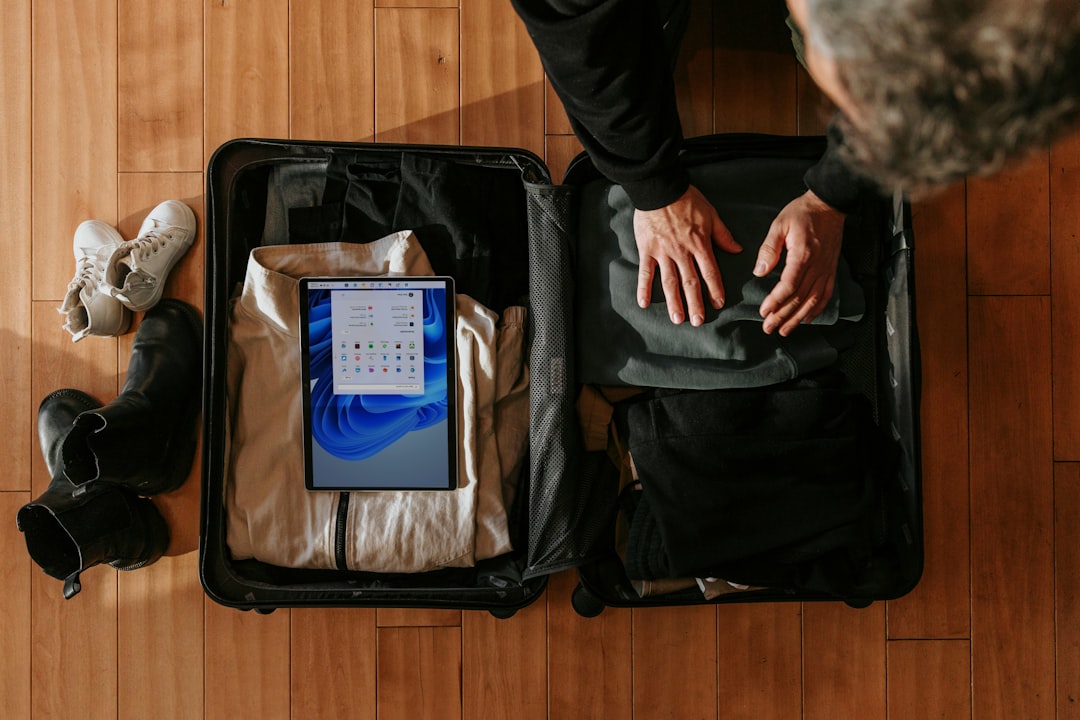
Photo by Surface on Unsplash
The biggest misconception is that traveling with one bag means going without. In practice, the opposite is usually true. A one bag packing system gives you easier mornings, quicker transfers, and fewer small travel irritations. There is no carousel wait after landing, no dread about whether your bag made the connection, and no awkward heaving of a giant suitcase up a fourth-floor walk-up in a historic center.
There is also a mental shift that frequent travelers know well. When you pack less, every item earns its place. Your jacket has to work on a plane and at night by the river. Your shoes have to look good enough for dinner and feel good enough for 18,000 steps. Your toiletries have to pass security and still handle a humid beach day or a dry hotel room. That clarity is why a one bag packing system feels calmer, not harsher.
If your trip begins with an overnight flight, your in-transit outfit matters almost as much as your bag. A soft layer, compressible scarf, and shoes that slip off easily can make your first travel day far smoother, especially if you pair this approach with Long-Haul Flight Routine 2026: Sleep Better in Economy.
Here is what you gain when you commit to cabin luggage only:
- Faster airport exits and zero baggage carousel time
- Less chance of lost or delayed luggage ruining day one
- Lower airline fees, especially on multi-flight itineraries
- Easier movement on cobblestones, buses, ferries, and stairs
- Less decision fatigue once you arrive
- Simpler hotel check-ins on early or late schedules
- More confidence on solo trips, where you never want to leave a bag unattended
Pick the right bag before you write a carry-on packing list
Photo by Workshop& on Unsplash
Most packing failures begin with the wrong bag. Travelers often buy the largest cabin case allowed, then feel compelled to fill it. Others choose a stylish weekender that looks great in photos but becomes torture after 20 minutes of walking. Your bag should match the trip, your body, and the airlines you actually fly.
For most travelers, the sweet spot is a 30 to 40 liter soft travel backpack or a compact roller that stays within common cabin dimensions. A backpack is usually better for uneven streets, budget airline gates, and trips where you will switch between train, bus, and foot. A roller is pleasant in smooth airports and business-heavy itineraries, but wheels eat space, and tight overhead bins can punish rigid cases.
A reliable one bag packing system starts with margin, not maximum size. If an airline says 55 x 40 x 23 cm, do not buy a bag that only fits when fully compressed and prayed over at the gate.
| Airline or type | Typical cabin bag allowance | Typical weight limit | Notes |
|---|---|---|---|
| Full-service European carriers | 55 x 40 x 23 cm | 8 to 10 kg | Often allow a small personal item too |
| Ryanair priority | 55 x 40 x 20 cm | 10 kg | Strict on shape and sizer fit |
| easyJet large cabin bag | 56 x 45 x 25 cm | No formal limit on many fares | Personal item rules vary by fare |
| AirAsia | 56 x 36 x 23 cm | 7 kg combined | Weight checks are common |
| Emirates | 55 x 38 x 20 cm | 7 kg | Especially relevant for long-haul connections |
| US legacy carriers | Around 56 x 36 x 23 cm | Rarely weighed domestically | Regional jets may still force gate-check |
What to look for in a carry-on bag:
- Clamshell opening so you can pack like a suitcase
- Comfortable shoulder straps if it is a travel backpack
- Compression straps inside or outside
- One laptop sleeve, not five gimmick compartments
- Lockable zippers
- Minimal frame weight
- Dark interior or patterned lining so marks do not show quickly
- A shape that still fits a sizer when full
What matters less than people think:
- Fancy hard shells
- Too many exterior pockets
- Built-in chargers
- Detachable mini-daypacks that make the main bag sag oddly
- A published liter number without real fit data
Build your carry-on packing list by laundry cycles, not trip length
Gerry Walsh
A strong carry-on packing list is not built for every day of the trip. It is built for the number of days between washes. That sounds obvious, but it is the single idea that turns impossible packing into realistic packing. A five-day city break with no laundry and a ten-day trip with a wash on day four can use almost the same clothing system.
Think of your bag as a rotating wardrobe, not a sealed time capsule. You wear, air, wash, dry, repeat. Fabrics matter. Sink access matters. So does honesty. If you never hand-wash a shirt at home, choose accommodations with laundry or pack pieces you can comfortably rewear.
A one bag packing system works best when your carry-on packing list is structured in layers:
- Base clothing that gets washed often: underwear, socks, tees
- Core outfit pieces that repeat: trousers, skirt, shorts, overshirt
- One warmth layer: cardigan, fleece, light merino knit, or packable jacket
- One weather shield: rain shell or windbreaker
- One nicer option: shirt, dress, dark top, or polished knit
Carry-on packing list for 3 to 4 days
A short trip is where many people overpack because it feels harmless. Ironically, this is where restraint is easiest.
- 2 tops
- 1 bottom packed, 1 worn
- 3 underwear
- 2 socks if wearing closed shoes
- 1 sleep layer or multipurpose tee and shorts
- 1 light layer
- 1 weather layer if forecast demands it
- 1 spare pair of shoes only if the trip truly requires it
- Minimal toiletries
Carry-on packing list for 5 to 7 days
This is the sweet spot for most leisure travel. You are not packing a week of outfits; you are packing half a week of repeatable clothing.
- 3 tops
- 2 bottoms
- 4 to 5 underwear
- 3 to 4 socks
- 1 versatile mid-layer
- 1 packable outer layer
- 1 nicer evening piece
- 1 pair of walking shoes worn in transit
- 1 compact secondary shoe if essential
Carry-on packing list for 8 to 10 days
This is where discipline matters, not more volume. The secret is planned travel laundry.
- 4 tops at the absolute maximum
- 2 bottoms, occasionally 3 if one is activewear or swimwear
- 5 underwear
- 4 socks
- 1 insulating layer
- 1 shell or coat depending on season
- 1 outfit element that elevates evening wear
- Laundry sheets or a sink stopper if you like hand-washing
The easiest rule to remember is this: pack for four functional days, then support those four days with repeat wear, weather layers, and laundry.
The capsule wardrobe method for cabin luggage only
The reason some travelers can live out of a small bag for ten days while others run out of options by day three has almost nothing to do with folding technique. It is usually a capsule wardrobe problem. When every top works with every bottom, the bag suddenly expands. When each item belongs to its own fashion story, the bag collapses under its own drama.
A capsule wardrobe for travel should not feel dull. It should feel coherent. Picture creamy stone buildings at sunset, a black coffee on a metal terrace, a navy sweater pulled on as evening wind comes off the water. Neutral does not mean lifeless. It means your clothes play well together, photograph well, and let one scarf, shirt, or lipstick change the mood without doubling the load.
A one bag packing system depends on a capsule wardrobe because repetition is only comfortable when repetition still looks intentional.
The easiest travel color formula:
- Base color: black, navy, olive, or dark brown
- Light neutral: white, cream, stone, grey, or pale blue
- Accent color: rust, burgundy, forest green, red, or cobalt
- Metal and shoe choice: keep these consistent so outfits feel linked
Best fabrics for a capsule wardrobe in cabin luggage only:
- Merino wool for tees, socks, and thin sweaters
- Technical blends for underwear and active layers
- Lightweight cotton only when climate is dry and laundry is easy
- Linen blends for hot-weather trips where wrinkles are acceptable
- Viscose or jersey for dresses and tops that roll small
Avoid these common wardrobe traps:
- Jeans that take forever to dry
- Bulky hoodies that hog half a cube
- White sneakers plus black sneakers plus sandals just because each feels useful
- Tops that only work with one pair of trousers
- Clothing that needs ironing to look presentable
A workable capsule wardrobe for a temperate week might look like this:
- 2 short-sleeve tops
- 1 long-sleeve shirt or overshirt
- 1 nicer evening top or collared shirt
- 1 dark trouser or jean-style travel pant
- 1 lighter trouser, skirt, or short
- 1 knit or fleece
- 1 packable shell
- 1 shoe worn, 1 secondary shoe packed only if justified
Packing cubes, personal item strategy, and shoe math
People love to argue about rolling versus folding, but the real breakthrough usually comes from compression and access. Packing cubes are valuable not because they are trendy, but because they force categories. One cube for tops, one for bottoms, one for underwear and socks. You stop shoving and start editing.
Packing cubes also make the hotel room gentler. Instead of exploding your whole wardrobe onto a bed or hostel floor, you unzip one cube, lift out what you need, and move on. That matters more than it sounds on a trip with early departures or tiny rooms. A clean one bag packing system survives because unpacking is nearly unnecessary.
How to use packing cubes well:
- Small cube: underwear, socks, sleepwear
- Medium cube: tops
- Medium or slim cube: bottoms
- Flat pouch: cables, adapter, power bank
- Toiletry bag: keep it removable for security
Where everything should go inside the main bag:
- Heaviest items close to your back if wearing a backpack
- Shoes at the bottom or along the sides in dust bags
- Packing cubes in the center for structure
- Jacket stuffed into gaps only after the rest is packed
- Airport essentials near the top
Your personal item is not a second suitcase. It is the cockpit of the trip. Use it for things you may need before landing or during a delay:
- Passport and wallet
- Phone, cable, power bank
- Medication
- Water bottle after security
- Snacks
- Book or e-reader
- Eye mask and earplugs
- One spare top or underwear if you want a safety margin
Shoe math deserves brutal honesty. Shoes are usually the item that kills cabin luggage only. If you are bringing three pairs, one of them probably should stay home. The usual best setup is one pair worn in transit and one packed. For many urban trips, the smartest solution is even simpler: one pair only.
One-bag formulas for city breaks, beach trips, work travel, and winter weekends
This is where a one bag packing system proves whether it is elegant or just theoretical. Different trips ask for different silhouettes, fabrics, and backup plans. The good news is that you do not need a different philosophy for each one. You need a different ratio.
The feeling of each trip type is different. A city break smells like espresso, rain on stone, and laundry from tiny balconies. A beach escape smells like sunscreen, salt, and hot boardwalk wood. A work trip has bright lobbies, cold meeting rooms, and dinners that start casual then sharpen. A winter weekend is all about insulation, dry socks, and choosing your bulkiest layers wisely. The one bag packing system stays the same; only the mix changes.
City break
For a city break, style and miles both matter. You need walking comfort, one evening-ready option, and enough versatility to move from museum steps to wine bars without feeling underdressed.
Use this formula:
- 3 tops
- 2 bottoms
- 1 knit or overshirt
- 1 compact rain layer
- 1 polished walking shoe worn in transit
- 1 optional flat, loafer, or sandal if the forecast justifies it
City-break note: choose one dark base bottom. Spilled coffee, metro dust, and sudden showers are real.
Beach trip
A beach trip tempts people into overpacking because swimwear is small and resort clothes seem harmless. But piles of light fabric still become clutter fast.
Use this formula:
- 2 swimsuits or swim shorts
- 3 lightweight tops
- 2 airy bottoms
- 1 long-sleeve sun layer or shirt
- 1 evening piece for dinner by the water
- Sandals packed only if your transit shoe cannot double for warm evenings
Beach note: the best beach item is often a quick-dry shirt that works as sun protection, light layer, and dinner cover-up.
Work trip
Business travel is not harder; it is just less forgiving of wrinkles. Your one bag packing system for work should lean toward structure, darker colors, and one shoe that looks sharper than a trainer but still walks comfortably.
Use this formula:
- 2 to 3 work tops or shirts
- 2 smart bottoms
- 1 blazer or knit jacket worn on the plane
- 1 casual top for downtime
- 1 sleek shoe worn in transit
- 1 fold-flat secondary shoe only if meetings truly require it
Work note: if you bring a laptop, remove another bulky item to balance the weight. Electronics are the silent space thief.
Winter weekend
Cold-weather trips are where people assume cabin luggage only cannot work. It can, if you pack for layering instead of packing multiple heavy garments.
Use this formula:
- 2 base tops
- 1 warmer mid-layer
- 1 thermal legging if needed
- 1 trouser
- 1 sweater worn in transit
- 1 compact insulated coat or shell worn in transit if possible
- Warm socks and one reliable boot or sneaker
Winter note: gloves, beanie, and scarf take less space than a second sweater and often add more warmth.
First solo trip
A lighter bag is a safety tool as much as a comfort tool. You are less distracted, less likely to set something down, and more mobile when plans change. If you are traveling alone, combine cabin luggage only with the routines in First Solo Trip Guide 2026: Safe Routines for Going Abroad.
What breaks a one bag packing system every time
Packing lightly is rarely ruined by a missing trick. It is usually ruined by emotional packing. The extra dress for a dinner that does not exist. The third cable for a device you may not even use. The full-size sunscreen bottle because it feels safer, even though every pharmacy at your destination sells one.
A broken one bag packing system feels familiar at first: the zip strains, the bag tips forward, the personal item becomes a second wardrobe, and suddenly you are negotiating with yourself at security. The fix is not another organizer. The fix is subtraction.
The most common mistakes:
- Packing for hypothetical events instead of planned ones
- Bringing too many shoes
- Treating the personal item like overflow luggage
- Packing cotton-heavy clothing that dries slowly
- Carrying both laptop and tablet for leisure travel
- Taking full-size toiletries that can be bought on arrival
- Bringing sentimental extras instead of functional layers
- Forgetting that laundry exists
- Choosing a bag that is already heavy before you fill it
- Ignoring airline weight limits until the airport
A pre-trip edit that actually works:
- Pack the full bag two days early.
- Weigh it.
- Carry it around the house for ten minutes.
- Remove one bottom, one top, and one tech item if possible.
- Repack using your final carry-on packing list.
How to get there
If you want to test this method on a real trip, Lisbon is one of the best starter cities in Europe for cabin-luggage-only travel. The weather is forgiving outside peak winter, the airport is close to the center, public transport is easy, and the city rewards walking light. Hills feel far less charming when you are dragging a hard case behind you.
Lisbon also gives you the kind of mixed days that prove whether your one bag packing system is truly working: bright mornings in Alfama, breezy viewpoints at sunset, tiled metro platforms, a tram ride with barely any standing room, dinner that starts late, and a quick train to Belém or Sintra if you extend the trip. It is a practical place to learn the rhythm of rewearing, layering, and moving fast.
| Route | Airport or station | Duration | Typical cost | Notes |
|---|---|---|---|---|
| From London to Lisbon | LIS | 2h 40m to 2h 55m flight | Often €45 to €180 return | Fast city-break option on several carriers |
| From Paris to Lisbon | LIS | 2h 30m flight | Often €60 to €170 return | Strong shoulder-season deals |
| From Porto to Lisbon | Campanhã to Oriente or Santa Apolónia | 2h 50m to 3h 15m by Alfa Pendular | Often €15 to €35 | Excellent if you are already in Portugal |
| From Faro to Lisbon | Bus or train | 3h to 4h | Roughly €8 to €30 | Good for combining beach and city time |
| Airport to Baixa or Saldanha | Lisbon Metro Red Line from LIS | 20 to 30 minutes | About €1.80 plus reusable card | Cheapest central transfer |
| Airport to city by taxi or app ride | LIS to central Lisbon | 15 to 25 minutes | About €12 to €20 | Easy if arriving late or carrying work gear |
Useful official planning links:
- Lisbon Airport: https://www.ana.pt/en/lis/home
- CP trains: https://www.cp.pt/passageiros/en
- Carris public transport: https://www.carris.pt/en
- Lisbon Metro: https://www.metrolisboa.pt/en
Things to do
A city that rewards carry-on travel should invite movement. Lisbon does. You can weave from hilltop miradouros to pastry counters to riverside promenades without once wishing you had packed more. The city feels textured and sun-warmed: yellow trams scraping uphill, grilled sardines in the air, jacaranda petals on sidewalks in late spring, and Atlantic wind rising after dark.
For a first one-bag trip, choose activities that show how flexible light packing can be. You want stairs, trams, neighborhood wandering, one smart-casual dinner, and perhaps a day trip that tests your layers. Lisbon offers all of that.
- Walk Alfama from Sé Cathedral to Miradouro de Santa Luzia and Portas do Sol for classic roofline views.
- Ride Tram 28 early in the morning to avoid the densest crowds and feel the city wake up through clattering yellow wood interiors.
- Spend an afternoon in Belém for Mosteiro dos Jerónimos, the riverside, and pastéis de nata still warm from the oven.
- Browse LX Factory at Rua Rodrigues de Faria 103 for design shops, books, and industrial-chic cafés.
- Watch sunset from Miradouro da Senhora do Monte, where the light goes honey-gold over domes and red roofs.
- Take a day trip to Sintra from Rossio Station for palaces, mist, and cooler hill air that justifies your light layer.
- Wander Chiado and Príncipe Real for boutiques, tiled façades, and excellent people-watching over coffee.
Where to stay
The best base for a carry-on-only traveler is not always the cheapest room. It is the place that saves you friction. Elevators matter in steep cities. On-site laundry or nearby laundromats matter on longer trips. A calm location near metro access matters when you arrive late with one bag and no patience for guesswork.
In Lisbon, staying central means you can move between neighborhoods without repeatedly climbing every hill in one go. If you are testing cabin luggage only for the first time, pick somewhere with easy airport transfer and simple access to Baixa, Chiado, or Avenida da Liberdade.
Budget
- Home Lisbon Hostel, Baixa. Roughly €35 to €70 for a dorm bed or basic private depending on season. Friendly common spaces, central location, excellent for solo travelers.
- Goodmorning Solo Traveller Hostel, Restauradores. Roughly €40 to €85. Great transport access and easy walk to central sights.
- Lost Inn Lisbon, Cais do Sodré. Roughly €30 to €75. Handy for nightlife, ferries, and river walks.
Mid-range
- My Story Hotel Tejo, Baixa. Roughly €110 to €180. Compact, reliable, and well-placed for metro and walking.
- Lisboa Pessoa Hotel, Chiado. Roughly €160 to €260. Stylish without being intimidating, with a strong location for evenings out.
- LX Boutique Hotel, Cais do Sodré. Roughly €140 to €230. Good for river access and a slightly livelier neighborhood feel.
Luxury
- Bairro Alto Hotel, Bairro Alto. Roughly €400 to €700. A polished classic with a rooftop and one of the best central positions in the city.
- Verride Palácio Santa Catarina, Santa Catarina. Roughly €350 to €650. Quiet grandeur and dramatic city views.
- Four Seasons Hotel Ritz Lisbon, near Eduardo VII Park. Roughly €650 and up. Spacious rooms, strong service, and excellent if your trip mixes work and leisure.
Where to eat
Packing light changes how you eat, too, though in a good way. You become more willing to drift into a market for a quick lunch, sit at a counter, or walk twenty extra minutes for a place locals still genuinely love. In Lisbon, those rewards arrive fast: garlicky clams, creamy rice, charred fish, flaky pastry, cold vinho verde, and espresso taken standing up.
The city is generous to travelers who like to wander. A carry-on-only day means you can linger in Alfama until your legs are tired, then slip into a tiled tavern instead of detouring back to a hotel to deal with luggage or wardrobe issues. That is the hidden luxury of traveling light: it keeps appetite and spontaneity alive.
- Cervejaria Ramiro, Avenida Almirante Reis 1. The famous move is seafood: scarlet prawns, garlic, crab, and prego sandwiches to finish.
- Taberna da Rua das Flores, Chiado. Small, atmospheric, and ideal for modern Portuguese sharing plates.
- Time Out Market Lisboa, Avenida 24 de Julho 49. Good for sampling multiple dishes when a group cannot agree.
- Zé da Mouraria, Mouraria. Go for deeply comforting Portuguese home-style cooking and generous portions.
- Manteigaria, Chiado or Time Out Market. One of the best stops for still-warm pastéis de nata.
- Casa do Alentejo, Rua das Portas de Santo Antão 58. Classic setting for regional Portuguese dishes in a richly decorated palace-like interior.
- Cervejaria Trindade, Rua Nova da Trindade 20C. Historic atmosphere and a good place for beer, steaks, and traditional plates.
Dishes worth seeking out:
- Bacalhau à Brás
- Arroz de marisco
- Sardinhas assadas in season
- Bifana sandwiches for a quick lunch
- Pastéis de nata with cinnamon dusted on top
Practical tips
The best months to test a one bag packing system in Lisbon are March to June and September to November. The light is softer, prices are often better than peak summer, and you can usually get by with a compact layer instead of a heavier coat. July and August are lively but hotter, and that changes your carry-on packing list toward lighter fabrics, sun protection, and less evening insulation.
Lisbon is safe by big-city standards, but like all high-traffic tourist cities, it rewards alertness on trams, in crowded squares, and around nightlife zones. A small bag helps because you are more mobile and less distracted. For cost planning, especially accommodation swings by season, Lisbon Travel Budget 2026: Build a Trip Budget That Holds Up is a helpful companion.
Lisbon weather snapshot
| Months | Daytime feel | What to pack in one bag |
|---|---|---|
| Jan to Feb | Cool, occasionally wet | Light sweater, shell, closed shoes |
| Mar to May | Mild and pleasant | Capsule wardrobe, light knit, thin rain layer |
| Jun to Aug | Hot, bright, dry | Breathable tops, sun layer, sandals if needed |
| Sep to Oct | Warm days, breezy evenings | City-break capsule wardrobe, light jacket |
| Nov to Dec | Mild cool season | Dark layers, compact shell, versatile shoe |
Carry-on-specific Lisbon tips:
- Wear your bulkiest layer on the plane, even if you take it off after boarding.
- Use one crossbody or small day bag inside your personal item rather than carrying two separate loose bags.
- If you plan a Sintra day trip, keep a light layer accessible because hill weather can feel cooler than central Lisbon.
- Pick shoes with grip. Lisbon's calçada pavements can be slippery when wet.
- Book accommodation with air conditioning in summer if you sleep badly in heat.
- Keep some coins or a backup card for small cafés and transit top-ups.
Useful official links for rules and logistics:
- TSA liquids rule: https://www.tsa.gov/travel/security-screening/liquids-rule
- IATA guidance on lithium batteries: https://www.iata.org/en/programs/cargo/dgr/lithium-batteries/
- Visit Lisboa: https://www.visitlisboa.com/en
- Portuguese rail bookings: https://www.cp.pt/passageiros/en
FAQ
Can you really travel for ten days with only cabin luggage only?
Yes, if your one bag packing system is built around laundry, rewearing, and a capsule wardrobe instead of a new outfit for every day. Ten days is usually a fabric problem and a planning problem, not a volume problem.
What should never go in a carry-on bag?
Rules change by country and airline, but the main issues are oversized liquids, prohibited sharp items, and certain battery setups. Always check your airline and security authority before departure, especially for power banks, razors, and sports gear.
Is a backpack better than a roller for a one bag packing system?
Usually yes for mixed trips with stairs, trains, old neighborhoods, or budget airlines. A roller is still excellent for smoother, business-focused itineraries where you are mostly moving through airports, taxis, and hotels.
How many shoes should a carry-on packing list include?
For most trips, one worn pair and one packed pair is the upper limit. For many city breaks and even some work trips, one versatile pair is enough.
How do I keep clothes fresh when I repeat outfits?
Choose odor-resistant fabrics, air pieces out overnight, spot-clean early, and do small travel laundry loads instead of waiting for everything to get dirty. This is the quiet engine of a good one bag packing system.
You know the system is working when the trip feels bigger than the bag. You step off the plane, skip the carousel, walk straight into the city, and realize that freedom often looks less like having more and more like carrying only what you will actually use.