The most overpriced part of many trips is not the hotel minibar or the tourist-square cocktail. It is the airport: the €6 water, the rushed taxi, the last-minute checked bag, the sandwich that somehow costs more than lunch in the city. The good news is that the best airport hacks to save money are not gimmicks. They are repeatable habits that shave minutes off lines, stop small charges from snowballing, and make the whole day feel less like survival.
I have learned this the hard way in terminals that smelled of burnt coffee at 5 a.m., under fluorescent boarding boards flickering with delays, while travelers in socks repacked luggage on the floor to dodge overweight fees. Airports are designed to monetize stress. When you are tired, rushed, and unsure where to stand, you spend more. When you know the rhythm of the terminal, you keep your cash, your time, and your calm.
This guide focuses on airport hacks to save money in the places where travelers leak cash fastest: getting to the airport, clearing security, eating, charging devices, handling luggage, surviving connections, and arriving without paying panic prices. If you are already working on lighter packing, Pack Everything in a Carry-On in 2026 Without Outfit Panic pairs perfectly with the strategies below.
Why airports cost more than you think
Photo by Kazuo ota on Unsplash
Airports create a perfect storm for overspending. You are operating on a timer, often before sunrise or after a long commute. The air feels cold and dry, the announcements blur together, and every decision has a countdown attached to it. In that atmosphere, convenience wins over logic. That is why people who would never pay €8 for a yogurt in town do it without thinking in a terminal.
The trick is to spot the hidden multipliers. One small fee rarely hurts. But stack a checked bag, a bottle of water, a meal deal, a taxi instead of rail, a currency exchange spread, and a lounge day pass you barely use, and suddenly the airport portion of the trip has eaten a serious chunk of your budget. The smartest airport hacks to save money work because they interrupt that chain before it starts.
Here are the most common terminal money leaks and what a better choice usually looks like:
| Airport cost trap | Typical spend | Smarter move | Typical saving |
|---|---|---|---|
| Checked bag at airport counter | US$35-US$75 each way | Prepay online or fly with a personal item only | US$10-US$40 each way |
| Bottled water after security | US$3-US$7 | Carry an empty bottle and refill airside | US$3-US$7 |
| Grab-and-go meal at peak hour | US$12-US$25 | Pack snacks or eat before arriving | US$8-US$18 |
| Airport currency exchange | 8%-15% worse rate | Withdraw later or use a no-FX-fee card | Variable but significant |
| Taxi from city center | Often 2x-6x rail cost | Use rail or express bus | US$15-US$80 |
| Overweight bag penalty | US$50-US$150 | Weigh at home and redistribute | US$50-US$150 |
| Last-minute seat selection panic | US$10-US$60 | Check in early and monitor the seat map | US$10-US$60 |
Once you see these patterns, the airport becomes less mysterious. It turns into a series of decisions you can prepare for. That is the heart of airport hacks to save money: reduce the number of expensive choices you have to make when you are tired.
Airport hacks to save money before you leave home
The cheapest airport decision is the one you make the night before, in your own kitchen, with a full battery and no boarding queue in sight. That quiet preparation matters more than most travelers realize. A terminal punishes improvisation. At home, you can check the airline rules, pack snacks that you actually like, and choose the route to the airport that makes sense instead of the one you panic-book from the curb.
There is also a psychological advantage. When you leave home already knowing your bag weight, your transfer time, and your gate-side plan for food and water, the terminal stops feeling like a maze and starts feeling like a schedule. I usually compare airport transfer options and note backup plans inside TravelDeck before I lock in a departure time, because a missed train to the airport is usually much more expensive than the train itself.
The single biggest pre-airport saving is still luggage discipline. If you can avoid baggage fees, you save money both directly and indirectly. You skip the check-in counter, reduce the chance of lost luggage, and walk off the plane ready to leave. For many leisure trips, that matters more than almost any other hack. If you want to go deeper on that system, One Bag Packing System 2026: Fit Real Trips in Cabin Luggage is worth reading before your next flight.
Use this pre-departure checklist:
- Check in online as soon as it opens and save both the app version and a screenshot of your boarding pass.
- Read your airline baggage rules carefully. Low-cost carriers often make more money from bag confusion than from the base fare.
- Weigh your bag at home. A small digital luggage scale costs less than one overweight penalty.
- Pack an empty reusable water bottle.
- Bring compact, non-messy snacks such as nuts, protein bars, fruit, wraps, or crackers.
- Move all metal items out of your pockets before you leave for the airport.
- Wear your bulkiest shoes and jacket if you are trying to avoid baggage fees.
- Pre-book parking, train tickets, or airport bus tickets when discounts are available.
- Download your airline app for live gate changes and delay alerts.
- Save your passport photo page, visa, hotel address, and emergency contacts offline.
A few pre-booking habits deserve special attention because they save both time and cash:
- Book direct with the airline whenever possible. When delays or cancellations hit, direct bookings are usually easier to change.
- Prepay bags online if you know you need one. Airport-counter bag fees are often higher.
- Price airport parking against rail. In many cities, long-stay parking plus fuel costs more than public transport for solo travelers and couples.
- If you fly internationally more than once or twice a year from the United States, compare TSA PreCheck and Global Entry. Global Entry includes PreCheck and can pay for itself in saved customs time if you use it regularly.
One more habit belongs on every list of airport hacks to save money: never assume the airport is the cheapest place to solve a problem. Chargers, adapters, neck pillows, basic medicine, and travel-size toiletries can cost two to four times more once you are inside the terminal. Build a small permanent airport pouch and leave it packed between trips.
Fast airport security hacks that actually work
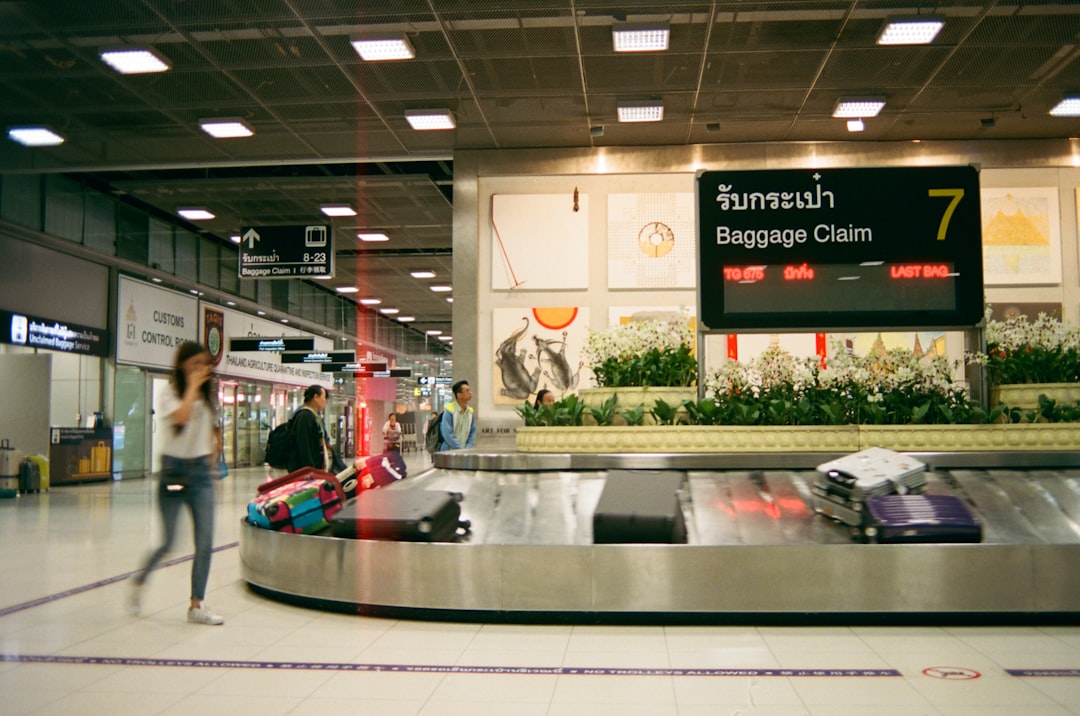
Photo by Rach Teo on Unsplash
Security is where the terminal mood shifts. Conversations get shorter. Roller bags rattle louder. The smell of perfume, coffee, and warm electronics hangs in the air while everyone quietly calculates whether the line in front of them is moving faster. The best fast airport security strategies are not about gaming the system. They are about showing up prepared so you flow through it with minimal friction.
The biggest mistake is treating security like a surprise. By the time you are standing in the queue, every delay is expensive. A forgotten laptop, coins in a coat pocket, lace-up boots, a half-full water bottle, or a toiletries bag buried under three layers of clothes all turn a routine screening into a bottleneck. Good fast airport security habits save minutes for you and money by reducing the chance that you will buy convenience later because you ran out of time.
If you fly often, expedited screening can be one of the highest-value airport hacks to save money over a full year of travel. It sounds strange to call a paid program a money saver, but time has a cost too. Missing a train because security took 35 extra minutes, buying an overpriced snack because you had no time to eat first, or arriving so stressed that you order the first expensive transfer on landing all begin in that queue.
These habits make fast airport security much more realistic:
- Put your passport, boarding pass, and phone in the same easy-access pocket every trip.
- Empty your pockets before joining the line, not when you reach the trays.
- Wear slip-on shoes when possible.
- Keep liquids and small electronics near the top of your bag unless local rules say they can stay packed.
- Use a soft jacket or tote as your catch-all so you are not juggling loose items.
- Choose the lane staffed by efficient agents, not simply the shortest line. A shorter line of confused travelers often moves slower.
- Watch the X-ray belt before placing your tray. If it is backed up, wait two seconds and avoid your bag sitting unattended.
- Repack away from the belt. Do not become the person blocking the area while retying boots and sorting cables.
For regular flyers, the numbers can be persuasive:
| Program | Typical 2026 cost | Best for | Main benefit |
|---|---|---|---|
| TSA PreCheck | About US$78-US$85 for 5 years | Frequent U.S. domestic travelers | Faster screening, shoes and light jackets usually stay on |
| Global Entry | US$120 for 5 years | Regular international travelers to the U.S. | Expedited U.S. immigration plus TSA PreCheck |
| Registered Traveller or eGates where available | Varies by country | Eligible passports on selected routes | Faster border control on arrival |
Fast airport security is also about timing. For domestic flights, arriving 90 minutes before departure can be fine at smaller airports, but major hubs at peak times can punish optimism. For long-haul or holiday periods, the extra buffer is cheaper than the consequences of missing the flight. That is one of the least glamorous airport hacks to save money, but it may be the most reliable.
And one warning that belongs here: avoid public USB charging points unless you are using your own plug and cable. If you need a deeper digital safety reset before travel, Travel Fraud Prevention Tips 2026: A Scam-Proof Trip Plan is a useful companion piece.
Cheap airport food, water, and lounge strategies
Walk into most terminals at lunchtime and you can feel the pricing logic in the air. Families are corralling toddlers, business travelers are balancing laptops on knees, and everyone is hovering near the brightest sandwich fridge. This is where airport spending becomes emotional. Hunger makes every choice feel urgent. The smell of frying oil and coffee drifts across the concourse, and suddenly cheap airport food feels impossible to find.
But cheap airport food exists if you know where to look and when to buy. The first rule is simple: do not arrive at the airport already hungry. Eat before you leave home or before you board the train. The second rule is to treat the terminal as a supplement, not your entire meal plan. A packed sandwich, fruit, and a refillable bottle can save more than any flight-price trick on departure day.
Airport lounge access is another area where travelers often spend from fear rather than value. Lounges can be excellent. They can also be a poor deal if you buy a day pass simply because the terminal looks crowded. The question is not whether airport lounge access sounds luxurious. It is whether it costs less than the food, drinks, workspace, and quiet you would otherwise pay for.
Use these cheap airport food habits first:
- Carry an empty bottle and refill after security. Many airports now have water stations near restrooms and gate areas.
- Pack a real snack, not just candy. Protein travels better than regret.
- Compare landside and airside prices if you arrive early. Some airports have better-value options before security.
- Look for staff-heavy areas or commuter terminals. They often have more realistic pricing than flagship departure halls.
- Buy one solid item and supplement with your own snacks instead of assembling an expensive meal deal.
- Skip airport currency exchange counters when paying for food abroad. A no-foreign-transaction-fee card is usually the cleaner move.
Airport lounge access makes financial sense in a narrower set of situations:
- Your delay is long enough that you would otherwise buy multiple drinks and a meal.
- You need reliable Wi-Fi, showers, or a quiet place to work.
- You already receive airport lounge access through a premium card or status perk.
- You are traveling as a solo business traveler, not paying for a whole family.
A simple comparison helps:
| Scenario | Terminal spend without lounge | Lounge pass cost | Better option |
|---|---|---|---|
| One coffee and quick snack, 60-90 min wait | US$10-US$18 | US$35-US$60 | Skip the lounge |
| Meal, two drinks, charging, 3-hour delay | US$28-US$45 | US$35-US$60 | Lounge can make sense |
| Family of four with light snacks | US$30-US$50 | US$140-US$240 | Skip the lounge |
| Solo traveler with included card benefit | Usually low extra cost | Included | Use the lounge |
A few more food and comfort hacks are worth remembering:
- Fill your bottle before boarding, not only before reaching the gate.
- Bring a tea bag if you like hot drinks; hot water is sometimes easier to find than cheap coffee.
- If you have a long-haul sector ahead, think strategically about comfort purchases. A decent pre-flight meal can be worth more than a neck pillow you will regret packing later.
- If your flight departs late, check whether the airport shops in your terminal stay open. Many travelers assume they do and end up buying the last expensive option standing.
Cheap airport food is not about denying yourself everything pleasant. It is about buying intentionally. One good pastry in a bright morning terminal can feel wonderful. The problem is not the treat. The problem is buying three bad ones because you had no plan.
Boarding, seats, and carry-on tricks that avoid extra fees
Boarding areas have their own theater: the soft chime of priority calls, the rustle of jackets coming back on, the silent panic when passengers realize their roller bag may be too large for the sizer. This is where some of the most effective airport hacks to save money either hold or collapse. A calm boarding routine protects you from last-second charges and from expensive choices later in the trip.
The most important principle is simple: the bag you bring through the terminal should be the bag your airline expects. Low-cost carriers especially make money from ambiguity. If your personal item bulges beyond the frame or your cabin bag is over the limit, the gate is the worst place to negotiate. To avoid baggage fees, measure and test your setup at home. If needed, shift heavy items into your pockets or wear them.
Seat strategy matters too. It affects comfort, timing, and sometimes money. If you travel as a pair, the window-and-aisle approach can occasionally leave the middle seat empty on less full flights. If you are prone to tight connections, sitting closer to the front can save crucial minutes on arrival. And if you know you will need to stand often, an aisle seat may stop you from making misery purchases later, such as lounge access during a connection just to recover from an uncomfortable first flight.
Use these boarding and seat habits:
- Put your liquids, headphones, charger, and passport in one small pouch you can grab quickly.
- Keep medication and one change of essentials in your personal item, not the overhead bag.
- Photograph your checked suitcase before drop-off if you must check one.
- Check the seat map again at check-in opening. Better seats often reappear.
- If you are on a tight connection, sit as far forward as your fare allows.
- If overhead-bin space matters, board when your group is called, not ten minutes later.
- If the airline offers free gate-checking on a full flight and you do not need fast arrival, consider it.
To avoid baggage fees, these details matter more than travelers think:
- Personal item dimensions are often strictly enforced on budget carriers.
- Hard-shell cases have less flexibility than backpacks.
- Duty-free purchases can complicate hand luggage counts on some airlines.
- Coats stuffed with electronics may help at the scale but can slow fast airport security if you overdo it.
For longer flights, comfort is still a cost issue. If you arrive wrecked, the rest of your trip gets more expensive because you spend for convenience instead of curiosity. For sleep and recovery tactics once you are on board, Long-Haul Flight Routine 2026: Sleep Better in Economy is genuinely useful.
Arrival hacks: baggage claim, cash, and getting out fast
Landing should feel like relief, but arrivals halls are where many travelers lose the discipline they kept so carefully on departure. The cabin doors open, phones reconnect, and suddenly everyone is hit by competing sounds: taxi touts, baggage belts grinding into motion, rideshare notifications, exchange counter screens flashing poor rates in bright red digits. The city is almost there, and that is exactly why mistakes happen.
This is also where airport hacks to save money pay off most visibly. If you can leave the terminal smoothly, using a pre-planned transfer and the right payment method, you begin the trip with energy instead of irritation. If not, the first hour becomes a blur of high fares, confusing signage, and expensive shortcuts.
The cleanest arrival routine looks like this:
- Connect to official airport Wi-Fi only if needed, or use an eSIM already installed.
- Skip airport currency exchange unless you need a tiny amount of cash immediately.
- Follow signs for rail, metro, or official bus services before opening rideshare apps.
- If you must take a taxi, use the official queue and confirm how payment works before getting in.
- Screenshot your hotel address and local language version before the flight.
- If you checked a bag, stand near the belt where larger bags appear, not where the crowd clumps.
A few arrival cost traps deserve special mention:
- Dynamic currency conversion: when a card machine abroad offers to charge you in your home currency, decline and pay in local currency.
- Airport ATMs from independent operators often add higher fees than bank-owned machines in the city.
- Rideshare surge pricing can spike at major airports exactly when planes land in waves.
- Baggage carts are free in some airports and paid in others. Know before you assume.
One of the sharpest airport hacks to save money is to have two airport transfer options ready before landing: your ideal route and your fallback route. Maybe the train is fastest, but if there is a strike or delay, you already know the express bus stop. That tiny bit of planning turns chaos into choice.
How to get there
Getting to and from the airport is one of the least glamorous parts of travel, yet it can swing the budget dramatically. Early-morning darkness, wet pavement, rolling suitcases on station tiles, the low hum of commuter trains before dawn: this is where your trip really begins. And because it begins before coffee for many people, it is exactly when overpriced decisions sneak in.
The smartest airport transfer options depend on city layout, time of day, and how much luggage you carry. A taxi can be worth it for four people with heavy bags. For one traveler with a backpack, rail usually wins. The trick is not to memorize one rule, but to know the likely cheapest and fastest route for your airport before departure.
Here are practical airport transfer options for four major hubs:
| Airport | From city center | Cheapest useful option | Fastest public option | Taxi or rideshare typical cost |
|---|---|---|---|---|
| London Heathrow, LHR | Paddington or central London | Piccadilly line, about 50-60 min, around £5.60 | Heathrow Express, about 15 min from Paddington, often £25+ walk-up, cheaper if booked ahead | £55-£90 from central London |
| New York JFK, JFK | Manhattan | Subway plus AirTrain, about 60-75 min, around US$11.40 total | LIRR to Jamaica plus AirTrain, about 35-45 min, roughly US$13.25-US$20.25 plus timing differences | About US$70 flat fare from Manhattan before tolls and tip |
| Paris Charles de Gaulle, CDG | Central Paris | RER B, about 35-40 min, roughly €11-€13 | Taxi can be faster off-peak but far pricier | Around €55 right bank and €62 left bank fixed fare, traffic dependent |
| Singapore Changi, SIN | Marina Bay or central Singapore | MRT, about 35-40 min, roughly S$2-S$3 | Taxi, about 20-25 min off-peak | Around S$25-S$40 depending on surcharges |
Useful official links:
- Heathrow transport information: https://www.heathrow.com/transport-and-directions
- Heathrow Express: https://www.heathrowexpress.com
- JFK AirTrain and ground transport: https://www.jfkairport.com/to-from-airport
- Paris airport transport: https://www.parisaeroport.fr/en/passengers/access/paris-charles-de-gaulle
- Changi transport guide: https://www.changiairport.com/en/airport-guide/transport.html
A few rules make airport transfer options easier almost everywhere:
- If the city has an airport rail link, compare it before booking a taxi.
- If you land late, confirm the time of the last train before you fly.
- If you are four people or more, price one taxi against multiple rail tickets.
- If you carry only a backpack, public transport usually becomes much more comfortable.
Things to do
A long layover does not have to mean sitting under cold air-conditioning beside an overpriced snack shelf. Some airports are now destinations in miniature, with gardens, galleries, food halls, and useful spaces that feel closer to a compact neighborhood than a transit box. The trick is to choose activities that either save money, improve comfort, or make the wait feel purposeful.
That does not mean chasing every attraction just because it exists. Good airport hacks to save money also mean knowing when free wandering beats paid entertainment. One calm walk, a refill, a proper meal, and a shower can be more valuable than a rushed shopping spree in duty free.
If you have time, these airport activities are genuinely worth knowing:
- Explore Jewel Changi, 78 Airport Boulevard, Singapore. The indoor waterfall and garden spaces are free to enjoy, and the basement food options are often better value than many airside snacks.
- Visit the Rijksmuseum annex in Holland Boulevard at Amsterdam Schiphol, AMS. It is free and ideal for a cultural reset during a connection.
- Walk through Haneda Airport Garden and the Edo-style dining street near Terminal 3, Tokyo Haneda, HND. It feels far more local than a generic food court.
- Use the indoor forest and public art spaces at Hamad International Airport, DOH, instead of paying for distractions you do not need.
- Plane-spot at the In-N-Out Burger near LAX, 9149 S Sepulveda Boulevard, Los Angeles, if you have a long landside break and want a cheap meal with a view.
- Stretch and shower at an airport gym or transit hotel if your layover is over six hours. This can be better value than buying airport lounge access only for comfort.
- Shop for practical items at a pharmacy or convenience store in the terminal instead of designer retail if you forgot something basic.
The best activity is often the one that restores your body. Walking a quiet terminal corridor at sunrise, watching the tarmac glow orange behind glass, can do more for your mood than duty-free browsing ever will.
Where to stay
Airport hotels are often dismissed as bland emergency boxes, but the good ones can save a trip. If you land after midnight, face an early departure, or have a brutal connection, sleeping near the terminal can be cheaper than a city hotel plus late-night transfers. It can also protect the first and last day of a trip from being swallowed by logistics.
The trick is to book the airport hotel that fits the purpose. If you only need six hours and a shower, an airside capsule or compact room may be perfect. If you are resetting after a long-haul flight, paying more for quiet windows, proper blackout curtains, and walkable terminal access can be worth every cent.
Here are reliable airport-stay ideas by budget tier:
| Budget tier | Hotel | Airport | Typical 2026 price |
|---|---|---|---|
| Budget | ibis budget Amsterdam Airport | AMS | €90-€140 |
| Budget | Holiday Inn Express London Heathrow T4 | LHR | £110-£170 |
| Budget | YOTELAIR Paris Charles de Gaulle Terminal 2E | CDG | €120-€170 |
| Mid-range | Hyatt Place Frankfurt Airport | FRA | €140-€220 |
| Mid-range | Hilton Munich Airport | MUC | €180-€280 |
| Mid-range | Crowne Plaza Changi Airport | SIN | S$260-S$380 |
| Luxury | TWA Hotel | JFK | US$280-US$450 |
| Luxury | Sofitel Athens Airport | ATH | €260-€420 |
| Luxury | Fairmont Vancouver Airport | YVR | C$320-C$480 |
A few notes on when each works best:
- ibis budget Amsterdam Airport is practical for a cheap overnight before a Schengen departure, especially if all you really need is a bed and shuttle.
- Holiday Inn Express Heathrow T4 is a smart value play when you want direct terminal access without central London prices.
- YOTELAIR at CDG is best for travelers who value airside convenience over room size.
- Hilton Munich Airport is one of the easiest premium choices for a genuinely restful airport night because you stay inside the flow of the terminal.
- TWA Hotel at JFK is part transport solution, part design experience, and most worth it when you have the time to enjoy it rather than simply collapse into it.
Booking platforms and official hotel pages change rates constantly, so compare direct booking against https://www.booking.com or https://www.hotels.com before you lock it in.
Where to eat
Airport dining can feel like a tax on hunger, but some terminals still offer meals with real local character and fairer pricing than the generic sandwich chains near the gates. The smell changes from place to place: ramen broth at Haneda, toasted bread and espresso in Europe, chili and grilled meat in North America, pandan and fried garlic in Southeast Asia. That sensory shift is often your first taste of the destination.
If your goal is cheap airport food, focus on food halls, landside public areas, and restaurants used by airport workers or locals meeting arrivals. These spots often beat the premium grab-and-go counters hidden near long-haul gates.
Good airport eating options to know:
- Jewel Changi Food Republic, Singapore Changi, SIN. Expect meals around S$8-S$15, with Singaporean staples like chicken rice, laksa, and kaya toast.
- Edo Koji and Haneda Airport Garden, Tokyo Haneda, HND. Soba, ramen, curry rice, and set meals often feel much better value than packaged snacks.
- Rodilla at Madrid-Barajas T4, MAD. A practical stop for sandwiches and coffee when you need something quick under €10.
- Simit Sarayi at Istanbul Airport, IST. Tea and a simit can be far cheaper than a full café breakfast.
- Briciole Bar area and simpler cafés at Rome Fiumicino, FCO. Look for espresso and pastry combinations before defaulting to packaged food.
- In-N-Out near LAX if you have a landside break. Not technically inside the airport, but often a better-value meal than terminal fast food.
To keep cheap airport food realistic, remember these rules:
- Eat the local simple thing, not the imported branded thing.
- Breakfast pricing is often gentler than dinner pricing in terminals.
- Refill water before you buy drinks.
- If you are traveling with children, carry backup snacks even if you plan to eat at the airport.
Practical tips
Airport days are part choreography, part weather system. A freezing cabin can follow a sticky taxi ride in tropical heat. A smooth spring departure can turn into summer thunderstorm delays by the time you connect. The best airport hacks to save money are practical partly because they respect this uncertainty instead of pretending it does not exist.
Think of airport preparation in layers. Your clothing should handle curbside heat, terminal air-conditioning, and cabin chill. Your money setup should work even if Wi-Fi fails. Your documents should be reachable even if your main phone battery dips lower than expected. These habits are not glamorous, but they are the difference between a composed arrival and an expensive one.
Keep these practical points in mind:
- Best months for cheaper flying are often late January to early March and late September to early November, outside school holidays and major festival peaks.
- Early-morning departures are often less delayed, but they may require pricier nighttime transfers if you do not plan ahead.
- Dress in layers: T-shirt, light mid-layer, compact outer layer, and comfortable slip-on shoes.
- Carry a pen for forms where digital systems still fail.
- Use local currency on card machines abroad and decline dynamic currency conversion.
- Keep one backup payment method separate from your main wallet.
- For U.S. and Europe delays, know your passenger-rights basics. The EU air passenger rights portal is useful: https://europa.eu/youreurope/citizens/travel/passenger-rights/air/index_en.htm
- If you rely on maps on arrival, set up your eSIM or roaming plan before departure.
- Take a screenshot of your hotel address, terminal map, and transfer instructions.
- If you want to avoid baggage fees, build your outfit around the heaviest shoes and coat.
A small packing list for airport comfort and savings:
- Empty water bottle
- Portable charger and plug
- Snacks with protein
- Compact toiletries in a clear pouch if required
- Pen, tissues, and any medication
- Compression socks for longer flights
- Lightweight tote for reorganizing after fast airport security
Finally, kindness still has practical value. Polite travelers often get clearer help, better rebooking options, and more useful guidance from gate agents and check-in staff. It will not create miracles, but it can absolutely improve outcomes when a day goes sideways.
FAQ
Do airport hacks to save money really work on budget airlines?
Yes, and often more than anywhere else. Budget carriers tend to charge for the exact things travelers forget to plan for: bag size, seat selection, airport check-in, and last-minute printing or payment quirks. The best airport hacks to save money on these airlines are strict bag compliance, online check-in, and arriving with food and water sorted.
Is TSA PreCheck or Global Entry worth the fee?
If you fly regularly from the United States, often yes. Fast airport security saves time repeatedly, and that time often turns into real money saved on missed trains, rushed meals, and stress spending. Global Entry is especially strong value if you travel internationally more than once or twice a year.
Is airport lounge access cheaper than buying food in the terminal?
Sometimes, but not always. Airport lounge access usually makes sense for solo travelers with long delays, expensive terminal dining, or included card benefits. It is much less compelling for short waits or families paying for multiple passes.
What is the easiest way to avoid baggage fees?
Use a correctly sized personal item, weigh your bag at home, and wear your bulkiest clothing. If your trip allows it, learning to avoid baggage fees is one of the most reliable airport savings of all.
Should I exchange money at the airport?
Usually no. Airport counters tend to offer poor rates. Withdraw later from a bank ATM if needed, or use a card with no foreign transaction fees and pay in local currency.
Airports will probably never feel truly relaxing. They are too bright, too timed, too full of rolling wheels and interrupted thoughts for that. But they do become easier when you understand where the leaks are. The best airport hacks to save money are not flashy. They are the quiet habits that keep your trip intact: a bottle packed empty, a bag weighed at home, a train chosen before the taxi line, a meal planned before hunger turns expensive. Get those right, and the terminal stops feeling like a trap. It becomes what it should have been all along: just the way through.