Rome Tourist Scams in 2026: Outsmart the First 24 Hours
The easiest money a scammer makes in Rome is often earned before a traveler has seen the Colosseum. Rome tourist scams thrive in that fuzzy stretch between landing and settling in: your phone battery is low, your shoulders are tight from the flight, the street names feel unfamiliar, and the first person who sounds confident can seem trustworthy. That is why the smartest way to think about Rome tourist scams is not as random bad luck, but as a predictable part of arrival-day pressure.
Rome is beautiful in a way that can disarm your instincts. Warm stone glows honey-gold at dusk. Scooter engines buzz between church domes and umbrella pines. Espresso bars spill the smell of coffee and butter into narrow streets while fountains hiss softly in the background. It is easy to let the city take over your attention. That is exactly when small deceptions work best: an unofficial taxi at Fiumicino, a fake guide outside the Vatican Museums, a petition team around Termini, a bracelet seller who steps into your personal space before you have time to refuse.
This guide looks at Rome tourist scams through a more useful lens than a simple list of tricks. Instead of treating every con like an isolated event, it focuses on the first 24 hours - when fatigue, excitement, and logistics create the biggest openings. You will see where the pressure points are, how the common setups actually unfold, and what practical routines shut most of them down fast.
Why Rome tourist scams catch smart travelers
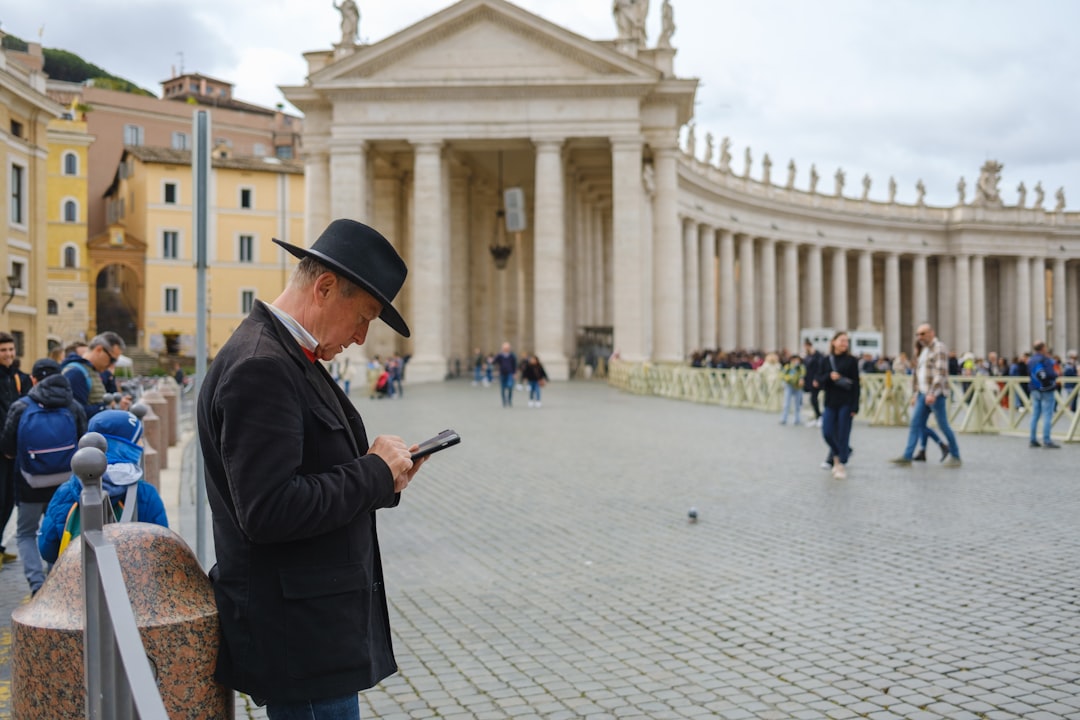
Photo by Josè Maria Sava on Unsplash
Most travelers imagine scams happen because someone was careless. In Rome, that is usually not true. The sharper explanation is friction. A traveler lands at FCO after a night flight, stands in a bright arrivals hall, needs euros, data, transport, and maybe a bathroom, and suddenly has to make five decisions in ten minutes. Rome tourist scams feed on that compressed decision-making. A scammer does not need you to be gullible; they only need you to be tired enough to accept a shortcut.
The city itself adds layers to the problem. Rome is walkable but sprawling, full of traffic noise, changing street levels, and tourist zones where genuine helpers and opportunists occupy the same pavement. Around Termini, the rush of rolling suitcases and diesel buses creates a constant sense of movement. Near the Colosseum and Vatican, crowds bunch and loosen without warning. In those conditions, pressure feels normal, and anything that feels normal is harder to question.
Health matters here too. Dehydration, jet lag, heat, and hunger make people less skeptical. In summer, the air can feel thick by midday, especially on long stone avenues with little shade. Travelers who would never hand over cash too quickly at home do exactly that abroad because they are light-headed, behind schedule, and trying to reduce discomfort. The best defense against Rome tourist scams is partly street smarts and partly body management.
Here are the conditions that make travelers easier targets in Rome:
- You have just landed and have not yet bought data or confirmed your route.
- You are carrying luggage, making you slower and more visible.
- You are arriving at Termini, Tiburtina, FCO, or Ciampino during a rush period.
- You are walking while looking at your phone or printed booking.
- You are overheated, hungry, or low on sleep.
- You are trying to save five minutes and trust the first person who intervenes.
- You have not checked official taxi fares, train times, or ticket rules in advance.
The warning signs most Rome tourist scams share
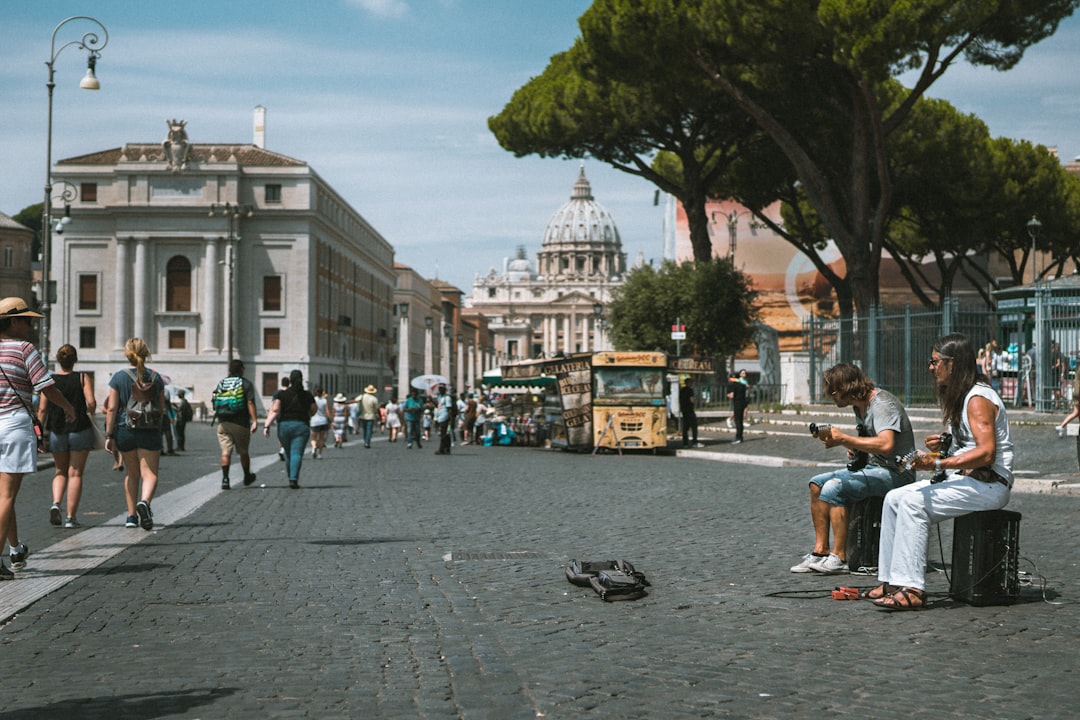
Photo by David Ramírez on Unsplash
Before you learn the individual setups, it helps to recognize the common rhythm. Rome tourist scams rarely begin with an obvious threat. They begin with confidence. Someone steps into your path with certainty, not hesitation. They sound like they belong there. They tell you the train is difficult, the line is too long, the ticket machine is broken, the site is closed, your hotel has an issue, or they can make life easier right now.
That is the emotional pattern to watch: urgency mixed with helpfulness. The scammer is not really selling a service. They are selling relief. In the moment, relief feels valuable enough that people stop asking who benefits. You do not need to become paranoid in Rome, but you do need to become slightly slower. A ten-second pause solves an astonishing number of problems.
The city gives you sensory clues too. Legitimate transport desks look boring. Official ticket counters are well marked. Real staff members are usually busy rather than overfriendly. Pressure, by contrast, is theatrical. A hand on your arm, a sudden wave, a half-joking insistence, someone trying to move you away from a signboard or machine - those physical cues matter.
Use this fast filter whenever a stranger approaches you:
- Did they approach you first in a tourist-heavy area?
- Are they asking you to move to a second location?
- Are they touching you, your bag, or your luggage handle?
- Are they creating urgency before you have verified anything?
- Are they steering you away from an official desk, queue, or website?
- Are they asking for cash when card payment should be normal?
- Are they offering an unusually easy fix to a stressful problem?
If the answer is yes to even two of those, step back, stop speaking, and verify independently.
Airport taxi scams, unofficial transfers, and Termini hustles
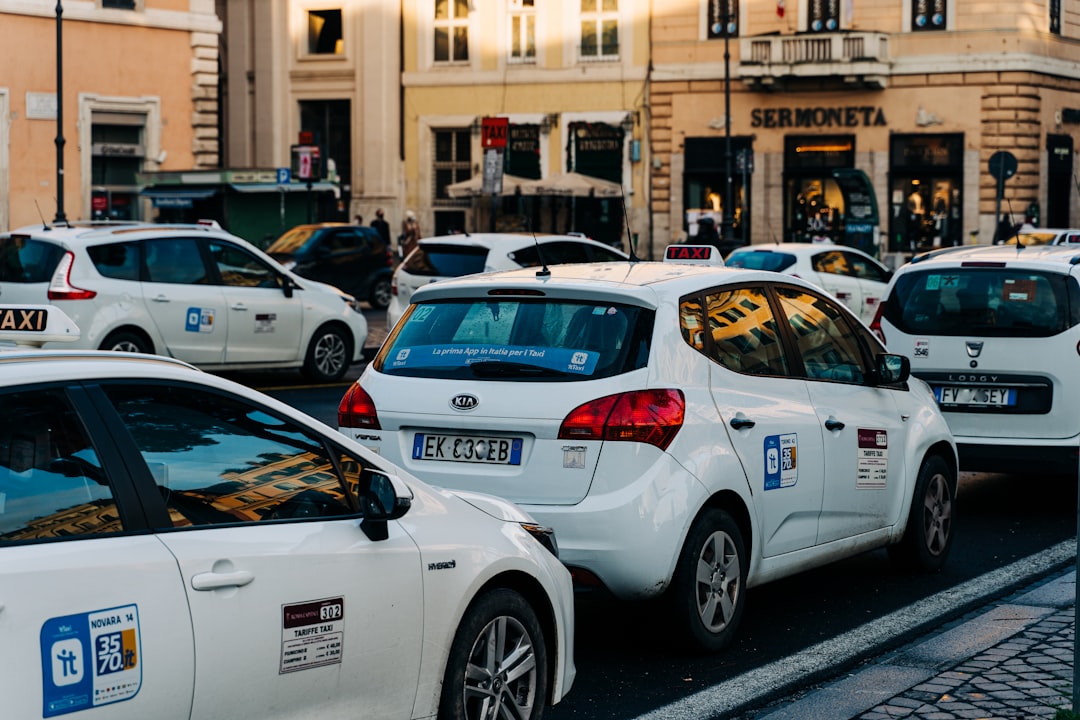
Photo by Gabriella Clare Marino on Unsplash
If you want to understand Rome tourist scams, start at the airport curb. Fiumicino and Ciampino are where many travelers make their first expensive mistake. After a flight, the temptation is obvious: skip the hassle, get in the first car, reach the hotel. But unofficial drivers know exactly how drained long-haul passengers feel. Some approach in arrivals. Others wait just beyond the official taxi flow and offer what sounds like a private transfer at a friendly rate, only to add luggage fees, demand cash, or quote a price far above the legal flat fare.
At Fiumicino, the safest thing about the official system is that it is dull. Official white taxis queue outside designated stands, and the fixed fare into central Rome within the Aurelian Walls is typically around 55 euros. That price already includes luggage for standard service. If someone intercepts you before the stand, that is the first red flag. At Ciampino, the fixed fare into central Rome is usually around 40 euros. Scammers rely on the fact that many visitors do not know those numbers.
Termini creates a second version of the same problem. Arriving by Leonardo Express feels organized until you step outside into bus lanes, taxis, fast walkers, and people who look like they know exactly where your hotel should be. A driver might claim your address is difficult, that the meter would be worse than a flat deal, or that public transport is unsafe at night. Sometimes a bystander joins the conversation to reinforce the story. Rome tourist scams often use two people because social proof feels convincing when you are carrying bags.
How to shut down transfer scams in Rome:
- Use the official taxi rank only. Do not follow anyone who approaches you inside arrivals.
- Confirm the fixed fare before the door closes if you are going to central Rome.
- If the driver refuses the fixed fare or pushes for cash only, leave before the trip begins.
- Screenshot your hotel address in Italian and keep it offline.
- Use Leonardo Express from FCO to Termini if you want the simplest rail option. The journey is about 32 minutes and usually costs 14 euros.
- From FCO, the FL1 regional train can be a better fit for Trastevere, Ostiense, or Tiburtina and generally costs about 8 euros.
- From Ciampino, official shuttle buses to Termini usually cost around 6 to 7 euros.
- If you prefer private transfers, pre-book through your hotel or a reputable operator before departure.
- Keep your luggage in the trunk only after you are sure the car is official and the fare is understood.
If you want to reduce stress before landing, it helps to pair this with a broader arrival plan. Save Money at Airports in 2026: Beat Queues, Skip Markups complements the same idea from a different angle: fewer rushed decisions, fewer openings for bad actors.
Pickpocket distraction scams on Metro A, Metro B, buses, and piazzas
Not all Rome tourist scams involve direct payment. Some are really theft wrapped in theater. The city is famous for distraction pickpocketing because the setting is perfect: crowded Metro cars, luggage bottlenecks, bus doors, escalators, and dense plazas where bodies naturally brush against one another. At Termini, Spagna, Barberini, Colosseo, and Ottaviano, the feeling of compression is familiar enough that a bump rarely seems suspicious.
The most effective setups are small and fast. A person blocks the door as passengers board. Another presses in from the side. A third creates confusion with a map, a question, or a dropped object. On buses, a hand can enter an open backpack in seconds. In piazzas, a stain on your shirt, a child underfoot, or a clipboard waved across your chest can divert your eyes long enough for a wallet to vanish. The physical environment of Rome - uneven paving, narrow boarding spaces, sudden clusters of selfie-takers - makes these moves easier.
The reason experienced travelers still get caught is emotional, not technical. They are trying not to look rude. They hesitate to guard space, slap away a hand, or refuse contact. But with Rome tourist scams that depend on distraction, clear boundaries are more important than politeness.
Protect yourself in crowds with these habits:
- Wear your bag crossbody and keep it in front on Metro trains and buses.
- Use zipped compartments only. Open tote bags are an invitation.
- Keep your phone out of your back pocket and your wallet out of your rear jeans pocket.
- Split money and cards between two places so one loss is not total.
- Step away from anyone trying to place a petition board, bracelet, flower, or paper in your hands.
- If something spills on you, clean it yourself and move toward a shop or staffed area.
- Board public transport with one hand on your bag zipper and the other free.
- Avoid standing by train doors with valuables accessible.
- If a crowd suddenly compresses for no clear reason, assume that is the moment of risk.
If you are traveling alone and want a city-specific mindset for moving confidently without looking vulnerable, Porto Solo Travel 2026: A Street-Smart Guide to Going Alone has useful habits that translate well beyond Portugal.
Fake guides, fake tickets, and the attraction-is-closed story
Few Rome tourist scams are more frustrating than the ones that attach themselves to places you were excited to see. Around the Colosseum, Roman Forum, Vatican Museums, St. Peter's Square, and Galleria Borghese, the line between legitimate tourism activity and opportunistic selling can blur quickly. The scene feels official because everyone is talking about timed entries, skip-the-line access, and sold-out slots. That vocabulary is useful for scammers because it sounds plausible.
One classic setup is the closed-or-late trick. Someone near the approach tells you the site is unexpectedly closed, partially closed, or much too crowded for same-day entry, then offers an alternative tour or directs you to a partner office. Another version is the fake guide with a lanyard who speaks rapidly, flashes a badge too quickly to inspect, and pushes a private tour at a premium. In peak season, there are also fake or inflated tickets sold in the immediate orbit of major attractions. Travelers pay because fear of missing out is powerful in Rome.
The best defense is simple but requires discipline: buy from the official site or a major licensed operator before you arrive, and walk directly to the main entrance. Do not let sidewalk commentary change your plan until you have verified it yourself. Rome tourist scams in attraction zones work because people trust the nearest voice more than the official website already sitting on their phone.
Use these rules around major sights:
- For the Colosseum and Roman Forum, check and book via https://colosseo.it/en/
- For Vatican Museums, use https://www.museivaticani.va/content/museivaticani/en.html
- For city planning and updates, use https://www.turismoroma.it/en
- Never buy high-value entry tickets from someone who stops you on the street.
- Ask to see a licensed guide credential and take time to read it.
- If someone says a site is closed, walk to the official gate or ticket office and confirm.
- Be cautious of people offering to help you use a ticket machine or QR code kiosk.
- Do not scan random QR codes posted on temporary paper signs near attractions.
A useful side note: a little cultural confidence helps here. Knowing how to decline politely without inviting debate can save you energy all day. Travel Customs by Country: 8 Etiquette Lessons for 2026 is helpful if you want to sound firm without sounding combative.
Safe payment abroad in Rome: ATMs, card readers, and public Wi-Fi travel security
Some of the most modern Rome tourist scams do not look old-fashioned at all. They involve a glowing ATM screen, a contactless terminal, a fake guest Wi-Fi network, or a QR code pasted over another QR code. Because Rome combines ancient streets with intensely digital travel behavior, many visitors let their guard down around technology. They assume the risky part is the alleyway, not the screen.
ATMs are a good example. In busy tourist zones, the safest machine is usually the least convenient one: inside a bank branch, under a camera, during opening hours, with a solid card slot and no one hovering nearby. Standalone cash machines with flashy exchange language or heavy tourist branding are more likely to carry poor rates or feel easier for tampering. Card terminals in restaurants and taxis are usually safe, but the moment you lose sight of your card or let someone redirect the currency choice without explanation, the situation changes.
Public Wi-Fi creates a quieter risk. In airport lounges, cafes, and hotel lobbies, fake networks with familiar-looking names are not hard to set up. A traveler logs in, checks banking or email, and hands over useful information without any dramatic encounter. Rome tourist scams increasingly blend physical and digital cues: someone helpful points you to a network, a QR menu, or a payment page, and the harm happens invisibly.
Use these payment and data habits in Rome:
- Withdraw cash from bank-branch ATMs when possible.
- Tug lightly on the card reader and look for loose or bulky overlays.
- Cover the keypad every time you enter your PIN.
- Choose to pay in euros, not your home currency, unless you have confirmed the rate.
- Keep one backup card stored separately from your main wallet.
- Turn on transaction alerts before departure.
- Use eSIM data or roaming for sensitive tasks rather than open Wi-Fi.
- Disable auto-join on public networks.
- Verify Wi-Fi names with staff, not with a sign taped to a wall.
- Avoid logging into banking, insurance, or government accounts on public networks.
If you like traveling with a lean digital setup, Travel Apps for Every Trip in 2026: The 7-Icon Rule is a smart reminder that fewer apps often means less confusion when you need to verify something quickly.
Nightlife, restaurant, and street-seller traps after dark
Rome changes character after sunset. The stone cools a little, glasses clink in Trastevere, and candlelight spills across narrow lanes. Campo de' Fiori hums with groups moving between bars. Piazza Navona stays bright and theatrical. It is one of the pleasures of the city - and one of the moments when travelers drift from alert to carefree. Rome tourist scams after dark are less about formal fraud and more about social pressure, inflated prices, and situations that become expensive because you were trying to avoid awkwardness.
Street-seller tactics are common near romantic viewpoints and crowded evening routes. Roses, glowing toys, bracelets, and small trinkets are pushed toward your hand or placed near your table. The item becomes a pretext for payment or distraction. Around nightlife zones, overly friendly strangers may suggest a better bar, a private club, or a shortcut. Sometimes the end result is merely a terrible bill. Sometimes it is a far less comfortable problem involving isolation, aggressive staff, or a card terminal you are not given time to inspect.
Restaurant friction can be milder but still irritating. Menus without printed prices, verbal specials with no cost mentioned, bread or extras presented as if complimentary, or a waiter pushing cash in a way that feels designed to avoid a paper trail - all of it deserves attention. Rome is full of wonderful restaurants; there is no reason to surrender control just because a square is pretty and the music sounds good.
For safer evenings in Rome:
- Check the menu and prices before sitting down.
- Ask whether service, bread, or extras carry a charge if it is unclear.
- Request the printed bill before paying.
- Keep your drink in sight in busy nightlife areas.
- Do not follow strangers to a second venue because the first one is supposedly touristy.
- Ignore unsolicited gifts at the table.
- Use licensed taxis or app-based rides after late nights rather than negotiating from the street.
- If a place feels pushy before you order, leave before you owe anything.
Hotel, apartment, and check-in problems that feel legitimate
Some Rome tourist scams are quieter because they imitate normal lodging friction. A driver says your hotel is closed or overbooked and offers to take you somewhere else. A caller claiming to be reception asks you to confirm card details. An apartment host messages outside the booking platform and asks for a last-minute deposit by bank transfer. None of these setups feel cinematic, which is why they work.
Rome's apartment market is large, and self-check-in has made convenience normal. But convenience can hide weak verification. The safest route is to keep communication inside the booking platform, confirm the address independently on a map, and never accept a replacement property or payment request until the platform itself has verified the issue. If you arrive late, it is worth paying slightly more for a place with consistent reviews mentioning clear check-in and honest staff.
Use these accommodation rules:
- Never let a driver redirect you to a different hotel or apartment.
- Confirm your property on the map before arrival and save the route offline.
- Keep all pre-arrival payment inside the official booking platform.
- If reception calls asking for full card details, hang up and walk to the front desk.
- Photograph your room, safe, and any existing damage on arrival if something feels off.
- Do not hand over your passport as informal collateral to anyone other than standard legal check-in procedures.
A first-day routine that cuts your risk fast
The best response to Rome tourist scams is not to memorize every possible trick. It is to build a routine strong enough that most scams never get a chance to start. Picture your arrival as a sequence. Wheels down. Passport control. Official ATM or no ATM. eSIM active. Train or official taxi only. Hotel check-in. Water. Shower. Fifteen quiet minutes. Then sightseeing. Once you frame the day like that, the city becomes much easier to manage.
This matters because the first impulse in Rome is often emotional. You land and want to begin immediately. You want pasta, a piazza, a perfect first photo, maybe sunset by the Forum. But the city rewards the traveler who sets the foundation first. Charge your phone. Confirm your route. Put only the day's cash in your easy-access pocket. Save your booking PDFs offline. If you like keeping tickets, notes, and addresses in one place, a simple trip board in TravelDeck can help you verify details without digging through email on a crowded platform.
Once those basics are done, Rome feels less slippery. You stop reacting and start choosing. That is the shift that weakens Rome tourist scams more than any clever comeback.
Use this first-day checklist:
- Buy or activate data before leaving the airport.
- Screenshot your accommodation address and nearest transit stop.
- Decide on your airport transfer before landing, not after.
- Carry water and have a quick snack before making complex decisions.
- Move your bag to the front before entering any train, bus, or queue.
- Keep your passport deep in your bag or hotel safe, not in an easy outer pocket.
- Book at least one major sight in advance so you are not vulnerable to street sellers.
- Use one card for daily payments and keep a backup elsewhere.
- Set a firm personal rule: no gifts, no petitions, no spontaneous tickets, no second locations.
- Treat fatigue as a safety issue, not just a comfort issue.
Come arrivare / How to get there
Arriving in Rome safely is half the battle. The city has excellent official connections, but the right choice depends on your airport, your budget, and where you are sleeping. If you are staying near Termini, the simplest line from Fiumicino is usually the Leonardo Express. If you are heading to Trastevere, Ostiense, or Tiburtina, the FL1 can be more useful and cheaper. From Ciampino, buses are often the best-value option, while official taxis make sense if you arrive late or with heavy luggage.
Train arrivals are straightforward too. Rome is connected to Florence, Naples, Milan, and Venice by high-speed rail, which often beats flying once you factor in airport time. Cruise passengers landing at Civitavecchia can also reach Rome without much trouble, though luggage and timing deserve planning.
For official transport and planning, these links are the most useful:
- Aeroporti di Roma: https://www.adr.it/web/aeroporti-di-roma-en
- Trenitalia: https://www.trenitalia.com/en.html
- Italo: https://www.italotreno.com/en
- ATAC Rome public transport: https://www.atac.roma.it/en
- Rome tourism board: https://www.turismoroma.it/en
| Route | Best option | Typical time | Typical cost | Scam-resistant note |
|---|---|---|---|---|
| Fiumicino Airport FCO to Roma Termini | Leonardo Express | 32 min | 14 euros | Buy from official machines or railway apps only |
| Fiumicino Airport FCO to Trastevere/Ostiense/Tiburtina | FL1 regional train | 27-48 min | 8 euros | Useful if your hotel is not near Termini |
| Fiumicino Airport FCO to central Rome | Official white taxi | 40-60 min | about 55 euros flat | Use the rank only; avoid solicitors inside arrivals |
| Ciampino Airport CIA to Roma Termini | Shuttle bus | 35-45 min | 6-7 euros | Book online or buy at official counters |
| Ciampino Airport CIA to central Rome | Official white taxi | 35-50 min | about 40 euros flat | Confirm the fixed fare before departure |
| Florence SMN to Roma Termini | High-speed train | 1 hr 30 min | 25-60 euros | Faster and calmer than flying |
| Napoli Centrale to Roma Termini | High-speed train | 1 hr 10 min | 15-50 euros | Excellent for short Italy itineraries |
| Civitavecchia to Roma Termini | Regional train | 70-90 min | 5-15 euros | Validate and board through official rail channels |
Cosa fare / Things to do
Rome rewards early mornings and pre-booked afternoons. The safest sightseeing rhythm is simple: one major timed attraction, one neighborhood food stop, one open-air walk, then a relaxed evening in an area you already understand. That pattern keeps you away from the most aggressive street selling moments and reduces the chance that you buy expensive last-minute tickets out of panic.
It also makes the city feel richer. The smell of pine on the Appian Way, the cool museum air after a hot pavement walk, the chatter at a market counter in Testaccio - these are the details that linger far longer than any rushed queue. You do not need to hide from Rome tourist scams by staying indoors; you just need to enjoy Rome on your own terms.
Try these activities:
- Colosseum and Roman Forum, Piazza del Colosseo. Book the first morning slot you can get from the official site.
- Vatican Museums, Viale Vaticano. Pre-book and arrive with your QR code already saved offline.
- Mercato Testaccio, Via Aldo Manuzio 66b. Great for lunch, people-watching, and a calmer local feel.
- Galleria Borghese, Piazzale Scipione Borghese 5. Timed entry only, which makes the visit smoother and less stressful.
- Giardino degli Aranci and the Aventine area, Piazza Pietro d'Illiria. Ideal at golden hour.
- Appia Antica Regional Park, Via Appia Antica. Rent a bike or walk a section in the cooler part of the day.
- Palazzo Massimo alle Terme, Largo di Villa Peretti 2. One of the best places to escape crowds and summer heat.
- Trastevere evening walk from Piazza Santa Maria in Trastevere toward the Tiber. Go before dinner service peaks if you prefer a calmer atmosphere.
Dove dormire / Where to stay
Where you sleep changes how exposed you feel. Staying near a major rail hub can be practical, but the atmosphere around Termini is more hectic and opportunistic than in quieter neighborhoods. If it is your first time in Rome, areas like Monti, Centro Storico, Prati, Testaccio, and parts of Trastevere often strike a better balance between convenience and calm. The point is not to avoid city life; it is to avoid beginning and ending every day in maximum friction.
Recent reviews matter more than star ratings. Look for comments on late check-in, honesty, neighborhood feel, sound levels, and whether the staff help guests book official taxis or airport transfers. Rome tourist scams shrink dramatically when you have a solid base and a reliable front desk.
Budget
- The RomeHello, Via Torino 45 - usually about 45-120 euros for dorms and simple private rooms depending on season.
- YellowSquare Rome, Via Palestro 51 - roughly 40-130 euros; social but organized, near Termini.
- Generator Rome, Via Principe Amedeo 257 - about 35-140 euros; practical if you want transport access.
Mid-range
- Hotel Artemide, Via Nazionale 22 - roughly 220-380 euros; dependable service and excellent central position.
- Hotel Centro Cavour, Via Cavour 237 - around 150-250 euros; walkable to Monti and major ruins.
- The Hoxton Rome, Largo Benedetto Marcello 220 - about 180-320 euros; good for a calmer base in Parioli-Salario.
Luxury
- Hotel de Russie, Via del Babuino 9 - often 900-1600 euros; prime location near Piazza del Popolo.
- J.K. Place Roma, Via di Monte d'Oro 30 - usually 700-1400 euros; intimate and polished.
- Rome Cavalieri, Via Alberto Cadlolo 101 - around 450-900 euros; less central but spacious and resort-like.
Dove mangiare / Where to eat
Food is one of the great joys of Rome, and it is also one of the easiest ways to avoid bad experiences: eat where prices are visible, reservations are clear, and the room feels more interested in cooking than in pulling tourists off the street. The smell to follow is not someone waving a laminated menu in your face; it is toasted bread, pecorino, frying supplì, coffee, and sauce hitting a hot pan.
Rome's classic dishes are simple enough that quality shows quickly. Carbonara should taste rich but not heavy. Cacio e pepe should feel sharp, glossy, and peppery rather than clumped. Pizza al taglio should crackle at the edges. If a restaurant near a famous monument looks generic, has photos of every dish, and staffs the sidewalk like a sales team, keep walking.
Good places to start:
- Roscioli Salumeria con Cucina, Via dei Giubbonari 21 - famous, busy, and worth reserving for pasta and Roman classics.
- Pizzarium Bonci, Via della Meloria 43 - excellent pizza al taglio near the Vatican area.
- Trattoria Pennestri, Via Giovanni da Empoli 5 - polished Roman cooking in Ostiense.
- Da Enzo al 29, Via dei Vascellari 29 - classic Trastevere favorite; expect a wait.
- Testaccio Market, Via Beniamino Franklin 12E - ideal for sampling multiple dishes at lunch.
- Supplizio, Via dei Banchi Vecchi 143 - great stop for supplì and a light snack between walks.
Typical price guide:
| Experience | What to expect | Typical cost |
|---|---|---|
| Espresso at the bar | Quick standing coffee | 1.20-2 euros |
| Supplì or slice of pizza al taglio | Snack or light lunch | 3-8 euros |
| Casual trattoria pasta | Carbonara, amatriciana, cacio e pepe | 12-18 euros |
| Full dinner with wine | Starter, pasta or secondi, dessert | 30-60 euros per person |
| High-profile historic dining room | More polished service and location | 60-120 euros per person |
Consigli pratici / Practical tips
Rome is easiest in spring and early autumn, when the light is soft, evenings are comfortable, and walking does not feel like an endurance event. April to June and late September to early November are especially good for travelers who want long days without the worst summer heat. July and August can be beautiful, but the heat radiating from stone streets and crowded transport can wear you down quickly, which matters because fatigue makes Rome tourist scams harder to spot.
Pack for movement, not just style. Comfortable shoes are non-negotiable on cobbles and uneven paving. A slim crossbody bag beats a loose shoulder tote. A refillable water bottle matters because Rome's public fountains, or nasoni, are one of the city's great gifts. In summer, a cap, sunscreen, and electrolyte tablets can be more useful than an extra outfit. In cooler months, layers beat heavy bulk because mornings and evenings shift fast.
The final practical point is mental: decide your boundaries before you arrive. No handing over phones. No gifts. No petition signatures. No street tickets. No second locations with strangers. That little private code keeps you calmer than trying to improvise every answer on the spot.
Quick practical notes:
- Best months: April-June and late September-November.
- Hottest months: July and August; plan indoor attractions for early afternoon.
- Currency: euro.
- Emergency number: 112.
- Connectivity: eSIM or roaming is better than depending on public Wi-Fi.
- Water: tap water is generally safe, and many public fountains are drinkable.
- Tipping: not a major tipping culture by U.S. standards; small rounding up is common, but always check whether service is included.
- Modesty: cover shoulders and knees when visiting many churches.
- Transport validation: validate paper tickets where required and keep them until the journey ends.
- Sunday rhythm: some areas feel quieter, while religious sites and major landmarks still attract heavy traffic.
FAQ / Domande frequenti
Is Rome safe for tourists at night?
Yes, Rome is generally safe for tourists at night in busy central areas such as Centro Storico, Monti, Prati, and much of Trastevere, but the main risks are pickpocketing, inflated taxi situations, and poor judgment after drinking. Stick to well-lit routes, use licensed transport late, and keep your bag closed and in front in crowded zones.
What are the most common Rome tourist scams?
The most common Rome tourist scams include unofficial airport taxis, pickpocket distraction teams on public transport, fake petitions and bracelet setups, overpriced street-sold attraction tickets, fake or unlicensed guides, and pressure around nightlife or restaurant bills. The common thread is urgency mixed with false helpfulness.
Are official taxis from Fiumicino and Ciampino safe?
Usually, yes - if you use the official rank. From FCO to central Rome within the Aurelian Walls, the flat fare is typically around 55 euros. From Ciampino to the same zone, it is usually around 40 euros. Problems begin when travelers accept rides from people approaching them inside the terminal or outside the marked taxi stand.
Should I buy skip-the-line tickets from people outside the Colosseum or Vatican?
No. Even when a seller looks professional, the safest move is to buy through the official website or a reputable licensed provider before arrival. Street sales around major monuments are one of the easiest ways to overpay or end up with invalid tickets.
What should I do if I get pickpocketed in Rome?
First, move to a safe place and freeze your cards immediately. Then note the time, location, and what was taken. Report the theft to local police as soon as possible, especially if your passport is gone. If needed, contact your embassy or consulate and your travel insurer. Quick action matters more than replaying the moment in your head.
Rome rewards attention. Not fearful attention, but grounded attention - the kind that lets you notice both the beauty and the pressure in the same street. A city can smell like coffee, old stone, and orange peel after rain and still ask you to stay alert. That balance is part of traveling well. Once your basics are in place, Rome stops feeling like a maze of little tests and starts feeling like what it should be: a layered, generous, unforgettable city that is far easier to enjoy when you do not hand the first hour away to someone else's script.